At Kids Carpentry in Columbia City, the goal is to bring home a finished, handmade woodworking project. But Loren Kite, director of the business, wants parents to know a little secret: when their kids participate in a class, they’re actually gaining a knowledge of basic tools and, more importantly, boosted confidence and self-esteem that will last much longer than the toys the children build.
“We get kids who won’t come in the door on the first day, or come in tears because they don’t believe it is possible to build their own toys,” said Kite. But then, “these kids don’t want to leave at the end of class and are the first to sign up for the next class.”
For Kite, this embodies the ethos of Kids Carpentry — teaching kids a craft while also empowering them with soft skills for the future. Carpentry was a core part of Kite’s childhood, with his dad teaching his kids to use tools to make things rather than buy them.
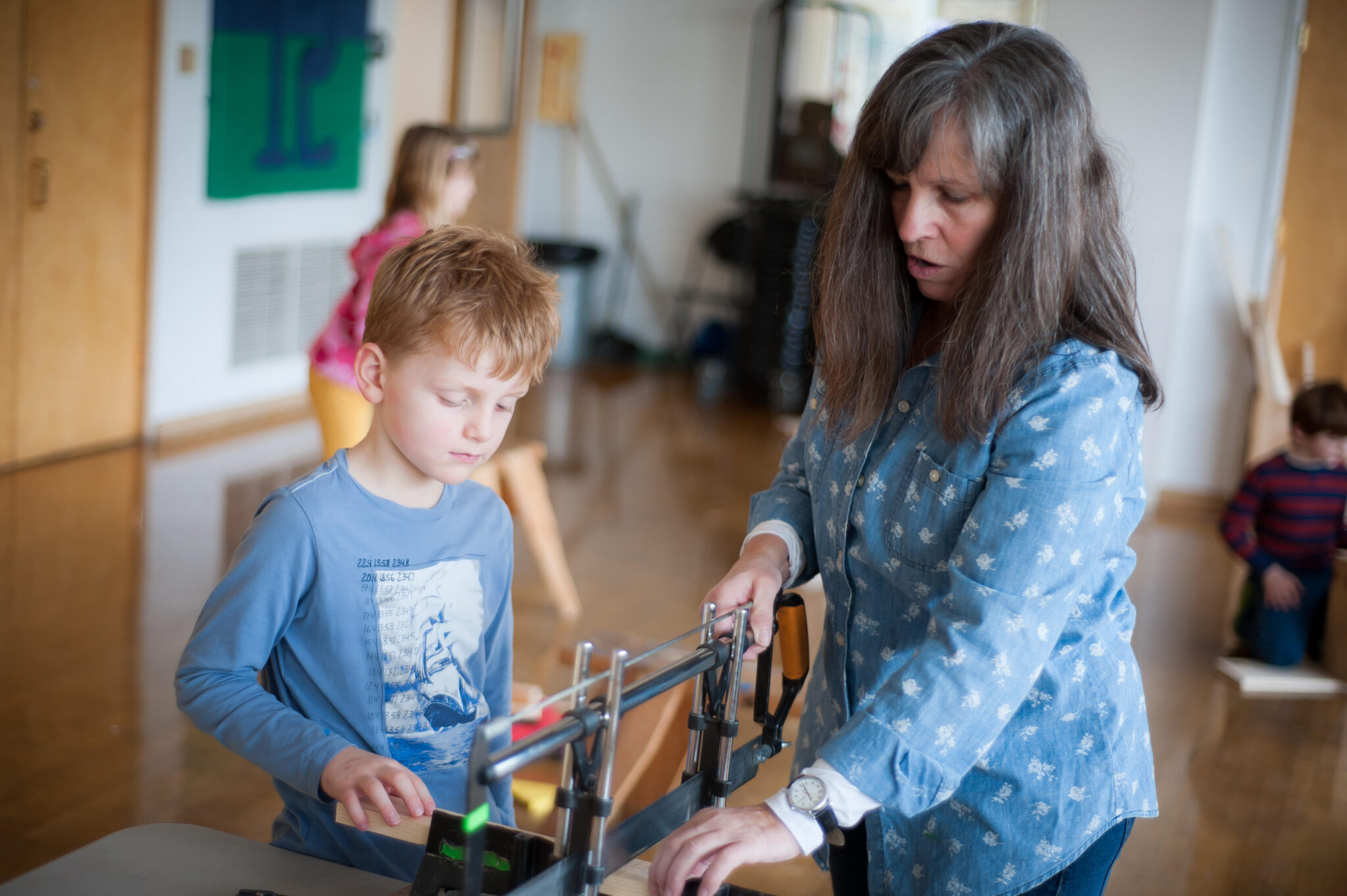
Learning to use woodworking tools helps children develop fine motor skills. (Image: Anthony Dell’Ario)
“Carpentry and other material manipulation classes were readily available in my elementary and middle schools,” Kite explained. “As a young adult, building things by hand helped me feel in control of something tangible that I couldn’t necessarily achieve in other aspects of my life.”
In 2009, Kite started teaching at the original Kids Carpentry in Berkeley, California, before moving to Seattle and opening a branch here in 2013. Today, Kids Carpentry offers classes for kids between ages 5 and 13 in their workshop, located between the Columbia City library and PCC in South Seattle, and in schools nearby. Kids can attend after-school clubs at Kids Carpentry, with free transportation from Graham Hill, Hawthorne, and Orca elementary schools. Kids Carpentry also hosts birthday parties, which is where many students are initially exposed to the craft.
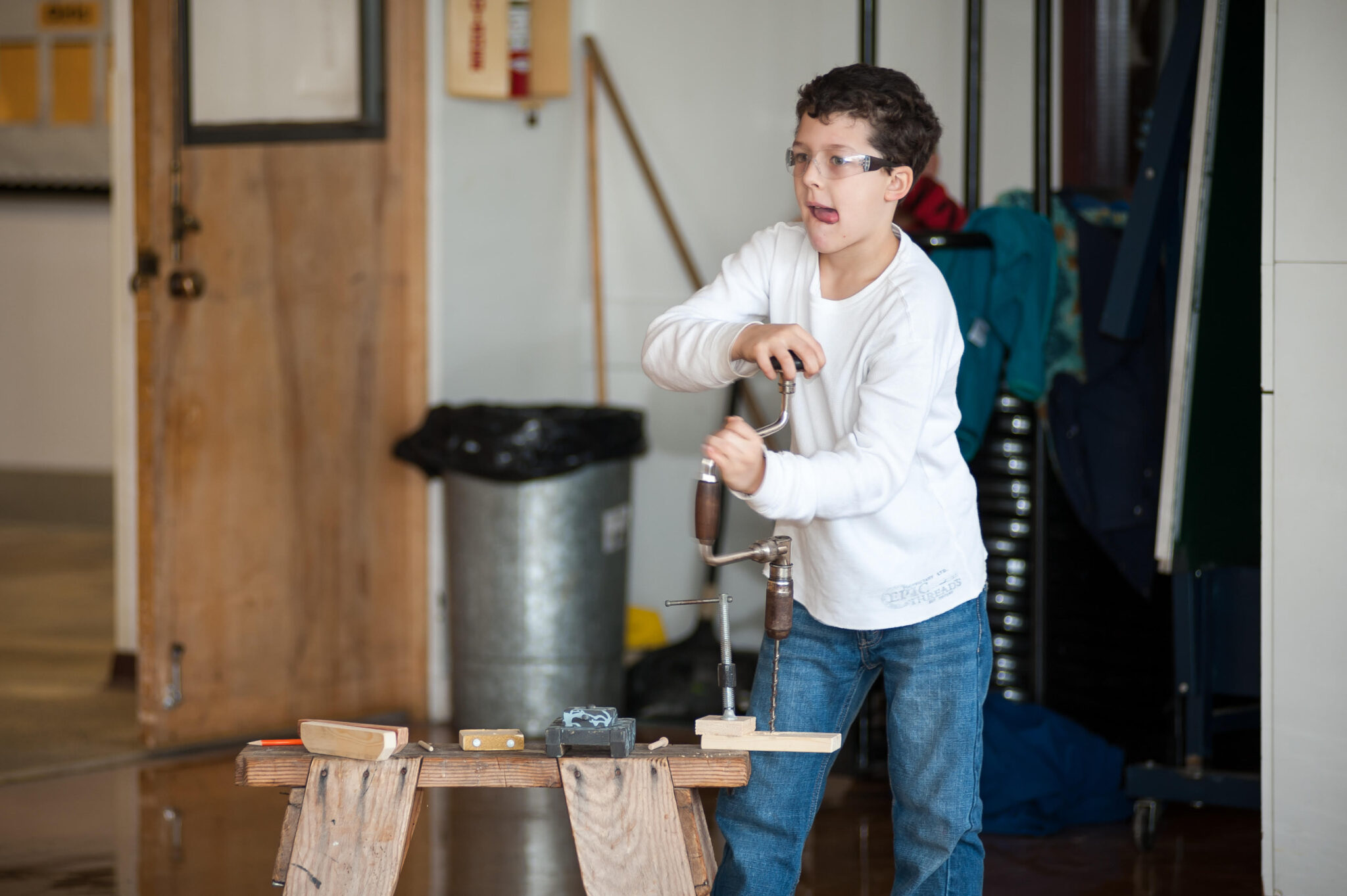
Kids take pride in their hard work and completion of projects during Kids Carpentry classes. (Image: Anthony Dell’Ario)
First-time students can choose from a number of simple projects that will get them familiar with tools and making 45- and 90-degree angles. Wooden boxes tend to be the most popular choice, said Kite, which can be simple, basic containers, or include slots on top or a lock to keep treasures inside safe. Games like the tic-tac-toe board are also favorites.
“We give kids access to tools and materials they may not otherwise ever get to use, creating opportunities to understand how things are made and where all this stuff we have comes from,” Kite said.
To make woodworking even more accessible to all, Kids Carpentry will bring tools and supplies to schools to teach before- and after-school classes. The team can also lead projects during school hours that align with the current curriculum. Kids are often having so much fun that they’re not aware that they’re also learning.
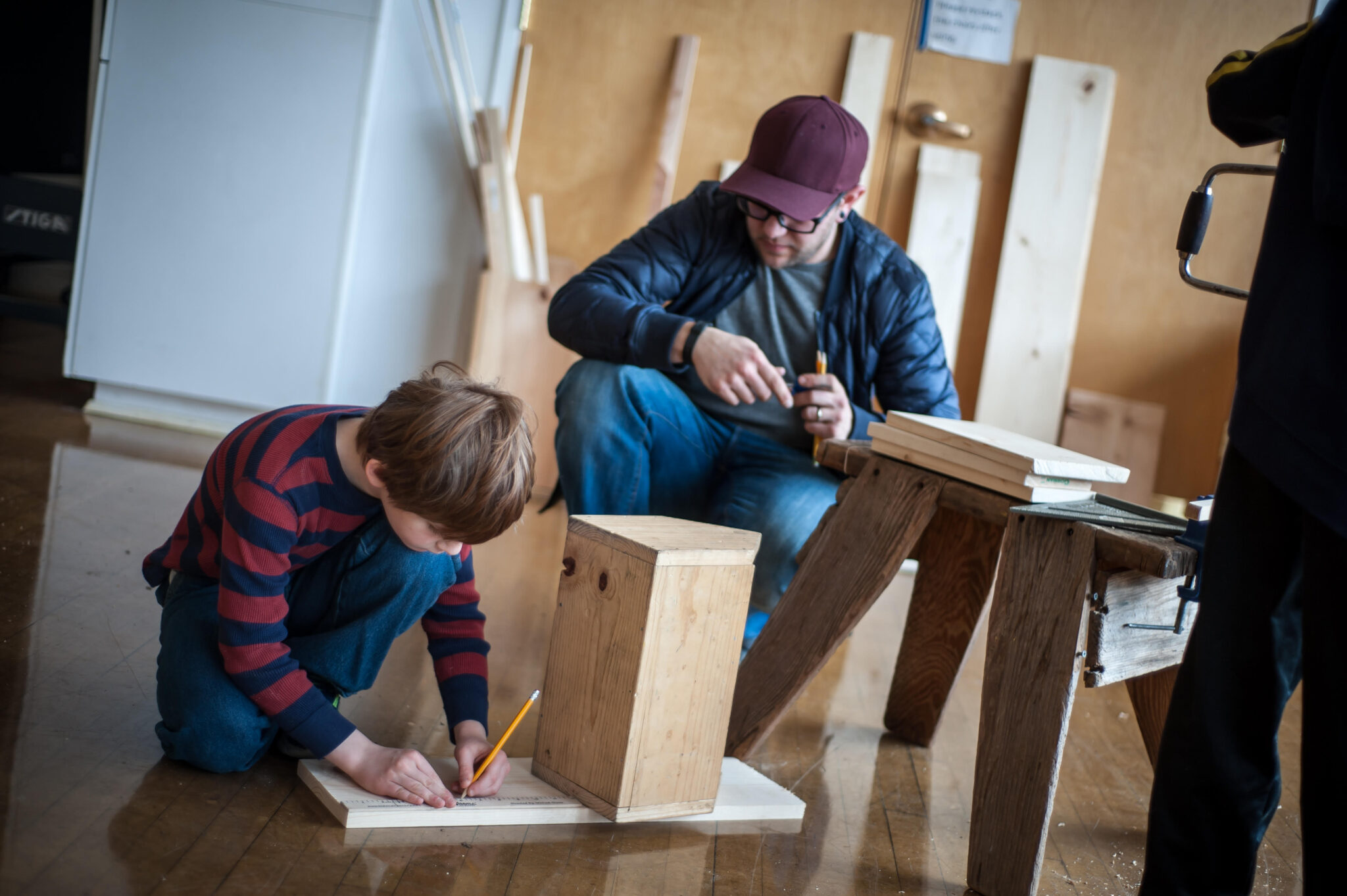
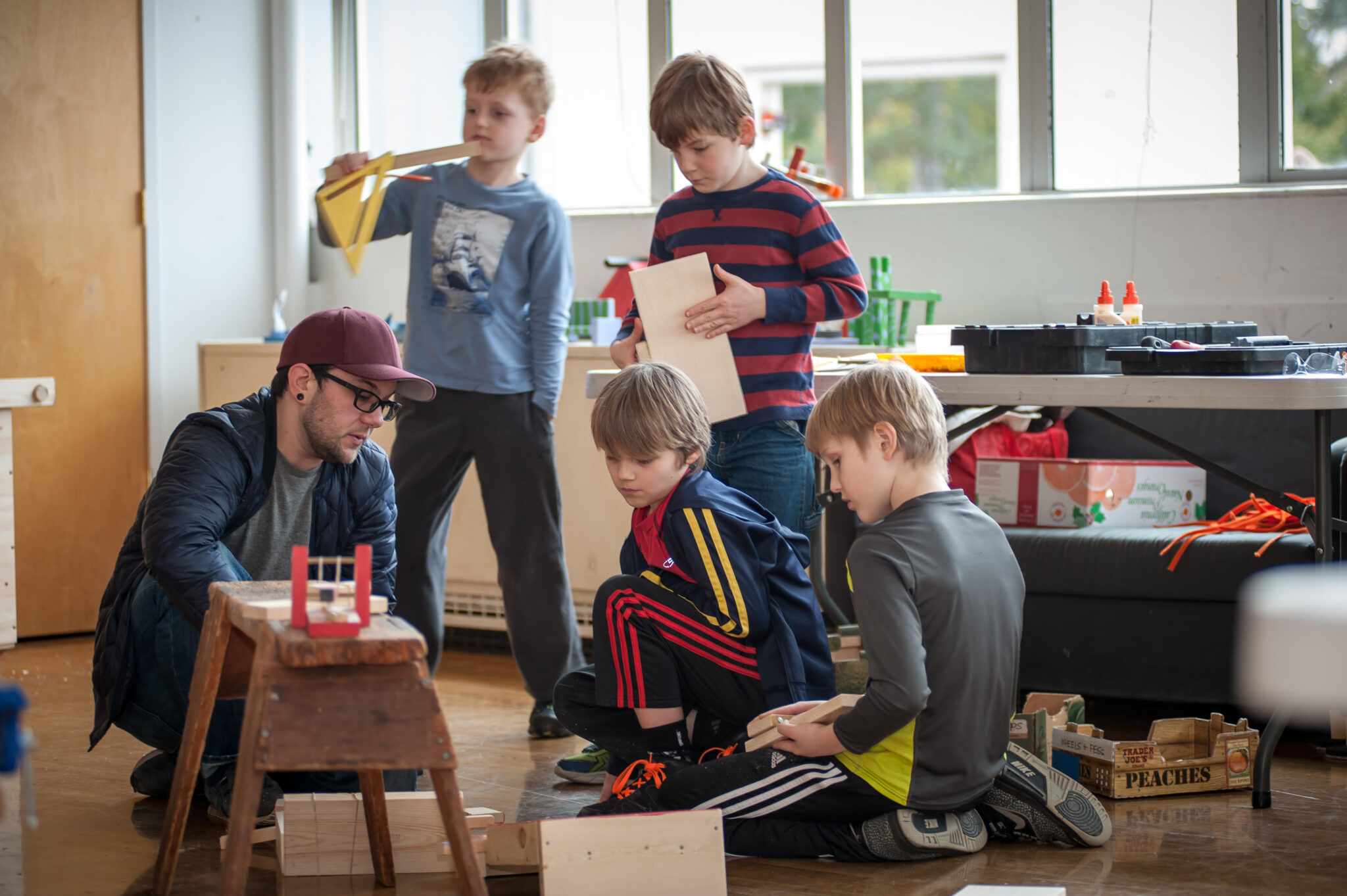
Kids Carpentry offers camps during school breaks and the school year that give them opportunities to engage in hands-on activities. (Image: Anthony Dell’Ario)
Understandably, parents may be concerned about their kids having free rein with sharp objects. But Kite reassures parents that safety is a priority at Kids Carpentry. Small class sizes ensure that kids receive plenty of individual attention, and the students receive thorough instruction on using basic tools. In addition, the Kids Carpentry team is experienced with and passionate about working with kids, in addition to knowing the ins and outs of woodworking.
“We often get inquiries from parents of children who don’t always thrive in traditional learning environments who want to sign their kids up, but are worried they will get easily frustrated or won’t be able to keep up with their peers,” said Kite. “I always tell parents that this is the place for their kid. We use simple repetitive steps with clear boundaries that allow kids to work at their own pace to build something that works for them, and that is why those kids do thrive in our classes.”