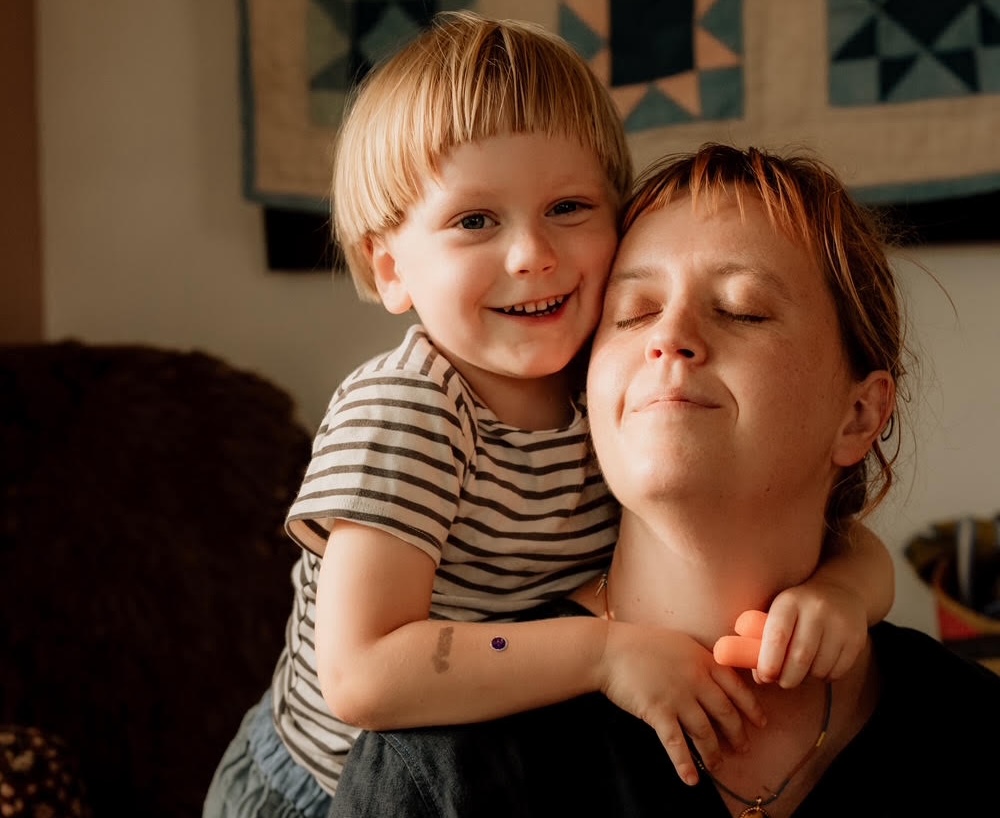
For Seattle mom Julie Reed, 2026 has been a tough year of medical navigation. Her son, 3-year-old Ari, was diagnosed with asthma, and Reed says it’s been a learning curve to “understand his body and how to support him.”
“As someone who hasn’t interacted all that much with the medical system until having kids, a lot of it is new to me,” Reed says. “Ari hasn’t had any life-threatening asthma symptoms or hospitalizations, but enough symptoms that it has really impacted our quality of life.”
Ari has contracted croup on a regular basis. When he’s gotten a virus, he tends to experience long, lingering coughs: “He will be grunting out air, have really low capacity for exercise, fatigue, and will just be winded really easily.”
“I’m still learning and feel like I don’t have a great understanding yet of what asthma even is,” Reed says.
What Reed does know is that there are many environmental elements that can trigger asthma: dust, animal dander, pollen, even foods. And she knows that keeping her home free of those triggers will help Ari. That, in part, is why she said “yes” when Ari’s pulmonologist asked last spring if she’d like a referral to the King County Community Health Worker Asthma Program.
“I’m in a phase of just trying to say yes to all resources — to see what’s out there and what could be helpful after this overwhelming year,” Reed says. She was amazed at what the program delivered right to her door.
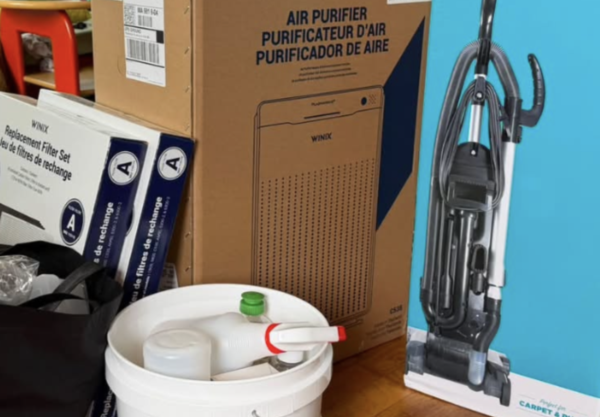
Julie Reed’s family received an array of supplies, including a new vacuum, HEPA air filter, natural cleaning supplies, bed and pillow covers and more. (Photo courtesy Julie Reed)
A program that delivers
The King County Community Health Worker Asthma Program traces its roots to research conducted by Public Health – Seattle & King County and the University of Washington in the late 1990s and early 2000s. At the time, researchers were responding to rising childhood asthma hospitalizations, which were hitting children in lower-income communities particularly hard, especially in central and southeast Seattle.
Things are looking up. In 2025, 4.4% of King County children ages 0–17 enrolled in Medicaid had a recorded asthma diagnosis. Approximately 3,600 children had an emergency department visit in 2025, down from approximately 4,600 emergency department visits in 2022, according to county public health data.
We asked Jan Capps, Community Health Worker and Asthma Program Manager at Public Health – Seattle & King County, to tell us about the program. Here’s what Capps had to say:
Seattle’s Child: Why was this program created?
Jan Capps: That research examined how home conditions including mold, dust mites, pests, and poor indoor air quality affected children’s asthma, and how community health workers could help families reduce these exposures. The findings helped establish our approach, which combines personalized asthma education, practical supplies, and support for creating healthier homes.
Over the years, the program has helped hundreds of families and has become nationally recognized. We continue to use research and quality improvement to strengthen our services. Currently, we are collaborating with the University of Washington to study the impact of HEPA air cleaners on asthma in children.
Seattle’s Child: What is the aim of the program?
Jan Capps: Our goal is to help people manage their asthma so it does not interfere with school, work, sleep, play, or other daily activities. We give families the knowledge, skills, and supplies to manage symptoms and reduce exposure to asthma triggers. We also help families advocate for their needs with health care providers, schools, landlords, and other organizations.
Seattle’s Child: What kinds of supplies do you provide to families?
Jan Capps: We provide supplies that help families reduce asthma triggers at home, including mattress and pillow covers, HEPA vacuums and air cleaners, pest traps, food-storage containers, and green cleaning kits. We also provide inhaler spacers and storage boxes for asthma supplies. Community health workers explain how to use and care for these items so families can get the most benefit from them.
Seattle’s Child: What happens during home visits?
Jan Capps: The visits combine relationship building, asthma education, and practical help tailored to each family. During the enrollment visit, a public health community health worker gets to know the child and family, explains the program, and reviews the child’s asthma history, medications, and symptoms. We ask about nighttime awakenings, rescue medication use, and whether asthma interferes with school, play, or other activities.
The community health worker also assesses the home for potential triggers, such as dust, mold, moisture, pests, pets, smoke, fragrances, and cleaning chemicals. Families can share challenges involving medication access, housing, or other needs. Together, the family and community health worker identify priorities, set initial goals, and determine which supplies and referrals would be helpful.
During two to three follow-up education visits, families learn more about asthma, the difference between controller and rescue medications, correct inhaler and spacer technique, and how to follow their child’s health care provider’s asthma action plan. Community health workers demonstrate skills and work with family members to practice these skills.
Families also learn practical ways to reduce triggers, including safer cleaning, controlling dust and pests, addressing moisture, and reducing exposure to smoke and outdoor air pollution. At each visit, we review symptoms, discuss progress toward the family’s goals, and work through barriers. When needed, we connect families with health care providers, weatherization services, utility assistance, and housing resources. The final visit helps families plan how to maintain these improvements.
Seattle’s Child: How do you measure program success?
Jan Capps: We measure success by whether children feel better and can participate more fully in everyday life. At enrollment and follow-up visits, we ask about the previous 14 days: how many days the child had asthma symptoms, how many nights symptoms disrupted sleep, how often rescue medication was needed, and how many days asthma interfered with school, play, or other activities. Comparing these measures over time helps us assess improvement. We also track the number of families served and review their demographic and geographic distribution to assess whether we are reaching communities with the greatest needs. Finally, we regularly ask families about their experience with the program and use their feedback to improve our services.
Surprisingly ‘seamless’
The day supplies were delivered to her door, Reed became a cheerleader for the county’s asthma support program, adding this enthusiastic post to the South Seattle Stroller Brigade community: “I want to shout out the King County asthma program for anyone who may not know about it. If your kid is on Apple Health and has asthma/RAD, it’s such an amazing program. They deliver a ton of stuff to your house for free to support reducing asthma triggers. It was just a tiny note on the bottom of one of our pulmonology visit lists that I usually wouldn’t have noticed but I did and on a whim called. Especially as we gear up for viral season, I wanted everyone to have this resource who could use it.”
Besides the amount of supplies she received, Reed says she was surprised at how easy it was to apply for the program: “It felt pretty easy and seamless!”
“I assume with government programs that there’ll be all this paperwork and waiting and just a lot of extra work,” Reed says. “But they really made it easy and it felt really nice to have that extra support, especially as a single mom. It felt like I had someone on my team. That felt really nice.”
Reed says the program not only offers parents a chance to save money at a time of escalating costs, but also provides important validation in the face of uncertainty:
“Sometimes it can feel isolating and overwhelming being a parent — new stuff pops up that we have to learn about on the fly,” she says. “It’s not like they solved every challenge or hole in the medical system, but it provided some extra support and relief. We all know doctors are so limited on time to spend explaining things to us. So when there’s extra programs that fill in that gap, it can be very impactful.”