
As rumors swirl about an increased presence of Immigration and Customs Enforcement (ICE) and Customs and Border Protection (CBP) in the Seattle area, many families are looking for guidance on what to do when encountering federal agents.
First things first. If stopped by immigration officials, “everyone has the right to ask if they are under arrest, remain silent, and inspect any judicial or administrative warrant presented to them, regardless of immigration status,” said Julia Hunter, principal attorney at the Law Offices of Carol L. Edward and Associates, P.S., in Seattle. “ICE does have the right to inquire about immigration status, and noncitizens can refuse to show identity documents that reveal their country of nationality or citizenship.”
If the encounter with ICE or CBP results in arrest or detainment, what happens next varies by each individual. Here’s how.
*The contents of this article are informational only, not legal advice.
If You Are a U.S. Citizen
A United States citizen (USC) cannot legally be detained or deported. If, by some error, a USC is deported, there are significant legal remedies to return them to the United States.
ICE does have the authority to arrest U.S. citizens, though until recently this was extremely uncommon. If a USC is arrested by ICE, here’s what they should know.
“ICE is claiming 18 U.S. Code 111, which is the crime of forcibly interfering with a federal officer’s duty or assaulting a federal officer,” said Hunter.
If a USC is arrested by ICE, they must be informed of their Miranda rights, which include the right to remain silent, to request an attorney, to refuse searches beyond their immediate person, to be informed of the crime they’re being arrested for, and, in most but not all cases, a phone call. The vast majority of Americans who have been arrested by ICE have been released, but the point, said Hunter, is the chilling effect.
The best course of action? Stay calm. Ask for a lawyer. And say nothing.
If You Are a Green Card Holder or Visa Holder
There are approximately 12.5 million lawful permanent residents (green card holders) and 3.6 million visa holders in the United States. In the past, in order to detain a visa or green-card holder, “they usually have to be convicted of certain crimes or commit immigration violations,” said Hunter. But lately, even leaving and returning to the country could result in detainment. Traveling has become extremely tricky for any noncitizen, especially for anyone with even a distant criminal history.
Even while not traveling, “I advise my clients to carry their green card with them at all times,” said Hunter. “ICE can arrest any noncitizen.”
When a lawful permanent resident or visa holder is detained, here’s what to do.
“Advise the agents of immigration status including the exact name of visa, etc. All lawful permanent residents should have copies of their documents. If detained, they should contact their immigration attorney – or procure one.
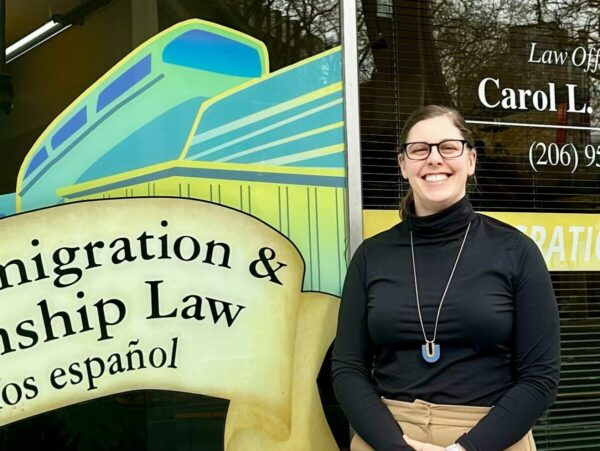
Julia Hunter is a principal attorney at the Law Offices of Carol L. Edward and Associates, P.S., in Seattle. (Image courtesy Julia Hunter)
If You Are a Noncitizen Without (or Pending) Legal Status
For parents without legal status, encounters with immigration officials can raise urgent questions about childcare and family planning.
The majority of people detained in the past year of sweeps and raids are noncitizens with no legal or pending legal status. Many noncitizens came in through a port of entry, declared their presence, and were paroled into the country. Their cases are then transferred to non-detained immigration court, and they are ordered to appear for hearings over the next year before filing for asylum.
When noncitizens with no legal or pending legal status encounter ICE, it is recommended to verbally exercise the right to remain silent and refuse to answer the officers’ questions.
Earlier this year, ICE arrested noncitizens appearing at court, but received several legal challenges and has since pulled back. That said, all noncitizens should plan for the possibility of detainment. Immigration advocates also encourage families to think ahead about practical planning — especially if children are involved.
Hunter advises anyone without legal status to download the ReadyNow app, which notifies legal aid and/or emergency contacts if a person is being detained. Immigration advocates also encourage families to think ahead about practical planning — especially if children are involved.
They should also provide their emergency contacts with copies of all immigration documents and their Alien Registration Number, or A-number, if they have it.
“If your kids are citizens and you are not, designate someone who can take care of your kids and be able to provide any needed medical care. The alternative is foster care,” said Hunter.
Emergency contacts and detainees can search for a local immigration lawyer on the American Immigration Lawyers Association (AILA) website.
When Immigration Enforcement Violates Due Process
The crackdown on nonviolent immigrants has been shocking, but recent violent encounters, recorded dutifully by law-abiding bystanders, have, in some cases, opened up opportunities for legal remedy.
“There has always been a presumption that the government follows its own rules,” explained Hunter. “Whether you’re an agricultural inspector inspecting a farm or an immigration agent apprehending a noncitizen, there are established norms to follow.
“But when the government does not follow its own rules,” she said, “it is presumptively a violation of your due process rights, which can give you a basis to contest your detention.”
If you or a loved one is in need of support or guidance on immigration issues, there are excellent resources at the National Immigrant Law Center and the Northwest Immigrant Rights Project.