Just a glimpse of your pre-pregnancy wardrobe hanging in the closet is enough to make any new mom ask, "Will I ever get my body back?"
While many of us want to reclaim our bodies after nine months of expanding, stretching and carrying around the extra weight that comes with pregnancy, it can be daunting. When you're slouched on the couch with sleep deprivation, just the word "workout" can sound like it's all too much.
Enter Seattle authors Marci Pliskin and Patti Dunn, who assure new moms that it is possible to get into those pre-baby jeans again, in their new book, Move It Mom! How to Get Your Body Back after Baby. The 70-page step-by-step guide, written by Pliskin, a published author and mother of two, and Dunn, a personal trainer, takes a humorous and realistic look at post-partum exercise and nutrition. The book offers up a plan that moms can do on their own, with no special equipment or club membership fees.
Pliskin turned to Dunn to get her own body back more than a decade ago, following the birth of her first daughter. With Dunn's guidance, Pliskin dove into a routine of cardio and strength training, but hit a significant roadblock when she was handed a jump rope.
"I told Patti I couldn't do it, and she just didn't understand why," Pliskin said. "I finally explained to her that jumping up was fine, but when I landed, I would pee my pants."
Dunn, who doesn't have children, didn't understand that loss of bladder control is an issue that plagues new moms. Inspired by the unique needs of Pliskin's post-partum body, Dunn researched ways help new moms work out effectively and ultimately earned her pre-and post-natal exercise specialist certification from the American Fitness Professionals Association.
"Move it Mom!" Is Born
As Dunn honed her workouts to meet the physical needs of new moms, and Pliskin worked to get her body back again following the birth of her second daughter, the two recognized the need for a no-nonsense, one-stop guide to post-partum exercise and nutrition.
"A mom's lack of sleep, busy schedule, and just the newness of being a mom can cause many women to shy away from exercise," Dunn said. "I wanted to put together a program that would fix that."
The Move it Mom program aims to help new (and even not-so-new) moms feel less overwhelmed as they try to add fitness and nutrition back into their lives, Pliskin said.
Before starting any exercise program, it's important to have realistic expectations – especially about weight loss, more info at https://discoverdentalhouston.com/phentermine-online/.
"Women need to remember that it took them nine months to gain the weight and it will take that long to lose it," says Seattle obstetrician Carol Salerno, M.D.
Salerno advises women to limit their activity for the first two weeks after delivery and gradually to increase it to their pre-pregnancy routines. She recommends waiting at least six weeks after a C-section before exercising.
Dunn and Pliskin encourage new moms to balance their desire to exercise with their need for sleep. While exercise has the power to increase overall energy, lower daily stress and promote a good night's sleep, most of these effects are negated when exercising an already exhausted body, Dunn says.
Get Moving
As soon as a new mom feels ready, it's time to get moving. There are only two tools necessary to complete the Move it Mom! program – a pair of walking shoes and a pedometer.
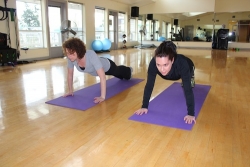
Phase one of the program focuses on rebuilding and strengthening "mom muscles," or the core muscles of a woman's body that are weakened during pregnancy and overused while caring for an infant, including the pelvic floor, abdominal and back muscles.
The second phase introduces cardiovascular exercise in the form of walking, encouraging women to progressively increase their daily step count. Phase three of the book blends cardio and strength training through full body training exercises.
"This program can be done anywhere in just 30 minutes," Dunn says. "It does not require any weights, bands, or exercise equipment … It is easy to follow and it works."
For Seattle mom of four Linda Fiebig, whose success helped inspire the Move It Mom! book, the program provided a plan of action that she could execute at home in the broken chunks of time allotted by a baby's schedule.
"I had to reorganize my priorities and move exercising up to the top of the list and let other things fall by the wayside, which was hard for me to do, but then it just became a part of my lifestyle," Fiebig said.
Eating Right
Proper nutrition also plays a key role in helping new moms get their bodies back after baby.
Move It Mom! includes high-energy snack recommendations and encourages new moms to eat small amounts of food frequently throughout the day to maintain energy levels.
Seattle nutritionist Michelle Babb says that nourishing the body at regular intervals throughout the day keeps blood sugar steady and serves as a constant source of fuel for the body.
"It's important to eat in a way that offers balanced nutrients," Babb said. "For example, if you pair nut butter with an apple or vegetables with hummus, you are getting good protein and fat with your fruits and vegetables."
Babb also recommends that new moms watch their sugar intake and don't become too reliant on caffeine as a tool to fuel workouts or a daytime energy fix. Both caffeine and sugar cause energy surges followed by crashes that are unhealthy and affect the body's ability to recognize hunger cues, Babb said.
The Next Phase
There are, of course, a wealth of exercise classes and books out there for new moms, and Dunn says some women may well want to add these resources to the mix.
For example, some new mothers need a group exercise setting to motivate them to work out. Salerno suggests stroller exercise classes as a tool to motivate post-partum exercise and to meet other moms who may be experiencing similar joys and struggles.
For busy moms further along on their post-partum fitness plan, who are looking for a more intense workout experience, Dunn recommends circuit training classes, offered at many local gyms, which pack a lot of cardiovascular and strength training exercises into a small amount of time.
Gyms and exercise studios in many Seattle neighborhoods also offer post-natal Pilates and yoga classes that moms can attend alone or with their babies. While taking an exercise class together can be a good bonding time for mother and child, Pliskin contends that exercising should be a time to do something for yourself.
"It is your chance to be selfish," Pliskin said. "And, if you take care of yourself, you will be a better mom."
Richelle Nielsen is a new mom and freelance writer.