The recent Artemis II lunar flyby was mesmerizing to those of us watching from Earth.
The crew’s mission was ambitious and their enthusiasm was infectious, at times emotional and even suspenseful in the moments before we knew for sure that they had successfully splashed down.
The Museum of Flight in Seattle has a message for kids: You can do that. You can be an astronaut, or you can work in Mission Control, commercial aviation, manufacturing, or any number of other fields right here in the Puget Sound area.
“How can we inspire them?” asks Rafael Gallardo, director of education programs and initiatives, summing up one of the Museum’s primary missions. He and Clare Tally-Foos, Aerospace Camp Experience manager, talked about the work that drives them – and about what they want kids to know.
Some of their messages: You can do this. Science is not scary. Aviation and aerospace have a place for you, no matter who you are, where you live, or what your background is.
“There is a huge array of options out there,” says Tally-Foos. “My passion is to create an environment where every kid can feel confident.”
The Museum has a variety of educational offerings going on all the time, but one of its signature programs is the summertime Aerospace Camp Experience, or ACE.
There, kids as young as kindergarten age and up through middle school get what Tally-Foos calls “bite-sized exposures” to aerospace-related fields through activities that are so much fun that it’s easy to forget they are also educational.
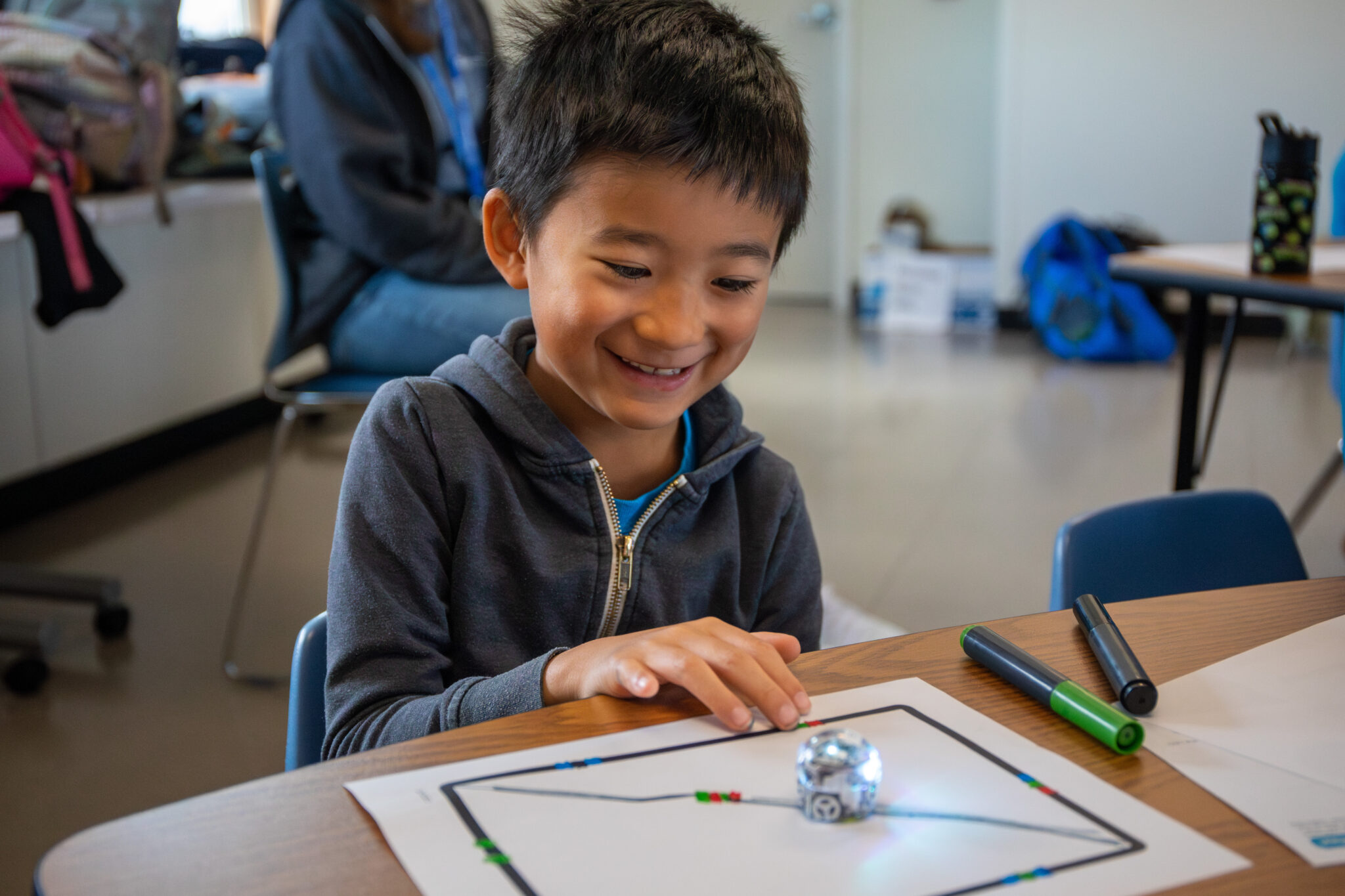 The younger kids play as space explorers in a solar system obstacle course, experiment with sound waves, launch rockets or design a spy disguise.
As they get older, campers learn more about actual jobs and the skills required to have those jobs.
But this is not AP Physics. “This is an entry point, an inspiration phase,” Gallardo says. It’s where a kid might realize: “I don’t have to build or design an airplane, I could fly the thing!”
(For the record, you could also inspect it, maintain it, design its interior, or map out its travels, to name just a few options.)
And let’s not forget: Engineering, coding, and manufacturing are all in-demand skills in aerospace and aviation fields, but so are curiosity, creativity, teamwork, and the ability to ask good questions.
“Soft skills are really valuable,” says Tally-Foos. “There is a place for everyone, if they’re interested.”
It’s not about training for a career, it’s about being exposed to possibilities – while having fun. “We create an environment where every kid can feel confident, and where they can say, ‘I’ve done science and been successful,’ “ Tally-Foos says.
“We are all able to be science doers, system thinkers, and problem solvers – and here are some ways that could look in your future.”
A typical day at a weeklong ACE session includes moving between three different types of activities:
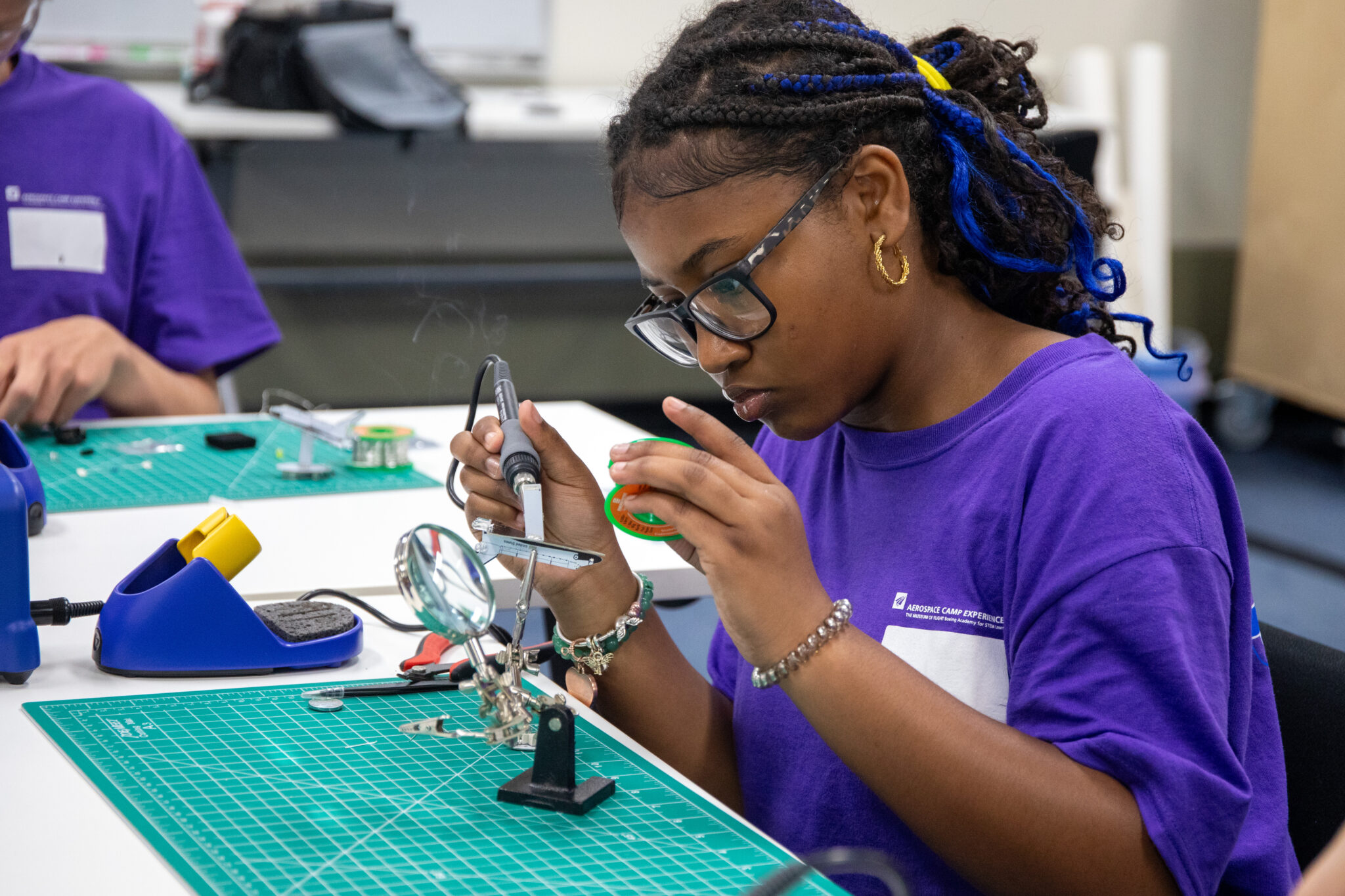
- Hands-on learning: Depending on age, this could include art, science experiments, or technical projects.
- Time spent in the Museum galleries or behind-the-scenes collections.
- “Camp” activities: games, crafts, stories, team-building, outside time. “We definitely lean into the informal side of the education spectrum,” Tally-Foos says. “We know it’s summer and that kids learn differently then. We do a bunch of activities, so kids can find the pieces they really like.”
“The idea is not to make it intimidating, but to make it fun,” Gallardo adds. “How can we hook them and make them feel welcome and seen?”
The Museum particularly seeks to reach out to traditionally underserved and underrepresented communities, and some financial assistance is available for ACE programs that run all summer and serve hundreds of students each year.
The camps are run by Museum staff, some of whom are former camp participants who have gone on to study or work in the aerospace industry. In addition, the Museum brings in a variety of other professionals to talk about their jobs and their lives. A goal is for campers to see themselves – their strengths, their interests, their personalities – in the people they look up to and learn from.
Because, seriously, most 6-year-olds aren’t making career plans, and middle-schoolers might not be hot to do that, either. The Museum keeps things fun and casual while still emphasizing curiosity, teamwork, and experiential learning.
But coding a robot? Hanging out in a space shuttle trainer? Taking a field trip to an airplane factory? Those are the things summer memories are made of — and the moments where plans and dreams begin to grow.
And they’re the things that teach young people: “I can do that.”