Years ago, I remember standing next to a friend of mine at a family holiday party. She was an early childhood educator, and an experienced mom with two teenaged children. We were watching another woman move through the crowd holding hands with her four-year-old son. He was dressed in an adorable little suit, and she was wearing a sparkly cocktail dress. They were the handsomest pair in the room — happy and radiant, and so obviously in sync. The bond between them was almost palpable.
My friend sighed and said: “Aren’t they lovely? They have no idea how many times they’re going to break each other’s hearts.”
I laughed, but I didn’t fully understand what she meant. At the time, my oldest daughter was only two. Now, with thirty more years of parenting experience under my belt, I finally get what she was saying.
There’s a psychotherapist named Orna Gurlnik who’s best known for her television docuseries Couples Therapy. She believes that the fundamental task and challenge of relationships is figuring out how to deal with what she calls “otherness.” She likens it to a political system, in which people have to come together for the common good, but can only do so if they figure out how to tolerate — and ultimately appreciate — each other’s differences.
In the couples that Gurlnik works with on her show, those differences have been present from the start. Sure, with new love there’s a certain blurring of boundaries, and for a time we feel as if we and our partners complete each other. Part of that completion, though, is because of our differences. We look to our romantic partners to fill in some of the holes in our life, and they are able to do that (at least for a while) precisely because they are different from us.
By contrast, consider the bond between a parent and their infant. Otherness is not part of that equation. The boundaries that exist in any other relationship are completely absent, because parent-infant codependency is built right into our DNA to ensure the survival of our species. If managing differences is a challenge for two lovers as they grow older and grow apart, it’s no wonder that a parent and child experience the same struggle on steroids. Not only are the rate of change and magnitude of growth much greater, but the power of the enmeshment is many times stronger. The inevitable separation between a parent and child is the ultimate abandonment. In most people’s lives, it’s the original betrayal.
This is why toddlerhood and adolescence are so hard. Both are developmental gauntlets a child has to run in order to create a new level of separateness. At the same time that they’re driven to push away from their parents, they’re experiencing the loss of a bond that they’ll never be able to fully replace. No wonder they explode with tantrums and wild emotional swings. How else should they respond to such loss, but with grief, fear, and rage?
Often, when our kids go into these developmental free falls, we desperately want to rescue them. We see their pain, and we want to make it go away, but we have no idea what to do. How are we supposed to help them when most of the time we have no idea what they’re so upset about?
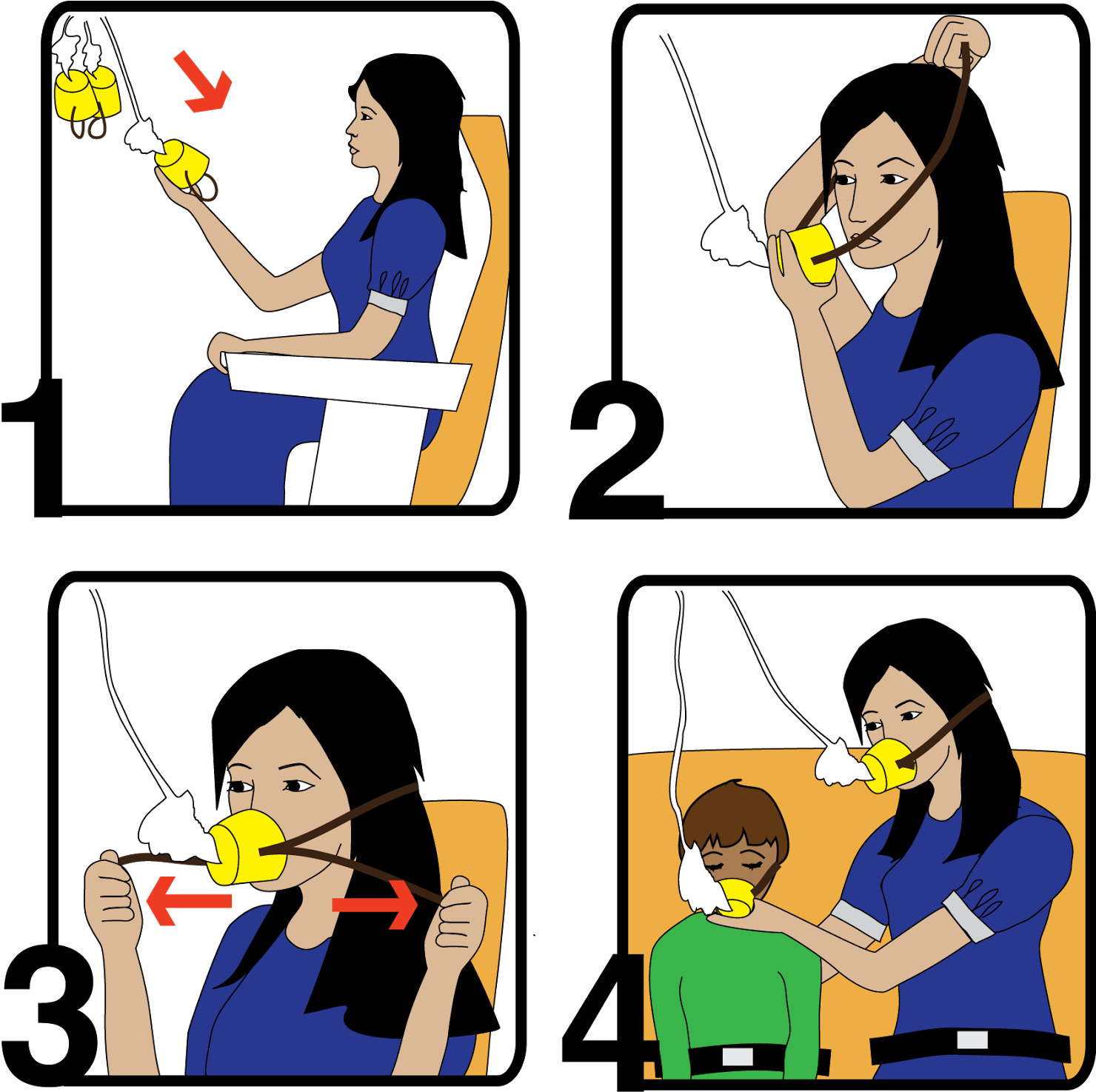
This is one of those times when we should take the parenting advice of our friendly neighborhood flight attendant: “In case of emergency, put your own oxygen mask on first.”
The thing we often forget, when our kids are panicking through this separation pain, is that we’re on the same flight they are. That infant-child bond that they felt at the beginning of their lives was an unspoken promise that we believed in, too. Maybe not intellectually, but in our hearts and our guts and our bones. We lived as though that bond would never be broken. We loved as if there was no such thing as betrayal. Even as our children feel abandoned by us, we feel abandoned by them.
What our kids need most when the cabin pressure drops is for us to stay calm and fully present. We can’t be thrashing around gasping for air and unbuckling our lap belts. To help them deal with their own grief and uncertainty, we have to recognize and take care of our own.
Take a deep breath. Tighten your seatbelt. Put your own mask on first.