My father grew up fishing with bamboo poles and bent-pin hooks, in the irrigation canals of Macao. His uncle taught him how to fish (and also how to gamble), because my grandfather was 8,000 miles away in a land they called “Gold Mountain.” More precisely, in a Chinese laundry in Rochester, New York.
Fishing was one of the few things from my father’s boyhood that followed him through his long journey to America, his stint in the U.S. Navy, his college and dental school on the G.I. Bill, and all the way to our home in Amherst, Massachusetts. It was a reminder of his mostly happy childhood, before all the displacement, and struggles of his new life in the New World. It was one thing he hadn’t lost or left behind.
He tried to teach me and my brothers how to fish, but I was the one who really took to it, and I became his regular fishing buddy. It’s hard to say which came first — my love of fishing or my love of those precious moments when I had my father all to myself — but over time the two merged into one.
The night before, we’d rig up our rods and place them by the door so we could sneak out of the house without waking the rest of the family. In the morning, he would creep into my room while it was still pitch dark and squeeze my shoulder.
“Are you awake?” he’d whisper, and I’d sit up immediately, as if some part of my sleeping brain had been waiting for that moment all night long.
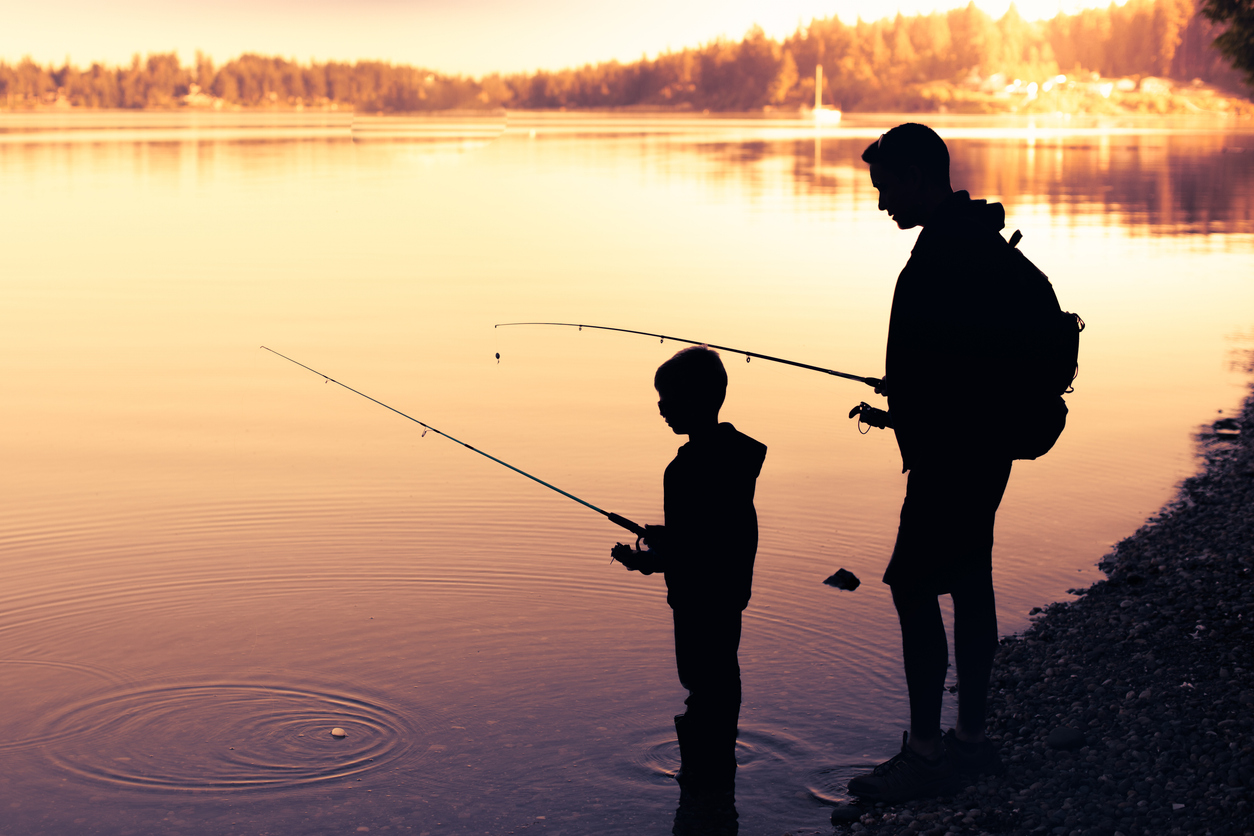
The drive to our favorite fishing spot was about 25 minutes. I got to ride shotgun without battling my brothers for the honor. By the time we arrived, there’d be just enough light so we could pick our way down the trail from the unmarked turnout to the edge of the lake.
As we approached the shore, we stopped talking. Supposedly, this was to avoid spooking the fish, but for me it was more like walking into a church. A faint, swirling mist hung low over the lake, and the splash of feeding fish sent rings across the glassy surface — tantalizing signs that our devotion and sacrifice might yet be rewarded. We baited our hooks, cast our lines and waited, mostly in silence. I never got bored. I never lost faith. I never wished I hadn’t come.
By the time we got home, the rest of the family was barely starting their day. We, on the other hand, had spent hours in the presence of still water, wild creatures, and new light. It was our little secret. If we had no fish to show for our lack of sleep, the others would look at us with a mixture of smugness and pity, but we knew better. We knew what they couldn’t know.
These days, I often go to sleep early and wake before dawn. I slip out of bed and get dressed with as little noise as possible, and set out on a long, leisurely walk. This morning, I saw a scraggly coyote weaving right down the middle of the road, like he was stumbling home from some all-night coyote rave, secure in the knowledge that no bothersome cars or respectable, collar-wearing dogs would bother him at that hour. I saw a skunk tiptoe daintily across my path and duck under a fence. And I saw a young barred owl swoop silently into a cedar tree and come to rest on a low branch, eyeing me as I walked by below.
I think of these early hours as a gift from my father. He wrapped them up for me in the mist and quiet of a hundred summer mornings, and secured them with all those yards of fishing line he patiently untangled when I’d somehow twisted them into a hopeless knot.
The next time you consider the legacy you want to leave for your kids, don’t forget that there are some things you can’t put in your will. You won’t pass them on for free — they require some planning, and maybe a few hours of lost sleep. On the other hand, they won’t get stuck in probate, or gobbled up by lawyers and taxes.
Besides, the return on investment can’t be beat.