Last summer, Seattle’s Child blew up our small corner of the internet with a feature on Tin Can, a local company that hadn’t even been in operation a full year by the time we published. Four months after the article went viral, my family’s very own eponymously-named Tin Can, a WiFi landline for kids, delivered just in time for Christmas.
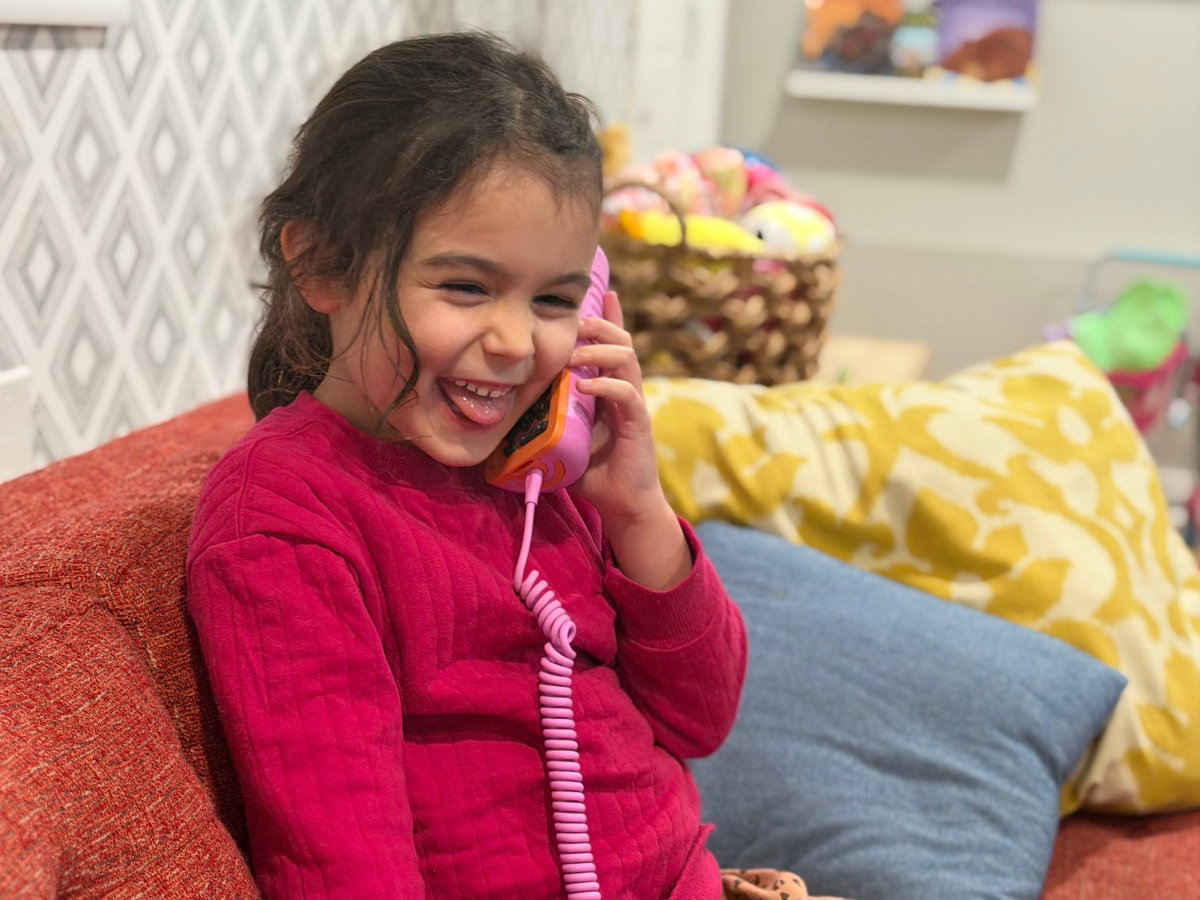
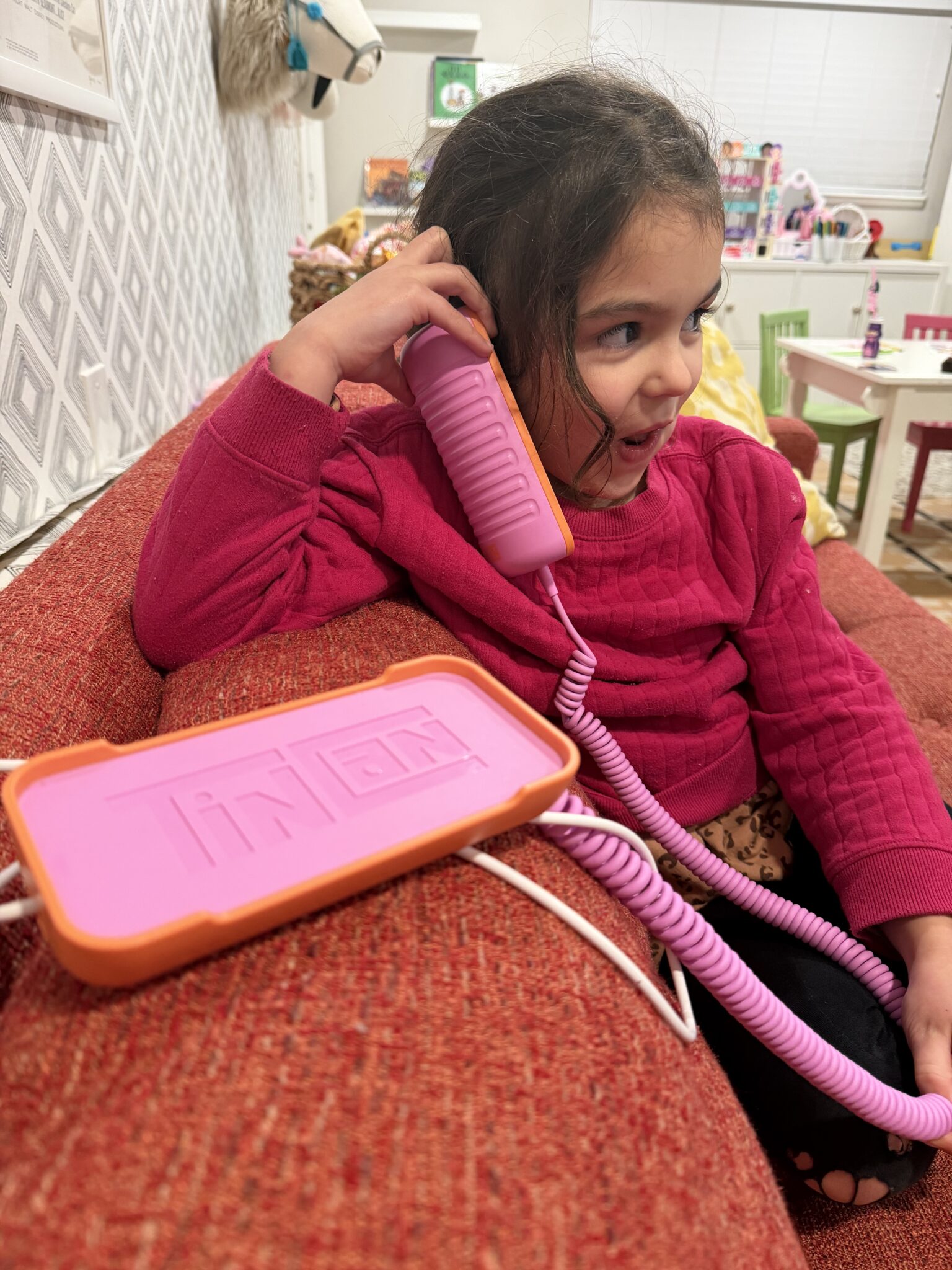
My daughters squealed at the revelation tucked under the tree. Their very own phone! We christened her “Pinky” after her gorgeous magenta shell, and she immediately became a fixture of our playroom, a dollop of age-appropriate freedom in their everyday life.
Analog Rules for a Digital Generation
The introduction of a landline came with excitement, but also an unexpected learning curve. As a generation that grew up with call waiting, voicemail inboxes, and *67, we, the parents, take for granted our innate familiarity with a corded phone and the unspoken etiquette that comes with it. As we are now three weeks out from Pinky’s inauguration into our daily routine, there are some “rules of conduct” every caregiver should have prepared before getting a landline for Gen Alpha.
(Image: Candice McMillan / Seattle’s Child)
1. Orientation Matters
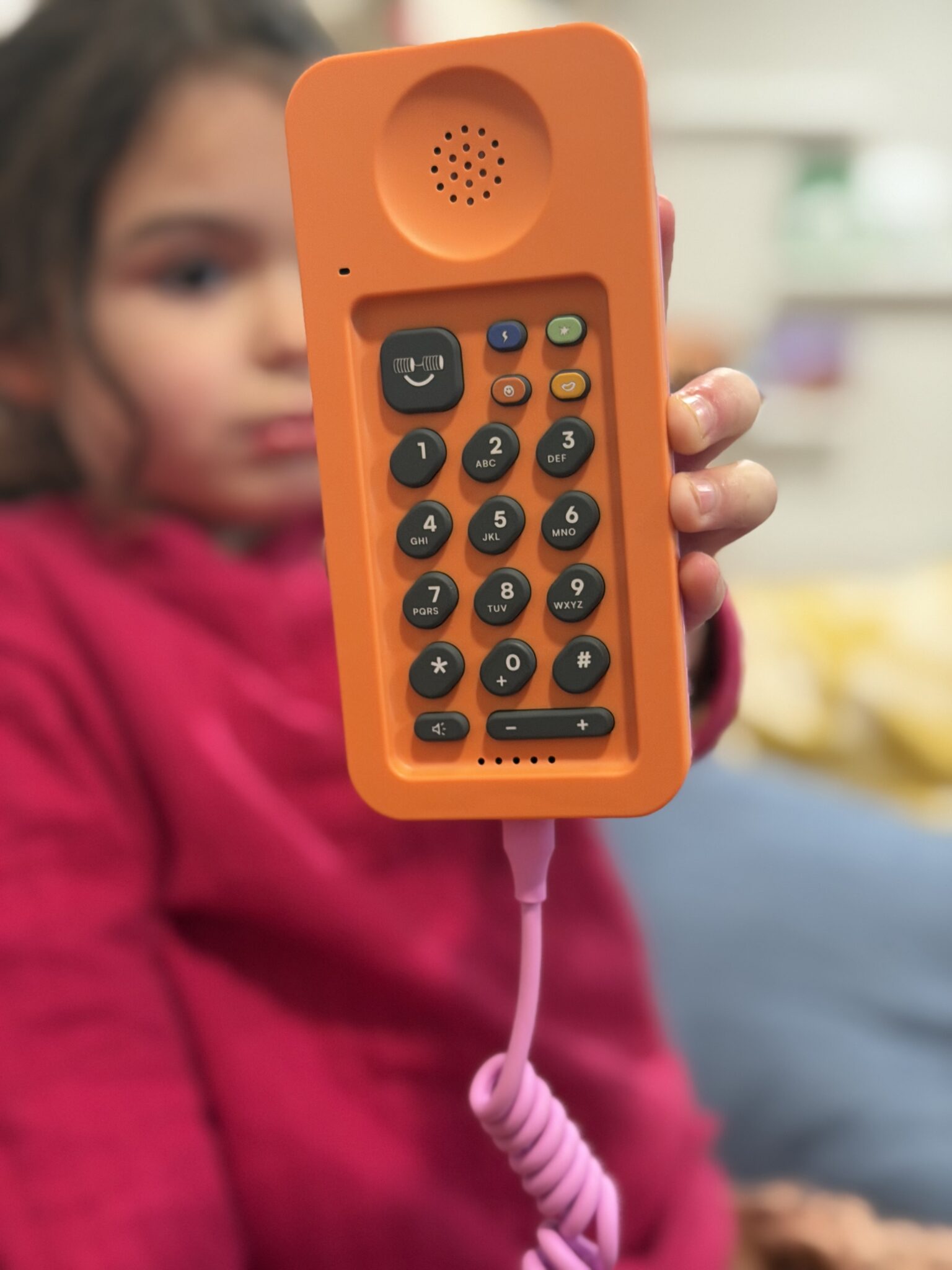
You may laugh, but my daughters had no idea how to physically handle Pinky’s handset. They would position it upside down, away from their ears and mouth or, my personal favorite, out in front of them like they were on FaceTime, only to feel utter confusion as to why they couldn’t hear the person on the other end.
After trial, error and lots of coaching, they have finally processed the basic mechanical function of the phone: the top is for listening and the bottom is for speaking into. It is easy to forget that most of these kids have never used a phone that doesn’t have a screen, though they were relatively quick on the uptake. (The other day, one of my daughters held the receiver to her chest, shielding the microphone as she scolded me for interrupting her conversation.)
2. Hours of Operation
The day after Christmas, I found my youngest, who is six going on 16, on the phone at 6 o’clock in the morning. I hadn’t fully sorted out the parent features that Tin Can offers, and thankfully only one grandparent was locked in conversation about “The Princess in Black” before sunrise, showcasing possibly the most important lesson of owning a landline: respect the hours of operation.
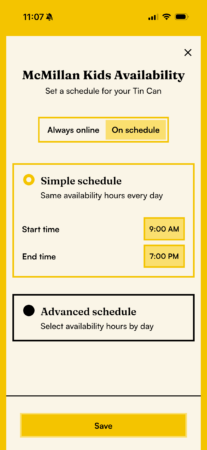
Tin Can offers an app for parents to manage and control the phone’s usage. Their “Quiet Time (shhhh mode)” allows you to set a daily schedule wherein the phone only works for certain times of the day. For example, Pinky’s hours of operation are 9 a.m. to 7 p.m. There has been an occasion that necessitated a call outside of this timeframe, in which case I manually turned off the quiet mode.
(Image: Candice McMillan / Seattle’s Child)
3. Dial Tone, Ringing, and Off the Hook
For a few days, massive misinformation spread back and forth between the two novice landline users in our household. One would pick up the phone to make a call, hear the dial tone and announce that the phone was ringing, causing both to wait anxiously for someone to answer on the other end. The “similarities” – yes, that is Millennial sarcasm – between the dial tone and the phone ringing was a nuance I didn’t realize I needed to explain, but here we are.
These two pint-sized socialites also needed to be told multiple times that “hanging up” is not as simple as letting the other person end the call for them. In the first week, I found Pinky stranded off the hook multiple times, dangling from the couch or thrown aside haphazardly. It took some explaining that keeping Pinky off her dock meant no calls could come through.
And receiving calls is infinitely more exciting than making them. Pinky has been put to bed properly every time since.
4. Once Is Enough
Tin Can offers a digital call log, a wonderful feature that lists every user who has called in or out, as well as the time and duration of the call. It is fascinating to see how my kids use Pinky, often going through their list of approved contacts until someone answers. In the early days, I happened to peruse the log, only to discover that one of the girls had called a family friend three times in a row. They tried a classmate, who also got a Tin Can for Christmas, eight times within two minutes!
This led to a rule that feels nearly as important as hours of operation: once is enough. If a recipient doesn’t answer, the only option is to leave a message and wait for them to call back. We do not, under any circumstances, flood their phone with multiple calls. It shows a lack of respect for their time and space, it’s rude, and it should be reserved for emergencies only, as it implies an urgent need to get hold of them.
5. 1 + Every Time
With four speed-dial options, they have easier access to some numbers more than others. When they do need to type in a full number, the rules of dialing are more important than ever. They should always start with 1, followed by the three-digit area code, and ending with their seven-digit phone number. Again, it might be second nature to an older generations, but this is not necessarily the most intuitive process, particularly since dialing on a smartphone is the press of a button.
(Image: Candice McMillan / Seattle’s Child)
6. A Tool, not a Toy
To quote Spider-Man, “With great power comes great responsibility.” I have said that enough to my children, that they will grow up thinking I am credited for it. The sentiment is important. This is a piece of equipment that can and will break if it is not treated correctly. There is no swinging it, dropping it, throwing it at anyone. We place the receiver on the hook gently and with purpose. If they want Pinky to continue working for them, then they need to treat her like the lady that she is.
7. Courteous, Kind, Thoughtful, and Engaging Conversation
Pinky also has the power to connect them with outside parties – albeit only those I have pre-approved on their call list – and that ability to reach into other people’s lives should not be taken for granted. By using Pinky, they are signing their name on an unwritten contract. They agree to be courteous, kind, thoughtful, and engaging. No one wants to have the person on the other end of the phone leave suddenly because something more interesting is happening in the room next door.
We say hello to whoever enters into this two-way relationship. We ask about their day. We always announce politely when we need to hang up, and we wish them a good day before signing off.