Dr. Michelle Martin spends a lot of her time reading books to kids. Martin may be a PhD, author, and graduate professor at the University of Washington, but she never strays far from that fundamental act. Whether she’s leading a monthly drop-in storytime at the Broadview Taphouse, reading over Zoom to children on the East Coast, or jumping on a video call with her nephew, reading to children is the beating heart of her mission.
“It’s all about surrounding kids in a literacy-rich environment,” Martin says. “Children have to be exposed to a thousand books to be ready for the work of learning to read.”
Literacy rates among children have declined alarmingly in the wake of the academic disruption caused by COVID-19 and amid the pervasiveness of video screens. Nationally, high school and middle school test scores are at their lowest rates since the 1990s, and here in Washington a study in January 2025 found that 68% of our state’s fourth graders scored below proficient in reading.
“I consider it a literacy crisis, and everybody who can read can do something about it,” says Martin. “If kids don’t have those skills down by the third grade they’re already behind and might never catch up.”
To that end, she co-founded Camp Read-a-Rama with Dr. Rachelle D. Washington in 2009, a curriculum for afterschool and summer literacy immersion camps for kids age 4 to 11, especially those in historically underserved communities.
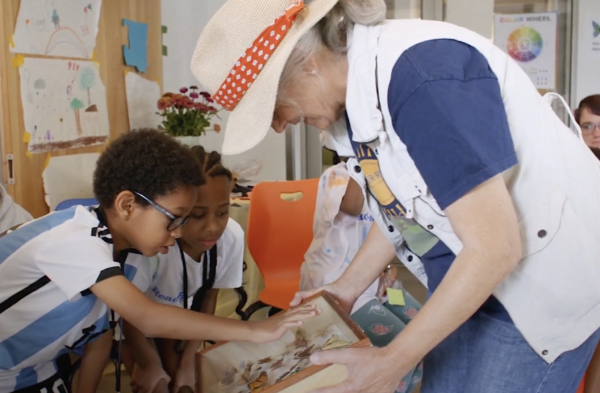
Connecting kids to actual things they read about (in this case butterflies) helps build a love of reading (Photo courtesy Read-a-Rama)
A club that grows a love of books
And this fall, kids will return to Club Read-a-Rama, an afterschool version of the camp that will serve children at the Compass Broadview affordable housing development from Sept. 30 to Nov. 18. At a cost of $175 for eight sessions kids ages 4 to 11 will sing, dance, play, and read with trained staff as well as take home books for their own libraries (register at read-a-rama.org/camp-registration).
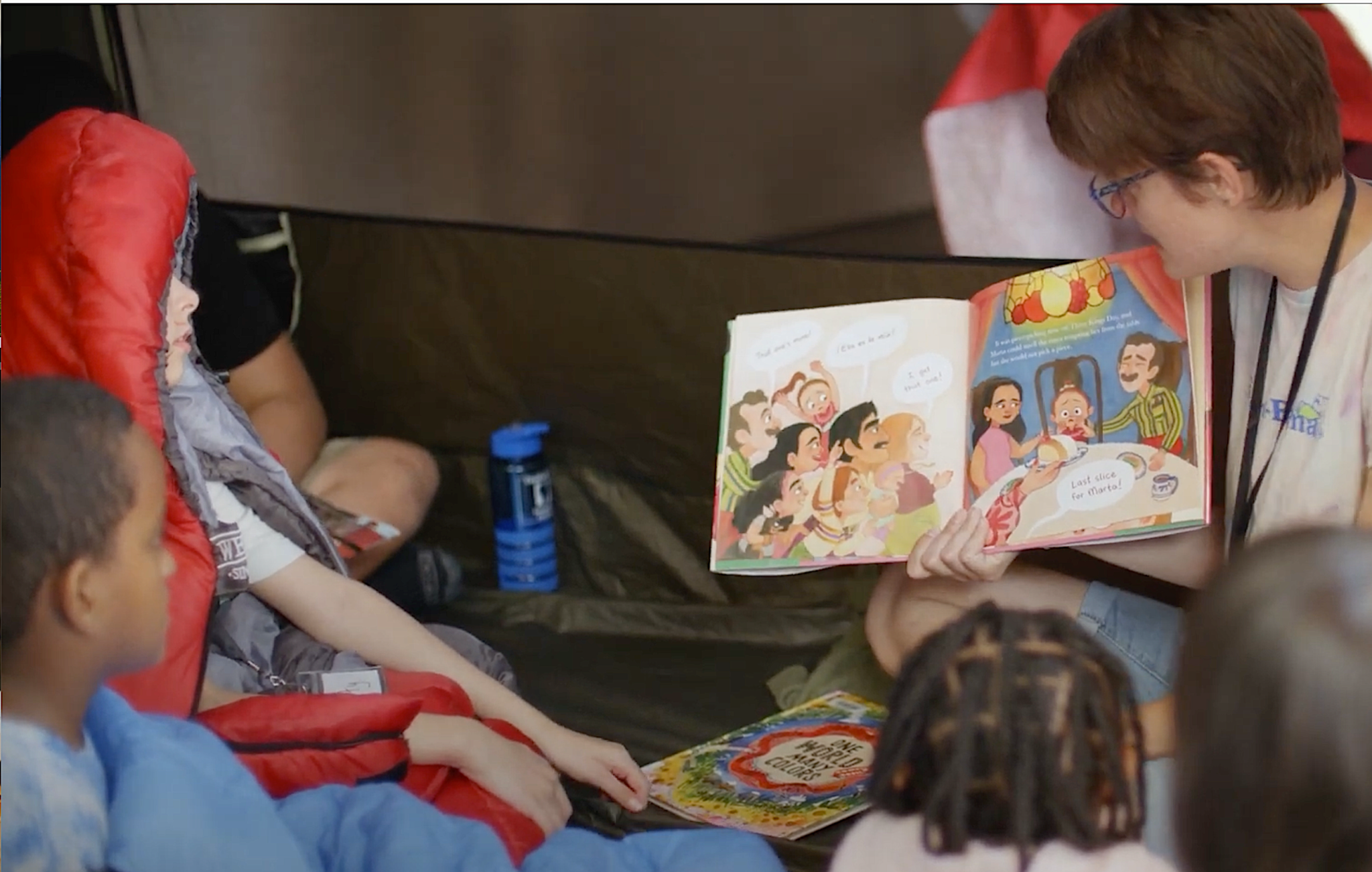
Both camp and club programs pair songs, crafts, outdoor activities, and field trips with selected books to get kids hooked on the printed page. If they read a story about baking bread, they bake bread; a book about swimming precipitates a trip to the pool. Much of it happens outdoors, where little bodies are freed from the confines of a classroom to wiggle and explore.
“Anything you read, there’s something you can do to enjoy it more. Anything you do, there’s something you can read to enjoy it more,” Martin says. “We think of Read-a-Rama as reducing the distance between books and life.
“A lot of times people see Read-a-Rama and think, ‘Oh, that’s just for passionate readers,”’ Martin adds, “No. We love the kids who can’t stand to read, or someone wrecked reading for them, or they are reluctant readers, or they may have learning disabilities, identified or unidentified. Read-a-Rama is for everyone. Our mantra is 100% engagement, 100% of the time.”
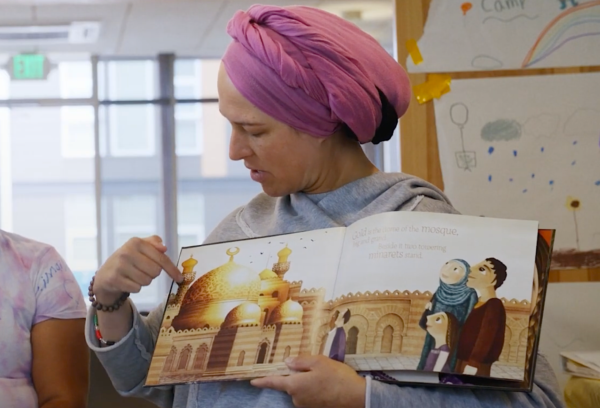
Kids should have access to books with characters who look like them (Photo courtesy Read-a-Rama)
All kids need to see themselves in books
Martin is keenly focused on helping black and brown kids and uplifting diversity in children’s literature. “You’re much more likely to see yourself in children’s literature if you’re a white child or a bunny than a child of color,” she says. That self-recognition is crucial for young readers, but the Trump administration’s attacks on diversity efforts in education have deeply harmed ongoing efforts toward representation.
“Small publishers that work in diversity have told me that 70-80% of their budgets are now gone because schools and libraries aren’t buying their books,” Martin says. “The holes that are being dug right now are going to take decades to reverse.”
In the face of these daunting challenges to child literacy, Martin persists. Earlier this year, Camp Read-a-Rama became the broader nonprofit Read-a-Rama organization when it launched a national online educator training effort. The organization has already seen some of its former students come full circle. Siblings Kevin and Karina Louis-Jeune were campers at 9 and 10 years old and went on to become Counselors-in-Training. Then, Kevin was hired on as a staff member this year.
“Seeing all those kids in the same place where I had been was a real full circle moment,” Karina says, “I got to show them that reading was something fun they could do on their own.”
“I was in a position to flip these kids from thinking reading was a chore to seeing it as something they could enjoy that could have a big impact on their life,” Kevin adds. “I was really into space as a kid but that’s not something they taught much in school. I realized if I wanted to learn about it I would have to read about it on my own. Now I’m headed to Florida A&M to study astrophysics.”
Bring stories alive
Charisma Ross is the mother of two kids—one of whom has dyslexia—who attended Camp Read-a-Rama and she speaks of Martin reverently.
“She was made to lead children in the right direction,” Ross says, “Get on one of her [online] storytimes and see how she interacts with the students to bring stories alive! The book they had the other day didn’t even have any words, just pictures, and she was asking, ‘What do you think the characters would say if they were talking?’”
In addition to the complete Camp Read-a-Rama educator training that’s available online, Martin has plenty of advice for caregivers hoping to instill their kids with a passion for books. She encourages them to ask critical thinking questions that take kids into the text (“Why do you think he said that?”) instead of the usual “text-to-self” questions parents normally ask (“There’s a grandpa in the book, do you have a grandpa?”)
The bottom line for making children into passionate, lifelong readers, according to Martin, is to encourage their innate curiosity by discovering and feeding their interests however you can:
“Find the books that kids love, period.”
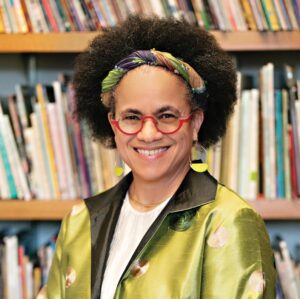
Dr. Michelle Martin, co-founder of Read-a-Rama (Photo courtesy Read-a-Rama)
Dr. Martin’s child literacy advice for parents
- Self-selected reading is important. “Let kids guide what you read. Take them to a library and find a good librarian who knows the children’s lit landscape.”
- Feed their interests. “Find the books that are their jam–they might not even know they have a jam but you can help them to find it.”
- Find ”just right” reading. “Pitch the level so it’s not too difficult but a little bit challenging.”
- Don’t discriminate against graphic novels. “I personally don’t care for Dogman but I will read it to a child til the cows come home.”
- Expose them to as many books as possible, however you can. “Turn on an audiobook when you’re not available to read with them. Ear reading is as important as eye reading.”
- Give kids credit. “Acknowledge them when they notice things that you did not see.”
- Reading and writing go together. “You really have to pair them to encourage the growth of both.”