
Being a parent is nonstop hard work, making it challenging to stay on top of news that impacts families in Washington state. This Hits Home is your weekly hit of news, commentary, and, occasionally, opinion. Want to have a say? Look for the “Take action” prompts. Here’s the update for the week of Sept. 7-13
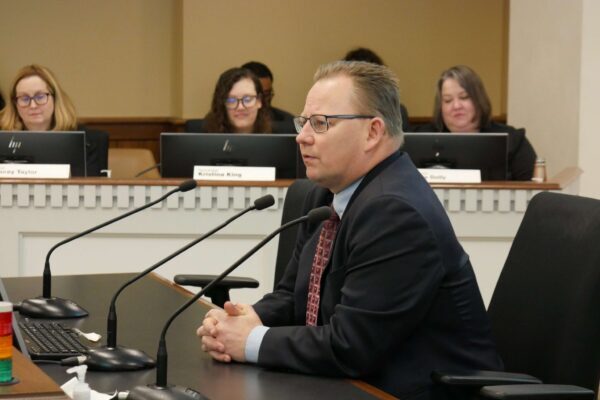
Superintendent of Public Instruction Chris Reykdal (Photo by Bill Lucia/Washington State Standard)
Reykdal seeks $2B infusion for WA public schools in next budget
Washington State Schools Superintendent Chris Reykdal announced this week that he will be bringing a multibillion-dollar budget request to the 2027 session of the Washington State Legislature. Reykdal said he wants lawmakers to approve $2 billion more for the 2027-2029 biennium than they did for the biennium that ends on Dec. 31. That much is needed, he said, to ensure the state meets its legal obligations to “amply” fund basic education for Washington’s 1 million K-12 students.
The state’s constitution requires that basic education be amply funded following a landmark Washington State Supreme Court case known as McCleary. In 2012, the court ruled the state was underfunding schools, a situation rectified by 2018, but which Reykdal says is slipping again. The remainder of the budget request is to expand learning assistance for students from low-income families and restore funding to the popular Transition to Kindergarten program. Reykdal doesn’t expect getting the request through the legislature will be easy.
“We understand it’s going to be a heck of a battle up there,” he said in a news conference. “We fundamentally believe that we are no longer being amply funded, that the constitution is not being met and the Supreme Court order in McCleary is not being met. We’re urging lawmakers to get to their constitutional duty before everything else.” Read the full story.

Mr. Monopoly is looking for recommendations on what locations to include on a new Seattle version of the game (Photo courtesy Top Trumps USA)
Mr. Monopoly is coming to Seattle. Top Trumps USA, the American arm of Winning Moves International, will release MONOPOLY: Seattle Edition on October 21, 2027, under license from Hasbro. The localized board will swap out the game’s classic Atlantic City properties, like Boardwalk to Park Place, for Seattle businesses, nonprofits and landmarks, with a custom Community Chest, Chance cards and Monopoly Money to match. “Seattle is such a unique community with rich history,” said Jennifer Tripsea, a Top Trumps representative, in an annoucement. “We aim to ensure that MONOPOLY: Seattle Edition is an accurate portrayal of what Seattle locals and tourists love about this charming city.”
Get your family involved in shaping what the board looks like before it’s printed. Members of the public are invited to nominate favorite Seattle spots, from neighborhood institutions to well-loved landmarks.
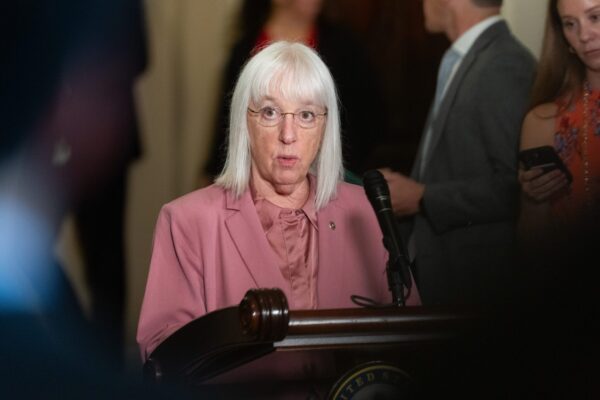
U.S. Sen. Patty Murray (D-Washington) (Photo coutresty Murray’s office)
Sen. Murray lashes out at plan to pay a stay-at-home parent for married couples — just married couples
“It’s not the 1950s in America.”
That’s the message U.S. Sen. Patty Murray wants members of Congress and anyone else who’ll listen to hear about the Trump administration’s plan to take federal dollars intended to help cover child care costs for working parents and give them to families where parents are married, and one stays home to parent.
Murray, a Democrat and ranking member of the Senate Appropriations Committee, lambasted the proposed policy this week, calling it an attack on single parents.
“Our government shouldn’t punish people for being single parents or choosing not to marry,” Murray said. “There are hundreds of thousands of families stuck on waiting lists who are eligible for very limited federal child care subsidies—you don’t get to skip the line because you have a marriage certificate.
“I will not allow this President to tell single moms that their kids matter less,” Murray said. “This is an illegal and backward move to deny single parents and unmarried couples federal funding they should be entitled to.”
Under the proposed rule, pushed by Vice President JD Vance, married parents who want to stay home with kids rather than work or go to school themselves would be eligible for federal child care subsidies. The money would come from the Child Care and Development Fund, created to help working parents and those attending school afford child care. The majority of parents who benefit from the fund currently are single working mothers, and critics like Murray say the proposal would make more people eligible for the limited funds and that single working mothers would pay the heaviest price.
“There are hundreds of thousands of working families who qualify for federal child care assistance on waiting lists,” Murray said. “Nobody cares what JD Vance thinks constitutes a ‘real’ family—single parents and parents who aren’t married pay taxes, too. Raiding an underfunded program solely to score culture war points is not pro-family—it’s a wasteful grift that I will fight every step of the way.” Read more on the story.

(Photo courtesy Mobile Integrated Health)
A great idea: Urgent Care that comes to you
I know they did it because it’s hard to get off an island when you need medical care, but can you imagine this, Seattle parents? A doctor’s visit that happens in your own front yard, no ferry line, no waiting room. That’s essentially what’s now available on Vashon Island, where a taxpayer-funded mobile health team — a physician assistant, a nurse practitioner, two RNs and two social workers — makes house calls five days a week for urgent, non-emergency needs. It may not be cost-effective for a city the size of Seattle or a bigger inland region like King County, but we can dream about seeing Mobile Integrated Health Vashon Fire & Rescue replicated widely. Someday, even, a big city like Seattle. Read a great article and photo in this story from the Seattle Times.

(Photo by Adam Kaz / iStock)
WA families using Affordable Care Act insurance face average 22% rate hike
For an estimated 3,000 to 5,500 local families navigating the gig economy, freelancing, or running a local small business, securing health insurance is a high-stakes balancing act. They earn too much to qualify for the state’s public Apple Health for Kids safety net, which covers children up to 317% of the Federal Poverty Level. Yet because they lack access to traditional employer-sponsored benefits, parents must navigate the private insurance marketplace on their own. Buying commercial plans through the Affordable Care Act via the Washington Health Benefit Exchange is the only way to keep their kids covered and their household budgets intact.
But after a major rate hike last year, those local families and another quarter million Washingtonians are bracing for another double-digit jump in premiums. Insurance Commissioner Patty Kuderer confirmed Wednesday that average rates on the ACA exchange will climb 22.2% on Jan. 1. The increase follows a wave of coverage cancellations tied to expiring federal tax credits–the same fight that triggered last fall’s extended government shutdown. Read the full story.
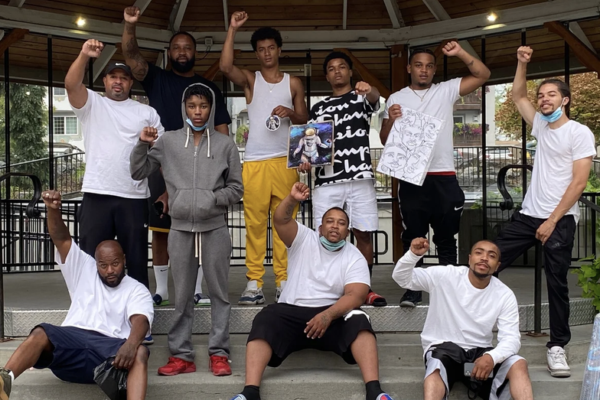
Members of the Community Passageways street team (Photo courtesy Community Passageways)
Community Passageways receives funding
Rainier Beach’s Community Passageways street team will keep walking kids through that neighborhood to keep them safe and help reduce violence, at least through June 2027, thanks to a save from Seattle Mayor Katie Wilson.
According to a report this week in the South Seattle Emerald, Wilson pledged $350,000 in city funding to keep 13 violence prevention “street team” staff on the job. This summer, an announcement that an organization contract with the City would end led parents and community groups to rally to save the program. At a tense July forum on the cuts, one parent said losing the team amounted to “another death for the kids.”
The new city funding will cover six Southeast Street Team staffers, allowing them to continue safe-passage and violence-prevention work in the Rainier Beach corridor on weekdays. Read the full story in the Emerald.

(Photo courtesy Page Ahead Children’s Literacy Program)
Seattle’s Page Ahead Children’s Literacy Program wins Library of Congress award
A Seattle nonprofit that distributes books to kids across Washington has been named a Successful Practices Honoree in the Library of Congress’s 2026 Literacy Awards, according to a Tuesday announcement from the organization, Page Ahead Children’s Literacy Program. The local program is the only Washington state group honored this year.
The Library of Congress program recognizes organizations for specific literacy practices. Page Ahead was cited for its approach of pairing book choice and book ownership with support from a trusted adult. Book access is the cornerstone of the organization’s work. In an email, Page Ahead Development Manager Debra Carnegie pointed to Page Ahead’s flagship program, Book Up Summer, to illustrate the organization’s approach and impact. The book fair–based three-year program helps build literacy skills and home libraries for kindergartners, first graders, and second graders at elementary schools in majority low-income communities.
“Book Up Summer is based on proven research that shows when you give kids the chance to pick free, brand-new books for summer reading at book fairs, they are less likely to experience the summer slide of learning loss,” Carnegie wrote. “We are thrilled for the recognition of our work, but more importantly, that this award enables us to serve more children across Washington.”

(Photo courtesy Seattle Public Schools)
Universal school meals roll out in Seattle schools
About a dozen Montlake Elementary students spent Tuesday afternoon as unofficial cafeteria consultants, working through a spread of dishes the district is weighing for future menus—from teriyaki salmon and vegetable yakisoba to Hawaiian-style beef stew. The kids weren’t the only ones getting a taste of what the district will be feeding students in its new universal free meals program. Mayor Katie Wilson, who was instrumental in pushing funding for the free meals, and SPS Superintendent Ben Shuldiner were right there with them.
Roughly half of SPS’s 106 schools were already serving free meals to every student through existing state and federal programs before this week, according to SPS. According to the Mayor’s office, that meant about 6,800 students in schools not serving free meals universally were falling through the cracks of food insecurity. The new policy fills that gap districtwide, guaranteeing one free breakfast and one free lunch per student per day no matter where they attend or what their family earns.
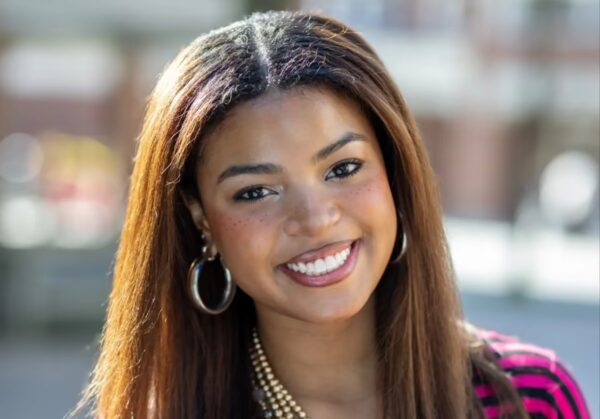
Doodle for Google winner Kameirah Johnson (Photo courtesy Kameirah Johnson)
Doodle for Google winner gives $50K prize to Rainier Beach High School
She graduated from Lakeside High School, but the artist and national Doodle for Google winner is using the prize money to help a school with more students that look like her. Kameirah Johnson, who is Black, donated the $50,000 school technology package she won in the Google competition to Rainier Beach High School instead of her alma mater. Black students make up upwards of 41% of Rainier’s student body.
Johnson, now a New York University (NYU) freshman, was chosen as the Doodle winner from “tens of thousands” of submissions, according to Google. Her winning image celebrated Black hair.
“My superpower is my hair and the family history it carries,” Johnson wrote of her entry. “Each texture and style holds culture, care, and survival passed down without words. Lying in the grass, our crowns rest without weakening. This kinky hair refuses conformity; it makes us different. Shaped by our lineage, our hair is undeniably beautiful.” For a great read on this gift, head to South Seattle Emerald.
Of her gift to Rainier Beach High School, Johnson brushed off the enormity of the act: “Everything I do is for the people,” she said in a video posted on social media. “Rainier Beach has one of the strongest, most talented, most resilient communities in our region. And I wanted to invest in a school full of kids who look like me, dream like me, and deserve every opportunity to create and succeed.”
Amazon padded the bay count in Seattle, but we’re still on a fertility slide
University of Washington demographer Sara Curran traces an odd wrinkle in Seattle’s population data back to Amazon: the company’s hiring boom in the 2000s drew huge numbers of young workers into the city, and enough of them eventually had kids there to nudge up the city’s count of children, even though Seattle still ranks among the least kid-populated major U.S. cities.
KUOW reports that the count actually rose 10% over the last decade — a reversal of the pattern in most big cities, where numbers of children decreased over that span, according to Wall Street Journal data. Curran cautions the shift looks more dramatic than it is, since Seattle started from such a small base of kids to begin with. It also hasn’t reversed the city’s broader fertility slide: births per 1,000 women of childbearing age fell from 55 in 2010 to 31 in 2024, the second-lowest rate of any major U.S. city. And Curran doesn’t expect the bump to last — Amazon’s growth has since stalled into layoffs and hiring slowdowns, meaning the young workers behind the trend are aging past their child-rearing years, and Curran says it’s an open question whether their kids will remain city residents once they’re grown, given the cost of living in Seattle. Read the full story.

(Photo courtesy of Rainier Beach Playfield Skatepark)
New Skate Park to open in Rainier Beach
A new skate park will officially be ready to roll outside the Rainier Beach Community Center later this fall. When it is, it will be thanks to community changemaker Danielle Jackson and the organization she co-founded: C.H.A.M.P.S (Changing Habits and Motivating Personal Self-Esteem). According to a report last week in the South Seattle Emerald, the park was born of Jackson’s experience seeing skaters barreling down the roads and her, as well as the broader community’s, determination to create a space where those on boards, bikes, or feet could recreate together safely. The end result? The new 31,000-square-foot park includes a skating bowl, walking path, and more. Read the full story.
seat

Ben Shuldiner, Superintendent of Seattle Public Schools (Photo courtesy Seattle Public Schools)
LISTEN: Seattle schools chief on school safety, meals, AI in schools
Seattle Public Schools Superintendent Ben Shuldiner was featured this week on KUOW’s Sound Side podcast, addressing an array of topics and listener questions. He doesn’t say anything new about teacher contract negotiations. The interview with Shuldiner starts at 12 minutes and 20 seconds (12:20)into the podcast.

(iStock)
Why you should vote no on Initiative | Op-Ed
By Cheryl Murfin
A handful of kids. That’s it. According to The Seattle Times editorial board, roughly 10 to 12 transgender girls — out of about 80,000 girls participating in Washington school sports — would be affected by the passage of Initiative 26-638 . The measure on the Nov. 3 ballot would ban transgender girls from school sports in Washington. But while approving the initiative on Election Day would affect few kids, it would be a black mark on a historically progressive, inclusive, forward-moving state.
Washington was an early adopter of policies addressing transgender students in school sports. In 2007, the Washington Interscholastic Activities Association became the first state high school athletics association in the nation to adopt a policy governing transgender athletes. In 2008, the association determined that high school students would be allowed to participate on teams consistent with their gender identity.
Nearly two decades later, Washington lawmakers had another opportunity to weigh in when Initiative 26-638 was submitted to the Legislature in January 2026. Lawmakers didn’t take up the measure or propose an alternative before the legislative session ended.
Yes initiative backers collected more than 444,000 signatures to bring it to the ballot. But as a whole, our state has stood by the principle of inclusion. We legally pushed back in court against a 2025 presidential executive order seeking to force schools to ban transgender girls from girls’ sports or risk losing federal funding. And, in our public schools, transgender students have the right to use the restroom that corresponds with their gender identity.
When it comes to supporting transgender kids, Washington hasn’t folded, nor should we.
Our history here is, for the most part, one of moving forward with civil liberties, not backward.
As The Seattle Times editorial board points out, Initiative 26-638 raises another concern: what would be required to verify a student’s sex. The initiative says verification may rely on a student’s reproductive anatomy, genetic makeup or naturally produced testosterone levels.
This initiative is a slap in the face of Washington’s determination to prevent that kind of slide and voters’ proven resolve to accept kids for who they are, not their physical attributes.
You are a 12-year-old girl who just wants to play sports with peers who reflect how you see yourself.
You are that girl standing in a doctor’s office while they are looking at your genitals or using other invasive means to verify your birth gender.
You are one of 80,000 girls who would stand in that same spot if this initiative passes. That’s because the sex-verification requirement would apply to all students seeking to compete in covered girls’ sports, not just transgender students.
Imagine how you’d feel. Imagine that invasion 80,000 times.
Vote NO on Initiative 26-638.
For more on these and several more really good reasons to vote no, don’t miss the editorial “Seattle Times recommends ‘No’ on I-638, ban on trans girls in sports”


