Being a parent is nonstop hard work, making it challenging to stay on top of news that impacts families in Washington state. This Hits Home is your weekly hit of news, commentary, and, occasionally, opinion. We pull aggregate our briefs from local and national news organizations in one place — and link you to the full story. Want to have a say? Look for the “Take action” prompts. Here’s the update for the week of July 13-19.

(Image: iStock)
State attorneys general urge Congress to reject ‘KIDS Act’
Washington Attorney General Nick Brown has joined 43 other state and territory attorneys general in urging Congress to reject the KIDS Act, H.R. 7757, a bill whose preamble purports to “protect children and teens online, empower parents and strengthen families.” In a letter to the U.S. House and Senate, Brown and the coalition called that framing misleading. Instead, they said, the bill would insulate Big Tech from appropriate oversight and accountability and imperil the young people it purports to protect.
A recent blog post by Children’s Alliance, Washington’s statewide child advocacy organization, echoes the warning:
“In reality, the KIDS Act would undermine protections for youth online.”
Brown said the objection to H.R. 7757 centers on how much ground the bill would take away from states. The KIDS Act touches on online obscenity, harms to minors, social gaming platforms, and AI chatbots, and in each of those areas, it would override state laws already on the books — including several the signing states passed specifically to address these problems. The letter also flags what’s missing from the bill: it “expressly disavow[s] any duty of care” for platforms and negates the platform’s obligation to verify user age. It also, according to Brown and other attorneys general, creates a “gaping enforcement loophole” around AI chat features.
“For years, tech companies have placed profits ahead of the safety of our children, designing platforms that are so addictive that kids forgo sleep, play, and in-person socializing just to keep scrolling,” Brown said in a release. “Because Congress refuses to act, they should get out of the way of states advancing sensible legislation to protect kids from damaging content online.”
The coalition isn’t opposed to federal action broadly — several signers back a competing bill, the Kids Online Safety Act (S. 1748), which they say “preserves states’ authority to enact laws, rules, or regulations that similarly protect children,” bars companies from using kids for product research, and actually requires that duty of care the KIDS Act leaves out. Technology is moving faster than Congress, say the attorneys general, and that’s why states must retain their authority.
“Technology is rapidly evolving, and each state is facing slightly different problems due to the predatory nature of many online products,” the Children’s Alliance explained. “It is crucial that federal laws don’t become obstacles for state legislators to nimbly respond to changes in technology and the evolving needs of their residents.” Read the full letter to Congress.
TAKE ACTION: Do you have an opinion about ensuring states have the right to protect kids from harmful online platforms? Contact your members of Congress and make your voice heard.

(iStock)
Be on the watch for explosive diarrhea
So far, King County has not seen a spike in cyclosporiasis, the disease caused by Cyclospora. A growing outbreak has infected thousands across the U.S. Cyclospora, the main symptom of which is explosive diarrhea. County health officials are watching for local cases of the parasite. In the meantime, Ann Shen, the lead for foodborne and enteric disease investigations for Public Health – Seattle & King County, answered a lot of questions parents may have in a helpful post on Public Health Insider, the health department’s blog. Read the blog to know what to look for and how to prevent ingesting Cyclospora.

(Photo courtesy Public Health — Seattle & King County)
Rabid bat found on sidewalk near UW
A rabid bat was found in Seattle on July 15, 2026, on the sidewalk on University Way Northeast, between NE 41st and NE 42nd streets. This is near Parrington Lawn, on the University of Washington campus, and is a busy area with many businesses.
Anyone who might have had physical contact with this bat (even if not bitten) could be at risk and should seek medical evaluation immediately or call Public Health at 206-296-4774 to determine if rabies preventative treatment is necessary.
Rabies is a life-threatening disease, but it can be prevented if treatment is given before symptoms appear.
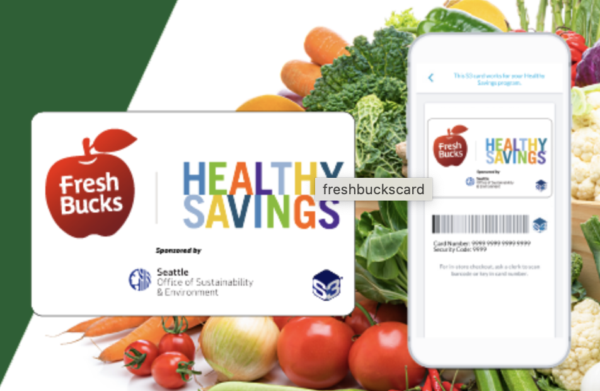
Send those Fresh Bucks out!
Rep. Pramila Jayapal wants every state to have what Seattle already has: a monthly cash boost just for buying produce. The Seattle Democrat introduced a bill this month that would take the city’s Fresh Bucks program national, offering $60 a month to households earning 80% or less of their area’s median income to spend on fruits and vegetables. Seattle’s version, funded by the city’s soda tax since 2012, has posted real results — a University of Washington study found participants were 31% more likely to be food secure and ate three or more daily servings of produce 37% more often than families on the program’s waitlist.
Jayapal isn’t pretending the bill has a shot this session. Democrats hold neither chamber, and even within the party, progressives remain a minority faction. Instead, she’s treating the introduction as groundwork: get cosponsors on record, build outside support, and have the policy ready to attach to something bigger — a future Farm Bill, for instance — if Democrats retake the House and Senate after the midterms. “You tee it up for when it can pass,” she told the Seattle Times.
That patience is part of a broader bet Jayapal is making on where her party is headed. Pointing to a string of progressive primary upsets around the country, including wins over sitting Democrats, she argues the party’s future leverage depends on energizing disillusioned voters with concrete, bread-and-butter wins rather than chasing the political center. A $60-a-month grocery credit, she said, is a small enough ask that it could even pick up a Republican cosponsor — proof, in her view, that helping families afford food shouldn’t be a partisan fight in the first place. Of the 353,019 households in Seattle, about 70,000 include kids, and about one third of those earn less than 80% of the area median income to be eligible for Fresh Bucks. Read the full story at the Seattle Times.
TAKE ACTION: Want to see Fresh Bucks go national? Contact your members of Congress.

(iStock)
Mayor’s free student meals hit a snag
Mayor Katie Wilson’s plan to give every Seattle Public Schools student a free breakfast and lunch is running into resistance at City Hall, months before it’s set to launch. City Council President Joy Hollingsworth and Councilmember Dionne Foster introduced amendments this week that would push the rollout of universal school meals back a full year, to the 2027-28 school year, and redirect roughly $3 million toward a separate voucher program aimed specifically at feeding low-income kids during weekends and school breaks. About half of SPS schools already offer free meals to all students; Wilson’s plan, funded through the $1.3 billion education levy voters approved last fall, would have extended that to every school this coming fall.
Foster has framed the delay as a hedge, not a rejection — a way to protect the program’s long-term funding while it’s still uncertain whether Washington’s new tax on high earners, which is supposed to help pay for the meals starting in 2029, survives the legal and ballot challenges already lined up against it. A second amendment would strip more than $920,000 from Wilson’s preschool voucher pilot, which was meant to help families stuck on waitlists for the Seattle Preschool Program, and instead steer that money toward the same low-income meal voucher effort.
Wilson isn’t on board. In a statement, she said hungry kids can’t be expected to wait out a budget hedge, and that she’d already built contingency funding into the levy plan to keep the meals program solvent through 2031. The council’s FEPP levy committee is set to vote on the amendments — one piece of an 11-item package of proposed changes to Wilson’s implementation plan — at its next meeting on July 22. Read the full story in The Seattle Times.

Gov. Bob Ferguson (Photo courtesy the governor’s office)
FAFSA required for graduation?
Gov. Bob Ferguson wants filling out a financial aid application to become as routine for Washington seniors as passing algebra. His proposal, announced Monday, would make completing the FAFSA (or the state’s alternative for students without permanent immigration status, WASFA) a graduation requirement, with an opt-out option for families who sign off on skipping it. He plans to push lawmakers to adopt the rule when the legislative session opens in January. The motivation is straightforward: roughly half of Washington families qualify for some kind of college financial aid, yet the state finished 47th nationally last year in the share of seniors who actually filled out the paperwork to claim it. “You’ve got to complete this form” to unlock that money, Ferguson told reporters, calling Washington’s aid programs among the most generous in the country.
Ferguson isn’t starting from zero. A campaign and advisory board he launched last fall has already nudged this year’s senior class ahead of last year’s pace, though the state has only climbed to 40th in the country, which he’s called nowhere near good enough. A few districts have shown what’s possible without a state mandate. College Place School District, which already requires the form, has three-quarters of its seniors completing it. Whether a statewide rule is the right lever is still being debated. The Washington State School Directors’ Association hasn’t taken a position, but its director says school boards are already worried about who pays for the extra support students would need, and whether a paperwork requirement could end up holding up someone’s diploma. State Sen. Lisa Wellman is on board and expects the cost to be minor, framing it as a natural extension of the High School and Beyond Plan students already have to complete.
The push is landing alongside a separate, broader idea from State Superintendent Chris Reykdal, who wants seniors to take a full-year class covering financial literacy and civics, FAFSA included, rather than treating the form as a standalone requirement. Reykdal says he supports Ferguson’s goal but is asking lawmakers to consider his version instead. The State Board of Education, which is already rewriting graduation requirements, is expected to decide next month whether Reykdal’s course becomes part of that package. Read the full story from Washington State Standard.
TAKE ACTION: Have an opinion about schools requiring kids to fill out the FAFSA before they graduate? Contact the Washington State Board of Education or Gov. Ferguson’s office.

Mifepristone tablets in box. RU-486 Medical abortion pills. Used in combination with misoprostol (iStock)
Abortion medication available in WA
Washington is now one of the first places in the country where you can pick up abortion medication before you’re even pregnant — a kind of insurance policy tucked in the medicine cabinet. Planned Parenthood’s regional affiliate, which covers Washington, Hawai’i, Alaska, Indiana, and Kentucky, launched the program in Washington and Hawai’i this spring, offering mifepristone and misoprostol — the same two-drug combination used in medication abortions for decades — to patients 18 and older who aren’t currently pregnant but want the option on hand if they ever need it. It’s available through telehealth or in person at any of the affiliate’s 16 clinics across the two states, either as its own appointment or tacked onto a routine visit, and runs about $150 out of pocket since insurance won’t cover it.
It’s a different tool than emergency contraception, which only works in the narrow window right after sex to prevent a pregnancy from starting. This is meant for later — if someone gets pregnant and decides not to stay pregnant, the medication is already there rather than something to track down under time pressure. Dr. Colleen McNicholas, the affiliate’s chief of clinical transformation, said the appeal isn’t really about whether an appointment is available when the moment comes; it’s about not having to scramble to arrange child care or find a private way to take time off work once a decision’s already been made.
Uptake has been modest so far — fewer than 100 patients had used the option a month in, according to McNicholas — but she said that tracks with what she expected, since most people simply haven’t been trained to think about abortion care as something to plan for ahead of time rather than react to in the moment. She said interest is coming from two different directions: people worried their birth control could fail, and people watching federal regulators for signs the FDA might restrict access to the medication down the line. The pills are good for about two years on the shelf, and providers tell patients the plan is to use them in the state where they got the prescription. Read more at KUOW.

(Photo by Carmen Murilla / iStock)
Teen gambling is up in WA
Data from the recently released 2025 Healthy Youth Survey show an increasing trend among teens: one in eight 10th graders answered the question “Have you gambled in the past 30 days?” with ‘Yes.’ That’s more kids than said they’d used drugs or alcohol in those same 30 days. And it’s going up: 9% of tenth graders self-reported gambling in 2021 compared to 12.7% in 2025. According to a report by Cascade PBS, young people who gamble think they are going to make money. Check out The Newsfeed series on the survey from Cascade PBS.
(CC 2.0)
Seattle’s braille library now open
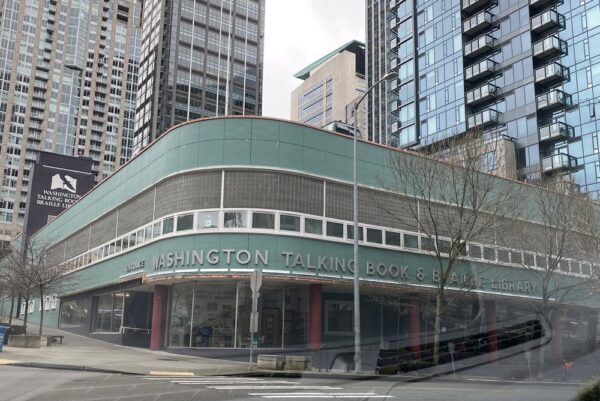
If you have a blind child who loves a good story, you — and they — are in luck. The Washington Talking Book & Braille Library, the state’s only braille library, is now open again at its South Lake Union location, after a year of closed doors. The library includes books for early learners, elementary readers and teens and welcomes walk-in visitors.
The library offers a range of materials from audiobooks and braille books to braille e-readers. Prior to its year-long closure due to budget cuts, it served around 7,800 visitors annually. Along with the re-opening come new offerings for kids, including:
- Multisensory Storytime on Wednesdays from 11 a.m. to noon will include stories, songs, and dance and 30 minutes of playtime in the library’s conference room.
- Virtual Multisensory Storytime will be offered on the library’s YouTube Channel.
- Storytime Kits and Early Literacy Kits: Parents and other caregivers are invited to request kits to be mailed directly to their home. (email [email protected] for more information).

(Photo from Seattle Human Services)
Free summer meals for kids
If keeping your kids well fed during the summer is a struggle, the Free Summer Meals Program is ready to help. The program provides any child or teen ages 1 to 18 and living in King County with a free lunch or snack — no registration, ID, or application needed. The program is a partnership among Seattle Parks and Recreation and the City’s Human Services Department and United Way of King County. Simply find a meal site (usually at community centers and parks) and head there Monday through Friday between noon and 2 p.m. Snacks are handed out until 4 p.m. Read more about the program at KUOW.

(iStock)
Leaders oppose overhaul of federal grant funding rules
Gov. Bob Ferguson joined 22 other Democratic governors this week in a stern warning to federal officials: A proposed overhaul of federal grant funding rules could defund maternal health programs.
Washington and the other states, all part of the Reproductive Freedom Alliance, submitted a joint comment Monday opposing the U.S. Office of Management and Budget’s (OMB) plan to change how federal grants are awarded, overseen and canceled. Ferguson has repeatedly stepped in to protect reproductive health funding in Washington, including covering an $11 million gap after Congress cut Medicaid reimbursements to Planned Parenthood.
The proposed rule would give political appointees a say in which grants get funded and allow federal agencies to cancel awards at any time, without warning. Governors say that could destabilize programs like CDC-backed maternal health collaboratives and rural maternal care grants. These Seattle or King County agencies or programs could be threatened by the proposed rule:
- Family planning clinics across Seattle and King County — including Planned Parenthood’s Seattle-area locations and county health clinics. They receive funding through a federal program that’s already being challenged in a lawsuit over new political screening requirements.
- A statewide effort to make childbirth safer, called the Washington State Perinatal Collaborative, relies on federal money and has a nurse assigned to King County. That funding could be pulled with no warning under the new rule.
- Public Health – Seattle & King County runs federally funded programs that support new and expecting parents, including home-visiting nurses for new moms and pregnancy support services. The county has fought off a federal funding cut to a similar program before, so this isn’t a new fight, just a possible new front.
Early childhood leaders oppose OMB rule change
Washington’s statewide Head Start network has added its voice against the same federal grant rule overhaul that’s drawn opposition from the state’s Democratic governors, warning it could destabilize preschool classrooms for low-income families. The Washington State Association of Head Start and ECEAP filed formal comments opposing the Office of Management and Budget proposal, arguing it would give federal officials broad new power to suspend or cancel Head Start grants using vague criteria, while also reviving diversity, equity, inclusion and accessibility restrictions that a federal court has already struck down once for conflicting with the Head Start Act.
Joel Ryan, the association’s executive director, called the timing of the proposed funding rule change especially precarious because federal money covers about 80% of the average Head Start program’s budget in Washington.
“Even short-term funding disruptions can force classroom closures, interrupt services for children and families, and create instability for staff and local communities,” he wrote in an email to Seattle’s Child and in comments submitted to OMB last week. He also flagged new administrative burdens the rule could impose on programs already dealing with staffing shortages, as well as restrictions on the professional development and provider collaboration that many local programs depend on.
Ryan’s letter comes amid other signs of strain in the state’s Head Start system, including slower federal grant processing, which may force the closure of some programs as soon as the 2026-27 school year.
The comment period on the proposed rule change closed Monday after drawing more than 278,000 public responses. OMB says it plans to finalize the rule by Oct. 1. Read the full story from Stateline.
TAKE ACTION: Although the period for public discussion is closed, you can still make your voice heard on the rule change proposal before OMB. Contact your members of Congress. Contact OMB at (202) 395-3080 or send a fax to (202) 395-3888
Students can help shape policy. Teach us how | Op-Ed
I love to hear from students — their experiences, their hopes, their desires to be part of designing the future, which is theirs. Which is why I really appreciated reading Bellarmine Preparatory School rising senior Samantha Gobal’s recent essay in The Seattle Times.
As Samantha tells it, she spent years building advocacy skills before discovering she’d had the tools all along. After successfully pushing her school to add a Middle Eastern and North African identity option to its demographic forms, she assumed reaching state lawmakers required a different level of access entirely. As a junior, she hadn’t yet taken civics class.
“I always had the power to speak to my legislators, testify on bills or draft my own legislation — I just didn’t know,” she writes. And students should know they have that power well before senior year, she argues. Part of the problem, Gobal rightly suggests, is structural: state law sets the graduation bar at a single semester of civics, and some schools don’t get to it until senior year.
That gap isn’t just a scheduling quirk — it shapes how an entire generation sees its own power.
“I thought that because I was young and had no college degree, no one would listen to me, and I’d just have to wait until I was an adult,” Gobal writes. “However, I didn’t want to wait; and my guess is the 1.6 million youths in Washington state don’t want to either. And we don’t have to.” Gobel hits the nail of a problem on the head: young people stay out of politics because no one’s taught them how it works, and no one teaches them because so few young people are in the room to ask.
Gobal doesn’t let schools off the hook, but she isn’t waiting on Olympia either. She points to a bill that stalled this session — it would have given students an excused absence each term to testify or meet with lawmakers — and to outside groups already doing what classrooms haven’t gotten around to.
Gobal is not asking for a full curriculum overhaul. What she suggests is smaller and more doable. Solutions could be as simple as legislators visiting civics classes and field trips to the Capitol.
“A better civic education standard across Washington state can start with a specific district, school and even an individual student,” Gobal writes. “When one young person is able to incite changes in the issues they care about, all youths are empowered.” Read the full essay at The Seattle Times.
Permanent daylight saving time? U.S. House says, ‘Yes’
The U.S. House voted Tuesday to make daylight saving time permanent nationwide, passing the Sunshine Protection Act 308-117 in a bipartisan decision that could end the twice-yearly clock changes at least for the foreseeable future. The bill, introduced by Florida Republican Rep. Vern Buchanan, has backing from President Trump, though its fate in the Senate remains unclear. Washington Sen. Patty Murray, who co-sponsored an earlier version of the bill, urged Senate leadership to bring it to a vote, noting Seattle’s notoriously early winter sunsets as a reason for locking the clocks in place.
Not everyone agrees permanent daylight saving time is the healthier choice, however. Many sleep and health experts favor standard time instead, arguing that more morning daylight better supports the body’s natural rhythms. Rep. Madeleine Dean of Pennsylvania was the lone House member to speak against the bill Tuesday, pointing to medical research and a deadly stretch during the country’s brief 1974 experiment with permanent daylight saving, when several children died walking to school in the dark. For now, Seattle families should still expect the clocks to change as usual this fall, until the Senate decides where it stands. Read the full story.

I want to be a carpenter! (Photo by David Goehring / CC 2.0)
Your kid’s not alone when she says, ‘I want to be a carpenter!’
In a recent article, The New York Times reported that more Gen Z students are passing on a traditional four-year degree in favor of hands-on career paths, from wiring buildings to welding pipes to fixing HVAC systems. Their hunch? A toolbelt may be a safer long-term bet than a diploma as tuition keeps climbing and AI reshapes entry-level office work at supersonic speed. Two-year vocational and trade schools have seen enrollment climb by roughly a fifth over the past five years, the Times reported, and apprenticeship programs are drawing more interest too, even as many of these students say they’re still fielding resistance from parents and counselors who view trade work as a less desirable choice than college.
The trend is happening in our region as well. In its 2024-25 school improvement plan, staff at Seattle Skills Center, a free half-day program through Seattle Public Schools, confirmed the increase in enrollments. Aside from the skills center, the region has several public options built specifically for students who want tech or vocational training in or after high school, including Puget Sound Skills Center in Burien, which offers tuition-free training in more than 20 fields for students from Highline, Federal Way, Tukwila and Tahoma districts and specialty public high schools built around a single industry, including Raisbeck Aviation High School in Des Moines, Maritime High School in Burien, which runs a shipyard welding pathway, and the Ballard Maritime Academy at Ballard High School, which introduces students to shipbuilding, boat design, and commercial fishing. Read the full article in The New York Times.