Being a parent is nonstop hard work, making it challenging to stay on top of news that impacts families in Washington state. This Hits Home is your weekly hit of news, commentary, and, occasionally, opinion. Want to have a say? Look for the “Take action” prompts. Here’s the update for the week of April 5-12.

(Image: Humanities Washington)
Governor vetoes funding for popular family reading program
Gov. Bob Ferguson’s decision to veto $300,000 in funding for Washington’s Prime Time Family Reading Program is raising questions among educators and advocates who say the cut will have an outsized impact on families across the state. The veto came as part of a nearly $80 billion budget signed recently, where most major spending decisions remained intact—but this relatively minor line item did not.
The reading program, launched by nonprofit Humanities Washington in 2012, takes a family- and community-centered approach to literacy. Held in libraries and community spaces rather than classrooms, it brings kids identified by educators as struggling readers and their parents or other chosen adults together over six weeks to share meals, read, and discuss themes like empathy and justice—building both reading skills and stronger family connections. The program currently serves about 5,000 young readers, including those from immigrant, refugee, and tribal communities across Washington. Several thousand kids participate at program sites in King County.
Humanities Washington is “baffled” by Ferguson’s decision. The program was funded by the legislature to the tune of $1 million in both the 2021–2023 and 2023–2025 state biennial budgets. At first, it was not included in the 2025-2027 budget, but lawmakers later added the $300,000 allocation to the final biennial budget they approved in March. Ferguson did not contact Humanities Washington before the veto.
“That’s why it’s so surprising,” said Julie Ziegler, executive director of Humanities Washington. “$300,000 is a lot of money, [but] in the context of the state budget, it is very, very small — especially when you consider the impact of the program and how efficiently and effectively it’s administered.”
Without the state funding, Ziegler said the program will need to be cut back significantly and only be offered in communities where there are donations to cover it.” That largely means metro areas, leaving more rural communities without the support.
“We have more than 90 requests for the program for the year and will have to turn most of those down,” she said.
The governor’s office couched the veto in shortfall rhetoric: “We had to balance our budget in the face of a $2.3 billion shortfall,” said the governor’s Deputy Communications Director, Dan Jackson. “The Governor and the Legislature made many tough decisions to balance the budget, including difficult cuts. Instead of restarting funding with an additional one-time $300,000, the governor used those resources to protect core services for Washingtonians.”
Budget deficit or not, Ziegler stressed that she will be going back to lawmakers and the governor during the next legislative session. Read the full story.

(Image: C.Murfin)
New data shows national birth rate down even more—and Washington’s even lower
New data from the federal Centers for Disease Control and Prevention shows fertility and birth rates continue to fall across the U.S., while cesarean section procedures increased and preterm birth rates remained flat.
The 2025 provisional number of births fell 1% from the previous year to about 3.6 million births, and the general fertility rate also dropped 1% for women between the ages of 15 and 44. The decrease was a difference of 22,534 births. The national fertility rate is calculated as the total number of live births per 1,000 women of reproductive age.
The number of births has continued to slowly decline or remain flat since 2015, according to the CDC, and the fertility and birth rates among teenagers continues to fall by much larger margins. The teenage fertility rate has decreased by 72% since 2007, down another 7% last year for teens aged 15 to 19.
The most recent Washington data shows a fertility rate of 51.4 births per 1,000 women in 2023, already below the national average, according to the Centers for Disease Control and Prevention Stats of the States. New provisional federal data for 2025 shows the U.S. rate falling further to 53.1, continuing a steady decline (CDC provisional data brief). Seattle-area indicators point to even lower birth rates and a shrinking percentage of young children in the population. While updated Washington figures have not yet been released, the state has tracked the same downward trend for more than a decade.
The CDC data also found that the rate of C-section deliveries is the highest it’s been since 2013. Among those having their first child, the section rate in 2025 was 26.9%.
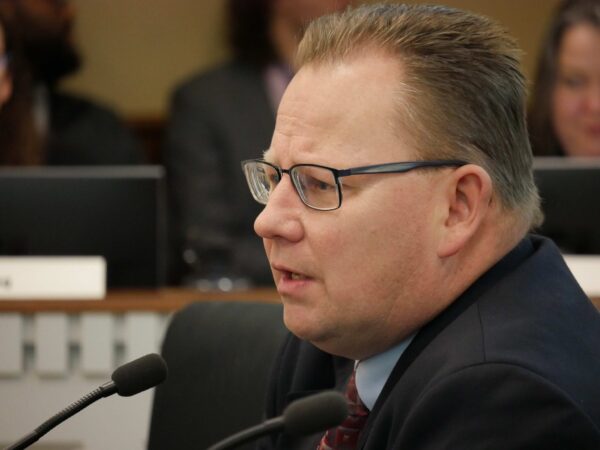
Superintendent of Public Instruction Chris Reykdal testifies during a committee hearing on Jan. 22, 2026. (Photo by Bill Lucia/Washington State Standard)
WA is lagging behind in national school phone limits movement
The state’s school chief says Washington is falling behind a national push to restrict smartphones in schools, arguing the state should move to a statewide standard rather than continue studying the issue.
In recent months, states have accelerated efforts to limit student phone use. Indiana advanced a stricter bell-to-bell ban, New Jersey adopted a statewide requirement that will make districts including Newark phone-free by fall, Michigan enacted a law requiring school policies with emergency-use provisions, and Hawaiʻi is moving toward broad classroom restrictions. Together, the measures reflect a shift toward tighter, more uniform rules aimed at reducing distraction and improving focus.
Washington, by contrast, did not adopt a statewide policy this year. Instead, lawmakers directed the Office of Superintendent of Public Instruction to study the issue.
“We are behind. We are behind,” State Superintendent of Public Instruction Chris Reykdal told host Austin Jenkins on TVW’s Inside Olympia.
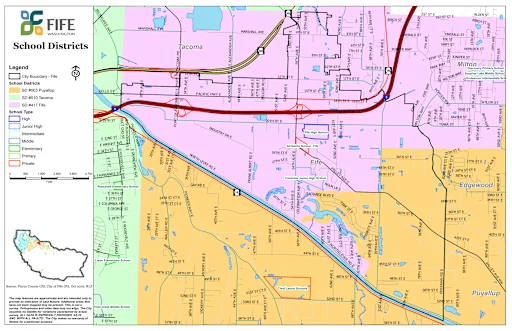
Fife School District Map
Fife School District caught in federal rollback of trans student protections
The Trump administration decided this week to terminate civil rights agreements protecting transgender students, making Fife School District one of five school systems and one college nationwide swept up in what advocates call a dramatic policy shift.
The Education Department announced Monday it was backing away from the agreements, which had required districts to maintain protections like faculty training on preferred pronouns and allowing students to use bathrooms aligned with their gender identity.
Responses from the five districts varied. Delaware Valley School District in Pennsylvania had already voted to roll back its protections, while Sacramento City Unified defiantly declared it “remains committed to the support of our LGBTQ+ students and staff.” Fife School District officials did not return calls Tuesday.
According to AP and other news reports, Assistant Secretary for Civil Rights Kimberly Richey framed the action as removing “unnecessary and unlawful burdens,” while advocates from organizations like the National Women’s Law Center see the move as yet another assault on vulnerable kids and an invitation to harassment. Federal investigations are already underway in four Washington state districts over transgender athlete policies.
The rollback of federal enforcement tied to those agreements is more than bureaucratic reshuffling; it’s part of a year-long strategy to restrict the rights of kids whose inside gender does not match the one assigned at birth. Since taking office in January 2025, the Trump administration has attempted to reduce trans youth rights and protections, and has been successful on several fronts.
(Image: Courtesy North Seattle Community College)
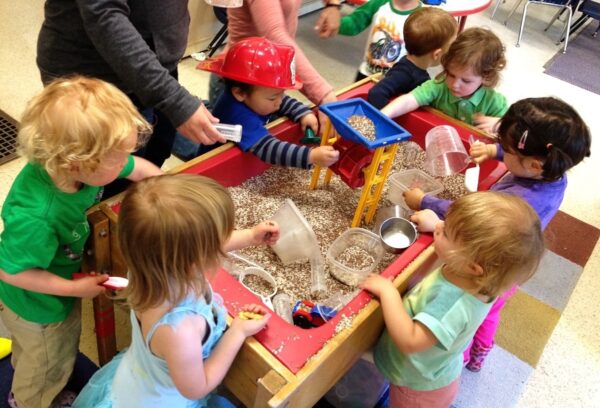
Seattle families fight to save community college co-op preschools
Seattle families are moving quickly—and loudly—to try to save a piece of early learning infrastructure that has quietly supported generations of parents and kids.
More than 300 people packed the Phinney Neighborhood Association Hall this weekend to launch the “It Takes a Village” campaign, a push to raise $2 million by May 14 to keep Seattle’s cooperative preschool and parent education programs from shutting down. Without that funding, programs serving roughly 2,100 families could close as soon as this summer after a state funding shift that now prioritizes workforce credential programs over parent education. As of Monday morning, the campaign had raised more than $34,000.
The programs are at risk due to the Washington State Board for Community and Technical Colleges’ decision to adopt a new allocation model that excludes parent education from state funding, funding only programs tied to industry-recognized workforce credentials. Parent education—despite its long track record of strengthening families and launching careers—doesn’t currently meet that definition. Without credential approval by June 30, 2026, programs at North and South Seattle College will lose state funding recognition starting July 1, putting their future on a tight and uncertain timeline.
Washington’s cooperative preschool model is easy to miss if you’re not in it—and foundational if you are. Built into the state’s community college system since 1947, it connects families to early learning through a structure that quietly does a lot: insurance, risk management, parent education, and institutional support that individual preschools couldn’t sustain on their own.
TAKE ACTION: To donate to the campaign to save cooperative preschools, go to the It Takes a Village campaign funding site. For more information, visit @parentedseattle on Instagram.
Admiring new glasses at Seattle/King County Clinic. (Image: Auston James)
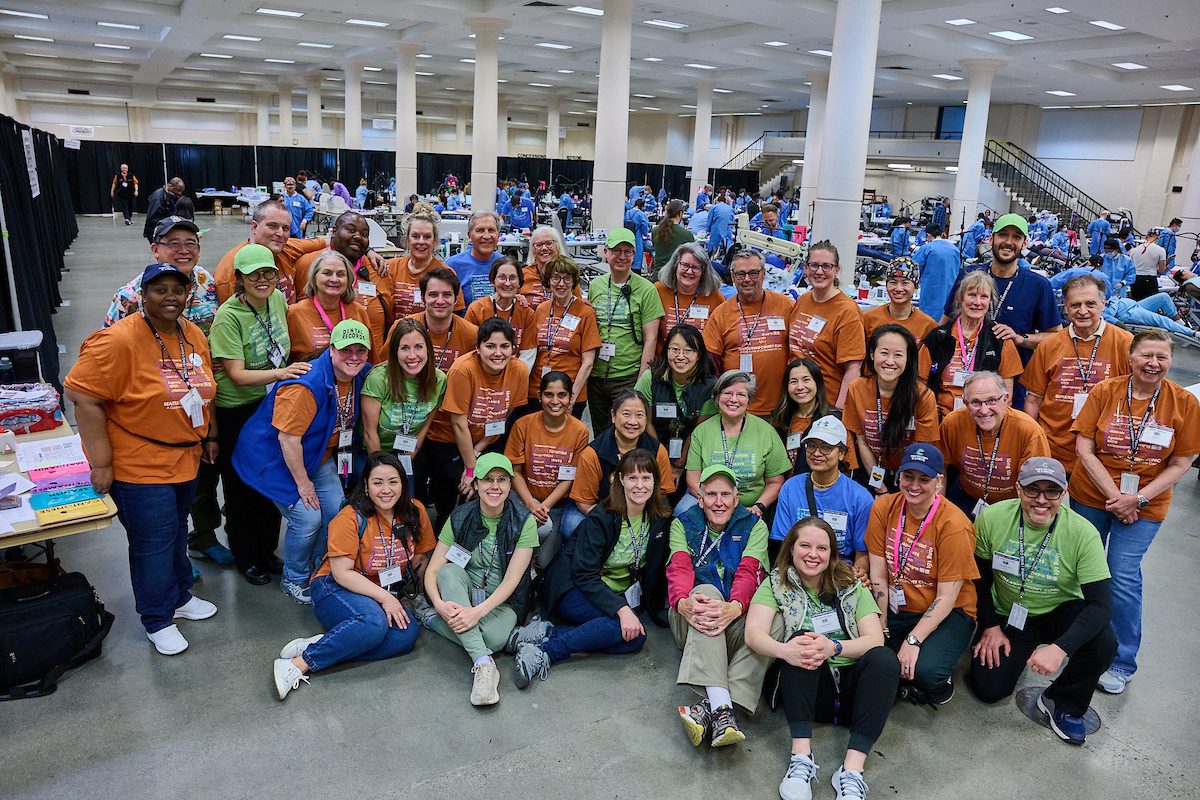
Reminder of free medical and dental clinic at Seattle Center
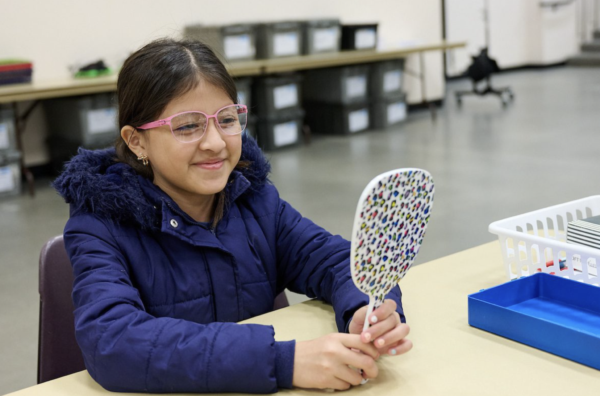
The Seattle/King County Clinic will return to Seattle Center for its 11th year later this month, offering free dental, vision, and medical care to more than 3,000 people, including kids, in need.
The four-day clinic will be held April 23-26 and is aimed at helping families and individuals who struggle to access or afford health care insurance. The large-scale health care operation will be staffed by more than 3,000 clinical and non-clinical workers who all volunteer their time.
Since its inception in 2014, the clinic has served 33,000 people, saving them an estimated $30 million in health care costs. Available services include dental fillings and extractions, eye exams and prescription eyeglasses, primary care, behavioral health, immunizations, diagnostic services such as lab tests, mammograms, ultrasounds, and X-rays, social work, and more.
Here’s the quick look:
- Patients are treated on a first-come, first-served basis. No advance registration or appointments are available.
- Fisher Pavilion at Seattle Center (200 Thomas St.) serves as the ticket distribution area. Free admission tickets are handed out beginning at 5:30 a.m. each day. Tickets are limited.
- Patients do not need to provide any documentation to receive care.
- Patients do not need to be residents of Seattle or King County to receive care.
- All onsite services are provided free of charge.
- Interpretation is available.
- Patients cannot receive both dental and vision care on the same day, but may return on another day to get a ticket and pursue additional services.
- For more information, visit seattlecenter.org/patients
TAKE ACTION: Seattle/King County Clinic is made possible by community partners, volunteers, and generous financial and in-kind contributions. Donations can be made at seattlecenter.org/donations.
Real-time tracking of measles (Image: Netstrain.org)
Scientists begin releasing critical data on measles
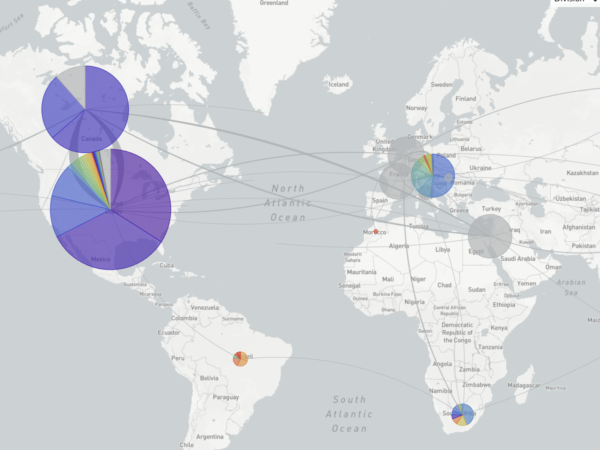
The Centers for Disease Control and Prevention has started releasing a long-awaited set of genetic data tied to last year’s measles outbreaks, which data scientists say will answer a critical question: Is measles once again spreading continuously inside the United States? If it is, the country could lose its measles elimination status, a benchmark it has held since 2000 and a marker of strong vaccination coverage.
The data, which had been delayed for months as agency teams worked through staffing losses, includes full genetic sequences of measles viruses circulating across the country. Researchers say those sequences will help determine whether outbreaks were isolated cases brought in from abroad or part of a sustained, domestic spread. “We should see a report in April,” said Kristian Andersen, who is tracking the data release but not involved in the CDC’s work.
Measles is one of the most contagious diseases known, but it’s also largely preventable: two doses of the MMR vaccine stop most transmission. As vaccination rates dip and misinformation spreads, cases are climbing again—reaching levels not seen in decades. What this new data reveals will determine whether that rise is a series of contained outbreaks—or a sign that measles has quietly regained a foothold in the U.S. Read the full story from KFF News.
Keep up to date on local measles spread with Seattle’s Child’s “Measles in Washington: A Parent Guide for Seattle-Area Families.”

Rainier Valley Leadership Academy, a charter public school (Image: Rainier Valley Leadership Academy)
Charter schools budget cut woes
For the past two years, Washington’s charter schools have received state funding to support enrichment activities—about $1,500 per student for things like tutoring, arts, after-school programs, and other supports that go beyond standard classroom instruction. That funding will not continue into the next school year.
That’s because this year state lawmakers stripped roughly $7.5 million in enrichment funding distributed across the state’s 15 charter schools. The Washington Charter School Commission, which authorizes and oversees those schools, also saw its budget reduced by about $262,000.
As schools finalize budgets for next year, leaders say they are now faced with decisions about what to cut or scale back—and how to continue serving roughly 4,700 students statewide with fewer resources. Don’t miss last week’s coverage of the reduction in The Seattle Times.

(Image: Seattle Public Library)
$410 million library levy? What could they possibly be thinking? | Op-Ed
By Cheryl Murfin
This week, gas costs were hovering around $5.60 to $5.68 per gallon. Seattle is in a child care crisis with too few seats to cover too many kids at too high a price—if you have two kids under age 4, you could pay upwards of $3,000 a month. And, according to Payscale, grocery costs here are 11% higher than the national average. That’s the short list of how inflation is hitting Seattle.
Why then did Seattle Mayor Katie Wilson bring the Seattle City Council a proposal for a $410 million levy renewal—nearly double the cost of the expiring levy? Why did members of a council “select” levy review committee jack up the ask even higher, to $480? If approved by the council, the levy would likely be on the August ballot.
$480 million. For context, in 2019, voters approved a $219 million levy.
Yes, yes, all signs point to Seattle being a city of readers. We love our libraries. Families rely on library storytimes, homework help hours, a Global Reading Challenge, playgroups, and many other services. More of these would be terrific.
But as homeowners with kids struggle to meet their food budgets and mortgage payments amid federal government chaos, inflation, and cuts to family support services, is now the time to ask for more? The library proposal would cost taxpayers about $160 a year—about $60 more a year on a median-priced home. But at the same time it would drive total Seattle levy payments (including those for housing, transportation and education) up to $3.03 per $1,000 of property value. That’s nearly $2,570 a year—or roughly $214 a month—for a home valued at $848,869, the average home value in Seattle according to Zillow.
“That’s just crazy,” said Carmen, a West Seattle homeowner and single parent of three. Carmen doesn’t want her last name used because it’s Hispanic and she’s afraid of ICE despite being a U.S. citizen. “But besides that, didn’t we just pass a huge levy? I’m barely making it here, and they want more?” She was referring, of course, to the $1.3 billion Families, Education, Preschool and Promise (FEPP) levy voters approved last November.
Renew a reasonable levy? Absolutely, says Carmen. But double the last one? No way, another parent told me last week, “I’m not an ATM.”
I’m with these two parents in trying to wrap my head around the family constituent disconnect here.
In a recent statement, Seattle City Councilmember Maritza Rivera said something she, the council, and the mayor need to hear and heed: “It is our job to be judicious and fiscally responsible to the taxpayers.”
So, do your job, Seattle City Council. Say no to putting a $480 million library levy before voters. Replace it with a reasonable ask. Perhaps start with the Congressional Budget Office’s estimated inflation rate of about 15% over the next seven years ( 2% to 2.5% per year). If you need to double something, double that.
TAKE ACTION: The Seattle City Council is expected to vote April 14 on whether to send a proposed amended $480 million library levy to voters. Have an opinion on doubling the current levy level? Now’s the time to fill council member in-boxes. Write to [email protected], which will reach all nine council offices, or call (206) 684-8888.
The Good Listen: Raising Good Humans on The Meaning of Your Life

Harvard Prof. Arthur Brooks, an expert on happiness (Image: Harvard)
I’ve been listening to developmental psychologist Dr. Aliza Pressman’s podcast, “Raising Good Humans,” of late and enjoying the perspectives it offers on parenting. This episode resonated with me through its guiding question: What makes a life and parenting feel meaningful in a culture where achievement and measurable success are the be-all and end-all? This conversation with Arthur Brooks looks at the myriad ways parents can resist the pressure to focus everything on what they and their kids accomplish. The podcast is available on all major podcast platforms, including Apple Podcasts, Spotify, Amazon Music, and Audible.

(Image: SELF Magazine is licensed under CC BY 2.0.)
An Important Listen: What the vaccine schedule whiplash means for your kids
If you’ve been tracking the federal government’s shifting vaccine recommendations and Washington’s decision to break from the Centers for Disease Control and Prevention’s new recommendations to promote a vaccine schedule based on recommendations by the American Association of Pediatrics, you may have questions—especially since March 16, when a federal judge blocked the Trump administration’s efforts to reduce vaccines recommended for kids. This report by KFF Health News chief Washington correspondent Julie Rovner takes a look at how the decision is impacting the public health system—and what it means for your kids.
https://drive.google.com/file/d/1w16JwhFDRdFe5-1mPj_Z-6zvcVA0lv3t/view?usp=sharing
Getting a trim at Barbershop, Chat, & Chew (Image: Courtesy Fathers and Sons Together)
Strong community means more events like this
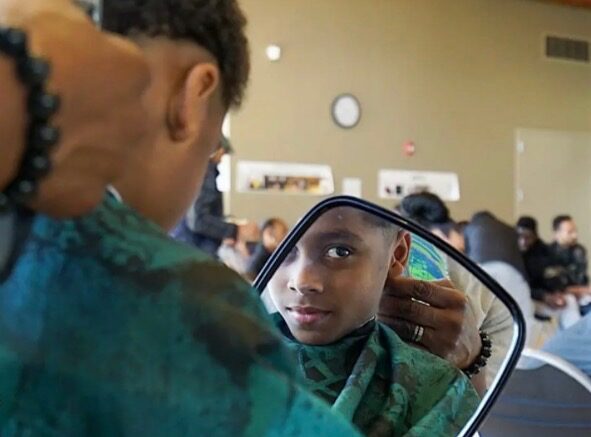
What does it take to connect neighbors and community? Check out Susan Fried’s photo essay coverage of the 15th Annual “Barbershop, Chat, & Chew” at the Rainier Beach Community Center earlier this month. The event, hosted by the non-profit Fathers and Sons Together (FAST), aimed at connecting families, youth, and caring adults around free haircuts, community conversation, music, chess, and more. Its four barbers trimmed locks nonstop for four hours. Don’t miss the photo essay in the South Seattle Emerald.
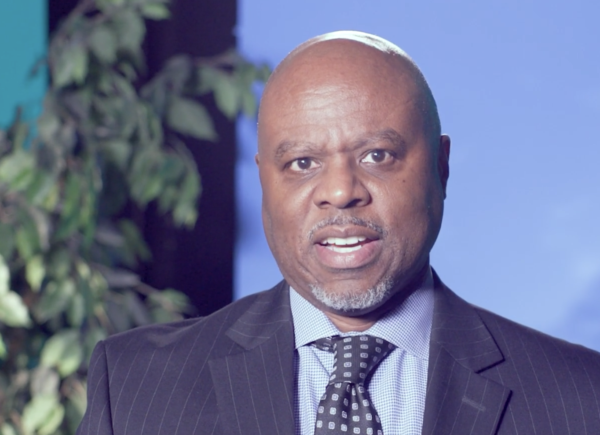
Dr. Brent Jones (Image: SPS Vimeo)
Good-bye SPS, hello SCC: Dr. Brent Jones has a new job
Wondering what happened to Dr. Brent Jones, who stepped down as Seattle Public Schools last year after weathering two rough years of parent disgruntlement? He’s stepped back up—this time as interim president of Seattle Central College. Jones will run things while the school searches to hire a permanent president. The search begins in May.
Administering at the school isn’t new to Jones, who once served as vice chancellor and chief human resources officer for the broader community college district that includes Seattle Central, North Seattle College, and South Seattle College. Read the full story in The Seattle Times.