Current Measles Status in Western Washington
Last updated: April 13, 2026
Status: Active exposure alert
What parents need to know right now
- New exposure: See list of multiple locations across Seattle, Bellevue — April 3-8, 2026. Watch for symptoms until May 3.
- Cases reported: An infant who spend signifiant time on public transportation reported by Public Health — Seattle & King County
- Who should take action: Unvaccinated people, infants, pregnant people, people with weakened immune systems, and anyone unsure of their vaccination status
- What to do: If you were at any of the exposure locations during the dates and times listed, check your immunity status. This means you have had two doses of the MMR vaccine or have had measles previously. Monitor for symptoms through April 11–April 20, 2026 (depending on exposure date). Symptoms may take up to 21 days to appear and typically begin with fever, cough, runny nose, and red eyes before a rash develops.
This section is updated as new information is confirmed by county or state health officials.
What is Measles and How it Spreads
Measles is one of the most contagious diseases in the world. It spreads through the air when an infected person coughs or sneezes and can linger in a space for up to two hours after they leave.
If one person has measles, up to 9 out of 10 nearby people without immunity can become infected.
Measles Symptoms Parents Should Watch For
Symptoms usually appear 7–21 days after exposure and often start before the rash appears. Common symptoms include:
- Fever
- Cough
- Runny nose
- Red, watery eyes
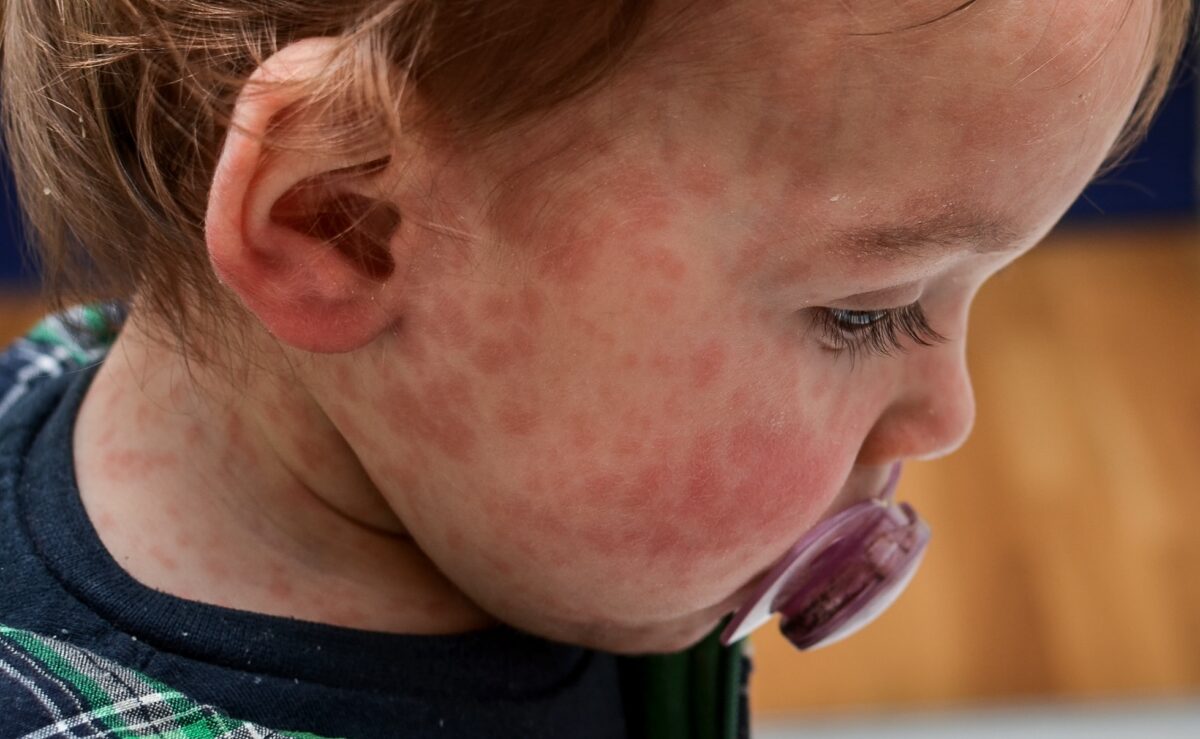
- Rash (typically appears several days after fever begins)
Because people are contagious before the rash shows up, outbreaks can spread quickly — especially in schools, child care centers, and crowded indoor spaces.
When to Call a Doctor After Possible Exposure
Health officials recommend calling ahead before visiting a clinic or hospital if measles is suspected. This helps prevent exposing others in waiting rooms. Call a provider if your child:
- Has a fever and rash
- Was at a known exposure site
- Is unvaccinated and develops cold-like symptoms after possible exposure
MMR Vaccine Facts for Washington Families
The MMR vaccine (measles, mumps, rubella) is the most effective protection against measles. Health officials note:
- Two doses provide about 97% lifetime protection
- The vaccine has been safely used for decades
- Most people in Washington are protected through routine childhood vaccination
Families who are unsure about vaccination records are encouraged to contact their pediatrician or school.
What Pediatric Experts Say About Measles in Our Community
Pediatric infectious disease specialists emphasize that measles remains highly contagious but very preventable with vaccination.
In a Q&A with Seattle’s Child, a board-certified pediatrician answered common questions from local families about measles symptoms, risks, and when to seek care — including how the illness can spread before symptoms appear and why early recognition matters.
Experts remind parents that:
- Most children are protected through routine MMR vaccination, which is safe and highly effective.
- If your child might have been exposed or develops symptoms, call your provider before visiting to limit contagion.
- Vaccination not only protects your own family but slows community spread when coverage is high.
For more expert answers, read Measles in King County: A pediatric expert answers your questions.
Recent Measles Activity in Washington State
- Jan. 2026 — Snohomish County: Three child cases linked to visiting family; exposure sites included schools and a medical clinic
- Jan. 2026 — Sea-Tac Airport: International traveler exposure in A Concourse and International Arrivals Hall
- Jan. 2026 — Kittitas County: Case confirmed involving Central Washington University student
How Schools and Child Care Respond to Measles Cases
When a case is confirmed, local health departments may recommend:
- Excluding unvaccinated students temporarily
- Notifying families of possible exposure windows
- Enhanced cleaning and ventilation
- Monitoring for symptoms over the incubation period
Policies vary by district and county.
Trusted Local Health Resources for Families
- Washington State Department of Health — Measles
- Public Health — Seattle & King County
- Snohomish County Health Department
- Pierce County Public Health
Bottom Line for Parents
Measles is serious, but it’s also preventable. Staying informed, checking vaccination status, and acting quickly after possible exposure are the most effective ways families can protect their kids and community.