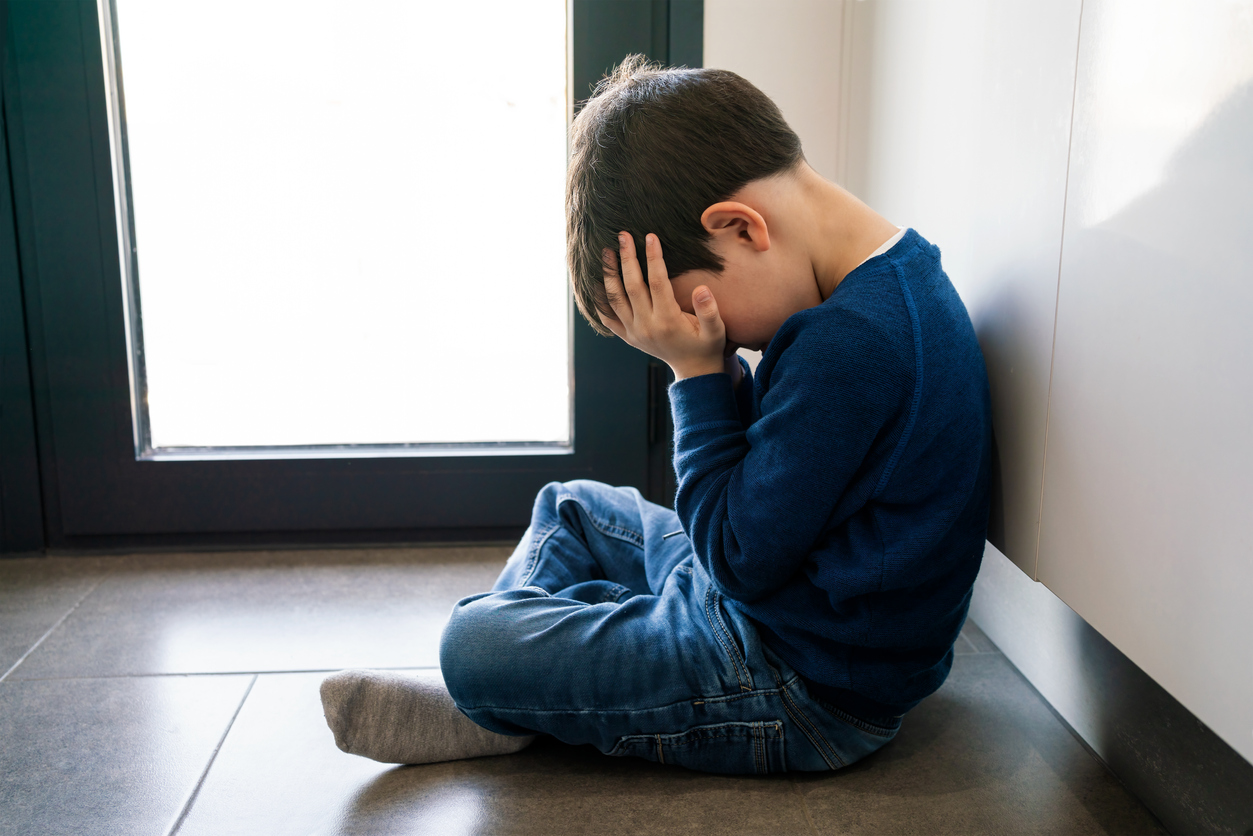
Parents and special education advocates let out a sigh of relief earlier this week when Washington Gov. Bob Ferguson signed a new law to protect students from traumatizing restraint or isolation.
Under the measure, school staff in Washington State can no longer use pepper spray, mace, sedatives, or physical restraints like handcuffs, zip ties, or belts and are limited in the use other restraint when student are exhibiting behavioral escalation. They’re also barred from pinning students down or forcing them against a wall in ways that could restrict breathing or blood flow. Restraint may be used onlt in the “likelihood of serious harm.” By that, the new law stipulates there must be substantial risk that a student will harm themself (for example, if they threaten or attempt suicide) or harm someone else.
Further, the new law says: “School districts and other providers of public educational services must not design, construct, remodel, reconfigure, repurpose, or otherwise establish any new room or other enclosed area for the primary purpose of student isolation, irrespective of how the space is labeled.” Staff can use a nonpermanent barrier to separate a child within the classroom, but only for a short time.
Parents, education advocates and mental health professionals have been raising alarms about the use of such tactics, often on kids with disabilities, for years, their stories are often painful. Similar legislation aimed at stopping such practices was brought to the legislature in 2024 and 2025 but failed to win approval in either session. House Bill 1795 was passed during the 2026 state legislative session.
Supporters say the law doesn’t solve everything—schools still need training, staffing, and resources—but it sets a clearer baseline for what’s safe and acceptable in classrooms.
“The League of Education Voters and our partners are happy because it bans the use of chemical and mechanical restraints on students and eliminates new construction of isolation rooms, which greatly traumatize students,” said Arik Korman, CEO of the League of Education Voters. ““However, the overall work to end isolation and reduce restraint in Washington state is like an ocean liner, and HB 1795 is the equivalent of a lifeboat.”
In a system where discipline can too easily escalate, the new law is a shift toward prevention, de-escalation, and a recognition that how adults respond in those moments matters just as much as what students are going through. It is not, however, the end of advocacy on the issue.
“There is still much work to do,” Korman said.