Kids and art:
My son was 3 years old. We were eating at a café in Lake City, now closed, which had a giant reproduction of George Seurat’s famous impressionist painting, “Sunday Afternoon on the Island of La Grande Jatte” on the back wall. Seurat is known for applying his paint in tiny dots. I told Nathan that this was called pointillism. He went home and tried it with his fingers and with the tip of a brush.
|
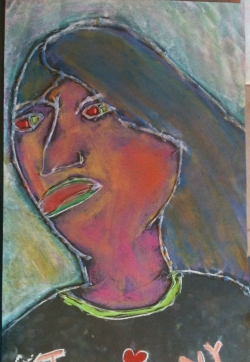
Natalie, age 9, created this self portrait at the Art of Ages Studio. |
I exposed my children to the visual arts in small doses – in books, galleries, museums, and wherever we saw it in daily life. I was the neighborhood mom who loaded watered-down paint in squirt guns and let the kids paint the fence, and told them to paint the outside of our backyard tree house however they wanted to. I still work with children and my mantra is: “It’s art; it can be any way you want it to be.”
[ Related: 4 easy, at-home art projects inspired by a visit to SAM | 10 easy art projects with an animal theme ]
In talking with three women who run Seattle art schools for children, I’ve also learned more about the importance of teaching techniques and concepts such as color theory, composition and perspective. This way, young artists have more ways to express themselves as they get older.
“We feel that both skill development and exploration of personal style are important,” says Lassie Webster, owner of Roaring Mouse Creative Arts Studio, and a longtime consultant to school districts on the creative arts.
At Early Masters Art School, Shelley Thomas first introduces her 7- to 12-year-old students to the works of a particular artist or the style of an earlier period. Then, she has them use that as a springboard for their own works.
“It gives them the parameters, and they take it and make it their own,” she says.
Valerie Durbin uses a similar approach at her studio. “We talk about being inspired by the artists, rather than imitative,” she says.
Kids and art: 8 tips
Here are some of our tips for helping your child enjoy and create art.
- Find art all around. In the early years especially, sparks for creativity “begin with all the things that engage the senses,” Webster says. “Going to a museum, watching a building being built, walking on the beach, going to the zoo, all of these things can inspire creative expression.” You can point out bits of art at street fairs, in restaurants or stores, on buildings, in the bus tunnel and at bus stops. It’s not something precious that is only housed in museums and galleries.
- Find art in special places. On the other hand, you can expand a child’s horizons by going to places where art is showcased. “When children are little, the three-dimensional things, like Alexander Calder (mobiles and large bright sculptures) are best,” Durbin says. “As they’re a bit older, go to lunch and visit one gallery. Go at the child’s own speed, so they’re not bored.” Art museums can be great for children 7 and older; Durbin recommends the smaller spaces such as the Wing Luke Museum, the Chihuly Garden and Glass, or the Seattle Asian Art Museum, as well as neighborhood art walks. The Frye Art Museum is a small, free museum that is actively working to attract children. Thomas also recommends family nights at Seattle Art Museum and other venues. All three art teachers are enthusiastic about the variety of art books now available to children. “Always ask them what they think about the art they’re looking at,” Durbin adds.
[ Related: Museums to visit for free on First Thursdays (and some other days) ]
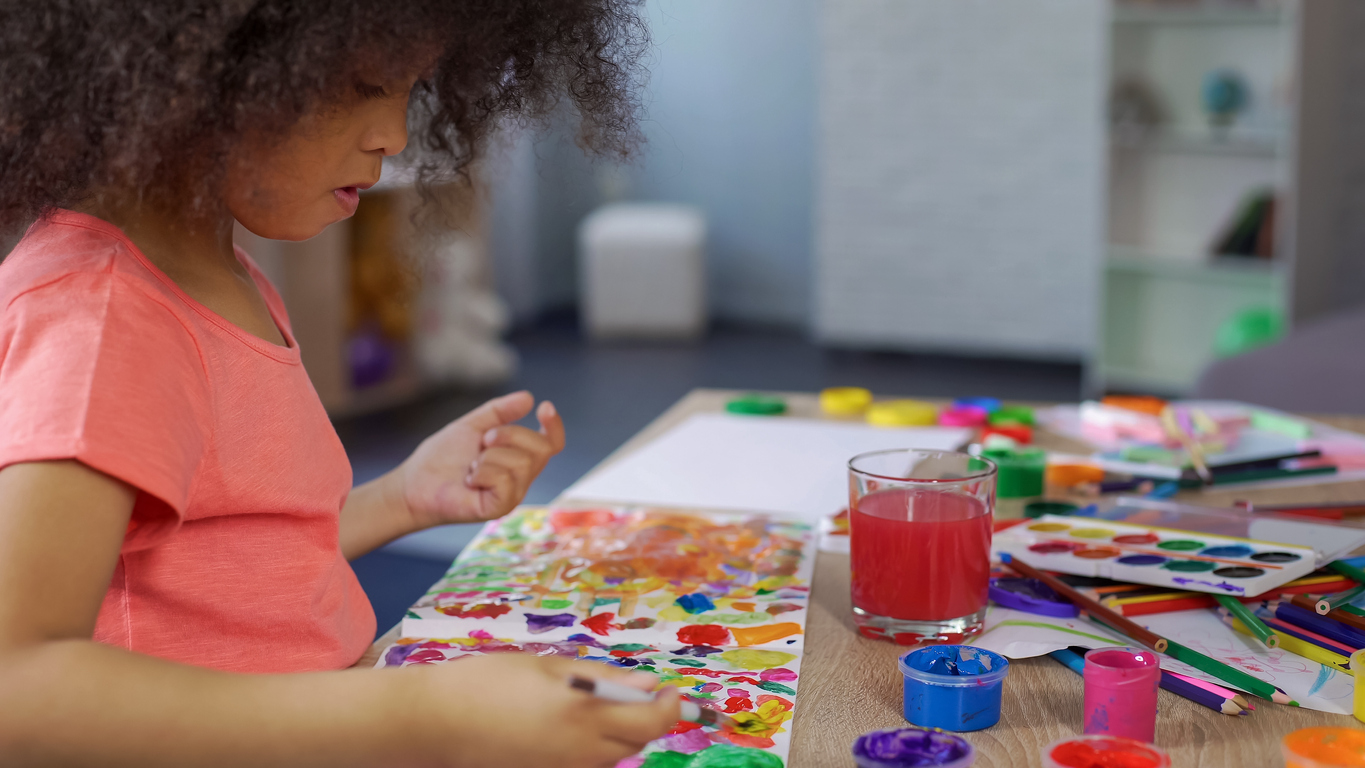
- Give them an art space at home. If you have room, it’s great to have a specific area where kids can do art and make a mess. Webster recommends stocking it with found items, glue and cardboard that children can put together any way they want to, along with inexpensive watercolor and tempera paints. “A big obstacle in art making is a tendency to make art too precious,” she says, recommending the simple supplies of paper, pencils and crayons. Thomas suggests decorating the space with rotating art postcards or pictures for inspiration. As children get older, she advises giving them good quality supplies and teaching them how to treat them with respect so that they “see themselves as an artist.”
- Do art with your children. Sit down and draw with your children, Thomas recommends. If they’ve learned a technique in an art class, let them teach you. “Talk with them while they’re drawing, or doing other art,” Durbin suggests. “Keep comments to a minimum. Don’t give too much generalized praise, like ‘That’s great.’ Comment more specifically, like, ‘I love how you mixed the red and yellow.’ At the end ask them, ‘Are you proud?'” Let children walk away from the artwork when they’re finished, rather than pressing them to perfect it our way, Webster adds.
- Give kids more information. Thomas has found that children are endlessly curious and are empowered when they are “armed with knowledge usually reserved for adults.” At her Early Masters Art School, she sends students home with “what we learned today” sheets that are touch points for dinner conversations and a chance for them to teach their parents. Durbin discovered that the more fun stories she shares about the artists, the more her students are engaged. At age 6 or 7, kids want to know more about composition and color theory, and she gives them the information a little at a time.
- Help them learn techniques. “When children are younger than 7, just let them play (with art),” Thomas advises. As they’re older, she shows them how earlier artists made their works and how to use the brush or mix the colors to create the same effects. “Imitating is not something parents should be afraid of; it’s a good thing,” she says of the age-old practice of artists copying earlier works, mastering the techniques and then creating their own artworks. “A blank canvas is less intimidating if they have an idea of where to go.” Children of all ages benefit from skills training, Webster adds. “Learning how to hold a brush or pencil, how to care for tools, how to cut and paste, how to shape and pinch clay together – these are all foundational skills that will ultimately free kids to do more with their ideas.”
- Follow a child’s lead. “If a child is expressing interest, then pursue it,” Webster advises. “If it wanes, then let it go. Sometimes kids do need a little push to stick with something, but if you find yourself as a parent invested in your kid succeeding in a particular area, you might want to step back and see if it’s your interest or your child’s.” Thomas has found that students are ready to move on to acrylics or oils or more advanced methods when they say so. “Expose them to everything, but if they want to do one thing – like the pottery wheel week after week – let them do what they want.”
- Honor your child’s work. One of the saddest things I remember as a co-op preschool parent is having a young mother visit my house, with lots of my kids’ art displayed and some of it framed. “My mother never saved or showed off anything I ever made,” she said with tears in her eyes. The art teachers all display their students’ works in their own galleries – and they let the kids choose what they are most proud of to display. “We stand back and look at our art displayed on the wall at the end of the session,” Thomas says. Her greatest joy is to hear students say, “I love it!”
“Every child is an artist. The problem is how to remain an artist once we grow up.”
– Pablo Picasso
Wenda Reed is a Seattle-area art lover and former “preschool art mom” who still loves introducing children she knows to art. This article was originally published in Seattle’s Child in 2012 and update in May 2023.