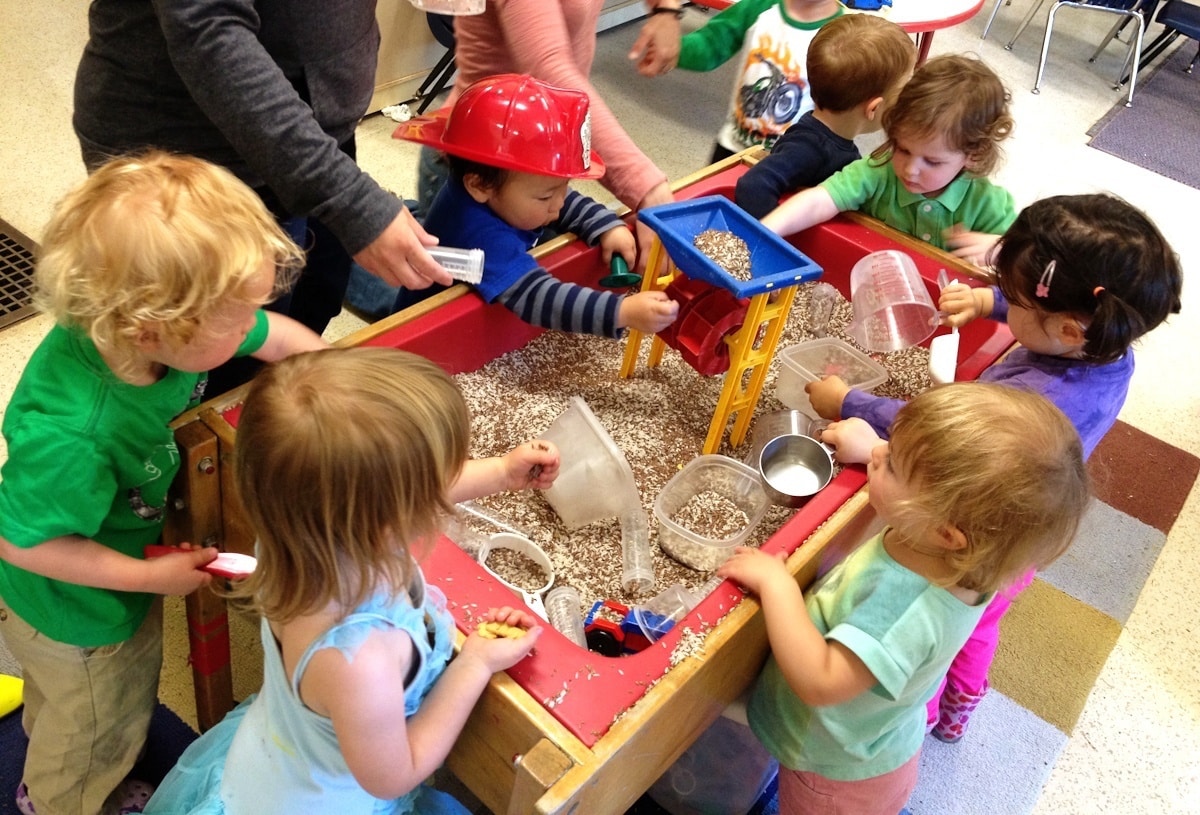
Seattle families are moving fast—and loudly—to try to save community college co-op preschools, a piece of early learning infrastructure that has quietly supported generations of parents and kids.
More than 300 people packed the Phinney Neighborhood Association Hall in early April to launch the “It Takes a Village” campaign, a push to raise $2 million by May 14 to keep Seattle’s cooperative preschool and parent education programs from shutting down. Without that funding, programs serving roughly 2,100 families could close as soon as this summer after a state funding shift that now prioritizes workforce credential programs over parent education. As of Monday morning, the campaign had raised more than $34,000.
The programs are at risk due to the Washington State Board for Community and Technical Colleges’ decision to adopt a new allocation model that excludes parent education from state funding, funding only programs tied to industry-recognized workforce credentials. Parent education—despite its long track record of strengthening families and launching careers—doesn’t currently meet that definition. Without credential approval by June 30, 2026, programs at North and South Seattle College will lose state funding recognition starting July 1, putting their future on a tight and uncertain timeline.
Elected officials joined educators and families in calling for a pause on shuttering the 88-year-old programs.
“I’m joining you…to call on the state board to revisit their decision… and preserve funding,” Mayor Katie Wilson said at the launch event.
State Sen. Rebecca Saldaña framed the stakes more bluntly: parent education, long carried by women, immigrants, and communities of color, has been “invisible and undervalued,” despite building real workforce skills, she said.
Parents and educators say those skills are not abstract. For many, these programs are the entry point to careers, stability, and community.
“The system that saved me…now that career is in jeopardy,” one North Seattle College parent educator said in a release, describing how the program helped her move from an isolated parent to a trained professional.
What’s at risk is uneven—and that matters. Programs in wealthier neighborhoods may survive through private fundraising, but those serving families experiencing homelessness, Spanish-speaking communities, and families relying on financial aid are most likely to disappear. Advocates say the campaign is a stopgap, not a solution: a one-year bridge while colleges pursue credential approval and lawmakers consider a longer-term fix.
Washington’s cooperative preschool model is easy to miss if you’re not in it—and foundational if you are. Built into the state’s community college system since 1947, it connects families to early learning through a structure that quietly does a lot: insurance, risk management, parent education, and institutional support that individual preschools couldn’t sustain on their own. At North Seattle College alone, that backbone supports co-op preschool classes in 16 neighborhood sites across North and Central Seattle—part of a statewide network that, advocates say, doesn’t exist at this scale anywhere else in the country.
For more information, visit @parentedseattle on Instagram.
TAKE ACTION: To donate to the campaign to save cooperative preschools, go to the It Takes a Village campaign funding site.
Are you trying to figure out what preschool is right for your child? Read this: How to Pick a Preschool: Tips and insight from Seattle-area parents and experts