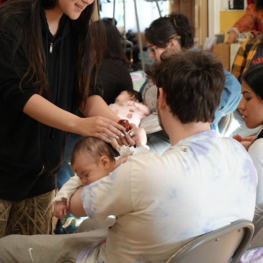
Being a parent is nonstop hard work, making it challenging to stay on top of news that impacts families in Washington state. This Hits Home is your weekly hit of news, commentary, and, occasionally, opinion. Want to have a say? Look for the “Take action” prompts. Here’s the update for the week of Aug. 17-23
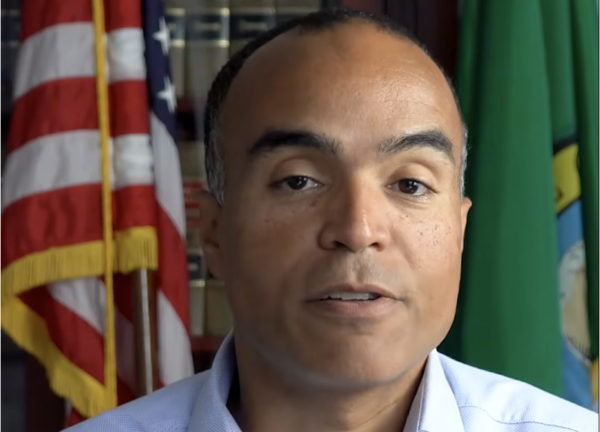
Washington State Attorney General Nick Brown speaks at start of trial against Meta (YouTube)
AG Brown speaks about Meta’s over-addictive features that harm kids
Washington State Attorney General Nick Brown spoke out last week on behalf of a bipartisan coalition of attorneys general from across the country who are suing social media giant Meta, as the trial for their case finally got underway on Aug. 18.
The state attorneys general say they will prove Meta knowingly designed and launched features that “exploit young users’ vulnerabilities, foster compulsive use, and maximize the time young people spend on Facebook and Instagram.” The company, they say, released the harmful features even as it assured parents and the public that the platforms were safe for teens and children.
The attorneys general also allege that Meta illegally collected personal information from children under age 13 without parents’ consent. Collecting personal data on children is a violation of the federal Children’s Online Privacy Protection Act.
“People all over our state are concerned about social media, particularly its effects on children,” Brown said. “We will continue to work to ensure social media companies like Meta are doing everything they’re required to do to protect our kids.”
The trial has been a long time in coming.
First filed in late 2023 after years of nationwide investigation, the trial was delayed by Meta’s repeated attempts to get parts of the states’ case dismissed. Courts rejected those attempts, clearing the way for the attorneys general to present their case at trial, which began Aug. 18.
The case is being heard in the U.S. District Court for the Northern District of California and is expected to last six to eight weeks, according to Brown’s office. Along with monetary penalties, the AGs want the court to order Meta to stop unlawful practices and comply with all child protection laws. Watch AG Brown discuss the trial.
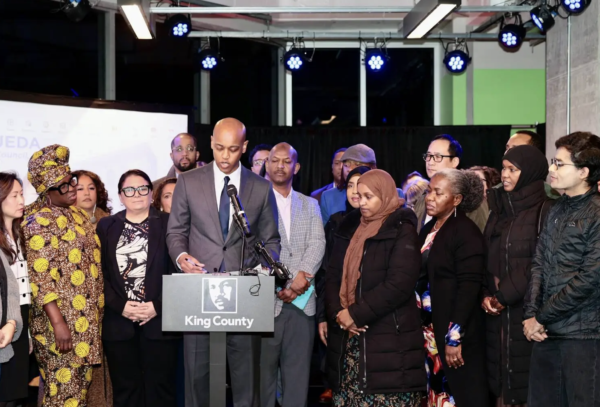
King County Executive Girmay Zahilay announces an executive order to protect immigrants on Feb. 12, 2026. (Photo courtesy of King County Office of the Executive)
King County invests $900,000 to support immigrant families
Executive Girmay Zahilay has announced that King County is investing $900,000 into a new public-private partnership aimed at supporting the health and well-being of immigrant and refugee families and communities impacted by federal ICE activities in South King County.
The South King County Immigrant and Refugee Futures Fund (SIRFF) will provide funding to organizational networks to support urgent needs of community members affected by federal actions, including money for basic needs, rapid response training for families, safety education, and programs focused on mental health, community care, and healing.
The funding builds on the $2 million in emergency funds announced as part of Executive Zahilay’s Protecting Immigrant and Refugee Communities Executive Order signed in February. Those dollars were distributed to community-based organizations to support housing stabilization, legal aid, and food assistance for immigrant and refugee families and residents throughout the county.
“King County is stronger when every resident – regardless of their immigration status – feels safe, welcomed, and has the support they need to thrive,” Zahilay said in a post by Public Health Insider. “I’ve heard directly from immigrant and refugee residents about how the fear of federal immigration enforcement is taking a toll on their health and well-being, especially for communities in South King County.”
Two Best Starts for Kids initiatives based in the county public health department will lead the new partnership: Communities of Opportunity (COO) and the Community Well-Being Initiative (CWI). Read the full post for more details.
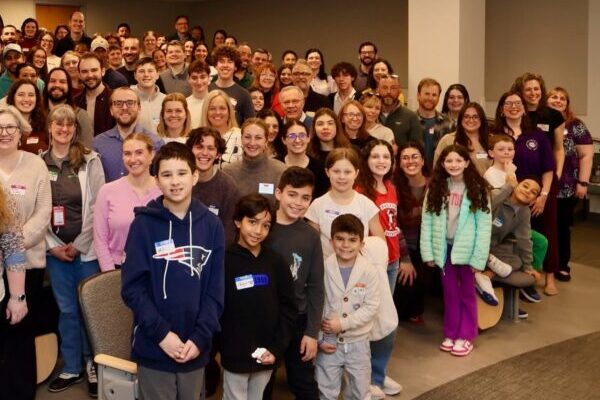
(Photo courtesy National Stuttering Association)
A day for Seattle kids who struggle with stuttering
In a room full of other kids, teens, and even adults who stutter, your child is not alone. They don’t have to hide or worry about what others think of them. You will find yourself sitting among parents who understand your child’s struggle and your desire to help and protect them.
The National Stuttering Association’s Seattle 1-Day Conference at Seattle Children’s Sand Point Learning Center is that room. The event offers the opportunity to know that you and your child are not alone.
Registration for the Oct. 24 event opened this week. During the day, people who stutter, families, friends, and speech-language pathologists will connect and learn together in workshops, conversations, and other opportunities, including specific programming for children, teens, adults, and family members.
“For many people who stutter, this may be the first time they enter a room where they are not the only person who stutters,” said Tammy Flores, Executive Director of the National Stuttering Association. “There is something powerful about being in a space where you do not have to hide, explain, or apologize for your voice. We want every attendee to know that they belong exactly as they are.”
They do kid curfews, why don’t we?
A parent who moved here recently from just outside Chicago asked me how it is that Washington does not have a curfew for kids. Don’t we care about our young people? I assured her we do. And we care about their rights. Turns out, in Washington, our Supreme Court has ruled curfews for kids are unconstitutional, infringing on minors’ fundamental right to freedom of movement.
Not so in Illinois. Curfews for residents under age 18 in that state are fully legal and actively codified. Illinois sets a statutory baseline, allowing cities like Chicago to enact even stricter restrictions based on shifting public safety needs and city council updates. If you’ve wondered how a curfew might work, check out this informative article in Chicago Parent.
There are, however, some exceptions in Washington:
- Driving Restrictions: Teenagers under 18 with an Intermediate Driver’s License in Washington cannot drive between 1 a.m. and 5 a.m. unless they are accompanied by a parent, guardian, or a licensed driver who is at least 25 years old.
- Public Parks: Seattle city parks officially close at night (usually between 10 p.m. or 11 p.m. and 4:30 a.m. or 6 a.m.). Being in a closed park after hours applies to everyone, regardless of age, and can result in a trespassing citation.
- Private Businesses: Individual malls, theaters, or venues in the Seattle area are legally allowed to set their own rules and may require minors to be accompanied by an adult during certain evening hours.

Testing taking the old pencil and paper way (Photo Seng Choy / iStock)
Is it possible to learn in school without screens? It seems it is
Imagine a child who uses no educational technology (“ed tech”) within a public school. As in no screens (except for the occasional peek at a neighbor’s with teacher oversight). Can you even imagine it? In a great read this week, The Seattle Times shows us kids can. And that some teachers are rather interested in going back to the dinosaur days of pen and paper learning. Check out the story of one child’s experience in The Seattle Times.
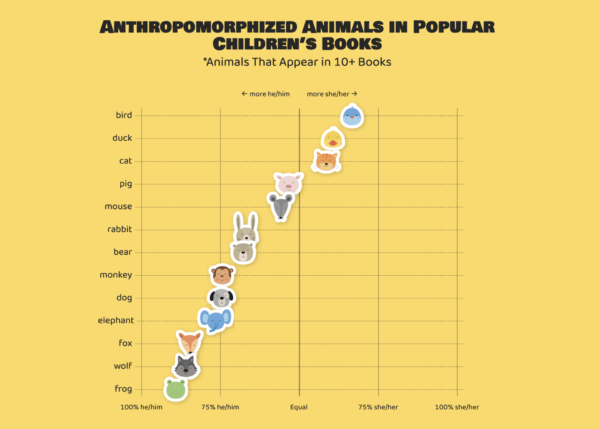
(Graphic courtesy The Pudding)
Why are all the bears boys in children’s books?
Which animals are gendered in kids’ books? And why are so many of them boys? Those are questions a Massachusetts data-journalist dad and researchers at the University of Washington set out to answer. Of course, before they could do that, they had to determine if their niggling feeling was correct: Do most animals in children’s books and in people’s minds skew male?
The answer — after analyzing 300 books and responses from 1,300 people asked to complete the sentence “And then the bear said, ‘I must go to the river.’ Upon arriving….” — was clear. Yes, more animals in kids’ books are referred to by male pronouns. But gender neutrality certainly made a show.
When they published their analysis results last year on The Pudding, their results show that “while he/him was still the most frequently used pronoun in the survey results, many respondents referred to the animal by name (26%), by it (17%), or by they/them (3%).”
“My biggest takeaway from The Pudding analysis is how sneaky gender bias is with animal characters, and how much they expose our ingrained cultural assumptions,” said University of Washington researcher Melanie Walsh. “Today when authors create human characters, they are usually thoughtful about choosing the character’s gender or racial background. But when imagining animal characters, people almost let their guard down.”
Walsh and doctoral students Imani Finkley and Yuanxi Li didn’t stop after identifying those animal pronoun trends. They became curious about what happened to the results when books were written with artificial intelligence.
The upshot of their new study, aptly entitled “Neutrality Bites: Gender Representation in AI-Generated Animal Stories, is that AI models writing kids’ animal stories don’t just repeat human gender bias. They erase female characters almost entirely, defaulting to “it” or no gender 57% of the time and giving animals female pronouns just 2% of the time. Read the full story.

(Photo courtesy Rock and Roll Roller Rink)
New Issaquah roller rink brings skating back to the Eastside
Now this is a great repurposing of a building — beloved family-owned drugstore turned all-volunteer roller rink.
Here’s how it happened. The popular Skate King roller rink went out of business in 2015. That meant, until this summer, there were no indoor roller skating options on the Eastside. But as of July 1, disco balls and toe stops were back at work across Lake Washington as the nonprofit Rock and Roll Roller Rink opened its doors in Issaquah.
The new rink, open Tuesday through Sunday, is housed in a former Bartell Drugs store at 5700 E. Lake Sammamish Parkway SE, and according to reports in The Issaquah Spotlight and other media, the operation was built up from an occasional weekend rental space at Pickering Barn to the now permanent location in the old store space. The best part? As a nonprofit, it’s run entirely by volunteers. Want to help out? Justfill out a volunteer interest form to let the rink know. Check out the full story.
(Photo courtesy Nikola Tesla STEM High School)
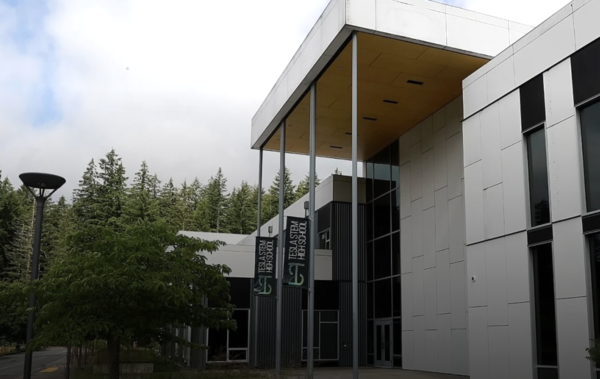
Redmond high school ranked among the top 10 in the nation
It’s not a perfect score, but it’s darned close: 99.95 out of 100. And it’s the score that put Redmond’s Nikola Tesla STEM High School among the “Top 10” high schools in the nation on the prestigious U.S. News & World Report’s Best High Schools list for 2026-2027. The list was released last week.
The school ranked highly among the nearly 18,000 public high schools that the news organization ranked this year, including International School in Bellevue, which came in at 41st in the country; Tukwila’s Raisbeck Aviation High School at 127th; Seattle’s Lincoln High School at 238th; and Mercer Island High School at 260th.
With 605 students in grades 9 to 12, Nikola Tesla STEM High School is one of 11 high schools in the Lake Washington School District. The school’s testing score was high, 99.5 out of 100. And its college readiness score came in at 95.
How’s the score weighted?
- College Readiness represents 30% of the score and looks at “proportions of 12th graders who took and passed Advanced Placement (AP) or International Baccalaureate (IB) exams.
- State Assessment Proficiency accounts for 20% of the score and is the school’s aggregated student scores on state math, reading, and science assessments relative to statewide benchmarks.
- State Assessment Performance accounts for 20% of the score and assesses how well student performance on state assessments aligns with the new organization’s expectations or historical state trends.
- Underserved Student Performance accounts for 10% of the total score and measures the proficiency score on state assessments for Black, Hispanic, and low-income student populations.
- College Curriculum Breadth also receives 10% and is the proportion of 12th graders who earned qualifying/passing scores on AP or IB exams across multiple distinct content areas.
- Graduation Rate, the final 10%, measures the proportion of students who entered 9th grade and graduated on time with a regular high school diploma.

Historic toy retailer FAO Schwartz returns – this time to Bellevue
When my kids were little, going to FAO Schwarz in downtown Seattle was, for them, like going to, well, heaven. And maybe it was for me too. It seemed the store had every toy ever made in the history of toys, at a time when you couldn’t just hop on Amazon and order. We didn’t have much money back then, but it was a wonderful place to dream and they always seemed to have enough lower-priced toys to leave us all thrilled.
This is not a pitch for FAO Schwartz. Just an announcement that Seattle’s royal family of retail, the Nordstroms, is bringing the magic back. The toy store will live in a “Jewel Box” — a curated store-within-a-store — inside the Nordstrom at Bellevue Square. It won’t hold all the magic of the bygone giant store, but will feature FAO Schwarz’s signature toy-soldier and dance-on-piano, hands-on stations, a baby-doll “adoption” counter, a DIY makeup kit station, and a Brio train personalization table.
“FAO Schwarz represents imagination and joyful discovery, which aligns naturally with how we think about creating meaningful experiences for our customers,” said Tacey Powers, executive vice president and general merchandise manager for shoes, kids, and home at Nordstrom, in a release.
The new toy “jewel” opened Aug. 22.
(Photo courtesy (University of Arkansas for Medical Sciences)
Washington should adopt postpartum wristbands | Op-Ed
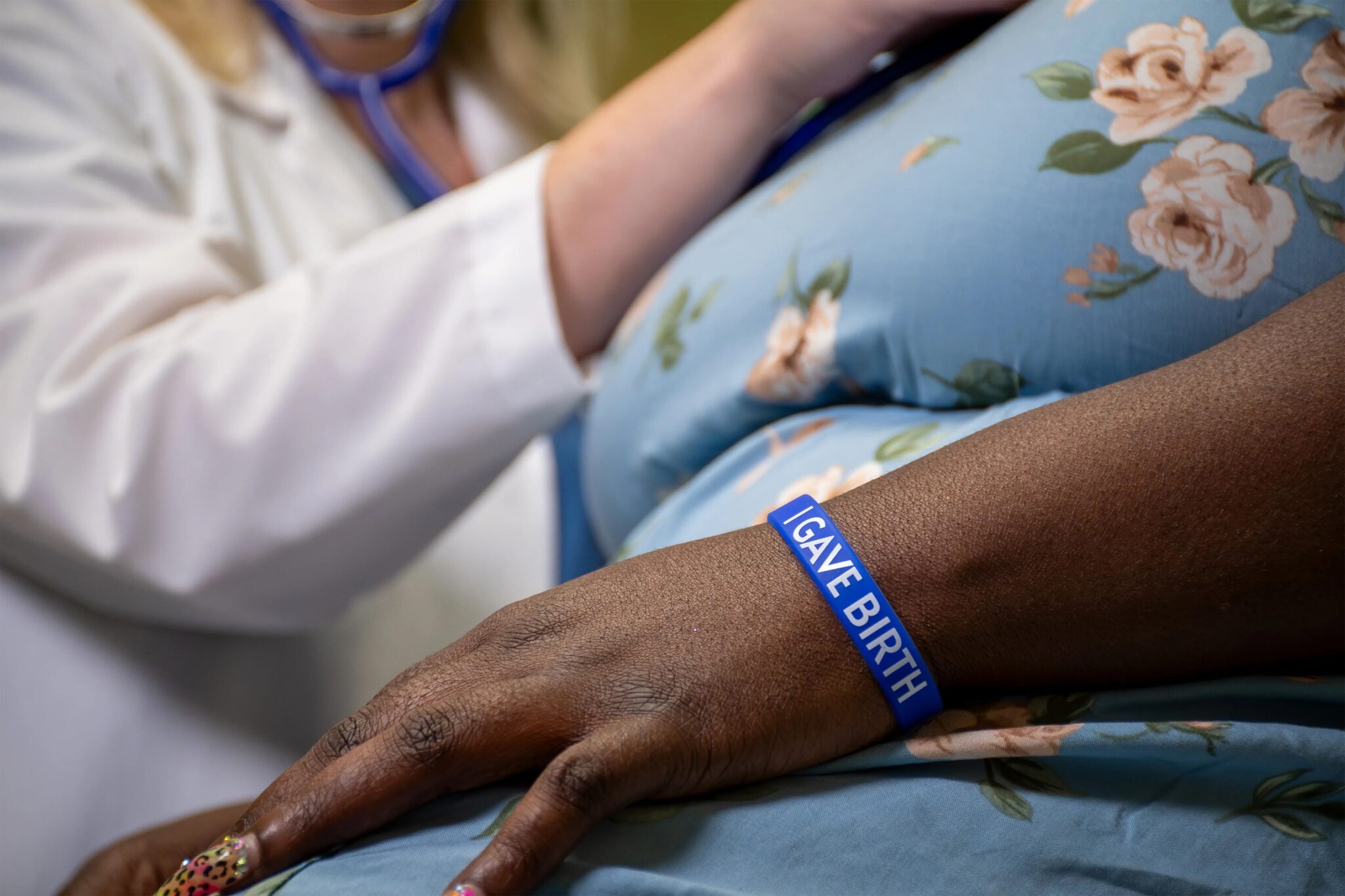
As far as we know, no hospitals in Seattle or Washington hand out silicone wristbands that say “I Gave Birth” on them. But it’s a very good idea. And, in my opinion as a longtime perinatal services provider, one that our local hospitals should adopt posthaste.
According to a report by KFF Health News, hospitals across the country have adopted a North Carolina-based initiative to curb the number of maternal deaths and complications after a woman delivers a baby and address the nation’s high death rates among postpartum mothers. Nearly 70% of pregnancy-related deaths in the U.S. occur in the days or weeks following birth. Nearly 40% occur beyond six weeks postpartum. Mothers are encouraged to wear the bracelets for at least four weeks, although the goal is longer.
Such a simple idea. I went to several wristband sellers’ websites and calculated that, for 81,000 bands (that’s the average number of births in Washington each year), it would cost the state about $13,000 to offer a silicone band to every mom. I know hospitals are bleeding money, what with all the Trump administration setbacks, but 13 cents per mom seems so abundantly reasonable as to make it ridiculous not to join the other 25 states. I imagine a state buying agent could get the cost far lower.
According to the 2025 March of Dimes Report Card for Washington, our state is doing better than most when it comes to maternal and infant outcomes after birth. We rank 9th of 48 in death rates for mothers. We lose 17.3 mothers per 100,000 births between pregnancy and six weeks after delivery.
If a 13-cent wristband could save one of them, or reduce the risk of costly health programs for any of them, it would save the state and hospitals plenty of money, and families inestimable heartache.
This is an easy one, Washington. Just do it.
Read the full story about wristbands and maternity care at KFF Health News.
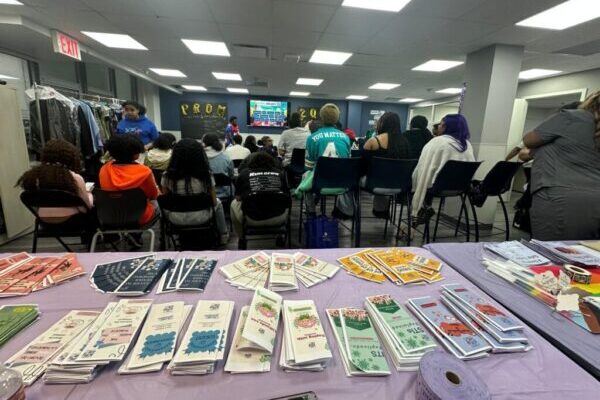
Photo Courtesy of Children’s Aid)
Judge halts changes to federal teen pregnancy prevention grants until case
The U.S. Health and Human Services (HHS) cannot implement any further comprehensive changes to grants under its Teen Pregnancy Prevention Program, at least until the case against the HHS cancellation of 53 grants made under the program is over. The judge in the District of Columbia federal court case has blocked any more changes during proceedings. The 53 grants, including a $1 million annual grant to Public Health – Seattle & King County for the Stepping Stones program, will remain cancelled for now, unless the administration decides to reinstate the funds.
Grantees like King County’s Stepping Stones program — a healthy-relationship and pregnancy-prevention curriculum aimed at justice-involved and child-welfare-involved youth — were given no advance notice before the June cancellation. They were told only that their programs were out of alignment with HHS priorities by normalizing or promoting sexual activity among minors.
King County and two other affected grantees, along with sex education advocacy group SIECUS: Sex Ed for Social Change, filed a lawsuit in the District of Columbia federal court to reinstate the funds. The judge in that case announced the hold on HHS Teen Pregnancy Prevention Program changes last week.
The Teen Pregnancy Prevention Program was created in 2010 by an act of Congress with the aim of preventing teen pregnancy through the use of diverse and evidence-based methods with a strong history of efficacy. Programs that received the funds focus not only on preventing pregnancy, but also on healthcare and community resources and on defining healthy relationships.
Since the federal program’s inception, teen pregnancy rates have fallen about 72%. Researchers attribute much of the overall drop in national birth rates to such education programs. The teen birth rate in Washington state for females ages 15 to 19 has dropped significantly since 2010. In 2010, that rate was 26.7 births per 1,000 girls. Currently, it stands at about 9.3 births per 1,000.
The administration could appeal the decision in the coming weeks. Stateline has requested comment from HHS officials. Read the full story from Stateline.

This Humboldt penguin chick hatched at Woodland Park Zoo (Photo courtesy WPZ)
Nominate a kid or parent for free zoo admission
Woodland Park Zoo is inviting members of the public—that includes parents, teachers, and kids—to request free admission tickets not for themselves, but for an adult or child they feel might not otherwise get to go to the zoo. Nominations will be accepted through September 30 through the zoo’s All for Access program.
Zoo staff point to a wide range of people who might qualify: families stretched thin financially or without stable housing, survivors of trauma or abuse, relatives raising kids through foster or kinship care, immigrants and refugees, and those managing serious illness or disability, among others. Nominations aren’t limited to acquaintances — anyone can put forward their own household. Once you submit your nomination, expect to hear back within about two weeks whether the nomination was approved. Approved tickets skip the nominator entirely and go straight to the person or family named. To submit your nomination, to to the All for Access webpage.