Being a parent is nonstop hard work, making it challenging to stay on top of news that impacts families in Washington state. This Hits Home is your weekly hit of news, commentary, and, occasionally, opinion. Want to have a say? Look for the “Take action” prompts. Here’s the update for the week of Aug. 24-30

Seattle teachers prepare strike signs on Saturday (Photo courtesy Seattle Education Association)
Will SPS teachers strike, delaying start of school?
Seattle Public Schools (SPS) and the Seattle Education Association (SEA), the union representing its teachers and other educators, met to try to move the needle on a new teachers’ contract. By Saturday evening, however, both sides were gearing up information campaigns for the increasing likelihood that an agreement will not be reached by Wednesday, the scheduled first day of school, and that teachers will strike. Their current contract ends on Monday. At a general meeting last Wednesday, union members approved a strike, “if necessary.”
SPS and SEA bargaining teams met Saturday; nearly 200 teachers gathered at Seattle’s Judkins Park to make strike signs. So far, the two sides have reached agreement on only about 20% of the 57 contract issues brought by the union. Check out The Seattle Times coverage of the sign-making event.
At the end of the day Saturday, teachers reported the bargaining session that day “did not go well.” A report in The Bulletin, an independent, parent-run publication covering SPS, that district officials had walked away from the table could not be confirmed on Sunday. The union has been posting bargaining updates on its website since negotiations began in June. On Saturday, the district posted information on the bargaining process for the first time.
“For the past several months, Seattle Public Schools has come to the bargaining table with purpose, persistence, and a clear commitment to students, families, educators, and schools,” that update said. “SPS remains steadfast in its commitment to working with Seattle Education Association (SEA) to achieve an agreement that serves all students, supports our employees, remains fiscally prudent, and positions our schools for a successful year.” The district update outlines the district’s rationale for what it has brought to the table. The superintendent plans to hold daily press conferences regarding the bargaining on Monday, Aug. 31.
Is walking out of the classroom legal? Check out this piece in The Seattle Times exploring that question. In a nutshell, it’s not legal, but the law hasn’t been enforced here in Seattle. At least not when the teachers last went on strike, in 2022.
Keep up today on SPS teacher contract negotiations.
(iStock)
As you prepare kids to return to school, these tips may help
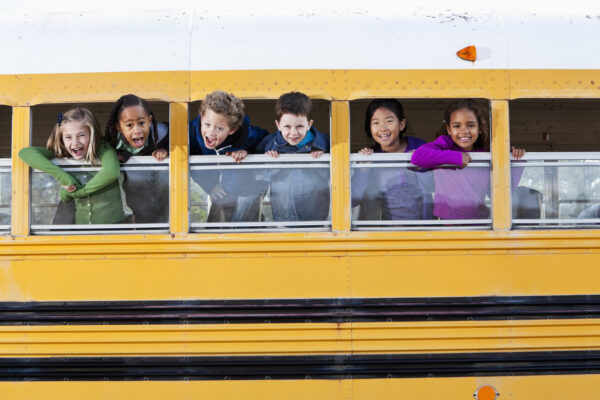
Heading back to school can be a stressful time for parents and kids, but planning ahead and talking through issues can help. Mollie Grow, MD, MPH, a pediatrician at Seattle Children’s Hospital, offers tips to ease the transition. Here are Dr. Grow’s tips for transitioning kids back to school:
- Incorporate check-ins with your child: Butterflies and anxiety are common when children head back to school. Starting or switching schools can increase stress. Talk about it. Focus on the positives and leave questions open-ended.
- Practice makes perfect: Practice getting back into a routine, starting now. Practice getting up earlier each day. Go to bed 10 minutes earlier.
- Plan ahead: The more a child feels involved in the plan, the more likely they are to cooperate, and the easier the transition. Allow kids to problem-solve and navigate situations on their own, within reason.
- Set routines now: Both for the morning and after school. Set aside time for homework in the afternoons and prioritize family dinners. Lay out the next day’s outfits and pack tomorrow’s lunch. Keep a highly visible calendar.
- Encourage proper sleep: A study published in June found that inconsistent bedtimes were associated with poorer behavioral self-regulation, task persistence, and homework completion. School-aged children need 10-11 hours total sleep. Teenagers should get at least 8 1/2 hours.
- Ensure they eat well: Start every day with a healthy breakfast. If you pack lunches, let kids help put them together or have a say in what they eat.
- Make safety a priority: Make sure children always carry an emergency contact card. Remind them to never get in a car with strangers. Practice walking or biking to the bus stop or to school before the first day.
- Talk to their teachers: Bring up any concerns (such as fear of bullying) with a teacher before the first day of school.

Image by Jon Anderson, Suguamish News. Read the Anderson’s history review at suquamish.nsn.us/suquamish-in-seattle
Suquamish tribal curriculum ready for King County classrooms and beyond
Last week, nearly 50 teachers and administrators from at least eight school districts were on hand at Chief Kitsap Academy to review a Suquamish Tribe-focused social studies course for grades 6-12. The curriculum, decades in the making, traces the original names and locations of Suquamish villages around Puget Sound and covers the 1855 Treaty of Point Elliott and the obligations it created for the U.S. government, present-day tribal governance, and how the tribe responds to environmental pressures. The lessons, centered in the Suqualmish point of view rather than outside interpretations of tribal history, connect kids with names and places erased or altered by colonization and frame the treaty as a case study in U.S. foreign policy.
According to a report from KUOW, Seattle Public Schools plans to start using the material with students after the return from winter break.
The new curriculum is the result of a 2015 law that turned the statewide “Since Time Immemorial” curriculum into a requirement, pushing districts to partner with local tribes to offer local tribal versions. The state Board of Education’s 2026 compliance report found 85 of Washington’s 325 districts, or 26%, still haven’t met the requirement statewide.
Funding has been a persistent obstacle: the team worked primarily from a single $30,000 OSPI grant, and Lawrence is now asking districts on Suquamish territory to contribute $5,000 each to sustain the work. Middle and high school units are finished and in use; elementary-level material doesn’t exist yet and will need more funding and time to build. Read more at KUOW.

(Photo courtesy of the state Department of Children, Youth and Families.)
More 2025 child welfare deaths and injuries than previously reported
In 2025 Washington’s child welfare system experienced a record number of deaths and serious injuries among children in its care. But according to new data, it turns out those surprisingly high 2025 numbers were underreported, and the actual 2025 numbers were even higher.
The new data from the Washington Office of the Family and Children’s Ombudsman, 35 children with a connection to the system died and 49 more nearly died in 2025 from causes including maltreatment, abuse and neglect. There may be even more as some cases continue to be reviewed. State officials say kids’ accidental drug ingestions were part of the reason for the high number of deaths and injuries. Things are looking up this year: critical injuries have dropped significantly in the first half of 2026. Read the full story at Washington State Standard.
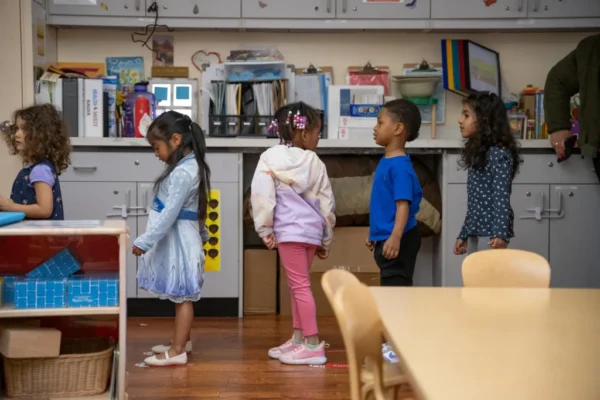
The Trump administration has proposed major changes to the Head Start program. (Photo by Florence Middleton / CalMatters)
Make your voice heard on proposed changes to the Head Start program
The Trump Administration recently proposed changes to the Head Start, the the federally funded early learning program that has provided access to education and assistance for more than 60 years. Those changes have leaders of the program in Washington State and across the county up at arms.
In a release, Washington State Association of Head Start and ECEAP said the Administration’s proposal “would would strip away decades of research-based standards and jeopardize one of America’s most successful investments in young children and families. The proposal would make it harder for local programs to provide the high-quality education, health, and family services children deserve.
The administrations proposals would roll back long-standing requirements related to child safety, staffing, teacher qualifications, curriculum and assessment, disability services, nutrition, and family support. In other areas, opponents of the changes say, it will create unnecessary red tape that would make it harder for families—including many experiencing homelessness—to enroll. They are urging parents to send comments to U.S. Health Secretary Robert Kennedy, Jr.
And, the release said, “The proposal also includes a backwards and mean-spirited attack on immigrant families by requiring Head Start agencies to provide instruction only in English, leaving out thousands of children and families who speak another language at home.”
Head Start leaders stressed “Current standards and requirements that govern Head Start enable local programs to provide high-quality support and care for kids and families.”
The U.S. Department of Health and Human Services is accepting public comment on the proposed changes until October 6.
TAKE ACTION: You can submit your thoughts on the administration’s proposed changes by going to the department’s comment site.

(iStock)
Washington’s teen drivers are doing pretty well, overall
According to the Centers for Diseaase Control and Prevention, teen auto accidents cost billions annually – not just financially but in human suffering. Which makes Wallethub’s Best & Worst States for Teen Drivers in 2026 list welcome news for Washington: WalletHub compared every state in the nation over 23 key metrics and ranked the state 8th best in the nation in terms of how its teen drivers fare. The metrics cover everything from the cost of auto repairs to teen driver fatality numbers. Here’s how Washington did (with 1st being the best):
- Overall Rank: 8th
- Teen driver fatalities per 100,000 teens: 26th
- Presence of distracted-driving/texting-while-driving laws: 1st
- Premium increase after adding teen driver to parent’s policy: 14th
- Provision of teen driver’s graduated licensing program laws: 14th
- Vehicle miles traveled per capita: 6th
- Presence of occupant-protection laws: 1st
- Presence of impaired-driving laws: 1st
Don’t let that high overall ranking fool you. When it comes to safety, Washington came in close to the middle of the pack at number 19.

Dolly Parton did far more than sing for Washington’s kids
Leaders at the local arm of Imagination Library, launched by legendary country singer Dolly Parton to ensure all children have access to free books to read at home, pledged to continue Parton’s mission following the announcement of her death on Tuesday.
“Today, we mourn the loss of Dolly Parton — an extraordinary woman whose vision changed childhood for millions,” said Brooke Fisher-Clark, Executive Director, Imagination Library of Washington. “Here in Washington, Dolly’s legacy will live through every book delivered, every story shared, and every child inspired to dream bigger.
“Dolly made a colossal impact on this world, and particularly on our children,” Fisher-Clark said. “We are committed to keeping her legacy alive in Washington state, alongside our local program partners, by ensuring our youngest learners continue to have the opportunity to receive a free Imagination Library book in the mail every month.
In a video announcing the singer’s death, Parton’s nephew, Bryan Seaver said: “By her example, we believed that anything was possible. She never saw a door she couldn’t open, and the doors she opened made and changed history.”
Together with community partners, Imagination Library of Washington mails books directly to kids’ homes each month to support and increase early literacy and school readiness. The library sends out books — including bilingual options — to kids in all 39 Washington counties regardless of family income. Click here to enroll.

(Photo courtesy Coffee TAB)
Enjoy a cuppa Joe to support foster youth
Nonprofit coffee shop Coffee TAB is preparing to open its third location, this one at 23rd Avenue South and South Jackson Street in Seattle’s Central District, expanding its workplace training program for Seattle youth. The organization also operates cafes in Pioneer Square and Belltown.
Coffee TAB’s paid, eight- to 12-week apprenticeship is aimed at supporting foster youth and other teens and young adults who have experienced foster care or housing instability. Apprentices gain hands-on barista experience in customer service, support and skill-building for job applications and interviewing, personal finance and workplace responsibilities. New Horizons, Treehouse and YouthCare are among the foster care support and youth organizations that refer participants to the program. The cafe will occupy a former Starbucks space that has been vacant since 2022. An opening date has not yet been announced. Read more at South Seattle Emerald.
TAKE ACTION: Help kids leaving the Washington foster care system gain work skills and other support by enjoying a cup or two of coffee at Coffee TAB’s first two locations: 211 Lenora St. and 719 2nd Ave., both in Seattle.
(iStock)
Stop teaching the fun out of childhood | Op-Ed
By Lenore Skenazy for The Herchinger Report
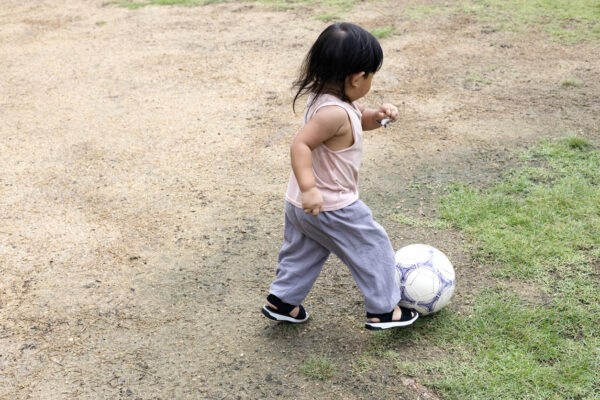
How do kids learn how to kick a ball? If you think that’s a silly question — kids just kick things, don’t they? — you are thinking like me: Old school.
Recently Ginny Yurich, host of the “1000 Hours Outside” podcast, sent me some pages from a pre-K curriculum she’d seen at a conference last year. Kicking is just one of the skills it offers instructions for. And it’s not just, “Give ’em a ball and get out of the way.”
No, the guidance is much more granular. Teachers facing the complex and detailed task of teaching kids to kick are told to first “invite” kids outside, earnestly discuss safety issues (kids must stand far apart!) and then “Demonstrate how to kick the ball, and talk through each step as you complete it: ‘Now that I’ve looked around to make sure it’s safe, I’ll run up and kick the ball. I’m going to keep my foot under the ball when I kick.’ ”
Then, “Tell the child to place the ball on the ground and take at least four large steps back.” How far back? That, too, must be prescribed: 8 to 10 feet. Next: “Have the child move quickly up to the ball and place the nonkicking foot next to the ball. Help him or her swing the kicking leg forward so the foot hits the ball below its center. …”
The instructions keep going! But if someone told four-year-old me to kick a ball by moving quickly up to it and being sure not to use my “nonkicking foot” — surely a popular phrase among preschoolers — I think I’d have kicked something else.
And I wouldn’t need an adult’s “help” swinging my other leg forward, thank you very much.
Note that these instructions are for all kids, not kids in early intervention programs. What’s most disturbing is they seem perfect … for a robot.
Kids don’t need to be taught to kick a ball. Put a ball in front of one and see if you can keep them from kicking it. They really don’t need much instruction in having fun. So why does this “curriculum” exist? It has to do with the way we think of education and fun itself. Read the full opinion in The Hechinger Report.
**Lenore Skenazy is president of Let Grow, the nonprofit promoting childhood independence and resilience, and author of Free-Range Kids.

Let kids learn about opera and get a backstage view during Opera Center Open House on Sept. 26 (Photo by Sunny Martini)
Seattle Opera open house: A family-worthy backstage pass
It’s rare that kids — or even adults for that matter —get a backstage pass to the inner workings of a classic professional musical theater. But the annual Seattle Opera’s Opera Center Open House offers that rare opportunity.
On Saturday, Sept. 26, from 1 to 4 p.m., families are invited to visit the opera house at Seattle Center for an afternoon of hands-on activities and learning about an artform that is nearly four and a half centuries old. The event is free.
Why take your kids? There are many reasons, not the least of which is the chance to try on real costumes, feel awe at the pageantry, engage in hands-on activities. But introducing kids to opera offers many benefits. Check out the whats and whys of attending the open house.
Should teachers ask kids to read Huck?
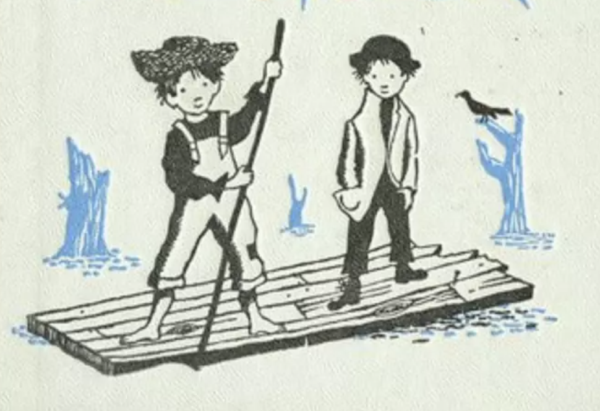
As of this month, “The Adventures of Huckleberry Finn” remains on Seattle Public Schools list of officially approved books for 11th-grade English. The book is listed, for example, on Ballard High School’s college prep reading list. That doesn’t mean it will be taught in any particular class or high school, but it means it could be.
Conversely, you won’t find the controversial book in Bellevue public schools. The district there removed it from official reading lists.
That dichotomy makes literary critic Ruth Franklin’s recent piece in The New York Times Magazine an even more interesting read as kids prepare to return to school. Franklin set out to answer a question dividing American English departments in King County and across the nation: does “Adventures of Huckleberry Finn” still deserve a place on the syllabus? Twain packed the novel with a slur that appears well over 200 times, using it, most scholars believe, to indict his characters’ bigotry rather than share it. That hasn’t stopped it from being targeted for removal in more than a dozen states over the past 25 years, though more often it just quietly falls off the reading list as stretched-thin teachers avoid the risk.
Franklin links that retreat to a longer decline in how much students read overall — AI, pandemic-era setbacks, and years of early classroom screen time have all chipped away at full-novel reading, pushing teachers toward Black-authored books on slavery instead. A 2011 edition that swapped the slur for “slave” tried to solve the problem and was largely rejected by scholars for draining the satire of its bite. A Trump administration order discouraging classroom discussion of systemic racism has added a legal chill on top of the pedagogical one, and current data puts regular classroom use of the novel at under 2% of surveyed teachers.
Franklin’s verdict: the novel is worth keeping, but only in careful hands. In a way, the article also offers important advice for any Seattle 11th grade teachers entertaining the idea of asking kids to open Huck this year: Spend real time on the slur’s history before asking kids to start reading, treat its ugliest scenes as satire meant to sting rather than entertain, and help students see the enslaved character Jim as sharper and more self-aware than the narrator gives him credit for.
What makes the book worth the difficulty, Franklin offers, isn’t just its portrait of racism — it’s the way it teaches readers to question inherited beliefs and think for themselves, a skill she worries students are losing along with the book itself.

Laerke the polar bear will soon leave Point Defiance Zoo & Aquarium (Photo by Katie G. Cotterill)
Time’s running out to visit Laerke, Tacoma zoo’s popular polar bear
Point Defiance Zoo & Aquarium‘s popular polar bear will leave Tacoma this fall for an accredited zoo elsewhere, following a breeding match recommendation from the Polar Bear Population Alliance. Laerke, now 5 years old, arrived at Point Defiance in 2023 alongside her twin sister, Astra. Astra was moved to another zoo on a similar recommendation in 2025. Laerke’s early life was rocky — she needed intensive medical care and was hand-raised by staff after a difficult birth at Detroit Zoo — but keepers say a year of hormone monitoring shows she’s now cycling into reproductive maturity.
That means she has a real shot at becoming a mom. Due to the threatened status of polar bears, accredited zoos coordinate breeding efforts to keep the population genetically diverse. Point Defiance isn’t planning to replace Laerke right away, though it intends to keep contributing to bear research. The vacated habitat won’t sit empty for long: starting in early 2027, the zoo’s penguins will move in temporarily while crews tear down the old North Pacific Aquarium building and replace it with a larger penguin habitat, funded by a bond voters approved in April 2026.