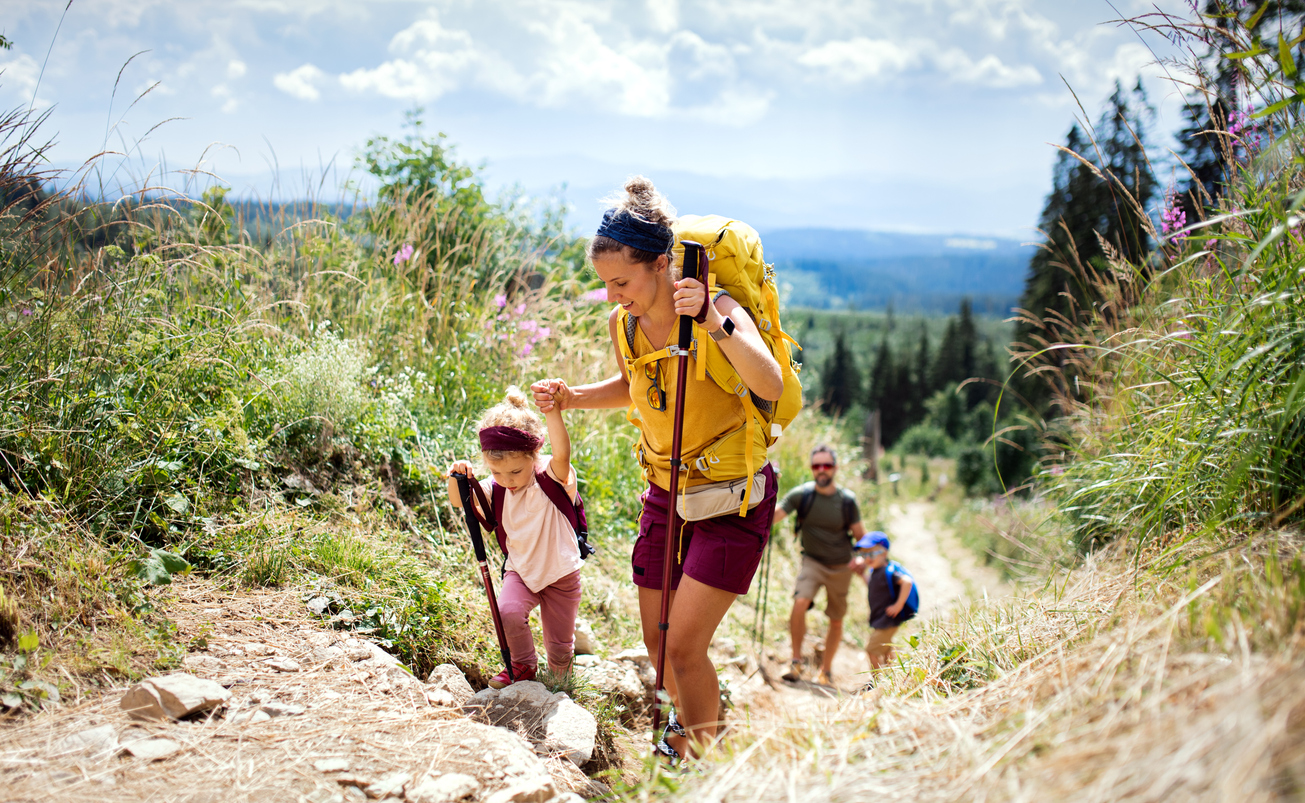
Editor’s Note: A string of serious hiking incidents in Washington this month offers a sobering reminder that even a day hike can quickly turn dangerous. A 9-year-old girl was seriously injured in a fall while hiking with her family near Cle Elum; a 45-year-old woman died after she and her husband were caught by an early snowstorm in the Enchantments; and two men, ages 78 and 66, died in separate incidents on Sauk Mountain within days of each other. The circumstances were different — a fall, rapidly changing weather, becoming separated from family and steep terrain — but together they underscore the importance of heading into Washington’s mountains prepared for more than the hike with your kids that you expect to have.
Time spent outside as a family is one of the best ways to connect with one another and to engage all of our senses. Time in nature provides novel experiences—a bug you’ve never seen, clouds in new shapes, experiencing the soft yellow needles of autumn larches for the first time. The unpredictability of a day on the trail or at the beach spurs curiosity and exploration, and helps kids develop executive functions like resilience, delayed gratification, and personal risk management.
But that same unpredictability comes with inherent risks—circumstances that we can anticipate and prepare for. Things don’t always go as planned, but your level of preparation often determines whether surprise events are challenging and fun with a good outcome, or challenging and dangerous with a bad outcome.
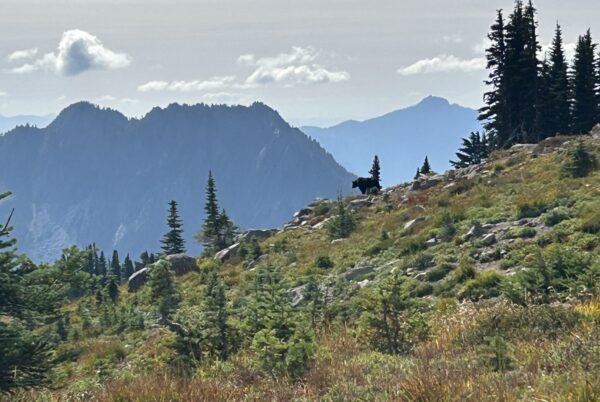
Look carefully. That’s a bear on a trail on Mt. Rainier (Photo courtesy M. Murfin-Bond)
Know the risks
Weather: The saying is “there’s no bad weather, just bad gear,” and while that’s not entirely true, being prepared for changing weather can make the unexpected “less bad.” And there are some conditions that we simply should not be out in, like lightning storms or heavy snowfall in avalanche terrain.
Injury: We can all make decisions that prevent injury, but just as we can trip and fall at home, injuries can and do happen outdoors. Whether it’s a bee sting, a scraped knee, or even a broken bone from a fall, it’s important to be prepared for injury, including anticipating risks and taking steps to prevent injury.
Wildlife: Most people love to see wildlife, but things like ground wasps and biting flies can make an outing unpleasant or even dangerous. Habituated (fed by humans) critters like chipmunks and gray jays (commonly called “camp robbers”) can become aggressive towards humans. Black bears, especially mamas separated from their cubs, can become aggressive. While rare, cougar encounters do happen, especially at dawn and dusk.
Darkness: Especially as we head into the fall, nightfall can surprise us as it gets earlier every day. At night, navigation is more difficult, hazards are harder to avoid, and temperatures drop.
Hypothermia (getting too cold): In the Pacific Northwest, hypothermia is a risk year-round. When we stop moving, we stop generating our own heat through movement. If we’re sweaty, if it’s breezy, or if it’s raining, we can get cold very quickly. The ground is usually very cold to sit on, and it makes us colder faster. Once we are cold, it can be hard to warm up, especially if we’re tired, because we need to move and generate body heat to warm back up.
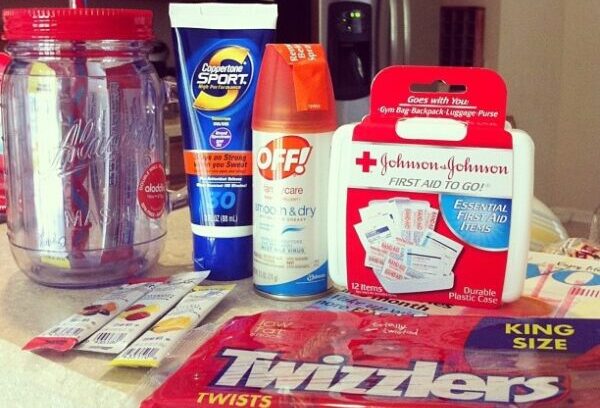
For your pack (Photo by Melissa Hillier / CC 2.0)
What it means to be prepared
You can anticipate and plan for the risks I listed above, even if they most likely will not happen.
Find a suitable destination. Washington Trails Association www.wta.org is a great resource for finding hikes—you can filter by region, kid-friendliness, distance, elevation gain, and other factors. It’s important to choose hikes within the limits of every member of the family, not just the strongest. For a family this is the youngest, weakest member.
Check the weather and conditions. The WTA site will have links to recent trip reports, as well as a link to the weather forecast. Consider trail conditions, which may be snowy, icy or muddy, as well as weather conditions. Remember to check wind forecasts, as well as temperatures and precipitation. Many trails in Washington are in avalanche-prone terrain, and snow arrives early in the fall and lingers late into the spring in the mountains compared to the lowlands. Check trail descriptions and trip reports to understand the avalanche risks. If there is any avalanche risk and you do not have avalanche training, choose a different destination.
Carry navigation tools and know how to use them. I always recommend taking a map-and-compass or navigation course, even if you use GPS. These courses are offered online, at REI, at The Mountaineers, and plenty of other places. If you have the Gaia Maps app, you can search for your selected hike, and it will take you there so you can follow the route on your phone. Be sure to download offline maps before heading out, since many hikes have limited to no cell service. Be sure you have a device that can identify the latitude and longitude of your location since communicating the latitude and longitude is critical for rescuers to find you in an emergency.
Carry supplies to stay warm, fed, and hydrated. Regardless of the season, I recommend carrying the following for every individual on your trip:
- a foam or inflatable sit pad to insulate from the cold ground
- a winter hat
- one layer warmer than you would typically wear in that weather
- a rain/wind layer
Bring more food than you think you’ll eat, and at least a liter of water per person for a half-day adventure (more if it’s a high-exertion adventure). In the spring/fall/winter, gloves and neck gaiters are a good idea, as well as much warmer layers.
Carry at least one light source per person. Even if you don’t plan to be out in the dark, having light makes a world of difference if it gets dark. Headlamps are great, but flashlights will do the trick. Don’t rely on your phone’s light – it’s too easy to drop, and tends to run out of battery faster than a headlamp or flashlight.
Carry a first aid kit. At minimum, you should have a first aid kit with:
- Bandaids
- Gauze
- Tape
- an EpiPen prescribed to the person with the allergy
- Emergency supplies for any other known medical conditions, such as treatment for diabetic shock
- ibuprofen
- sun protection
- insulation layers (see above)
- illumination like a flashlight or headlamp (see below)
- first‑aid supplies (see below)
- fire‑starting methods
- repair kits
- extra food (see above)
- emergency shelter
Pre-made first aid kits are a great purchase, and often include SAM splints and triangle bandages, which are both great to have. Even if you don’t know what to do with them, someone else on the trail might. And consider taking a wilderness first aid course.
Make a communication plan. Tell someone where you’re going, and what time you plan to be back. As many trails have minimal cell service, carrying a satellite device or a cell phone with satellite communication capabilities is highly recommended. Be sure you know how to use them before heading out.
Tend to your own needs, parents. When planning outdoor adventures, take care of yourself. Adults often worry so much about preparing the kids that they set their own needs aside. When you’re out in nature, you put your kids at risk if you don’t take care of yourself.
Now, customize for your family. Is there a portable game you can bring just in case you need to sit and wait, either while someone rests or (worst case) you are waiting for rescue? Are there special favorite snacks you can sneak in to pull out when things become challenging?
Talk to your kids about trail risks before you go. Consider taking a first aid or navigation class together.
Set expectations. When you plan to head out into the wilderness as a family, or when your teens go out as a group, set expectations ahead of time. What expectations? Agree that you’ll:
- stay together
- keep a distance from wildlife
- stay hydrated and remind each other to do so
- practice safe movement in challenging terrain
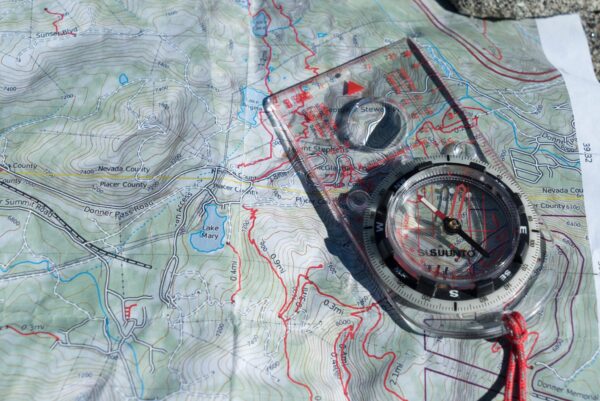
(Photo courtesy REI)
Education is the best preparation
I advise everyone in the family to get educated —take a course yourself and enroll your kids in outdoor programs that teach preparedness. The Mountaineers offers beginner, intermediate, and family hiking courses, as well as backpacking, navigation, avalanche, and first aid courses. The Mountaineers also offer a suite of youth programs.
No matter your experience, when you take a course, you’ll learn new tips and meet a great community of people who will support you as you make outdoor memories while managing risks along the way.
What do to in a hiking emergency
When a 9-year-old girl was injured while hiking on the Red Top Lookout Trail near Cle Elum this month, rescuers were called out to the trail. In fact, they were called to the trail twice in September according to Fire Chief Aaron Lowe of Kittitas County Fire District #7. Such incidents, while rare, are a good reminder for parents to head to any trail prepared. If injury does happen, here’s what to do, according to Lowe and the National Park Service:
-
Call 911 for a serious injury. Give your exact or best-known location, GPS coordinates if available, trail name, nearby landmarks, nature of the injury and relevant medical information. Give your phone number immediately in case the call drops.
-
Stay put after rescuers know your location, unless there’s an immediate danger where you are.
-
Stabilize the person and minimize movement. Control serious bleeding with direct pressure and keep the injured hiker warm and dry.
-
If there’s no cell service, send for help rather than trying to move a seriously injured person. If you’re in a group, send at least two people while others remain with the injured person. A passing hiker can also be asked to reach service and call 911.
-
Make yourself easy to find. Bright clothing, an emergency blanket or tarp, a whistle, flashlight or other signaling device can help rescuers locate you.
-
Be prepared to wait. Backcountry rescue can take hours or even days depending on terrain, weather and available resources, which makes being prepared all the more important.