Being a parent is nonstop hard work, which makes it hard to stay on top of news that impacts families in Washington state. This Hits Home is your weekly hit of news, commentary, and, occasionally, opinion. Want to have a say? Look for the “Take action” prompts. Here’s the update for the week of Sept. 21-27
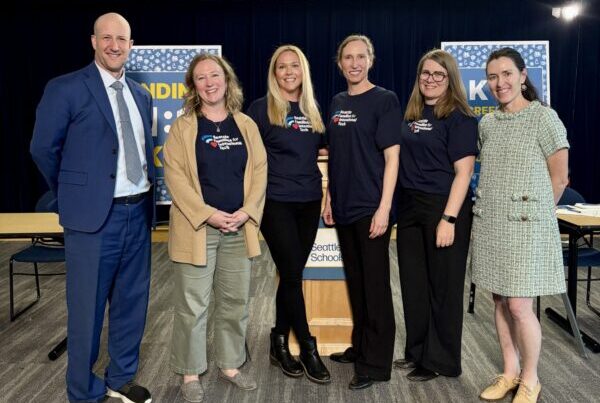
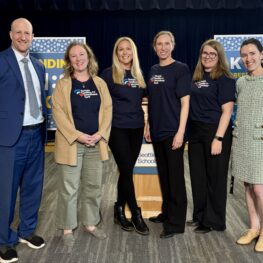
SPS Superintendent Ben Shuldiner with the district’s technology team (Photo courtesy SPS)
SPS changes iPad policy and sets screen time limits for K-2
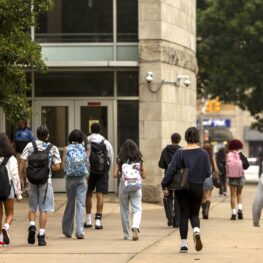
Superintendent Ben Shuldiner announced major shifts in Seattle Public Schools’ K-2 student technology last week. The district will phase out 1:1 devices for kids in grades K-2 —currently every SPS K-2 student has an iPad assigned to them for the year. By January 4, K-2 classrooms will shift to a model where iPads are available to sign out or borrow but will not be the exclusive designated device for each student. At the same time, SPS K-2 classrooms will limit student screen time to 30 minutes or less per day, and, said Shuldiner, “days where hopefully they have zero screen time.” This shift is also meant to occur by January 2027.
Shuldiner said the district needs more stringent and intentional use of technology.
“It’s not just about limiting it to 30 minutes. It’s that if we’re ever going to use technology, there needs to be a high bar for using it. Meaning, it’s not just to watch cartoons,” he said. “It’s not just to watch some video.”
The district isn’t getting rid of classroom technology altogether, but Shuldiner said the district wants a much higher bar for putting young students in front of screens. He added that SPS is “just the beginning of a conversation” on more intentional tech use and that the district is referring to the changes as a “shift” and not an official policy at this point. Read the full story.
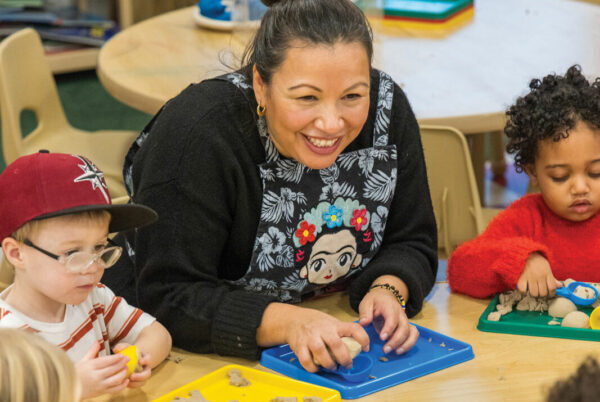
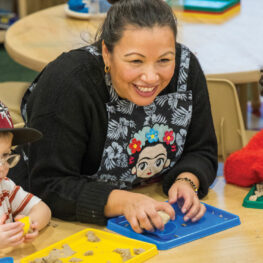
Playing with play dough and animals at the José Martí Child Development Center of El Centro de la Raza. (Image: Joshua Huston)(Photo by Joshua Huston)
15 Seattle and county schools and child care sites to open new free child care spots
Families looking for free preschool will have more options across the Greater Seattle area this school year, with 16 new sites opening in Seattle, Federal Way, Kent, Renton, Tukwila, Lynnwood and Des Moines.
The new locations are part of a statewide expansion of Washington’s Early Childhood Education and Assistance Program (ECEAP), expected to add about 2,400 preschool slots for the 2026-27 school year. ECEAP provides free preschool and family support primarily to eligible low-income 3- and 4-year-olds.
Seattle will get three new sites: Refugee Women’s Alliance – Nook, Refugee Women’s Alliance – Othello, and Rise and Shine. Four are opening in Federal Way, three in Renton, two each in Kent and Tukwila, and one each in Lynnwood and Des Moines.
Statewide, 42 new ECEAP sites are opening, while 105 existing sites are adding slots. More than $251 million in state and private grant funding will go to early learning providers this school year. Read the full story.
Talkspace teen mental health program reaching far fewer than expected
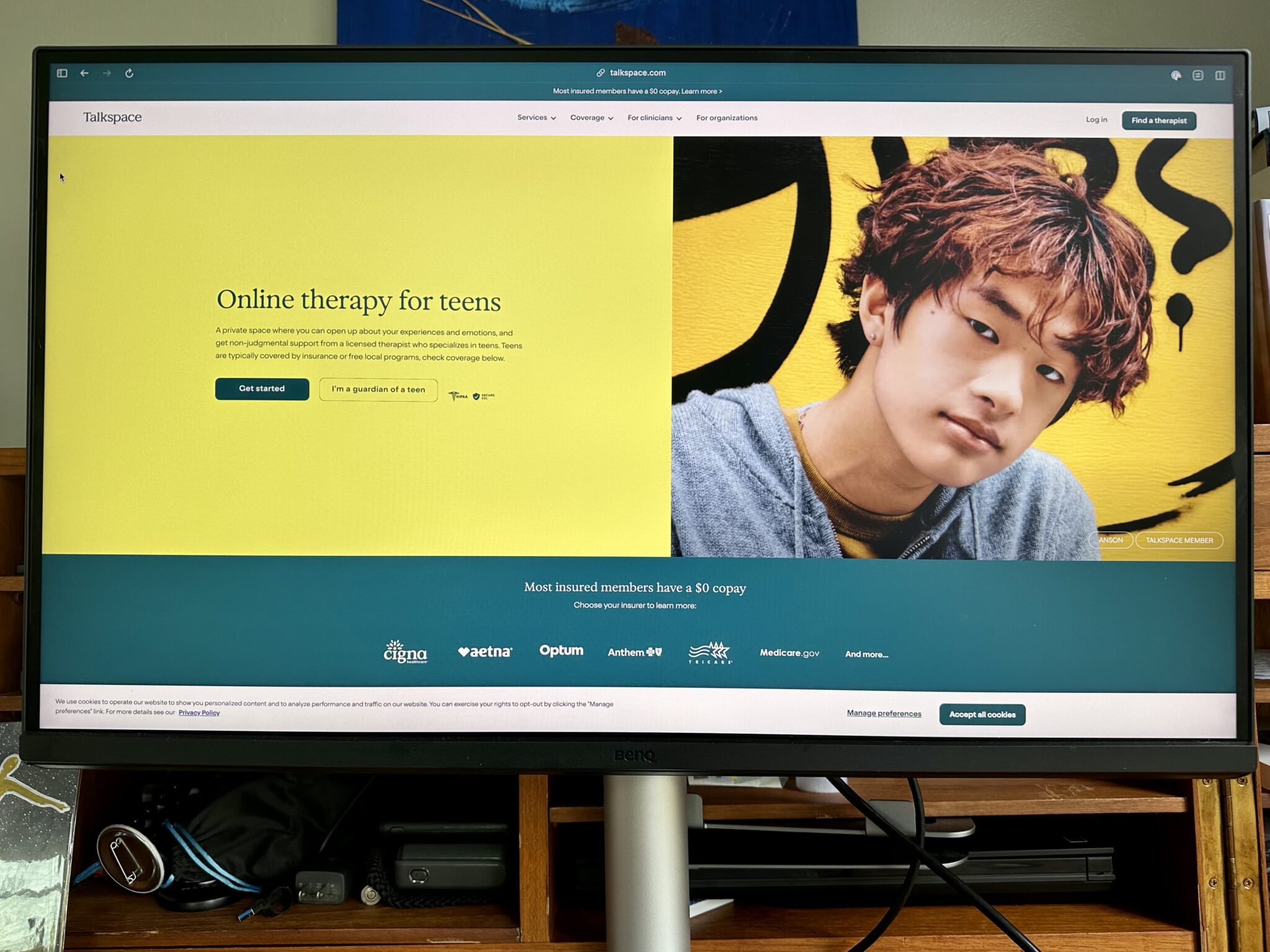
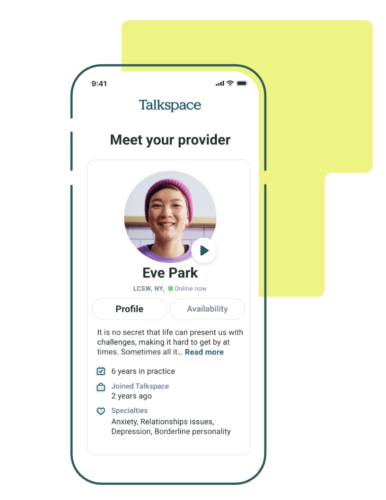
Remember back in 2024 when Seattle parents, educators, and city officials were all abuzz about Talkspace, the web-based service and app that promised to provide access to unlimited therapist messaging and one 30-minute virtual therapy session per month for thousands of teens and young adults (ages 13 to 24) over a 21-month contract with the city? According to an investigation by Proof News and The Seattle Times, the city expected more than 4,000 young people to register for the service last school year, but Talkspace reached far fewer than city officials anticipated. According to the report published last week in the Times, 1,762 registered and only 442 actually connected with a provider and received therapy. For some, that connection consisted of as little as a single text.
And yet, Seattle is paying Talkspace $104,500 per month regardless of how many young people use the service, an expense that city officials defend. But then reporters found similarly low participation in other government-funded Talkspace programs around the country.
Is the program’s low use worth the cost? Read the full story, which explores that question as well as another one: does Talkspace provide what kids need?

Fall offers perfect hiking weather: Are you keeping your kids safe?
A string of serious hiking incidents in Washington this month offers a sobering reminder that even a day hike can quickly turn dangerous. A 9-year-old girl was seriously injured in a fall while hiking with her family near Cle Elum; a 45-year-old woman died after she and her husband were caught by an early snowstorm in the Enchantments; and two men, ages 78 and 66, died in separate incidents on Sauk Mountain within days of each other.
The circumstances were different — a fall, rapidly changing weather, becoming separated from family, and steep terrain — but together they underscore the importance of heading into Washington’s mountains prepared for more than the hike with your kids that you expect to have. We asked Becca Polglase. Director of Programs and Operations at The Mountaineers and a lifelong hiker and outdoor educator, to outline for parents what it really means to go into the woods, hiking or pursuing any other wilderness adventure, truly prepared. Check out her thorough and informative advice: “Great outdoor family adventures start with being prepared.”
(iStock)
WA Board of Education sends granduation requirements overhaul to legislature
The Washington State Board of Education has settled on the overall plan for Washington’s high school graduation requirements, but more work lies ahead before that plan is finalized. A big piece of that work is getting the state Legislature to approve the board’s legislative request during the 2027 legislative session, which begins in January.
One of the biggest changes in the board’s new plan would eliminate the requirement that students complete one of the state’s nine graduation pathway options. Currently, students must meet at least one pathway, with options ranging from qualifying exam scores to completing a sequence of career and technical education courses.
The proposal would also reshape several course requirements. Algebra II would become the standard third-year math course. The current half-credit civics requirement would be expanded and paired with world history to create a yearlong course. Schools would also be required to offer a one-credit financial education course.
The package of proposed changes, called the FutureReady initiative, grew out of work that began last year, when the State Board of Education convened a task force that included representatives from government, community organizations, and businesses. The group was asked to reconsider Washington’s graduation requirements in light of the skills and education students may need after high school, particularly as more jobs require some form of postsecondary education or training.

A local author tackles autism, kindness and inclusion in new kids book
Every now and then, you come across someone who truly wants to make a difference and make others’ lives better. Elijah Winfrey is one of those people. A Seattle-area paraprofessional, advocate, and nonprofit founder focused on supporting those with autism, Winfrey is also a children’s book author. He says his inspiration comes from his niece and nephew, who are both on the autism spectrum.
His newest book “Little E and The Greatest Gift” will be released November 17 and follows a student as he develops a friendship with a sixth-grade classmate on the autism spectrum. The new book —about kindness, friendship, and inclusion—is the fourth in a series of books about the main character, Little E. The new book and others in the series are available on Amazon.com, Walmart.com and other book sites.
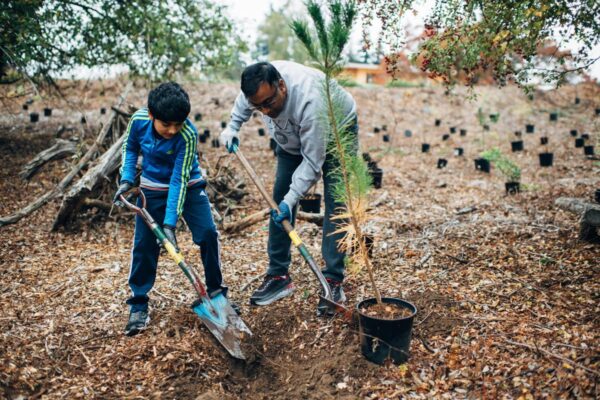
Borrow a tree for a donation and then plant it back in nature (iStock)
Holiday Trees for Habitat taking orders now
Is decorating a tree a traditional part of your Christmas or other fall or winter holiday season? If so, do you feel a little guilty about cutting down a tree that could keep serving the environment? Holiday Trees for Habitat is your “out.” The Mountains to Sound Greenway Trust sponsors the program and stewards the 1.5-million-acre landscape stretching from Seattle to Ellensburg along I-90.
Instead of cutting down a tree, the program invites families to adopt a living holiday tree this year. In fact, your family will just be borrowing the tree. After the holidays, participants return the trees to organizers, who will care for them until spring, then plant them at a habitat restoration project site. Living holiday trees must be pre-ordered between Oct. 1 and Nov. 23. A $100 to $200 donation supports local habitat restoration projects, including those in the Issaquah area, through the Mountains to Sound Greenway Trust and Friends of Lake Sammamish State Park. Learn more.
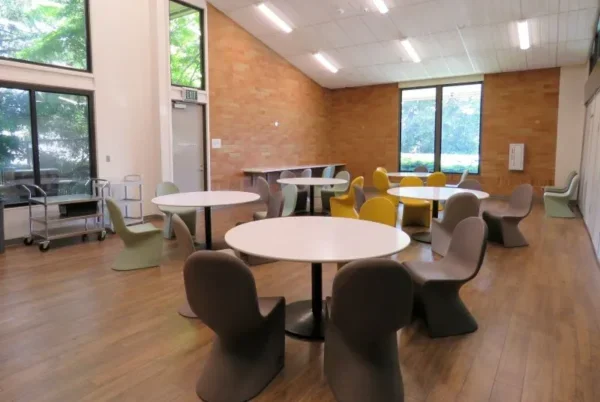
(Photo courtesy of Pearl Youth Residence)
WA is about to lose a third of its inpatient beds for seriously mentally ill kids
Washington is set to lose a significant share of its long-term psychiatric treatment capacity for children when a Tacoma residential facility closes in November.
Pearl Youth Residence, operated by nonprofit Comprehensive Life Resources, is one of four facilities in Washington’s Children’s Long-term Inpatient Program, or CLIP, which provides the state’s highest level of inpatient psychiatric care for children and teens with severe psychiatric disorders. The Tacoma facility has capacity for 27 youth; statewide, CLIP has 109 funded beds.
The closure comes as families already face waits for this intensive level of care. Thirty-six children are currently waiting for a CLIP bed, according to a report by The Seattle Times last week.
The loss of beds could put additional pressure on hospitals, where many children experiencing serious psychiatric crises end up for extended periods while waiting for treatment center placement. Read the full Seattle Times report.
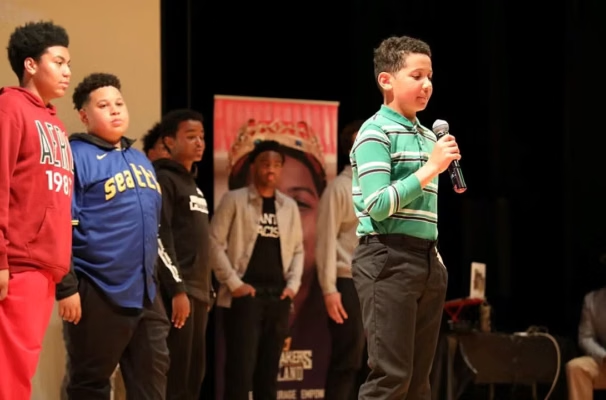
(Photo courtesy Seattle Public Schools)
Editor’s note: Seattle Public Schools has several efforts aimed at expanding opportunities for Black boys, including programs through its Office of African American Male Achievement and a current district strategy that calls for helping Black boys and teens reach Algebra I by eighth grade, gain access to advanced math and participate in STEM and career-connected learning outside the school day. SPS mentoring programs connected with the office also link Black students with college and career opportunities. The district did not return calls regarding whether it has or is planning stand alone STEM initiatives specifically for Black girls. — Cheryl Murfin, managing editor
We need more Black professionals in STEM. Getting starts with k-12 | Op-Ed
By Patrice S. Johnson
Only 3 percent of Black professionals hold executive roles in tech companies. That statistic is not just a number. It is a mirror reflecting opportunity lost, decisions never made and innovations the world will never see.
It also highlights a dynamic that we believe can be changed. The three of us — a nonprofit CEO, a founder and principal of a college prep high school, and a summit president — met last year over breakfast at an education summit in San Diego and have committed to driving that change.
The lack of Black leadership and talent in STEM fields is a problem with a known origin point: K-12 schools. It is evident in school classrooms where a 7-year-old is asking why the robot can’t recognize her face and a ninth grader is struggling to debug her first algorithm.
Students cannot be what they cannot see. By the time most students meet their first mentor in STEM, the pipeline has already narrowed. If we wait until college orientation to widen that pipeline, we have waited too long, because the future workforce does not start at college orientation.
The three of us are each doing our part to expand the pipeline. Our solutions to this problem include:
- Investing in programs that work: Equitable talent development begins well before internships. Philanthropic and corporate partners must invest in pre-K programs, historically Black colleges and universities (HBCUs), and other organizations that expand access to STEM.
- Elevating stories: Amplify narratives about the contributions of the graduates of those schools and organizations. Bring young innovators into boardrooms as collaborators. Tell their stories on the stages where capital and policy decisions are made.
- Building a career pipeline of future leaders and innovators: Commit to creating more paid internships, sponsoring a cohort of teachers or funding a classroom. The need is specific; the impact is generational.
Our partnership, which began as an effort to bring HBCU students and leaders into the ASU+GSV community (a convening platform for education innovators), now fosters access, mentorship and career-connected opportunity via collaboration between three separate entities.
Project Scientist is a national nonprofit that spans early exploration through college-ready leadership. We offer a series of out-of-school experiences, including an explorer’s club, innovation lab and scholars circle that walk students through every stage of their K-12 journey. The programs include rigorous, hands-on, real-world experiments and teacher training.
At the HBCU Early College Prep High School, students tackle projects such as exploring the role of science in civic justice by using physics to analyze bullet velocity and chemistry to help design protest-safety tools like tear-gas protection. When a ninth grader at the HBCU Early College Prep High School debates whether an algorithm can be biased, she is not just learning computer science; she is framing ethics.
It’s the first program of its kind in the world and is filled with scholars who are already engineering real-world solutions. In this way, students learn that STEM is not only about formulas; it is also about freedom.
HBCUs have always been more than institutions; they are incubators of intellect and courage. Despite receiving a fraction of the philanthropic and government investment directed at their peers and representing just 9 percent of four-year bachelor’s degree-granting institutions, HBCUs award 28 percent of STEM bachelor’s degrees earned by Black students. That is an outsized return on undervalued investment.
Our partnership treats HBCUs as essential infrastructure in the innovation economy, bridging K-12 and higher education. It seeks to foster students’ sense of belonging and to ensure they get access to mentorship from professionals, job shadowing and paid internships. This exposure to professional expectations will shape their futures.
Education at its best cultivates both innovation and integrity. Students in these programs and schools are not waiting for adulthood to create change. They do not need to be told they belong in the future. They are already building it.
Expanding pipelines requires more than corporate will. Some convenings and partnerships produce business cards; ours resulted in a blueprint: the conditions needed for people to sit across a table from one another, recognize a shared problem and refuse to leave without a plan. It is helping us forge relationships that move students, institutions and ideas forward.
It is also proof that when investors, policymakers and innovators are in the same room with educators, something real can happen. That is exactly the commitment the next generation is asking us to make, to ensure the doors we walked through stay open long after we are gone.
Our story began with a conversation over breakfast. The next chapter depends on who chooses to pull up a chair.
Patrice S. Johnson is the CEO of Project Scientist, a national nonprofit igniting curiosity and confidence in underestimated students from pre-K through career. Tiffany Taylor, president of the ASU + GSV Summit, and Asya Johnson, principal and founder of the HBCU Early College Prep High School, also contributed to this opinion piece.
Contact the opinion editor at [email protected].
This story Black students and STEM was produced by The Hechinger Report, a nonprofit, independent news organization focused on inequality and innovation in education. Sign up for Hechinger’s weekly newsletter.