
There is a moment many parents of neurodiverse children know all too well.
It may come in an email from the teacher: He had another hard day. Or in a conversation at pickup: She spent much of the afternoon outside the classroom. Sometimes, it’s the phone call in the middle of the workday asking you to come pick up your child early.
And sometimes, no one has to tell you the day was hard. You see it when your child climbs into the car completely exhausted, says very little about school, or holds it together until getting home and then falls apart.
When days like these become a pattern, parents may begin to wonder: Is my child struggling with school—or is the school environment not bringing out their best?
For children with autism, ADHD, sensory processing challenges and other learning differences, the learning environment itself can play an important role in how successfully they participate in school. For some students, a different environment can make a meaningful difference.

Struggling at school? Look beyond the behavior
Imagine a student named William. He is bright, curious and can tell you more than you ever expected to know about his favorite subjects. His parents know how capable he is. But that isn’t always the William his teachers get to see.
A busy classroom can be overwhelming. Transitions are difficult. He may need more time to process directions or more practice before a new skill clicks. When frustration builds, learning becomes harder—and increasingly, school becomes about getting through the day rather than discovering what he can do.
What if the first question wasn’t “Why won’t William listen?” but “What does William need to learn?” That question can lead educators in a very different direction.
Perhaps he needs instruction broken into clearer steps. More opportunities to practice. A visual support. A quieter workspace. Movement between tasks. Or simply a different way of being taught.
Now imagine Maya.
Maya doesn’t always use words to communicate what she needs. When an assignment is confusing, she may push it away. When a room becomes overwhelming, she may leave. When she doesn’t know how to ask for a break, adults may see a “meltdown.” But behavior communicates something, too.
Understanding what Maya is communicating doesn’t mean expecting less from her. It gives her teachers information they can use to teach her more effectively—including new ways for Maya to communicate on her own.
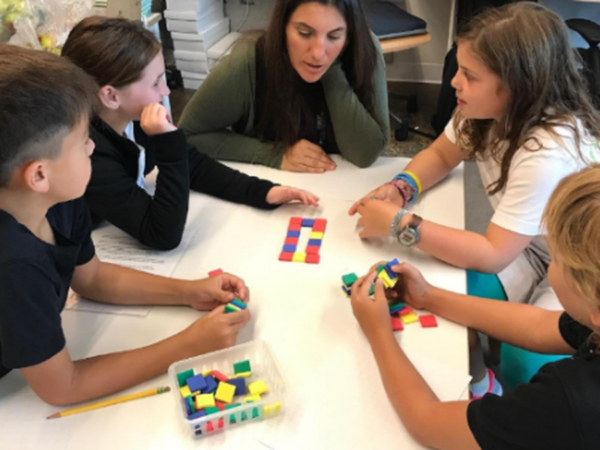
What can help a neurodivergent child learn in school?
William and Maya may need different things from school, but they have something important in common: both are capable of learning, and both need educators who are willing to ask what will help that learning happen.
That question is at the heart of Washington Spectrum Schools.
“Our approach draws on what research tells us about how students learn best, with instruction designed to build skills that are strong, lasting and useful,” says Lesley Pahl, founder and executive director of Washington Spectrum Schools. “We don’t simply teach a lesson and move on. We look at whether a student has actually learned the skill and use that information to decide what comes next.”
That responsiveness is an important part of what evidence-based instruction looks like in practice. “Sometimes that means breaking a skill into smaller steps, teaching it more explicitly or providing additional opportunities to practice,” explains Kylee Formento, school director at Washington Spectrum Schools. “Sometimes it means changing the way the material is presented. And sometimes it means recognizing that a student is ready for a greater challenge.”
Small, structured classrooms and low student-to-teacher ratios give teachers the flexibility to make those adjustments—but the goal is always the same: effective teaching that helps students make meaningful progress.
Supporting academics, executive functioning and independence
That intentional teaching extends beyond academics. Communication, emotional regulation, executive functioning, relationships, self-advocacy, life skills, and independence are taught throughout the school day because they are part of preparing students for what comes next.
Success might mean reading independently or solving increasingly complex math problems. It might also mean asking for help, navigating a disagreement with a classmate, or completing something independently that once required adult support. The goal isn’t to make every child behave the same. It’s to give each student the tools to participate and succeed.
This is the idea behind Washington Spectrum Schools: not lowering expectations but providing the support students need to meet them.

Finding the right school for a neurodivergent child
Washington Spectrum Schools gives families in Maple Valley, Ellensburg and surrounding communities in Washington state another educational option for students whose needs may not be fully met in a traditional school setting. Every child deserves to walk into school and feel that they belong.
Every child deserves to be taught. Every child deserves high expectations paired with the support necessary to meet them. And every family deserves the opportunity to find the educational environment that makes that possible.
Sometimes, the most important thing we can do for a child is not ask them to try harder to fit into the school. Sometimes, we need to find a school that fits the child.
To find out more about Washington Spectrum Schools, visit our website or contact us at [email protected] to talk more about your family’s options for supporting your neurodivergent child.