Being a parent is nonstop hard work, which makes it hard to stay on top of news that impacts families in Washington state. This Hits Home is your weekly hit of news, commentary, and, occasionally, opinion from our writers here at Seattle’s Child and news sources like The Seattle Times, Washington State Standard, KUOW, Cascade PBS and others. . Want to have a say? Look for the “Take action” prompts. Here’s the update for Nov. 15–22.
Youth sports: The adults may be the problem
Youth sports are supposed to be good for kids. So why are so many children being hurt by the adults running them? A new University of Washington survey found that 43% of families with kids in organized sports reported harmful treatment by an adult, including pressure to play through injuries, shaming and verbal threats. That number jumped to 60% for travel and select sports. Meanwhile, 63% of participating families worry about the cost. The survey’s preliminary findings include:
- 29.9%: Their child was encouraged to keep playing despite injury or pain.
- 26.4%: An adult spoke to their child in a shaming manner.
- 19%: An adult disregarded their child’s safety or well-being.
- 17%: Their child was verbally threatened by an adult.
The bottom line? Washington parents are being asked to pay a lot for experiences that they say may not be safe. The full UW report won’t be released until spring, 2027. Read more.
SPS merger talks: Sanislo families fought to save their school before …
Two years after Seattle Public Schools backed away from closing Sanislo Elementary, the West Seattle school is once again facing an uncertain future. Superintendent Ben Shuldiner proposes merging Sanislo with Highland Park Elementary, potentially bringing more teachers, arts instruction and a full-time social worker. But families at both schools are questioning what they’d lose, from trusted principals to the close relationships that make small schools work. In an article by The Seattle Times this week, one parent at a packed school meeting last week about potential merging, one called the repeated threat of closure “catastrophic” for families. The school board could vote in late February or early March. Read more in The Seattle Times.
Measles is back: Here’s what parents need to know
For a generation, most American parents have never had to worry much about measles. Clearly, that nonchalance is changing as vaccine wariness across the country has dramatically decreased the number of kids inoculated against the sometimes life-threatening disease. As of November, the United States has lost its measles elimination status after the virus has continued to spread for more than year, according to Public Health–Seattle & King County. As outbreaks grow, more and more infants and other vulnerable people have been put at risk. Measles isn’t just a rash: It can cause pneumonia, brain damage and death. The good news? Two doses of the MMR vaccine are 97% effective at preventing the disease. Public health officials explain what the change in elimination status means and how to check your family’s protection in the Public Health Insider.
Read more on this story from The New York Times: U.S. Loses Its Measles Elimination Status, a Historic Setback for American Health
Seattle’s holiday carousel is back after six years
For nearly four decades, riding the Westlake Park holiday carousel was a Seattle family tradition. The painted horses, the music, and the glow of holiday lights became part of downtown’s seasonal celebrations. Not to mention, a ride supported kids in need by supporting local nonprofits that served them. Then the carousel disappeared from the downtown holiday scene.
This Thanksgiving weekend, the wait is finally over. After a six-year absence, the beloved holiday carousel will return to Westlake Park on Friday, Nov. 27, bringing back a tradition that began in downtown Seattle in 1987. The carousel, presented by Nordstrom, will operate daily through Jan. 3, giving families more than five weeks to make a new holiday memory — or revisit an old one. Read more.
Girls’ school sports: A new requirement, a looming deadline
Washington’s new girls’ sports law is heading straight from the ballot box to the doctor’s office. Beginning Dec. 3, girls competing in school sports will need documentation from a medical provider verifying their sex under Initiative 638, approved by 56% of voters. Winter athletes face an especially tight deadline: Without the required attestation, they can practice but cannot compete. The rule is expected to affect tens of thousands of girls, not just transgender athletes, whom the initiative excludes from girls’ teams. Medical associations are raising privacy and ethical concerns, and a lawsuit seeks to block the law before it takes effect. Read more from The Seattle Times.
In the meantime, Initiative 638 heads to court as student athletes take sides
The fight over Initiative 638 isn’t over just because Washington voters approved it. Parents of transgender and cisgender girls, the state teachers union and LGBTQ+ advocates are suing to block the new law, arguing its restrictions and sex-verification requirements violate students’ rights. Now five high school athletes who support the measure want to join the case to defend it. They say competing against transgender girls has cost them opportunities and divided teams. Washington Attorney General Nick Brown has hired outside attorneys to defend the initiative. With a Dec. 3 effective date approaching, the courts may determine what happens next for student athletes across the state. Read more for the lawsuit from KUOW.
DON’T MISS: An examination of impacts of immigration enforcement on local families
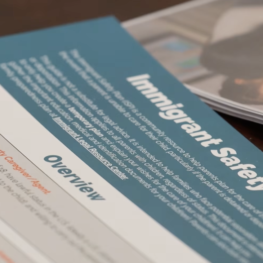
Imagine being 6 years old and summoned to immigration court without your parents’ case attached to yours. That’s what happened to Victoria, a child whose case was separated from her family’s after officials classified her as an unaccompanied minor. Her case was eventually reconnected with her mother’s, but advocates say many other children face similarly frightening proceedings. More than 300 children were arrested in immigration enforcement actions in Washington during the first half of 2026, according to reporting by Cascade PBS. Some were infants. The report examines what children are facing inside the immigration system.
What happens if a parent is detained? Who picks up the kids?
Cascade also looks this week at that question, which no parent wants to contemplate. But immigration attorneys and schools across Western Washington are helping families answer it before an emergency happens. At Seattle’s Franklin High School, parents have completed paperwork naming trusted adults to care for their children if they’re detained or deported. A Seattle nonprofit offers similar help through free workshops and private video appointments. So far this year, its program has helped families prepare plans for 174 children. The goal is simple: Keep children safe, with people their parents trust, if a family is separated. Don’t miss this series from The Newsfeed.
A year later, Seattle teachers union president remains on leave amid abuse allegations
Nearly a year after parents accused a Seattle special education teacher of injuring their 8-year-old son, she’s still on paid administrative leave — and remains the president of the city’s teachers union. A Seattle Public Schools investigation concluded that Ibijoke “Ibi” Idowu more likely than not grabbed the child hard enough to leave bruises. Idowu denied the allegation to investigators. She won election as Seattle Education Association president while the investigation was underway. Some union members have since tried to recall her. An investigation by KUOW raises difficult questions about student safety, accountability and what happens when a teacher accused of misconduct holds one of the district’s most influential union positions. Read the full story at KUOW.
Could taking away phones actually improve grades? Looks like it!
Parents and teachers have debated school cellphone bans for years, a tension that, in part, led Seattle Public Schools and other local school districts to ban or place heavy restrictions on phones in classrooms or even on school property. Now a major new study offers evidence that the strictest bans may help kids learn. According to a report from The New York Times, Harvard researchers tracked test-score growth among 3.3 million students and found that schools requiring students to lock away their phones saw modest gains in reading and math — roughly equivalent to an extra week or two of instruction each year. Less restrictive policies showed less certain results. The gains aren’t dramatic, but researchers say they could add up over time. And better grades may not be the only benefit. Read the full story in The New York Times.

(iStock)
State needs to keep pushing for youth safety on social media | Op-Ed
By Sheila Stickel / Washington State Standard
Existing at the forefront of any new technological frontier comes with advantages and drawbacks, and that is especially true for our digital lives. Organizing, connecting, and communicating has never been quite as seamless as it is today, and social media has progressed far beyond just entertainment.
It’s granted us an awesome ability to foster community amongst those of us who would otherwise remain disconnected. But at the same time, the power to connect with virtually anyone and anything can be all-consuming. And in an era where it feels like many adults aren’t equipped to engage with social media, how on earth can we expect that of children?
It’s time we stand up to the big-tech giants that design our children’s digital lives who have left parents with little to no say in the matter. I have spoken with families across Washington who do their very best to stay up-to-date with the latest that social media has to offer, both in terms of parental control options and social/educational opportunities for their kids. But in a reality where most kids are juggling multiple apps with multiple profiles, parents simply can’t keep up.
Washington Attorney General Nick Brown took a stand on their behalf. He and other attorneys general across the country secured a settlement deal with Meta that will bring safeguards to its platforms to help parents do their job. These new features will roll out over the next couple of months and include time limits, notification blockers at night/during school hours, and options to switch off auto-play features. These types of settings will help kids manage a healthier relationship with technology so they can best succeed at home and in the classroom. The fight, however, is not over yet.
I laud AG Brown for his work, as I’m sure most parents do across Washington state, but we know that the movement to keep kids safe does not stop at just Instagram and Facebook. Any form of social media that engages kids the way Meta’s platforms do should be held to the same standard. YouTube and TikTok both offer the same style of short-form, auto-playing content that exists on Instagram, but neither is bound by the agreement. This is meaningful because part of the agreement states that if the other major platforms adopt the same standards, Meta will release more money to states. In Washington, that means jumping from $237 million to nearly $339 million over the next decade. That’s roughly $100 million more that could help fund the youth mental health programs so many students in our communities rely on.
Surveys show that YouTube is the most widely used social media platform amongst American teens, so there is an even greater urgency for the platform to adopt these common-sense standards. YouTube is trying to evade responsibility by claiming it isn’t social media, which won’t fool anyone who has used the app recently.
I’ve seen firsthand how beneficial social media platforms have been for teens in the LGBTQ community. Finding peers and mentors with similar lived experience can be transformative, and in many cases, life-saving. I want to make sure these platforms are being used the right way, and AG Brown deserves great credit for heading that mission. We are so close to a huge breakthrough in the mission to keep kids safe online. I sincerely hope YouTube and TikTok step up so we get to see it through.
More than 15,000 Washington babies and toddlers are homeless
Some are sleeping in cars. Others are in shelters or crowded onto relatives’ couches. As an article by The Seattle Times shared last week, a new report estimates that more than 15,000 Washington children younger than 3 experienced homelessness during the 2023–24 school year, a 30% increase over the previous two years. Washington has the nation’s fifth-highest rate, according to the report by national advocacy nonprofit SchoolHouse Connection and the University of Michigan. The numbers are especially troubling because the first three years are critical for development. Now proposed federal changes could make it harder for homeless families to access Early Head Start, one of the few programs offering young children stability, care and help for their parents. Read the story in The Seattle Times.
Children’s advocates have a message for Olympia: Don’t cut the basics
Child care. Health coverage. Food. Housing. Washington families are struggling to afford the essentials, and children’s advocates are worried the next state budget could make things worse. With lawmakers facing another serious budget shortfall, Children’s Alliance has released its 2027 legislative agenda, urging them to protect early learning, health care, nutrition assistance and programs that help families stay financially stable. The organization argues that cutting one support can set off a chain reaction: Lose child care, lose work. Lose health coverage, delay treatment. Its agenda lays out what’s at stake for children as the Legislature prepares to make difficult decisions. Read the full 2027 Children’s Alliance Legislative Agenda,