Just a few hours east of Seattle, Ginkgo Petrified Forest State Park feels like another world. Here, ancient trees have been transformed into stone, and the surrounding landscape tells a story of volcanic eruptions, massive floods and millions of years of geologic change. I visited the Vantage area with my kids, then 9 and 11, for a family getaway that combined geology with hiking and a few unexpected stops along the way.

Bighorn sheep graze in the shrub-steppe landscape near Ginkgo Petrified Forest State Park.
Getting there: A changing landscape
Pack your snacks and car games—it’s time for a road trip. About 2.5 hours east of Seattle, Ginkgo Petrified Forest State Park is a straight shot on I-90, past Ellensburg and toward Vantage and the Wanapum Recreation Area.
The landscape changes dramatically along the way. Western Washington’s lush green foliage gives way to rolling hills and sagebrush, with housing developments becoming fewer and farther between. We cranked up the air conditioning as my kids announced that we must have entered the desert.
It may look like a desert at first glance, but it actually is shrub-steppe, an increasingly rare ecosystem found across parts of Eastern Washington. The dry landscape supports a surprisingly diverse community of plants and wildlife.

Check out the outdoor exhibit and the sweeping river views.
Arriving at Ginkgo Petrified Forest State Park
Ginkgo Petrified Forest State Park is easy to spot from the road, with parking, restrooms and picnic tables near the Interpretive Center. Pack plenty of water and sun protection, as shade is limited in this exposed landscape. A Discover Pass is required for day-use parking.
We stepped out of the car and were immediately struck by the sweeping views of the Columbia River. Outside the Interpretive Center, pieces of petrified wood are displayed alongside signs explaining the ancient forest and the geological events that transformed these trees into stone.

Visitors can touch pieces of petrified wood outside the Ginkgo Interpretive Center.
About 15 to 16 million years ago, forests and swampy lowlands covered this part of Washington. Over time, volcanic activity buried the waterlogged wood, and minerals gradually replaced the plant tissue, preserving the trees’ structure in stone.

A close-up look at the colors and preserved texture of petrified wood at Ginkgo Petrified Forest State Park.
Explore the Ginkgo Interpretive Center
Inside the Interpretive Center, visitors can get a closer look at petrified wood and feel just how different it is from ordinary timber. A docent at the back had a table filled with maps and samples and shared stories about the area’s geology and the Columbia River. That’s where we discovered the difference in weight between petrified wood and a regular piece of wood. My son picked up a sample and immediately exclaimed, “Oh my gosh, it’s so heavy!”

Comparing petrified wood with ordinary wood during our visit to the Interpretive Center.
We also learned how the park got its name. A rare petrified ginkgo log discovered here in 1932 helped put the fossil forest on the map and contributed to efforts to protect the site.
Back inside the center, my kids compared the colors and patterns of more than 30 varieties of petrified wood on display. Kids ages 4 and older can pick up a free Washington State Parks Junior Ranger booklet and complete activities as they explore the park.
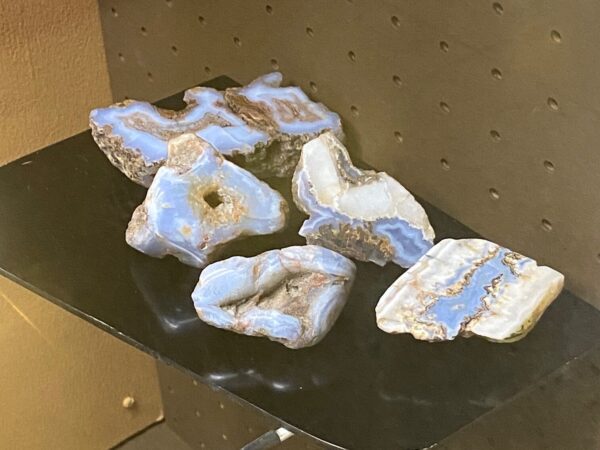
Petrified wood specimens on display inside the Ginkgo Interpretive Center.

A giant dinosaur marks the Ginkgo Gem Shop near the state park.
Make a stop at the Ginkgo Gem Shop
It’s hard to miss the giant dinosaur outside the Ginkgo Gem Shop. We’d spotted it on our way into the park, so naturally we had to stop on our way out.
Rocks, gems, fossils, carvings and jewelry fill the shop. My kids wanted to inspect everything, but parents of younger children should take note of the store’s very direct warning: “You break it, you buy it.”

The Trees of Stone Interpretive Trail leads into the fossil beds near the historic Trailside Museum.
Hike the Trees of Stone Interpretive Trail
About two miles west of the Interpretive Center, the historic Trailside Museum marks the beginning of the Trees of Stone Interpretive Trail. Built by the Civilian Conservation Corps in the 1930s, the small museum and surrounding trails take visitors into the fossil beds themselves. The 1.25-mile interpretive trail winds through the shrub-steppe past dozens of petrified logs preserved where they were discovered.
To protect the petrified wood from theft, many of the exposed logs are covered by red metal grates. We peered through the openings for a closer look, though some of the logs were partially obscured by vegetation during our visit.
Note: A sign at the trailhead warned us about rattlesnakes, so we made our way carefully through the exposed hills, keeping an eye and an ear on the trail.

Red metal grates protect petrified logs along the Trees of Stone Interpretive Trail.

Yurts are one of the lodging options at Sagecliffe Resort & Spa near the Columbia River.
Where to stay: Sagecliffe Resort
About 25 minutes from Ginkgo Petrified Forest State Park, Sagecliffe Resort & Spa makes an easy overnight base near the Columbia River Gorge. Families can choose from several types of accommodations, including traditional guest rooms, yurts and villas.
We stayed in one of the Cavern Rooms, built directly into the hillside. Our room had two beds, a soaking tub and a private patio overlooking the surrounding hills and the Columbia River. The unusual setting was part of the fun. You enter the room through the hillside and emerge on the other side to a wide-open view.
In the evenings, we sat together on the patio and watched the colors change across the sky as the sun went down.

Inside one of Sagecliffe Resort’s Cavern Rooms, built into the hillside above the Columbia River.

Sunset from our patio overlooking the Columbia River at Sagecliffe Resort.
Where to dine
My family brought a small plug-in cooler filled with breakfast foods and snacks. With cereal and fruit in hand, we spent our mornings on the patio, counting birds and watching the clouds drift past. For dinner, we ate at Tendrils, Sagecliffe’s on-site restaurant; the resort also offers wood-fired pizza as a more casual option, including for poolside dining.
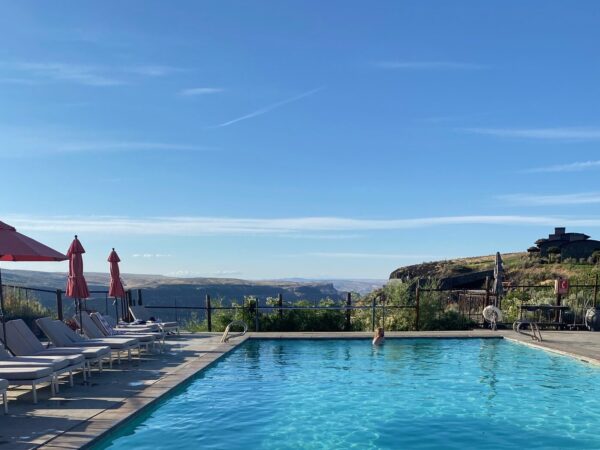
The outdoor pool at Sagecliffe Resort overlooks the Columbia River Gorge.

The steep trail climbs toward the Wild Horses Monument above the Columbia River.
Hike to the Wild Horses Monument
Just east of Vantage, about 10 minutes from Ginkgo Petrified Forest State Park, 15 life-size horses appear to gallop across a ridge high above the Columbia River. The installation’s official name is Grandfather Cuts Loose the Ponies, created by Washington sculptor David Govedare.
Getting up close requires a short but steep climb, about 0.4 miles round trip with 150 feet of elevation gain. We saw kids as young as 5 making their way up, but the sandy trail and loose rocks made the climb surprisingly tough. Trekking poles can help with footing.
At the top, we walked among the horses and looked across the Columbia River. The trip down gave our calves nearly as much of a workout as the climb up.

Up close with the 15 life-size horses of Grandfather Cuts Loose the Ponies.

Wind turbines stretch across the landscape at the Wild Horse Wind and Solar Facility.
Visit Wild Horse Renewable Energy Center
As we drove through Eastern Washington, wind turbines appeared across the landscape. But the drive to the Wild Horse Renewable Energy Center brought us startlingly close to them. As we wound our way up the ridge, enormous turbines towered over the road, making us feel very small beneath them.

Walking toward an operating wind turbine during our Wild Horse guided tour.
Step inside a wind turbine
We wore hard hats and safety glasses, took the free tour, and explored exhibits explaining how wind and solar energy generate electricity. Our guide showed us turbine components and explained how workers maintain the massive machines.
Then came the part my kids won’t forget: stepping inside the base of an operating wind turbine. Standing inside gave us a completely different sense of the machine’s scale—and made this an especially memorable stop for kids interested in engineering and how things work.
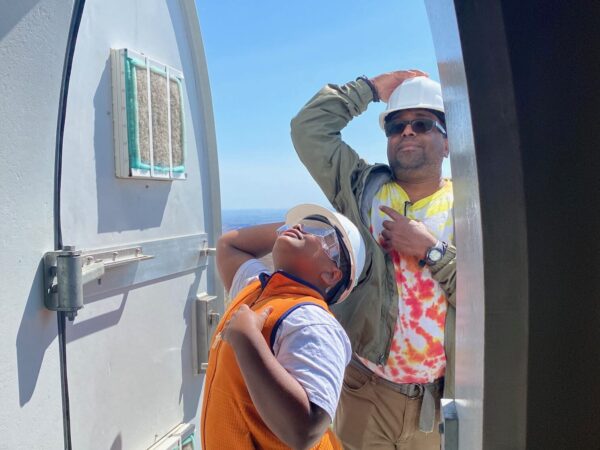
Our Wild Horse tour included a look inside the base of an operating wind turbine.
What started as a trip to see trees turned to stone became a weekend of unexpected discoveries. My kids held petrified wood that was millions of years old, searched the hills for petrified logs, climbed to a herd of metal horses and stepped inside a working wind turbine. It was the kind of road trip that gave us plenty to talk about on the drive home.
Know before you go
- Ginkgo Petrified Forest State Park: 630 Ginkgo Ave., Vantage. A Discover Pass is required for day-use parking.
- Sagecliffe Resort & Spa: 344 Silica Road NW, Quincy.
- Wild Horses Monument: Located just east of the Columbia River near Vantage.
- Wild Horse Renewable Energy Center: 25901 Vantage Highway, Ellensburg.
- Pack for the landscape: Bring sunscreen, hats, plenty of water and sturdy shoes. Trekking poles can be helpful on the area’s steep, loose-rock trails.
- Bring snacks: We found food options limited in some areas, so we packed a cooler with drinks, snacks and breakfast foods.
- Check before you go: Hours, tours and seasonal programs can change, so check current park and attraction information before leaving home.
This story was originally published in 2024 and updated in August 2026.
Read more
Find more things to do at Seattle’s Child