On a recent Saturday, volunteers at Akin, the non-profit family services organization formed by the 2024 merger of child welfare giants Childhaven and Children’s Home Society of Washington, handed out 500 baby diapers. The cost to families? Zero.
One grandma who attended the giveaway was skeptical: “What’s the catch?”
No catch. That’s because Family Resource Centers (FRCs) in Washington, including seven run by Akin, are all about helping families meet their needs. Most FRCs provide free diapers, clothes, and food to families, while at the same time providing parent education, housing support, employment resources, toddler playgroups, and more. In this way, the centers are truly one-stop shops, helping families not only survive, but thrive. With everything accessed at one site, FRCs save parents time, confusion and missed opportunity.
They also reduce child suffering and save taxpayer dollars.
According to the National Family Support Network, FRCs across the U.S. help reduce foster care placements by as much as 50% and reported child abuse cases by upwards of 60%. In addition, according to Akin, every dollar invested in an FRC saves up to $4.93 in public spending on crisis systems, such as CPS investigations and judicial system costs.
Building a community
“We connect the whole family to the whole community,” said Akin’s Chief Operating Officer Dr. Daniele Lyman-Torres. “[FRCs] are a hub, but also a front door to services everywhere.
“We don’t ask families, ‘What service do you qualify for?’” Lyman-Torres stressed. “We ask families what they need to thrive.”
Children’s Home Society of Washington (now merged to become AKIN) launched the first FRC in the 1990s. In 2021, Washington passed a legal definition of FRCs and guiding principles: an FRC is “a unified single point of entry where families, individuals, children, and youth in communities can obtain information, an assessment of needs, referral to, or direct delivery of family services in a manner that is welcoming and strength-based.”
Last year, Akin’s seven FRCs received more than 40,000 visits, including 20,000 at its Kent and North Seattle locations.
At Akin, and typically at most FRCs, resource navigators are key. They assess individual family needs and help parents connect to services—in some cases assisting in the completion of paperwork and making phone calls to set appointments. Families are led to FRCs by referrals from myriad sources, including schools, pediatricians, and food banks. Word of mouth is also effective: families served often provide a center’s greatest marketing.
Parent empowerment, an FRC essential
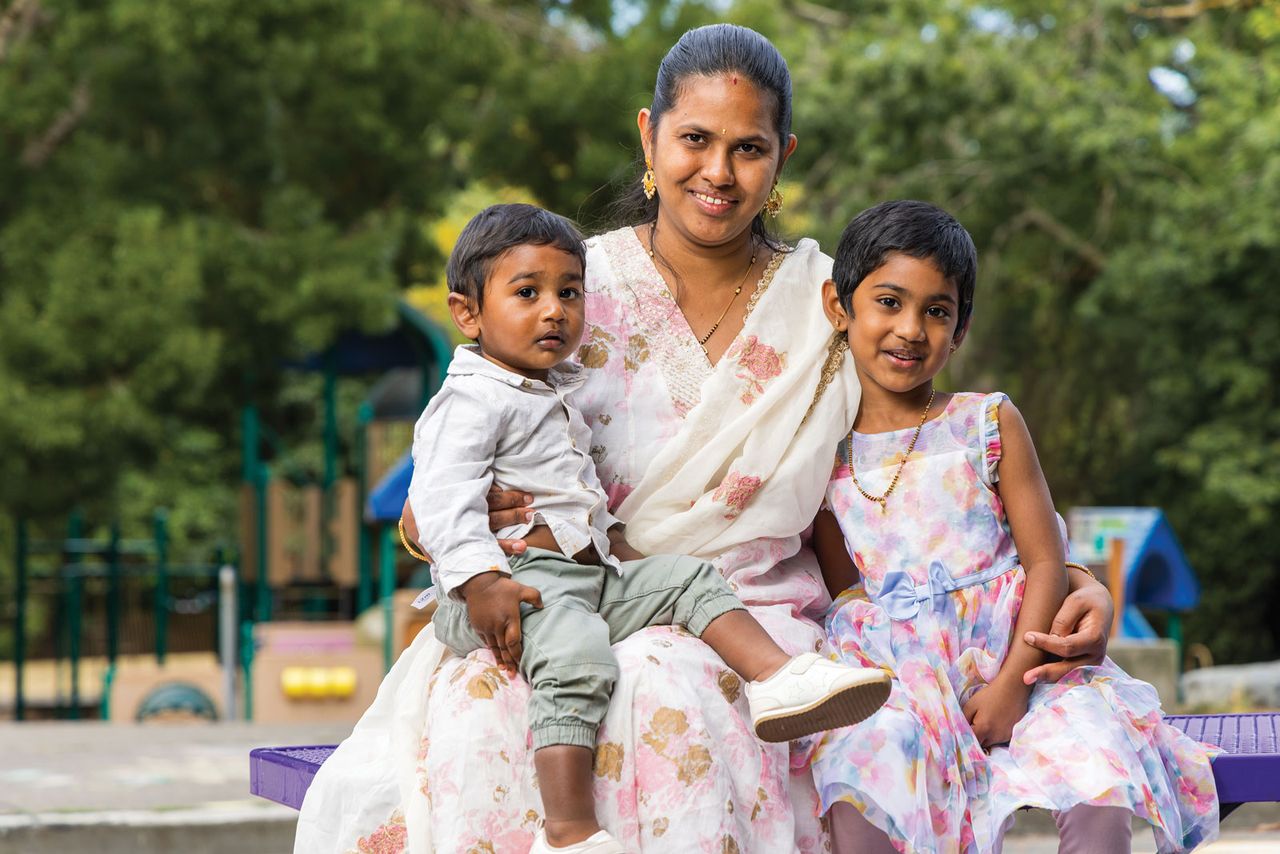
Gayathri Pochamreddy was pregnant with her second child in 2025 when she went looking for kid-friendly activities and diapers for her toddler. She saw a flyer promoting FamilyWorks, an organization that operates an FRC near the Roosevelt light rail station. The FamilyWorks center, which served 1,500 households in 2025, offers a wide range of programs and family essentials.
A year and a half later, Pochamreddy’s family still regularly attends events at the FRC. Her 4-year-old daughter loves storytimes and cooking classes and Pochamreddy has joined the organization’s parent advisory committee (called Family Alliance for Resource & Engagement or FARE).
“FARE is a great place to share my thoughts about FamilyWorks’ programs,” she said. Parent ideas are taken seriously. Based on parent input, FamilyWorks now runs a mobile pantry at Seattle Children’s Hospital and offers classes for caregivers of teens and tweens.
“I was in the meeting when the committee first brought those [ideas] up,” said Theresa Williams, FamilyWorks Supportive Family Programs manager. “I started crying because I was seeing their voices really come alive.
“I see the full circle. We’re not just serving them — we look to them as our guide. This center is what they need it to be, because their voices are being heard.”
FamilyWorks also has school-based FRCs at four Seattle Public Schools sites and two others in housing developments, with three more in the works.
More than resources, connection matters
But Williams is quick to point out the other thing FRCs offer: the chance for families to simply have fun together. She pointed to a recent BBQ where parents ran sack races while kids filmed them.
“Families are often in survival mode. So, for us, it’s a great opportunity to give them a moment where they can enjoy each other and just be present.”
Greater Seattle Family Resource Centers
- Akin Family Resource Centers
- FamilyWorks FRC and School-based FRCs
- Southwest Youth & Family Services
- Neighborhood House
- Seattle Children’s Hospital
- Chinese Information and Service Center
- White Center Heights Elementary School