
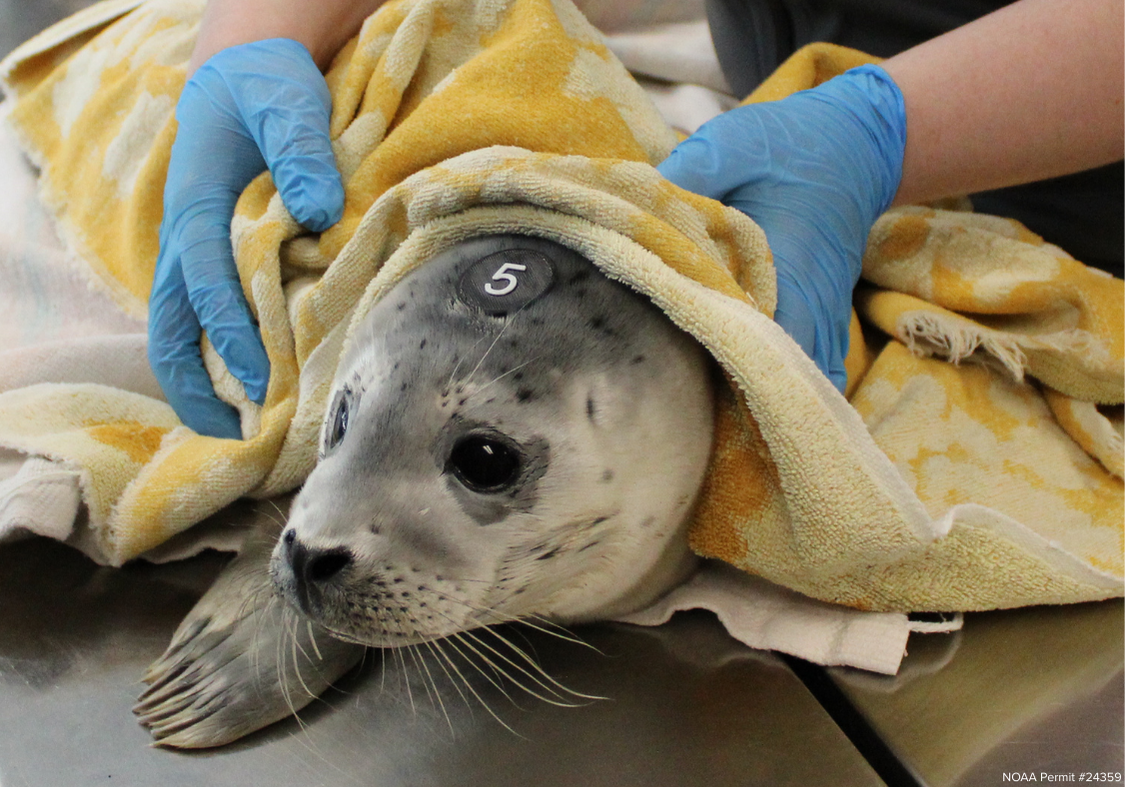
If things had gone differently for me, I would have been a marine biologist.
But growing up in the smack-dab middle of the country, I didn’t have much access or exposure to marine wildlife. That all changed three years ago when I moved to Seattle.
On my first walk along the Sound in West Seattle, I saw the signs advising people to leave “stranded” baby seals alone. As a long-time wildlife rehab volunteer in Wisconsin,
I wondered what was up with that?
I was used to rescuing and re-nesting baby birds (the idea that the mother will reject a bird that is touched by humans is a myth) and intercepting and returning other healthy animals to their families. I was confused as to why we leave baby seals alone on the beach.
The reason became very clear to me when I trained to be a volunteer at SR3, the Pacific Northwest’s only hospital dedicated to marine wildlife, located just south of Seattle in Des Moines, Washington.
Baby seal (they’re called “pups”) season is upon us, so this is a great time to share this information with kids and their families!
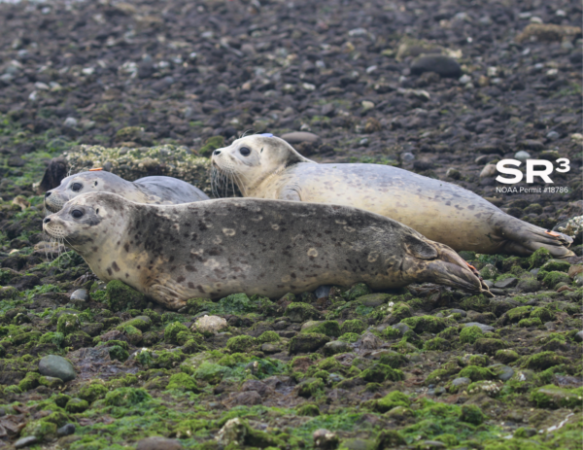
Spotted: A harbor seal mom and pup resting onshore. During baby seal season, it’s common to see seals like this on the beach — from a safe distance. (Image courtesy SR3, NOAA Permit #24359)
How Baby Seals Grow Up in the Wild
Along Washington’s coast and in the Salish Sea, harbor seals are born mostly from May to September. Pups nurse for four to six weeks on their mother’s nutritious fatty milk before they are ready to be on their own. They are born with the ability to swim, but this month of development helps them grow larger and learn to forage, doubling their body weight in that short period of time.
“During these first few weeks of a seal’s life, a healthy baby seal may rest alone on shore, rocks, docks, or other infrastructure for short periods of time while their mom is
off swimming and feeding in the area,” said Casey Mclean, LVT, Executive Director of SR3 and Veterinary Nurse. “While apart, harbor seal pups communicate with their
mother using a call that can sometimes sound distressed, but is completely normal. Mom is never far and can hear that call up to half a mile away.”
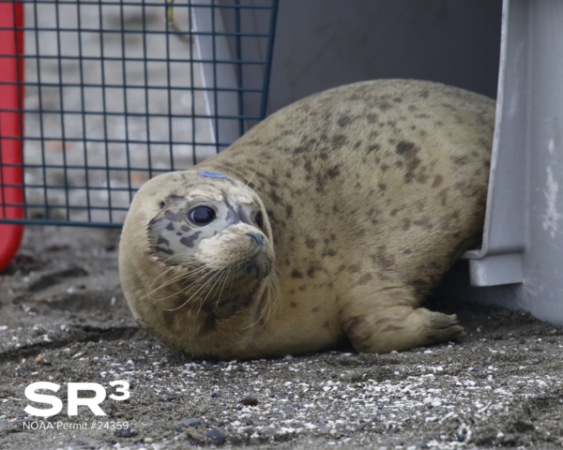
Whether it’s intake or release, every seal at SR3 gets the care it needs — and a safe, monitored journey from beach to rehab and back again. (Image courtesy SR3, NOAA Permit #24359)
Why Human Interaction Can Be Dangerous
But what happens if people enter the scene? If the mother notices signs of humans or our pets in the area – to her, predators – she will not come back to her pup in order to
protect her own life.
Pups that have been abandoned by their mothers quickly become malnourished, dehydrated, and need medical attention, that’s when they come to SR3, where they are cared for until they are big and strong enough to be released back into the wild. But by far the best scenario is to keep the pup with the mother. That’s why we stay away.
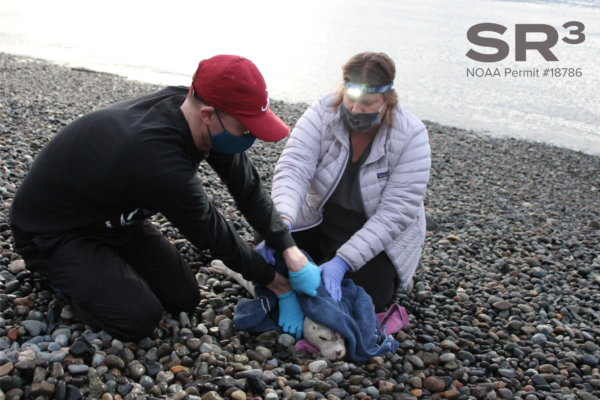
When a baby seal on the beach really does need help, trained wildlife responders from SR3 step in — and only as a last resort. (Image courtesy SR3, NOAA Permit #24359)
What to Do if You See a Baby Seal on the Beach
- Stay away: If you see a marine mammal, stay at least 100 yards away. If they turn to look at you, you’re too close!
- Keep your pets on a leash: Pups of all kinds are curious, and keeping your pet on a leash ensures their safety along with the safety of the marine mammal.
- Educate: Kindly alert others about the need to stay far away from the animal and keep their pets on a leash.
- Whatever you do, don’t touch: Even if the animal looks like it is in distress, never interact with it. This causes more harm than good, and is also illegal under
the Marine Mammal Protection Act.
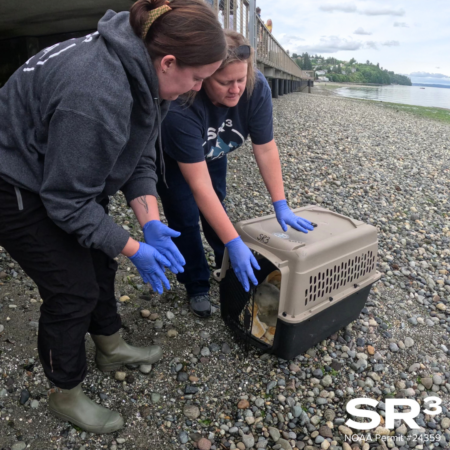
Only trained professionals should intervene with a baby seal on the beach. Here, SR3’s team begins a careful transport for medical care. (Image courtesy SR3, NOAA Permit #24359)
Want to Get Involved? Marine Education for Kids
Is your child interested in marine wildlife? Volunteers at SR3 need to be at least 18 years old, but there is always something happening on our website and on our social media platforms:
And here’s another great opportunity!
The Marine Science and Technology (MaST) Center at Highline College is a partner of SR3 and offers education programs and summer camps for kids that offer kids the opportunity to participate in a variety of hands-on educational experiences at the MaST Center Aquarium. While SR3 is only open to the public one day a year for their spring Community Open House, MaST Center Aquarium is open and free to the public every weekend.
Want to keep the marine curiosity going? After learning about seal pups and the work SR3 does, you might be inspired to explore more local marine life and nature. Check out this guide to 7 fun Seattle-area nature centers for kids to explore and learn, many of which offer hands-on exhibits and marine-focused programming — perfect for budding wildlife stewards.


