“Phew, it does get a little chaotic!”
That understatement was from Marlie, a Lynnwood mom, as she moved through the new Lorikeet Landing exhibit at Woodland Park Zoo with her husband, kindergartner and toddler.
Consider it fair warning if you plan to visit the exhibit, which opened this week, at feeding time.
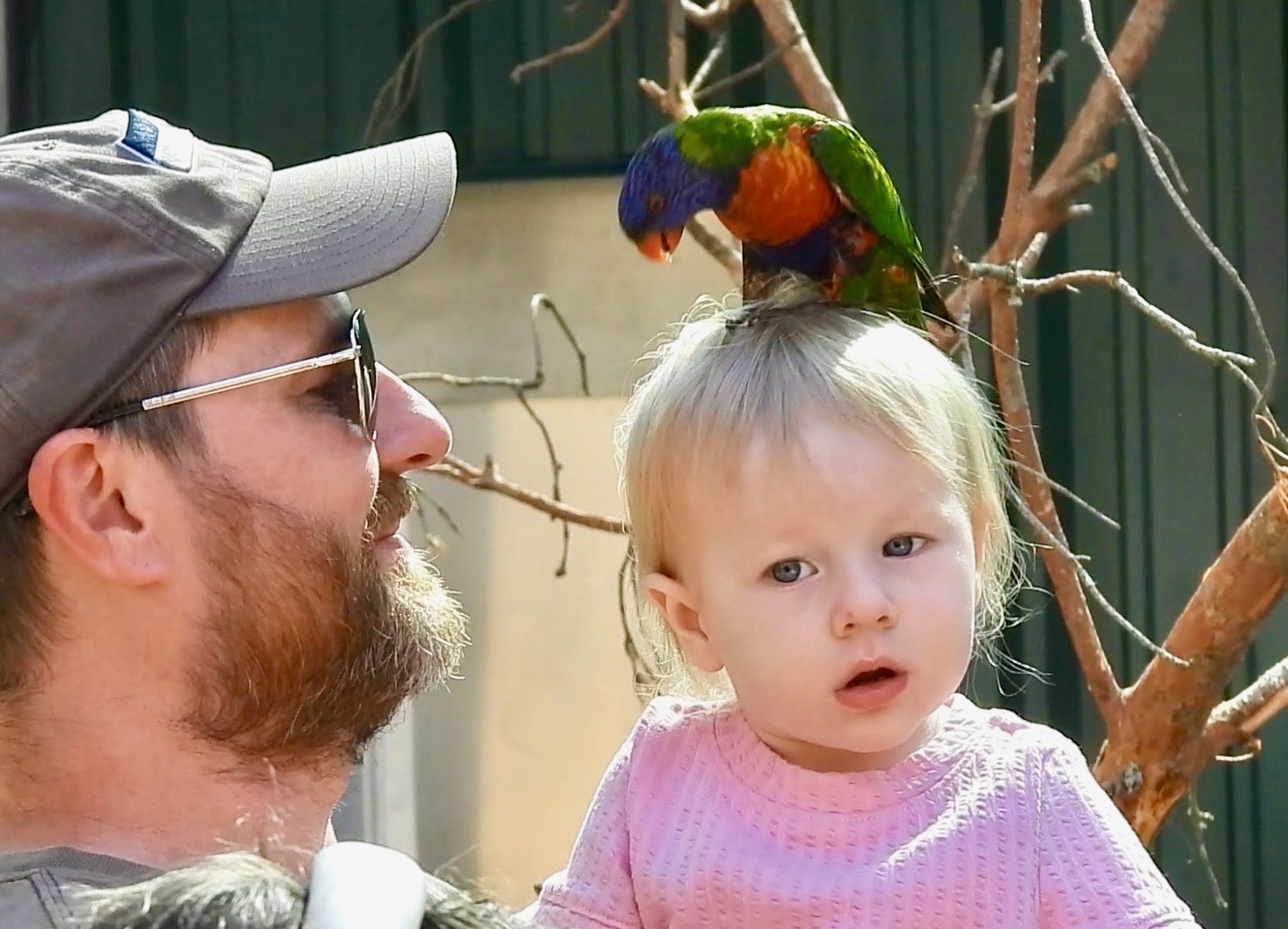
Within the new enclosed steel and mesh aviary you’ll find 46 lorikeets and lories (five different types), two Luzon aptly bleeding heart doves with blood-colored spots on their chests, a 35-year-old kookaburra named Tanami and Willie, a wonga pigeon. (Get it? Willie Wonga?). When the nector feeding cups come out, that energy in the exhibit ticks up notch or ten as the boistrous little parrets swoop into action, landing on human limbs, heads, and backs in hopes of getting a nip.
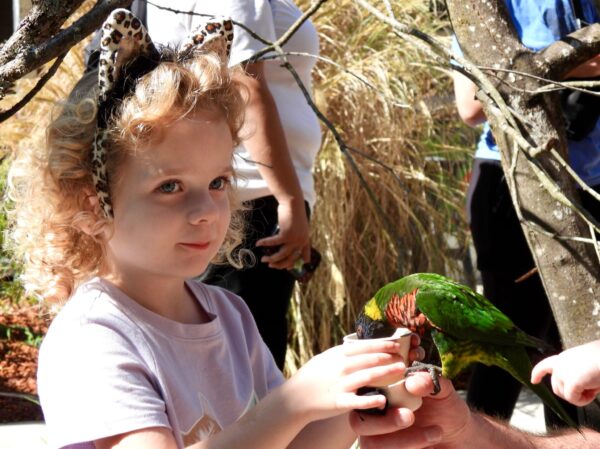
(Photo by Joe Shapiro)
Forewarned is forearmed
You’ll also find exhibit assistants there to help you enjoy all those birds.
“It did get a little chaotic and the kids did seem to get overwhelmed after a while,” said Seattle mom Ashley Collins, who was visiting the lorikeets with her two daughters. “The zoo staff did a really good job of warning us ahead of time what to expect so I knew going in to look for that kind of behavior from the birds.”
To get the most from their experience, Collins coached d her girls to focus on being quiet, careful, and slow-moving: “I think that helped us ensure that the birds felt comfortable coming to us,” she said.
Marlie called the frenetic flapping of feeding birds “fun chaos.”
“And also, so cool,” she added, as she helped her daughter, who was holding a feeding cup, manage the five-bird landing on her tiny arms. Standing together, covered in birds, they were the picture of he zoo’s description what to expect. They and other families were, indeed, “absorbed in a world of living color, sound, and motion as an array of energetic parrots flutter and perch nearby.”
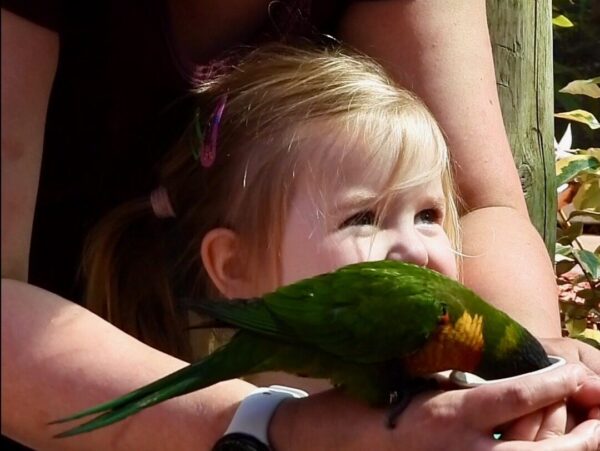
(Photo by Joe Shapiro)
These birds have come a long way
Lorikeets and lories are medium-sized members of the parrot family and native to tropical parts of Australia and nearby islands in the southern Pacific, according to the zoo. Signage in the new space helps visitors tell the species apart by sight and behavior, since several — including the coconut lorikeet, Biak lorikeet and Flores lorikeet — share similar color patterns, primarily reds, greens, yellows and blues.
All the birds in the walk-through aviary move freely between the ground and the branches.
Zoo officials note that while most parrots eat primarily nuts and seeds, lorikeets and lories have brush-tipped tongues built for pollen and nectar.
They are also pollinators as pollen clings to their feathers while they feed, then gets carried from bloom to bloom. Their tongue structure explains why the small cups that visitors may purchase during feeding time are filled with liquid rather than seed.
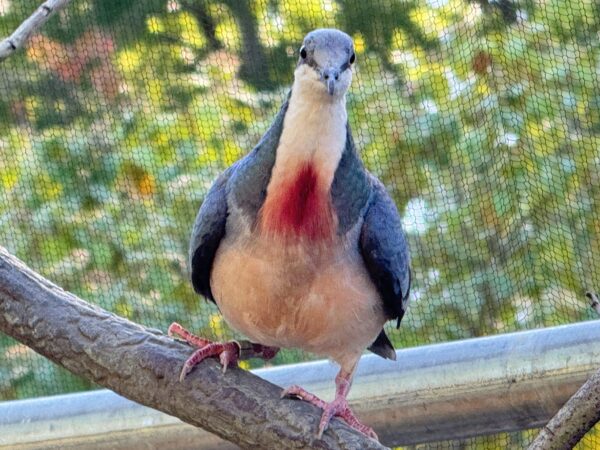
Luzon bleeding heart pidgeon (Photo by Joe Shapiro)
That’s just beak love
While most kids around at feeding time were thrilled with thebeating wings and close fly-bys, although there were a few surprised kiddo cries. Which brings me to another warning: while the birds nip the food, they can also get a little nippy on the skin.
“Ouchie!” one little boy cried after one such pinch. Rest assured, staff were quick to help him shoo the bird off his arm. (It’s a simple trick: with a loose hand, just slide your hand down the arm where birds are perched and they get the message to move on).
But, if it happens to your little one, you might also use the ol’ fake-out, as one parent did during my visit:
“Oh, that’s just a love pinch,” she told her young son. “It kind of tickles, right?”
Good trick: the boy held up his cup again, all smiles, no tears.
First phase of Wild Encounter, check!
Lorikeet Landing is a wonderful way to experience birds up close, rather than from a distance and from behind a barrier. It’s also the first completed piece of Wild Encounters, the zoo’s rebuild of the former Family Farm site into a hands-on, up-close animal-encounter space.
Alongside the aviary, phase one added two rescued female Aldabra giant tortoises — among the largest land tortoises in the world.
A second phase, planned for 2027, will give the zoo’s ambassador animals — the animals used in guided encounters and programming, currently housed off-view except during scheduled appearances — permanent, viewable habitats. Zoo officials say that phase will rotate through species including capybara, coati, three-banded armadillo, North American porcupine, striped skunk, African crested porcupine, raptors, kookaburra and blue-faced honeyeater.
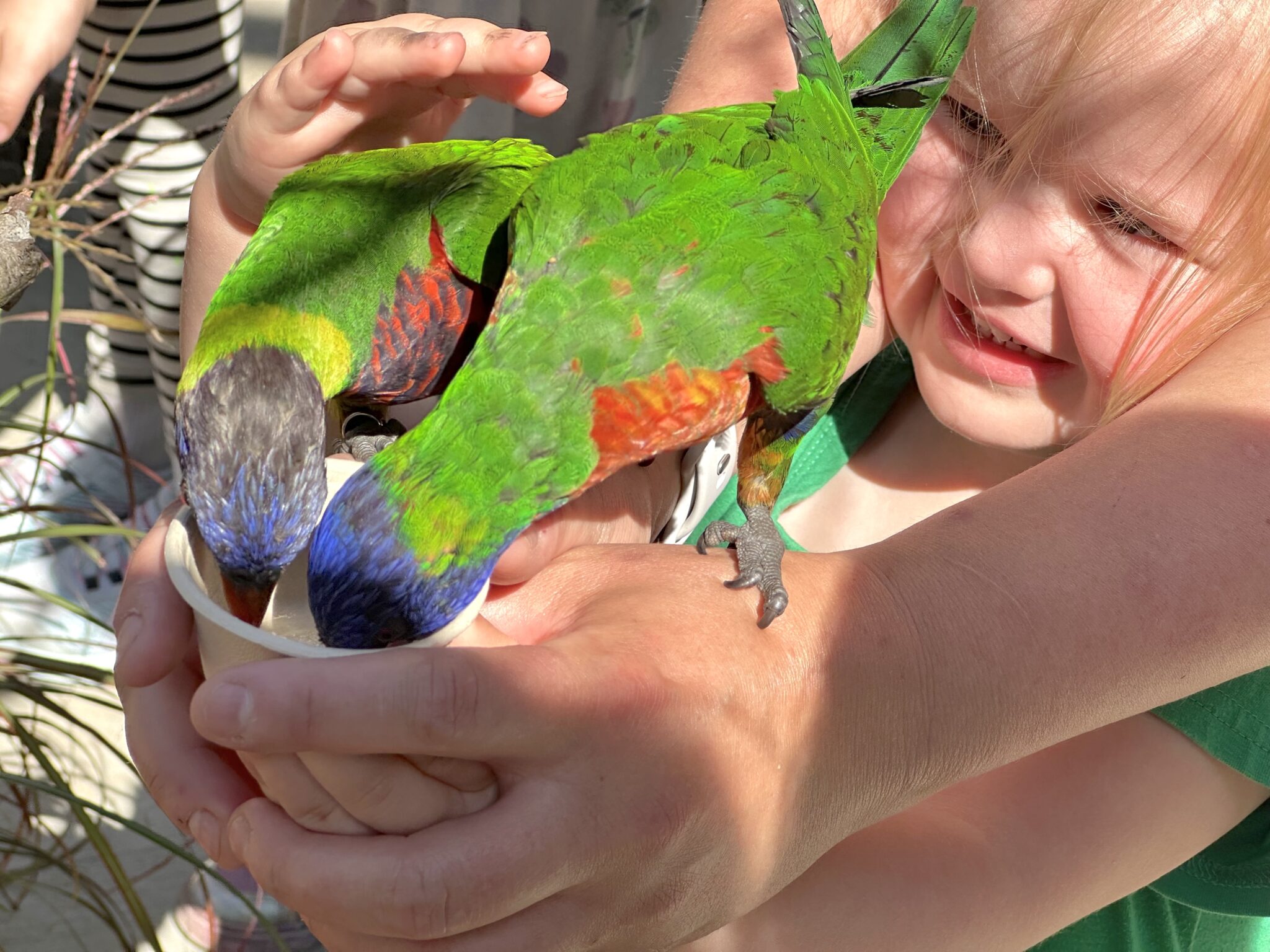
Place your hands around your young child’s hands to feed the birds (Photo by C. Murfin)
A very good tip
For now, Lorikeets Landing is well worth a zoo visit. And Collins has a very useful tip. Hold the feeding cup with your more wary child:
“For my 3-year-old, I found that what she really wanted was the independence to hold the cup of nectar but wrapping my hands around her hands while she held the cup protected her from any stray pecks from the birds.”
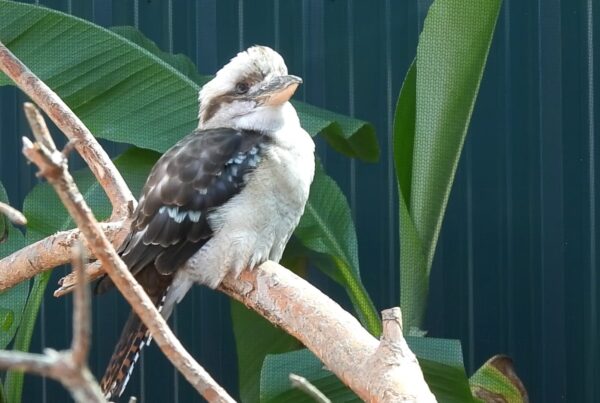
Tanami, the kookaburra sits above the fray. (Photo by Joe Shapiro)
If you go
- Where: Lorikeet Landing is located in Wild Encounters at Woodland Park Zoo.
- Best entrances: Enter from the West Entrance, 5500 Phinney Ave. N., or the South Entrance, 750 N. 50th St., Seattle
- Cost: $32.25, adults; $30.25, seniors; $19.95, ages 3-18; Ages 0-2 free
- Parking: $10 for two hours in the lot
- Zoo fall hours: 9:30 a.m. to 4 p.m. daily/
Tips from parents
- Consider having kids wear long, tighter-fitting sleeves to prevent nips
- Cost: While $7 per small cup feels steep, it is the best way to get the best view of the birds
- Talk to kids beforehand: No touching the birds. Just let them land and say hello