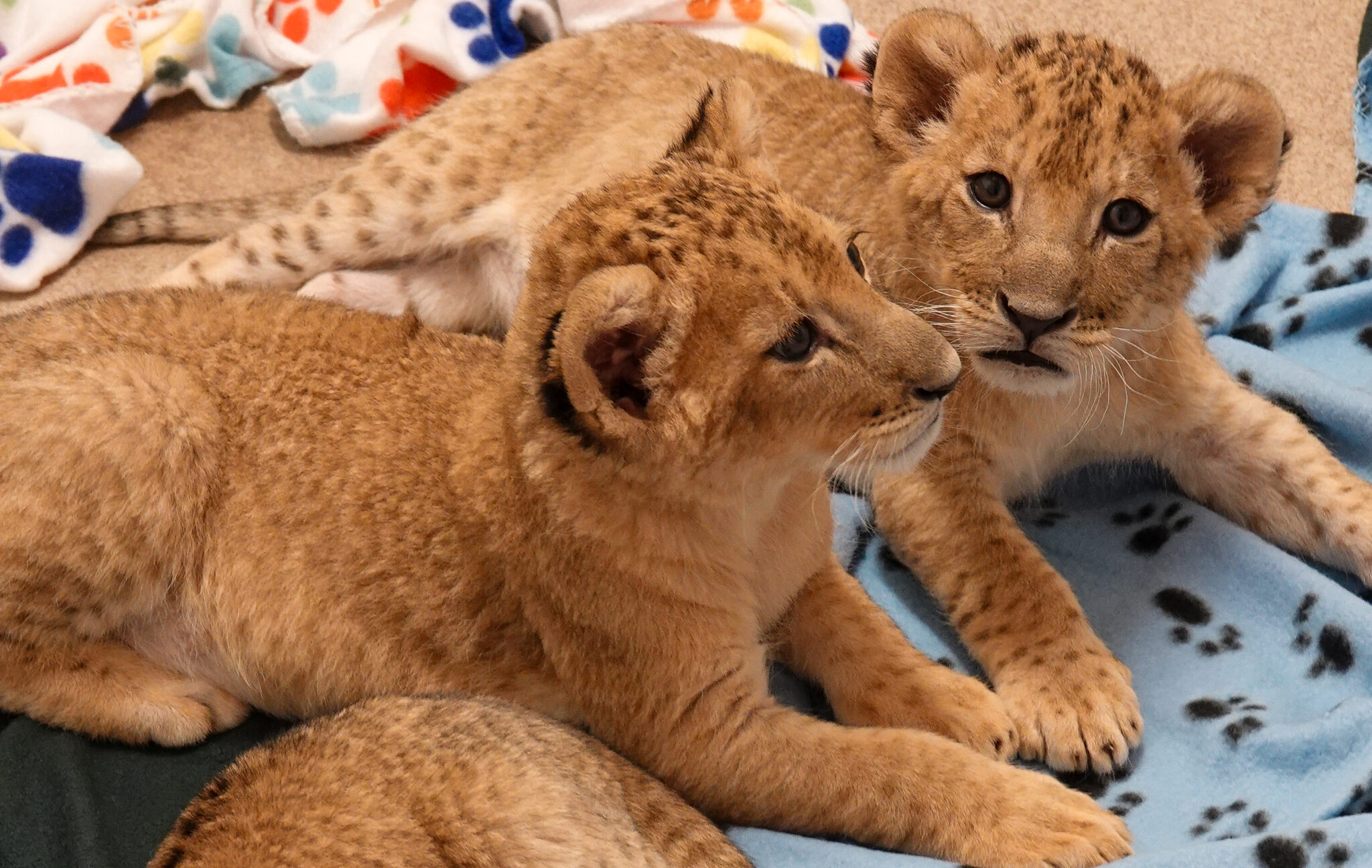
Time to break out “The Lion King” books, movies, and soundtracks, and teach the kids or grandkids the lyrics — if they don’t know them by heart already. They will be a fun preface to your visit to Cougar Mountain Zoo, where, starting Oct. 22, three African lion cubs will be on view in the zoo’s nursery.
(Image: Jordan Veasley)
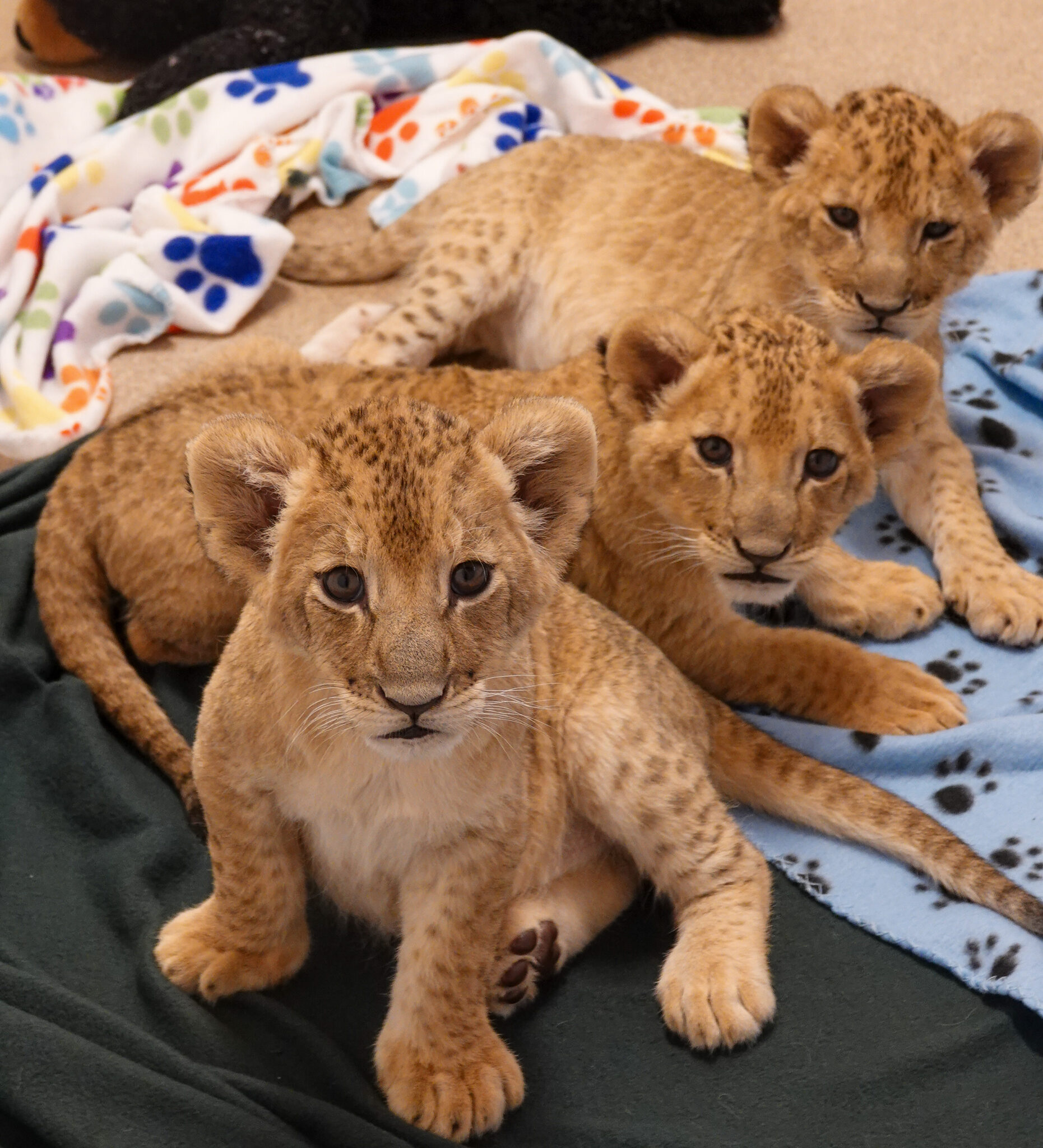
The cubs were born at the Tanganyika Wildlife Park in Kansas, and are now permanent residents of the Issaquah zoo. The cubs, two females and one male, are two months old.
“This is an incredibly special moment for our zoo community,” said zoo Director Jarod Munzer in a release this week. “Welcoming these young lions allows us to share their story and raise awareness about the urgent need to protect their wild counterparts.”
A vulnerable species
Making a home for the cubs is part of Cougar Mountain Zoo’s commitment to species survival and education. African lions were once widespread across much of the continent. Today, however, African lions face significant population declines due to habitat loss, human-wildlife conflict, and declining prey populations.
African lion numbers have plummeted by more than 40% in the past three decades, with some populations now considered critically endangered. Cougar Mountain Zoo officials hope that immersive educational experiences with the lions will inspire visitors to support global conservation initiatives. For now, visitors will be able to see the cubs in their specially designed nursery habitat, with opportunities to learn more about lion behavior, ecology, and conservation challenges during scheduled keeper talks and programs.
Lion facts
According to WWF International:
- Nearly all wild lions live in Africa. However, one small population exists in western India elsewhere.
- Adult male lions are heavy. They weigh, on average, about 419 pounds for males and about 278 pounds for females.
- They start off spotty. Young lions have rosettes and spots on their sandy-colored coats, but these generally disappear as they mature.
- Most male lions grow impressive manes the older they get, but not all males have them. ‘Maneless’ male lions are common in parts of Africa.
- Lion cubs are raised together. A “pride” or group of lions usually includes related females and their cubs, plus a male or a small group of males who defend their pride. The lionesses rear their cubs together, and the cubs receive milk from any female.
- Adult lions eat a lot. They can eat up to 88 pounds of meat in a single meal. Their tongues have sharp-pointed “papillae” which they use to scrape meat off the bones.
- Lions primarily hunt at night. Their eyes adapt to the dark, giving them a significant advantage over their prey.
- Lions are the only known cats that roar together. Even cubs join in with their mews. The calling sequence usually lasts about 40 seconds.
- There are likely only about 23,000 lions left in the wild, and they have disappeared from over 90% of their historical range.

(Image: Jordan Veasley)
A special habitat
For now, visitors will be able to see the cubs in their specially designed nursery habitat, with opportunities to learn more about lion behavior, ecology, and conservation challenges during scheduled keeper talks and programs.
“We hope that watching these cubs grow and mature will spark a lifelong passion for wildlife,” added Munzer. “Every visit supports conservation work here at home and around the world.”
For more information about Cougar Mountain Zoo’s conservation work, please visit cougarmountainzoo.org.