I’d always known that grief connected people, but I didn’t understand the depth of that until I showed up at Seattle Children’s Hospital for a “Pregnancy after Loss” support group.
I had already had three miscarriages and was several months into my fourth pregnancy. Every day, I was paranoid that I’d miscarry again. I didn’t want to tell anyone that I was pregnant because I couldn’t bear to hear people’s excitement when all I could feel was anxiety.
At the support group, the other people just got it. Some participants were grieving stillborns, others had similar experiences to mine. We were all pregnant, scared, and seeking a space where we didn’t have to filter ourselves.
Now, as a mom of three children between the ages of 8 and 13, those support group meetings feel like a lifetime ago — but the healing and community that I felt during those months remain vivid in my mind.
Parent Support Groups
Today, these groups continue to be a safe place for bereaved parents, thanks to Perinatal Support Washington (PS-WA), a nonprofit that focuses on perinatal mental health care, particularly during the transition to parenthood. Monthly perinatal loss support groups are offered online and in person at Seattle Children’s Hospital.
Liz Schoos, based in Arlington, has been facilitating the online group for three years. She starts out by covering rules around privacy and respect, shares her story of delivering a stillborn son in 2001, and invites others to talk about their experiences, if they feel comfortable. Schoos said that the virtual option allows people who are new to this type of grief to find support without leaving the comfort of their own home.
Casey Raker of Mill Creek, who leads the in-person group, first attended a support group meeting in early 1999, a few months after she delivered her stillborn son at 36 weeks.
“I felt very isolated, very alone, very angry, you know, with all the feelings,” Raker said. “My husband and I went to our first meeting, and I vividly remember just how overwhelmed and emotional I was. But I also found peace and comfort in knowing that I wasn’t alone.”
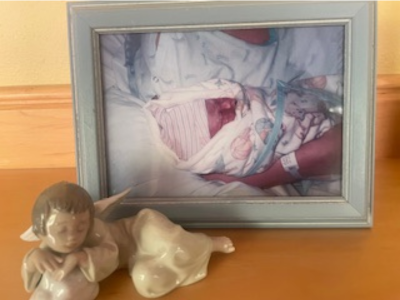
Raker’s son, Tyler. His memory continues to inspire her work supporting other grieving parents. (Image courtesy Casey Raker)
Since each meeting can be different, depending on who attends and their situation, Raker recommends that people attend at least two meetings before deciding if they want to continue. The first meeting can also be overwhelmingly emotional for participants.
The meetings typically begin with people sharing their stories, similar to the online group. From there, the conversation continues organically. Topics like Mother’s Day, death anniversaries, due dates, and challenging questions and comments from other people often arise.
Raker highlighted that the connections made among participants are particularly valuable, and people often naturally meet outside the group. She also mentioned that, over time, the roles of participants change.
“If someone’s there for five, six, seven months in a row, they can feel and see the growth within themselves because they remember what it’s like to be there in that early journey,” she said. “They can look back and see, ‘Wow, I’ve really come a long way.’”
Perinatal Support Washington’s Warm Line
For people who may want individual support, PS-WA also operates the Warm Line, a phone service that connects callers with resources, community, or just a listening ear.
The line is monitored by two PS-WA staff, several Master of Social Work interns, and 26 volunteers who have experienced a perinatal mental health issue like depression, anxiety, or loss, and have recovered, or are professionals with training in perinatal mental health. Callers can even request to speak with a father or request an interpreter.
Victoria Cherniak, a mother based in south Seattle, remembers feeling lost and desperate to talk to someone the first night she brought her newborn son home 14 years ago — but didn’t know who to call.
“Then that moment passed,” Cherniak said. “I never looked for a number [for a hotline] again, and I wish I had, because my healing was stalled.”
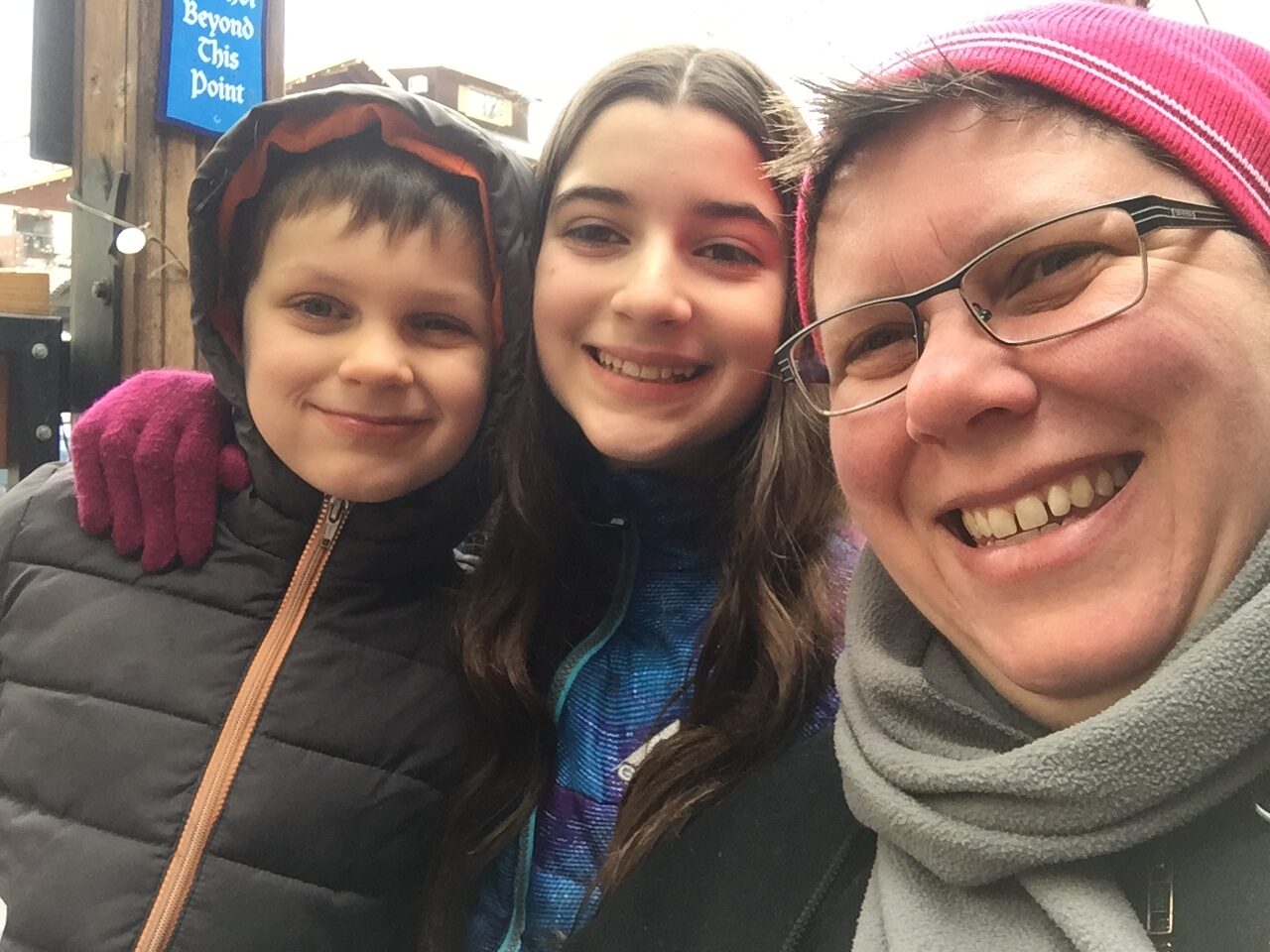
Cherniak, now a mom of two, remembers the loneliness of new parenthood — and works to support others. (Image: Victoria Cherniak)
Cherniak, now the manager of the Warm Line, wants to ensure that others can easily find support for their postpartum experiences, whether they are grieving a loss or struggling with new parenthood. Connecting via text or email is also an option. The Warm Line offers targeted referrals to therapists or psychiatric professionals, doing the work of finding therapists who take the caller’s insurance, are trained and experienced in perinatal mental health, and have openings for new clients.
Volunteers will send a follow-up email with resources specific to the caller and check in a week later. Depending on their needs, the caller can then choose whether or not to receive continued support, which typically lasts about three months or more. Individuals who have experienced a loss usually extend their care even longer to get through painful anniversaries.
Erin Reidy, who lives in Ballard, didn’t benefit from the Warm Line when she was experiencing postpartum anxiety, but now volunteers with them.
“When I had my miscarriages, I experienced intense grief that isn’t supported in the rest of our society,” Reidy said. “And just having somebody else say, ‘This is not unique to you. Other people have gone through it — I’ve found that can be so powerful and eye-opening for so many parents […] We sit in the hard things with people because they need to have their experiences validated.”
Shortly before my son was born, I stopped attending the support group, but never forgot the impact it made on me during one of my darkest seasons. I also realized back then the importance of breaking the silence around miscarriages, so that people know that this happens more than we realize, and those who experience it are not alone. That is why, three healthy children later, I continue to share my story and to raise awareness of resources that are available for people who would otherwise grieve their losses in isolation.
If you’ve suffered a loss and are ready for support, here are some resources:
- Warm Line: 1-888-404-7763 or [email protected]. Answered live Monday through Friday 9 a.m.-4:30 p.m. On evenings and weekends, leave a message and your call will be returned within 14 hours.
- Perinatal Loss Support Groups: Third Wednesday of the month at 7:30 p.m. in person at Seattle Children’s Hospital; Second Monday of the month at 7:30 p.m. over Zoom.