Students at two Seattle high schools could soon be walking through weapons detectors on their way to class.
The Seattle School Board voted unanimously Wednesday, Oct. 7, to support additional school safety measures, including weapons detectors.
Rainier Beach and Nathan Hale high schools requested the pilot programs. They would be the first Seattle Public Schools campuses to use the equipment for routine school entry. The board’s resolution supports Superintendent Ben Shuldiner’s existing authority to implement safety measures, rather than establishing a districtwide requirement for weapons detectors. Those measures can include building improvements, changes to school entrances and weapons-detection equipment.
The proposal was discussed publicly two weeks earlier, when students, parents, and school administrators appeared before the board at its Sept. 23 meeting. Students want to test the equipment — and measure the results
Nathan Hale students told board members at the September meeting that they support trying weapons detectors but want the district to learn from the experience before making longer-term decisions.
Nathan Hale senior Kayla Roos told the board she believed the detectors could reassure families without creating the stress she associated with a police or security presence. Other students emphasized that the district should evaluate the results rather than assume the technology would be effective. The students’ presentation made clear that they wanted a role in gathering feedback and helping district leaders interpret what they learned.
What would students walk through?
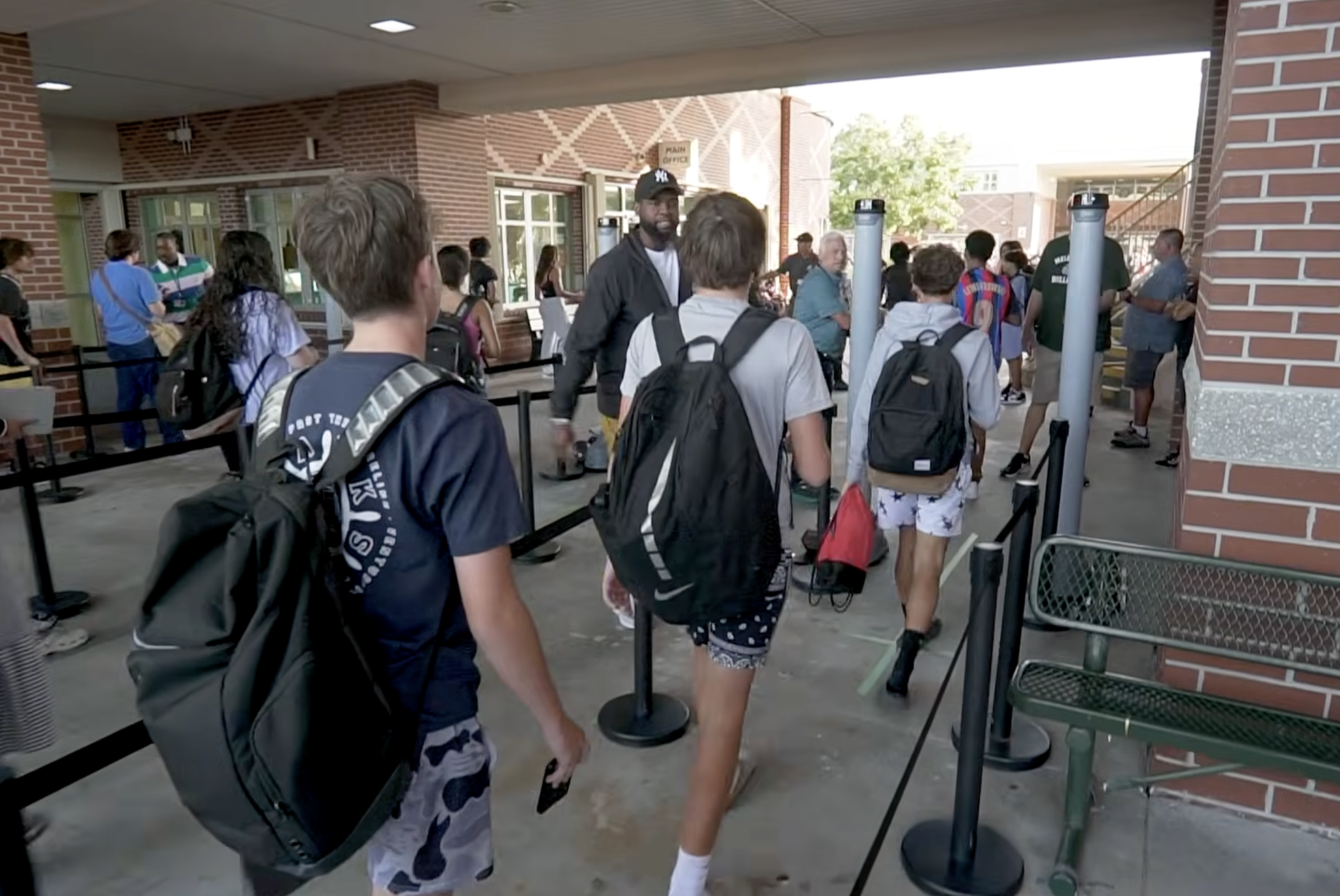
Seattle Public Schools has already used CEIA USA’s OPENGATE Weapons Detectors at graduations and sporting events, Shuldiner told the board Sept. 23. The equipment consists of two freestanding columns. Unlike airport security screening, students would not ordinarily need to stop and place their belongings on a conveyor belt.
Shuldiner explained that the equipment can be adjusted to detect different objects. He said students could generally walk through with keys and cellphones, although laptops and some other items could trigger an alert. He also described the system as capable of quickly screening large numbers of people.
Nathan Hale Principal Jillian Grimes told the board that the school had used the detectors at graduation and football games. She described the graduation screening as smooth and said parents had sent appreciative messages.
However, using the equipment every school morning would be different from screening families at an occasional event. That is one reason Nathan Hale students say they want to track arrival times and gather feedback throughout the pilot.
Rainier Beach students have other safety proposals
Weapons detectors are only one part of the safety changes Rainier Beach students discussed with the board.
Students involved in the school’s Youth Safety Ambassador (YSA) program described proposals involving student identification cards, building entrances and monitoring access to school spaces. The YSA program is a peer-led initiative launched by the Seattle Department of Education and Early Learning (DEEL) and the Seattle Human Services Department.
Students from Rainier also emphasized mental health support. During the Sept. 23 discussion, they explained that they help classmates find mental health resources and identify adults they can approach when they feel unsafe. Their presentation reflected a broader approach to school safety: controlling who enters the building while also connecting students with support.
A mother asks the district to act
Lonnisha Landry, whose son Xavier was killed by gun violence, also addressed the board Sept. 23.
Landry said Xavier would have been a senior at Rainier Beach this school year. She urged board members to seriously consider installing detectors rather than waiting for another shooting. She acknowledged the equipment could not prevent every tragedy but argued it deserved consideration as part of a larger school safety plan.
What happens when a detector sounds an alarm?
Board Director Liza Rankin raised a question during the September discussion: How would the equipment affect student discipline?
Rankin wanted the district to examine whether screening might lead to disproportionate disciplinary consequences for some students. She also asked what would happen if the equipment detected a weapon. Shuldiner responded that introducing the equipment would not change existing student discipline rules.
The issue came up again Oct. 7 when Rankin asked for clarity about when school employees would confiscate items and when law enforcement would become involved. District officials were not able to provide those details before this posting.
When will the detectors arrive?
Neither school has a confirmed installation date. During the Oct. 7 meeting, Shuldiner said he hoped to have the programs operating within the next couple of months, KUOW reported.
The district has not yet provided a publicly confirmed cost estimate or detailed implementation schedule for the pilots. Shuldiner also said the district would not introduce the equipment at additional schools unless those school communities wanted it.
For now, Rainier Beach and Nathan Hale will be the district’s first opportunity to evaluate weapons detectors during the regular school day.
Read more: Families can review Seattle School Board agendas and meeting materials, consult the Sept. 23 meeting transcript, or watch the Oct. 7 meeting recording. KUOW’s Oct. 7 report provides additional details about the board’s vote.