Seattle Public Schools Superintendent Ben Shuldiner said Monday that if district teachers and other Seattle Education Association union members go on strike, delaying the first day of classes, SPS will do what it can to help parents meet their needs for care and food.
“If there is a strike, we will have food and meals planned for our children,” Shuldiner said in a press conference. “If there are nonprofits or other folks that work within our schools, we’re going to continue to have those organizations there and open.
“We are doing everything we can to focus on our children,” Shuldiner stressed. “If we can serve them food, we’re going to serve them food. If we can have before care and after care, we will try to do that too. If we can have programming for our kids, we’re going to do that because at the end of the day, that’s my job: to make sure that the schools are open as much as they can be no matter what happens.
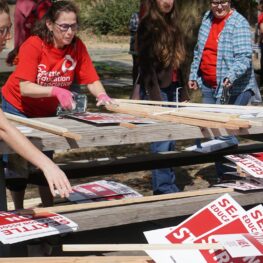
Signs point to the possibility that the union and the district may not reach a collective bargaining agreement by the scheduled start of school. Over the weekend, bargaining broke down, according to SEA. A mediator is now working to keep negotiations moving forward. Members of SEA voted overwhelmingly last week to strike if their contract negotiators call a strike. Even so, Shuldiner described himself as an “eternal optimist.”
“My hope, of course, is that we’re open on Wednesday for full classes and full schools,” he said. “But as the superintendent, you hope for the best, and you plan for the worst,” Shuldiner said. He added that schools are likely to allow nonprofits providing care for children more space to care for more kids.
He stressed that parents should call their child’s schools to learn what is being offered.
“We’ve been prepping our principals for the last couple of days. If families want to reach out to their schools, they really should. They’re in the building today. They’re working on it. And again, the first thing is making sure we can get food service, and then the second is to make sure that we can have care in the schools if the nonprofits are able to do it.”