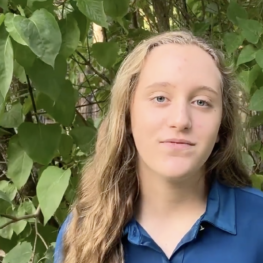
Don’t ask Savour Orji about the dismal statistics of women entering STEM careers. The 16-year-old junior at the Technology Access Foundation Academy in Kent is on fire to study neurology, ever since her chemistry teacher took a group of students to the University of Washington to check out what researchers there were up to.
“That trip gave me an idea of what neurology is about,” says Orji, “and how it affects the lives of people. It was just so super great. When I went there, I saw they were creating technology I didn’t know even existed. I would love to have that feeling of being so impactful” in a career.
If things continue as they are going at most other schools, girls like Orji will continue to be scarce in such high-tech arenas. It’s no secret that lucrative STEM jobs remain largely a bastion of mostly white men. Just look at one giant in the tech field, Google — arguably representative of much of the industry — where statistics tell this tale: Just 1 percent of its tech staff are African-American, according to company figures released this spring, while 2 percent are Hispanic. A whopping 83 percent of Google's tech workers are male. The only minority group present in any meaningful number are Asians, at 34 percent.
Compare those numbers to data from the U.S. Bureau of Labor Statistics, which show in the country at large, the workforce is 47 percent female, 16 percent Hispanic, 12 percent African-American and 12 percent Asian.
That’s got to change for the country to remain competitive and thriving, according to local groups working hard to prepare kids of all races with jobs in high tech and science.
One is the Road Map Project, a community-wide effort aimed at dramatically improving student achievement from cradle to college to career in South King County and South Seattle. The network includes school district and community college educators, community and nonprofit leaders to build awareness and enthusiasm for STEM, and provide kids with real-world STEM career experiences.
Another innovative effort to bridge the gap between underserved kids and STEM careers is the Technology Access Foundation in South King County, founded by Trish Millines Dziko and her partner, Jill Dziko. Trish Dziko knows the high-tech world well, based on her earlier career as a Microsoft programmer, and she and Jill Dziko are bent on giving kids like Orji a solid chance to snag a STEM job through their nonprofit.
Chris Alejano, director of education at TAF, says part of its mission is training K-12 teachers through a summer institute on how to integrate technology into classrooms, afterschool programming on STEM subjects and partnerships with South King County schools to help them achieve STEM proficiency.
Perhaps the most visible aspect of the foundation is the TAF Academy, Orji’s school. The academy, which emphasizes STEM subjects, critical thinking, college readiness and leadership, is a unique partnership between TAF and the Federal Way School District, serving kids in 6th through 12th grades. There are no admissions tests or GPA requirements to achieve, and 50 percent of the students there qualify for free or reduced-price lunches. Students either live in its area or put their name into a lottery.
Scores on state tests belie its students’ mostly modest origins: they’ve been good enough to earn the TAF Academy the state School of Distinction Award for several years — a recognition given to the top 5 percent of schools in Washington state.
That’s great, but Orji loves it for reasons beyond its academic chops. It’s turned into a kind of family business. “I have my two sisters here,” she says. “One is in middle school and one is a freshman.”