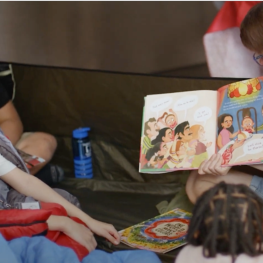
I was talking to a friend the other day about his adult son. Looking back, he feels like he gave the boy everything he could possibly need: a comfortable home, a stable environment, a fantastic education, and as much care and attention as he and his wife could muster. The son, however, sees it differently. He insists that the love was conditional, the attention critical, and the focus mostly on his flaws. Now his relationship with his parents is distant, bordering on estranged. My friend and his wife are bereft, and more than a little confused.
This situation is much more common than you’d think. So many people look back on their average childhoods, where they were cared for and protected and given everything they needed, and still feel that they weren’t well-loved. Meanwhile, parents everywhere find that no matter how hard they try and how many sacrifices they make, they still can’t shake the feeling that they’re coming up short.
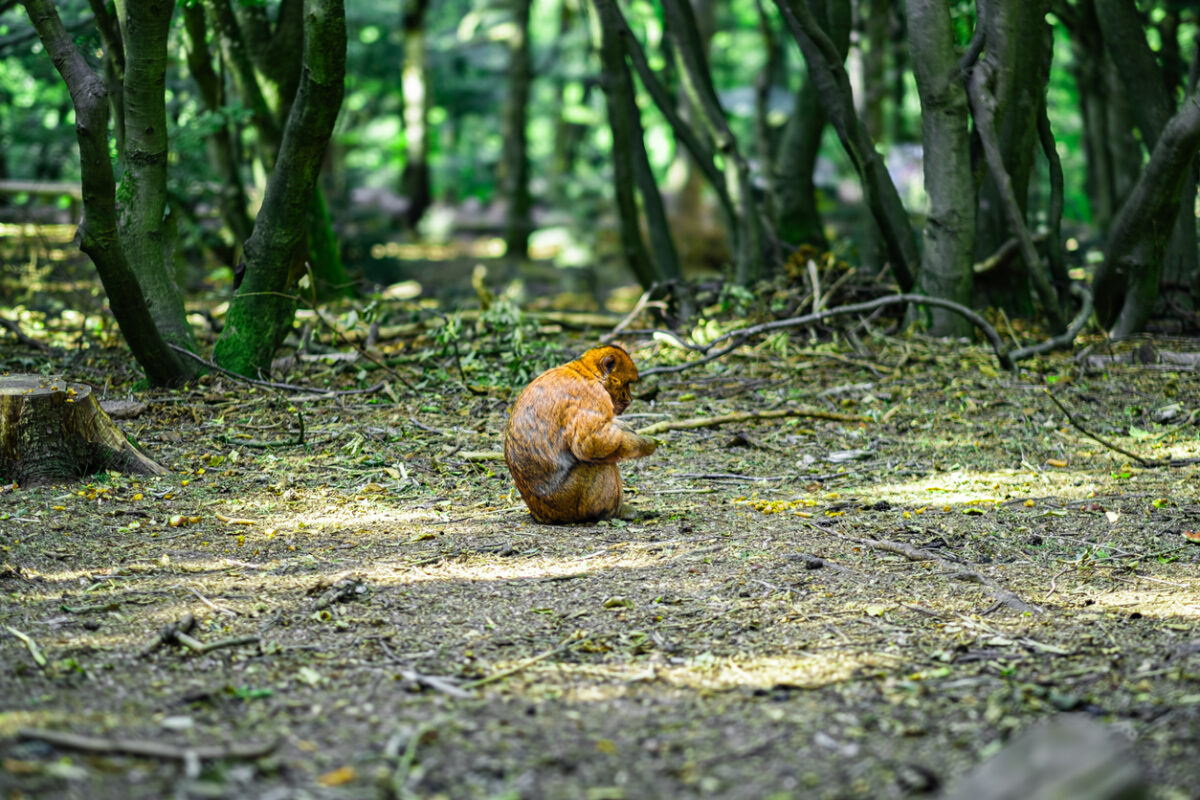
There’s an old saying about social animals in general and primates in particular: “A lone monkey is a dead monkey.” Our superpower as a species — the one that allowed us to conquer the planet without sharp claws, venomous fangs, or fast legs — was our ability to think, communicate, and cooperate as a group. The survival of any individual depended on its inclusion in that group, where the sharing of resources, protection, and information made us far more formidable than such a slow, weak, hairless animal had any right to be.
But of course, this superpower came at a cost. We need a prolonged childhood for our brains and our complex social skills to develop. In those early years, we are especially vulnerable, not only because we lack the ability to defend and care for ourselves, but because we have nothing to contribute to the well-being of the group. From the perspective of species survival, children are just dead weight — except they’re also the future, and for that reason, they’re everything.
Nature solves this problem by giving adults parental instincts. Our small, weak, profoundly helpless children trigger our deepest impulse to nourish and protect them. At the same time, our children are engineered to magnify those impulses by focusing relentlessly on gaining our attention and our love. The system works, more or less, in that most children survive to adulthood without being abandoned by the side of the road. That’s a win, right? Along the way, though, we acquire a few scars.
The thing about a child’s desire for attention and love is that it’s almost limitless. The more resources and protection they receive, the more likely they are to survive to adulthood and pass on their genes to the next generation. As far as their instincts are concerned, more is always better, and those instincts evolved back when the stakes were survival itself. This leaves kids with the constant fear that they’ll never get what they need, and parents with the gnawing feeling that they can never give enough. Essentially, nature has designed human children with an unfillable hole.
I don’t think we can ever make that hole go away. What we can do is recognize it for what it is, and be intentional about how we try to fill it. So often, we attempt to plug it with something that doesn’t fit there. We move obstacles out of their way, rather than letting them learn to do that for themselves. We try relentlessly to optimize their potential, focusing only on who they could (or “should”) be, rather than who they are. We buy them phones and video games hoping to distract them from what’s missing, but actually reinforcing it with every click. And all the while, the hole gets deeper.
We have to remember that the hole in our children, and in all of us, is the fear of being the lone monkey, and that the only thing that fills it is membership in the tribe. Most primates spend hours everyday picking ticks and lice off of each other, not just for the between-meal snack (Mmmm, extra protein!), but because it reinforces the social bonds that we are all programmed to crave. Since our mutual grooming opportunities are pretty limited, other than eating the Cheerios we find stuck to our babies’ clothes, we have to do the modern equivalent. We need to reinforce tribal membership with our words and actions.
“You are one of us.”
“We love and accept you exactly as you are.”
“We will never vote you off the island, or leave you by the side of the road.”
A lone monkey is a dead monkey. But a monkey who knows they belong has a lot fewer ticks, and won’t need psychotherapy for nearly as long.