
Being a parent is nonstop hard work, making it challenging to stay on top of news that impacts families in Washington state. This Hits Home is your weekly hit of news, commentary, and, occasionally, opinion. Want to have a say? Look for the “Take action” prompts. Here’s the update for the week of June 1-7.

Seattle Mayor Katie Wilson with members of the Somali Health Board soccer team (Image: Seattlefwc26)
They’re going to the World Cup!
More than 1,400 Seattle-area young people and their caregivers will get something extraordinary this month: a seat at the FIFA Men’s World Cup — for free.
In announcing the initiative last week, Seattle Mayor Katie Wilson said the giveaway is a statement that opportunity in Seattle isn’t reserved for those who can afford it.
“We believe that world-class experiences should be accessible to everyone,” said Mayor Katie B. Wilson. “Years from now, these young people will remember Seattle invested in them and made them part of something incredible.” That said, no city funds are involved in the tick distribution — the full cost is being covered by corporate and institutional sponsors, including Alaska Airlines, Amazon, Boeing, Microsoft, the Port of Seattle, the Puyallup Tribe of Indians, and the University of Washington.
The tickets, along with food vouchers and commemorative scarves, are being distributed through 40 youth-serving organizations across the region, with select groups also receiving shuttle service via King County Metro. Tickets will be given to youth through 40 youth-serving organizations already identified across the region. The full list is set to be released before the tournament kickoff, but among them are the Somali Health Board, the African Youth Sports Academy, and the Seattle Youth Safety Ambassadors. General public tickets remain available through FIFA’s last-minute sales phase, though even the cheapest run into the hundreds — making this program a genuine gift for the young fans it’s designed to reach. Read the full story.
Accidental death of Thurgood Marshall Elementary teacher rocks school community

Christian Salyer. (Image courtesy Support for the Salyer Family Gofundme)
The Thurgood Marshall Elementary School and community are in mourning after a beloved teacher’s death last week. Christian Salyer was struck by a recycling truck while commuting home on his bicycle after school on June 1.
Salyer, 30, was hit at the busy intersection of 12th Avenue and Yesler Way just after 4:30 p.m. His death was confirmed on June 3.
The truck involved was operated by Recology, a San Francisco waste and recycling company. In a statement, a Recology spokesperson expressed sadness over the death and confirmed the vehicle and driver were involved. The company is cooperating with authorities to determine what happened.
Salyer, known to his students as Mr. S., was a well-known member of the Thurgood Marshall community. The school’s principal, Julie Breidenbach, wrote to parents on Tuesday: “Christian was a dedicated teacher who served our school with passion and care for many years. His warmth, dedication, and commitment to education will be deeply missed.” Parents have been leaving flowers at a tree near the school entrance where Salyer used to greet students each morning. On Tuesday, an online fundraiser was posted to support the Salyer family.
Money raised by the online campaign will go toward “meals for the family, funeral expenses, logistics, and many unforeseen costs that arise when a loved one is lost so suddenly.” As of Thursday evening, the campaign had received nearly $77,000 in donations.
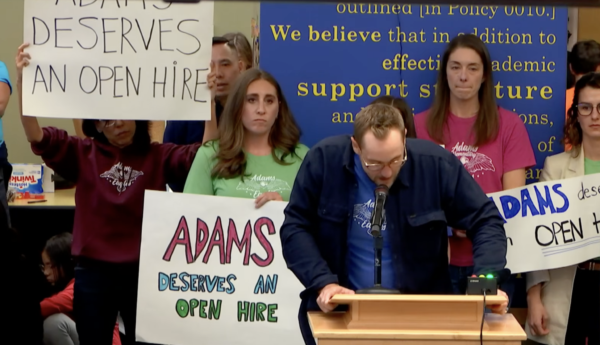
Adams Elementary parents attend a Seattle School Board meeting earlier this year to challenge principal hiring process. (Image courtesy SPS TV)
Why SPS’s hands are tied regarding Adams Elementary principal placement
If you have kids at Adams Elementary in Ballard — or anywhere in Seattle Public Schools — you may still be scratching your head about why a principal labeled “toxic” by one school community would be hired to lead another.
Last month, Anitra Jones quietly began her tenure as Adams’ principal, replacing longtime principal Doug Sohn. Her appointment sparked an unusual level of community pushback this spring, rooted in her time as principal at Rainier View Elementary for 13 years. Jones was removed in April 2024 amid allegations of harsh discipline disproportionately affecting Black and brown students, violations of student IEPs, and more. A state investigation resulted in mandated training. A labor adjudicator later found Jones had unlawfully discriminated against staff for union activity.
Despite all of that, SPS Superintendent Ben Shuldiner has held firm on Jones’ new placement overseeing Adams — citing state law, Jones’ contract, and a promise made by his predecessor as reasons he was required to seat Jones in a principalship. He has also said there are no disciplinary records in her personnel file, which matters legally.
It’s a complicated situation with no clean answers, but Seattle Times education reporter Claire Bryan’s recent article helps clarify important elements. Read the full story here.

Menopause is about more than hot flashes (Image: Jose Miguel Sanchez)
Fifty percent of parents will be impacted by this | Op-Ed
The percentage of births to women over 35 in the United States more than doubled between 1990 and 2023 — from 8.8 percent to 20.9 percent. Do the math, and that puts roughly one in five mothers on a trajectory to enter perimenopause while still actively parenting school-age kids. This makes a new op-ed in the New York Times not just timely, but personally relevant to a lot of Seattle’s parents.
In a piece published June 4, Seattle philanthropist and businesswoman Melinda Gates makes the case that American medicine is failing women at midlife — systematically and at scale. The statistics she marshals are staggering: nearly one in three U.S. women over 40 experiences severe menopause symptoms, yet only about one in four receives any treatment for them. Fewer than a third of OB-GYN residency programs in this country include a menopause curriculum. And the use of hormone therapy — currently the most effective tool available — has dropped to less than 5 percent of postmenopausal women.
Gates makes a striking historical parallel: the “twilight sleep” era of early 20th-century childbirth, when laboring women were drugged unconscious, sometimes restrained, and had no voice in their own care.
“Most of us look back on that era with a shudder. It’s hard to imagine how we ever came to accept a practice like that as standard,” Gates writes.
She wonders whether future generations will look back on today’s menopause care with similar disbelief. It’s a fair question. The symptoms Gates describes — shattered sleep, racing heart, joint pain, memory loss, depression — are not minor inconveniences. Left untreated, the underlying hormonal shifts raise a woman’s risk of cardiovascular disease, osteoporosis, cognitive decline, and Type 2 diabetes.
Gates has distributed millions in new funding for women’s health, including the $215 million in donations announced last week in support of midlife and menopause care, as well as contraceptive access and maternal care.
Gates’ essay is a call for systemic change: menopause training in medical schools, expanded insurance and Medicaid coverage, workplace protections, and research parity. It also flags a disturbing disparity: postmenopausal white women are more than twice as likely as Black and Hispanic women to receive hormone therapy — a gap that public education and policy must address.
“We need a menopause revolution in this country,” Gates writes.
Mamas, we all get there at some point. This op-ed is worth your 10 minutes.
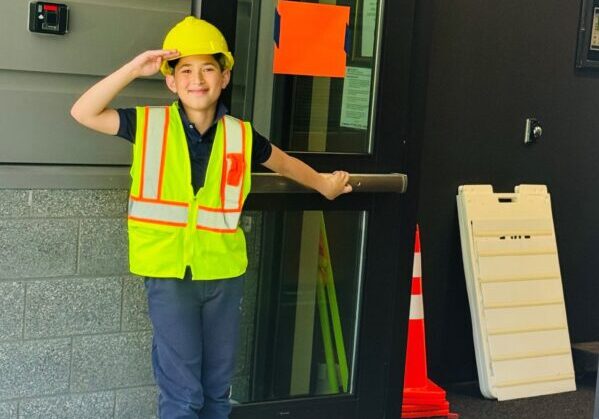
Student Emil Ghandiyan, one of 10 news members of the AAA Washington’s School Safety Patrol (SSP) Hall of Fame (Image courtesy AAA)
4 Seattle-Area Elementary Students Honored by AAA
Sometimes you just need a hit of feel-good news. Small people doing good for other small people. So hats off to four Seattle-area students who are among the 10 students statewide inducted into AAA Washington’s School Safety Patrol (SSP) Hall of Fame last week. The students were honored for “Going above and beyond wearing the brightly-colored safety vest and helping fellow students cross the street,” AAA said in a release. “These fourth- and fifth-graders are serving as role models in their communities.” Let’s hear it for:
- Olive Woody, a fifth grader from Echo Lake Elementary in Shoreline
- Emil Ghandiyan, a fifth grader from Tambark Creek Elementary in Bothell
- Tina Nguyen, a fifth grader from Glenridge Elementary School in Kent
- Vivian Luo, a fifth grader from Lakeridge Elementary on Mercer Island
The SSP program has supported thousands of students in grades 4 through 8 by providing volunteer crossing guards since its establishment in 1922 at an elementary school in Seattle. It now encompasses more than 700 partner schools and 22,000 student patrollers across the state.
Read more about the more than 100-year-old program.

Seattle City Council proposal would use street closures to curb gun violence
Residents near Aurora Avenue North have had enough. After a bullet struck a home just outside a 6-week-old baby’s bedroom, neighbors took matters into their own hands last week, placing barriers to block vehicle access to their streets and cut off the drive-by shooting corridor that Aurora has become. The city promptly replaced those barriers with concrete traffic-calming measures — but a larger policy response may be coming.
Seattle City Councilmember Debora Juarez (District 5) and Seattle Mayor Katie Wilson are pushing emergency legislation that would allow the police chief to recommend temporary street and alley closures specifically to prevent criminal activity and gun violence. Wilson has called the Aurora violence “alarming and unacceptable.” Juarez herself acknowledges the thorniest policy challenge: closures may simply push violence to adjacent streets rather than stopping it.
The proposal, which has been in the pipeline since former Mayor Bruce Harrell’s administration, could go before the Public Safety Committee as soon as June 23. Juarez is working with Councilmembers Eddie Lin and Bob Kettle to move it forward. Read the full report at KUOW.

New guidelines say Tylenol is safe in pregnancy (Image: iStock.com)
New guidance affirms Tylenol is safe during pregnancy
The Society for Maternal-Fetal Medicine published new clinical guidance this week affirming that acetaminophen, better known by its brand name, Tylenol, should be the “first-line” defense against pain and fever during pregnancy.
The directive contradicts the Trump administration’s notice to physicians last year, cautioning against the use of the primary pain reliever recommended for pregnant women, following the president’s unsupported claims that the medication could lead to autism in children.
The national professional association for maternal-fetal medicine specialists, clinicians, and scientists continues to recommend acetaminophen as the “first-line medication” to treat pain and fever during pregnancy. The federal government’s statements prompted the organization to review its 2017 guidance finding acetaminophen safe to use during pregnancy.
“Although some studies have reported associations between maternal acetaminophen use and adverse neurodevelopmental outcomes in offspring, methodological limitations preclude conclusions about causality, and the biological mechanism for such an effect remains unestablished,” reads the statement, following a comprehensive review of recent and historical scientific literature.
The organization’s guidance cautions patients to “use the lowest effective dose of acetaminophen for the shortest duration necessary,” while emphasizing that untreated maternal fever carries well-documented risks to the fetus, especially in the first trimester.
At a news conference last September, President Donald Trump said his administration had found acetaminophen use during pregnancy to be a likely contributing environmental cause of autism. Medical experts and the drug manufacturer have said there is no proven link. Read the full story by Stateline.
1,000 free gun lock boxes distributed in King County
Keeping kids (and adults) safe is what the Public Health – Seattle & King County’s Regional Office of Gun Violence Prevention is all about. And one of the best ways to do that is to ensure that guns are safely locked away from kids, without them being given the key or code access. Locking up firearms also reduces the chances they will be stolen and used to harm.
With that goal in mind, the office partnered with the City of Seattle and numerous community organizations to host seven free gun lockbox giveaway events throughout King County last week. The giveaway events were timed to coincide with National Gun Violence Awareness Day on June 5.
The good news is that free lock box distribution is having an impact. According to the King County Prosecuting Attorney’s Office “Shots Fired” report, gun violence in King County has steadily decreased in recent years, following an increase during the COVID pandemic.
The bad news is that residents aged 18 to 24 years old are twice as likely to die from gun violence compared with all King County residents.
“We are encouraged by the downward trend in gun violence across King County. However, community members who are closest to the issue remind us daily that there is significant work to be done to curb the violence they experience regularly,” said Regional Office of Gun Violence Prevention Director Eleuthera Lisch in a release. “We must continue to move with urgency and work together to end gun violence, so every neighborhood and community feels safe.” Learn more about safe firearm storage at the King County Lock It Up webpage.
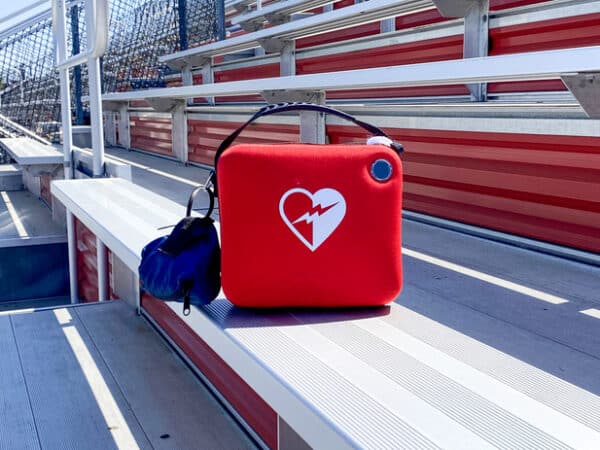
A life-saving AED defibrillator (Image: iStock.com)
Do you know where the AED is at your child’s camp, sports, or school? Here’s why you should.
Case in point: When 12-year-old Ashtyn Messinger collapsed during soccer tryouts in Sequim, Wash., last month, the fast action of a nearby coach, bystanders performing CPR, and a portable defibrillator all played a part in saving her life. Messinger was airlifted to Seattle Children’s Hospital, where surgeons implanted a defibrillator in her heart, and she’s now recovering at home.
Only one in about 10 children who experience sudden cardiac arrest survives, which is why Ashtyn’s parents are now advocating loudly for better AED access. A Washington state bill that would have required school districts to develop AED placement plans for schools and athletic facilities passed committee with bipartisan support earlier this year — then stalled without a full Senate vote.
Ashtyn’s experience is a reminder that as kids move into summer sports and activities, parents have an important question to ask: Does the sport, camp, or activity have an AED accessible at all times? AED stands for Automated External Defibrillator, a portable, life-saving medical device used to treat sudden cardiac arrest by automatically analyzing heart rhythm and delivering an electrical shock if needed to restore a normal heartbeat.
A Harris Poll commissioned by global medical-device maker ZOLL Medical found that many parents are in the dark about AEDs.
“Fifty-three percent of parents don’t know whether their child’s sports facility has an AED, and only 22% know where to find the nearest AED at a youth sporting event,” a company spokesman said in an email. “However, sudden cardiac arrest persists as the leading cause of death among young athletes.”
According to the Sudden Cardiac Arrest Foundation and the American Heart Association:
- CPR alone can double or triple survival chances by keeping blood and oxygen circulating until a defibrillator is available.
- For every minute that passes without defibrillation, survival odds drop by 7–10 percent.
- When CPR and an AED are used within 3–5 minutes of collapse, survival rates can reach 50–70 percent — compared to roughly 10 percent when neither is immediately available.
As part of its “Anything Can Happen, Anyone Can Help” campaign, ZOLL stressed five things every parent should ask before a child engages in a camp or a physical activity:
- Is there an AED onsite?
- Where is it located, and is it clearly marked?
- Are counselors or coaches trained in CPR and AED use?
- Has the AED been registered so that anyone can find it?
- What is the camp or league’s emergency action plan if a child collapses?
In the meantime, Ashtyn might well become the poster child for another run at Senate Bill 6118, which was introduced to the 2026 Legislature by Sen. T’wina Nobles, D-Fircrest. Read Ashtyn’s full story at the Sequim Gazette.
TAKE ACTION: Do you have an opinion about AED accessibility and training at all Washington schools and sports facilities? Make your voice heard. Contact your state lawmakers
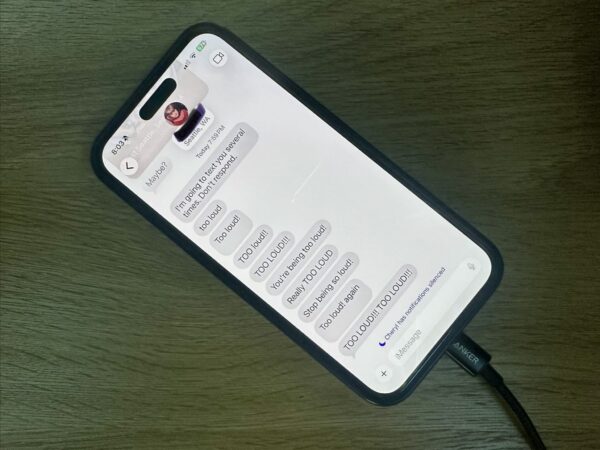
(Image: C. Murfin)
A GOOD LISTEN: He texted one phrase to his kids 133 times
Warning: AI reads this essay about a father’s archive of texts to his kids, and I think you should listen to it rather than read it. Russell Shaw’s recent contribution to The Atlantic is a tender record of the years his house was full — and a meditation on how parental love is often spoken in code, recognized only once the noise is gone. Why listen rather than read? Let your thinking mind go and just absorb the heart in this piece. Hit the play arrow at the top of the story.