Being a parent is nonstop hard work, making it challenging to stay on top of news that impacts families in Washington state. This Hits Home is your weekly hit of news, commentary, and, occasionally, opinion. Want to have a say? Look for the “Take action” prompts. Here’s the update for the week of April 20-26.
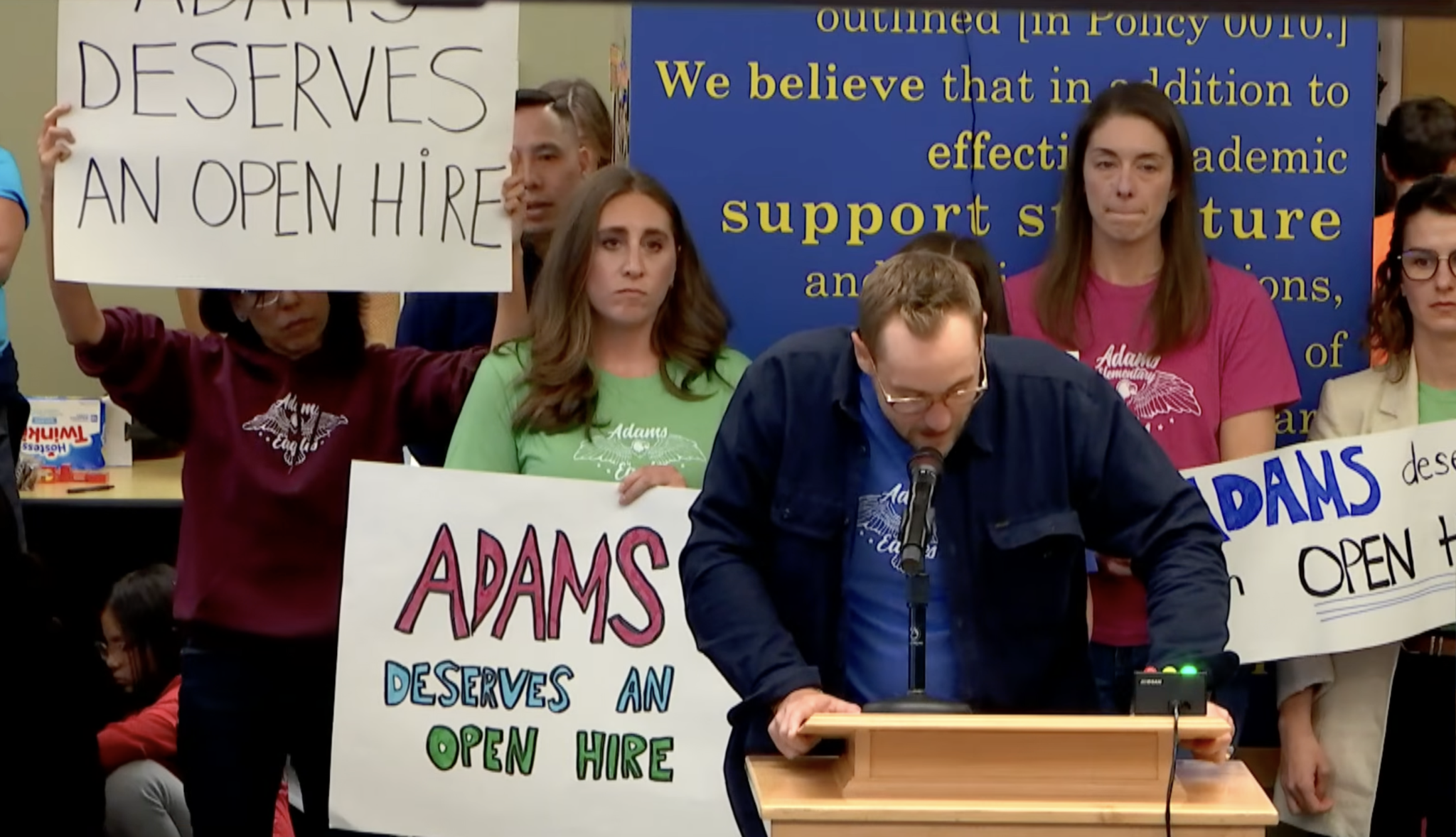
Parents raise heck following SPS placement of former Rainier View principal at Adams Elementary
A leadership change at Seattle’s Adams Elementary is raising new questions about how Seattle Public Schools places principals—and how much say families have in those decisions. The district has tapped former Rainier View principal Anitra Jones to lead the Ballard school, even as her tenure at Rainier View drew intense complaints from staff and families and was described as creating a “toxic” environment.
At a community meeting last week, Adams parents pressed Superintendent Ben Shildiner and district leaders for answers and transparency, but many left unconvinced. Families say they’re still wary, citing both Jones’ past record and the lack of a clear, consistent process for principal placement. Their concerns center around trust: how decisions are made, whether parent voices are heard—and matter—and what safeguards are in place when a school leader arrives with controversy behind them. According to news reports, Shuldiner took parents to task at a meeting of the Seattle School Board on Wednesday for what he called their “unacceptable” response to the appointment of Anitra Jones as Adams principal.
The blowup highlights an ongoing strain between staffing decisions within the district, contractual limits, and community trust. At Adams, families say their greatest concern is about what this leadership change will mean day to day—how the school will feel for students and staff, and whether concerns raised now will be acknowledged in a meaningful way. Read more on this from MyBallard.com.
TAKE ACTION: Do you have an opinion on how school leadership decisions should be made and what input parents should have? Contact your Seattle School Board member or the SPS Superintendent’s office at [email protected] or 206-252-0167 and share it.
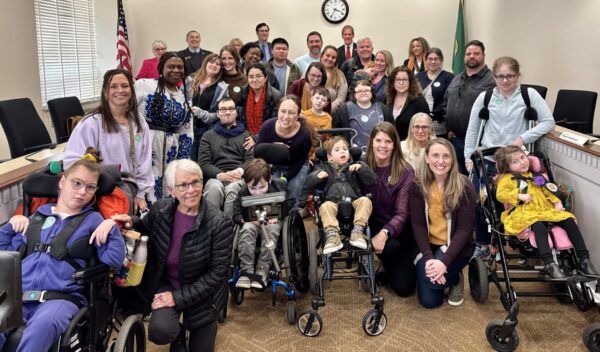
Families of children with developmental disabilities testified in front of a Washington House committee last year. (Photo courtesy of Katie Scheid)
Why are these families suing the state?
Washington families caring for medically fragile children are taking the state to court, arguing that promised care simply isn’t reaching the kids who need it.
At the center of the controversy is a gap in Washington’s Medicaid system: parents can be paid caregivers once their children turn 18, but not before. For families like Jamie Thompson’s—whose 16-year-old son requires round-the-clock, ventilator-supported care after a traumatic brain injury—this has meant years of unpaid labor, often with little to no outside nursing support due to workforce shortages.
A potential class-action lawsuit filed in federal court in Tacoma claims the state is failing to provide the in-home nursing and personal care hours children are already approved to receive, leaving some hospitalized longer than necessary or at risk of institutional placement.
Families say the system is forcing impossible choices: quit work to provide full-time care without pay, or consider placing their children in facilities. State officials, in court filings, maintain they are complying with the law and working to secure services, but parents and advocates argue that unfilled care hours—estimated in the millions annually—tell a different story. With bipartisan proposals to pay parental caregivers stalled in recent legislative sessions, the courts may now decide whether Washington must do more to ensure children with complex needs can safely remain at home—and whether the parents already providing that care should be recognized and compensated. Read the full story from Washington State Standard.

Mary Bridge Children’s Hospital. (Image: Courtesy of Multi-Care)
New Mary Bridge Children’s Hospital opens May 16
A new, standalone children’s hospital is opening in Tacoma at a time when pediatric care in the region is under increasing strain.
The new Mary Bridge Children’s Hospital, set to open May 16, moves the hospital from its current shared facility with MultiCare Tacoma General Hospital, to a brand facility with a six-story, 262,000-square-foot hospital designed entirely for young patients.
The $479 million project includes 82 private patient rooms, eight operating rooms, and a rooftop helipad—expanding both the scale and specialization of care available to families across Washington, as well as parts of Oregon and Idaho.
Hospital leaders say pediatric services in and around Tacoma continue to grow, particularly as seasonal illness surges and mental health needs push existing systems toward capacity. The new campus is designed to address that pressure, with a 38-room pediatric emergency department and a dedicated mental health crisis stabilization unit—resources that aim to reduce bottlenecks and keep more children closer to home for care.
It also remains the only Level II pediatric trauma center in Western Washington, a critical designation for emergency response and regional hospital capacity.
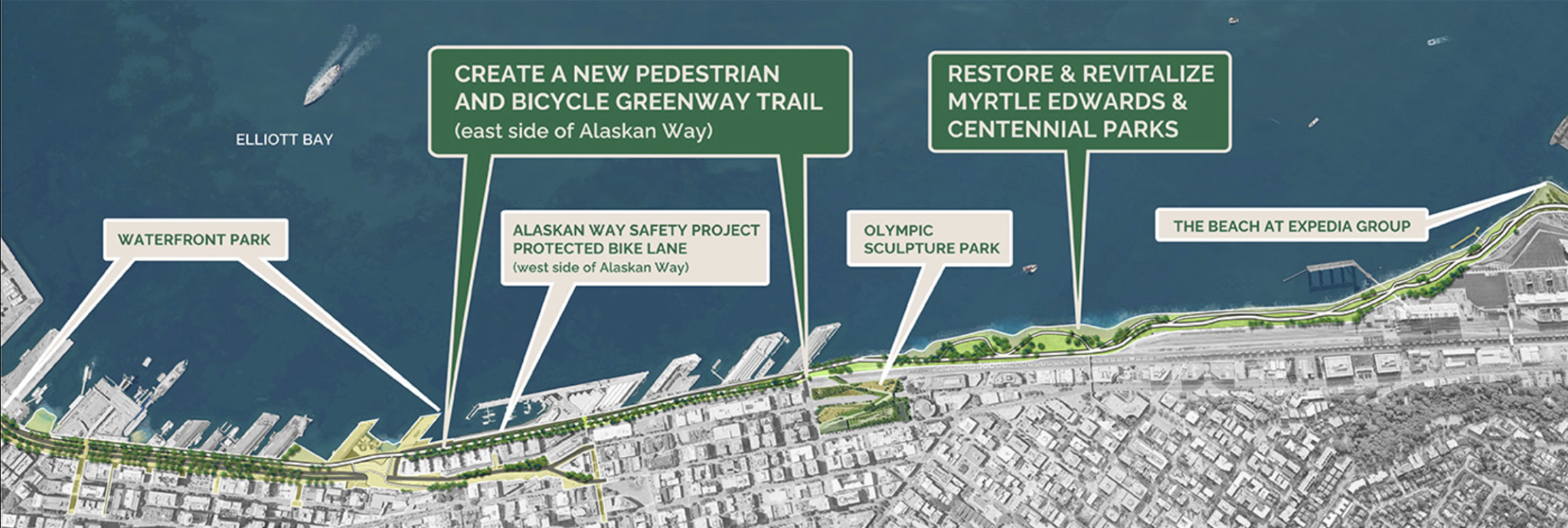
The full trail and bicycle greenway project. (Image: Courtesy Elliott Bay Connection)
Newest portion of Seattle waterfront riding trail now open
A new stretch of Seattle’s waterfront trail opened last Tuesday, April 22, creating a safer, greener route for families who walk, roll, and bike along Elliott Bay. The multi-use path runs along the east side of Alaskan Way—from near Pier 62 north toward Clay Street—replacing old tracks and narrow sidewalks with a wider corridor that includes plantings, lighting, and space for bikes and strollers. It’s part of a broader effort to connect Waterfront Park to the Olympic Sculpture Park and, ultimately, create a continuous route along the shoreline.
The project has already smoothed the ride from Myrtle Edwards and Centennial parks and the trails should be fully connected sometime this year. Along the way, there’s plenty to keep kids engaged—public art at Olympic Sculpture Park, driftwood and beach access along Myrtle Edwards, and nonstop ferry and ship traffic. It’s an easy ride to tailor, whether you’re doing a quick out-and-back or stretching into a longer loop.
Getting on the trail is simple. Park near Seattle Center and ride down, start at Olympic Sculpture Park, or roll in from downtown near the piers. The route also doubles as a bike detour on cruise ship days, helping riders avoid bottlenecks. The project is managed by Elliott Bay Connections, a public-private partnership, and is funded by private donations, including from Melinda French Gates and MacKenzie Scott. The goal? Connection, according to the project website: Connecting the parks of Elliott Bay and connecting people to restoration and revitalization efforts, the Salish Sea, Indigenous communities and culture, and each other as they ride or walk.

(Photo by Jonah Aguilar / iStock.com)
New high school graduation requirements on the horizon
The graduating class of 2031 could leave high school with a very different set of skills than those who graduate this year. That’s because Washington is considering a significant overhaul of what is required to graduate, part of a multiyear effort called “FutureReady” led by the State Board of Education. The goal is to simplify a system many say has become overly complex, while better preparing students for real life. Early concepts include strengthening core skills like math and digital literacy, expanding real-world learning, and making graduation requirements more flexible and equitable across districts.
What might real-world learning look like? Nothing is set in stone, but considerations include:
- Career and Technical Education (CTE) classes tied to real industries like health care, construction, tech, and environmental science
- project-based learning—designing solutions, building products, running simulations
- financial literacy
- digital skills and problem-solving
- internships, apprenticeships, or job shadows with local employers
- partnerships with community colleges or training programs for dual credit or certifications
- service learning tied to health, environment, or other community needs
At the same time, state leaders are weighing specific changes that could reshape the high school experience. Among the ideas under discussion: adding a fourth year of math or math-related coursework, replacing the current patchwork of graduation “pathways” with a clearer system, and requiring some kind of senior-year demonstration of learning. The aim is to connect coursework more directly to college and career expectations—but also to reduce confusion for students trying to navigate multiple routes to a diploma.
Any changes would likely begin with students entering high school later this decade, with a proposal expected to go to lawmakers in 2027. Supporters say the overhaul could better align schools with real-world demands, while critics worry about adding new requirements without ensuring schools have the staff, time, and resources to support them. Either way, the conversation signals a broader shift: rethinking not just how students graduate, but what a Washington diploma is meant to represent. Read more on this story in The Seattle Times.
TAKE ACTION: Have some thoughts about changes to high school graduation requirements in Washington? FutureReady is collecting public comments. Just complete an online form with your input.
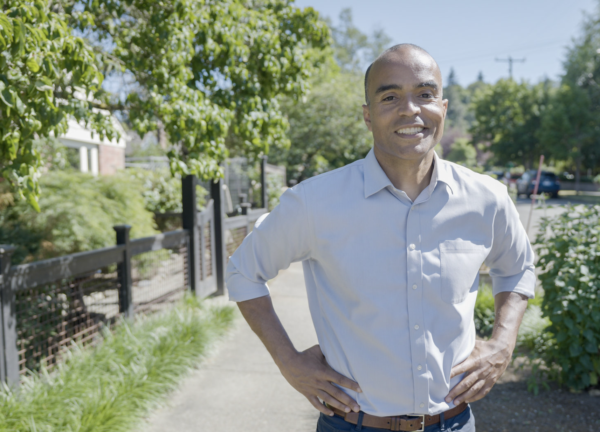
Washington Attorney General Nick Brown filed a lawsuit, joined by 20 other states, against HHS directive. (Image: Courtesy Nick Brown)
A ‘resounding’ win for Washington: Judge blocks Trump youth gender care rule
A federal judge in Oregon last week permanently blocked a Trump administration effort to restrict gender-affirming care for minors by threatening providers’ access to Medicare and Medicaid funding.
U.S. District Judge Mustafa Kasubhai’s ruling stems from a lawsuit, led by Washington Attorney General Nick Brown and joined by more than 20 other states, challenging a Dec. 18, 2025, declaration by U.S. Department of Health and Human Services Secretary Robert F. Kennedy, Jr. That declaration labeled certain gender-affirming care for minors “unsafe” and warned of financial penalties and potential government funding withdrawal for providers who continued to offer the care.
Gender-affirming care for minors typically includes puberty blockers, hormone treatment, and mental health support services and is widely endorsed by major U.S. medical organizations.
In his scorching April 18 opinion, Judge Kasubhai found that the federal government, through Kennedy’s directive, overstepped its authority and impeded states’ “rights to regulate the medical profession and their discretion to design their own statutorily-compliant Medicaid plans.” He concluded the policy bypassed required rule-making procedures and interfered with states’ ability to regulate medical care.
“This case highlights a leader’s unserious regard for the rule of law,” wrote Kasubhai. “Tragically, this case is one of a long list of examples of how a leader’s wanton disregard for the rule of law causes very real harm to very real people.”
The judge added: “This case illustrates that when a leader acts without authority and in the absence of the rule of law, he acts with cruelty.” Read the full story.

(Image: iStock.com)
Hey Mom or Dad, how about you give underachieving a try? | Op-Ed
Rachel Feintzeig’s essay in The New York Times offers some real parenting food for thought — especially in the way it names something many are quietly carrying. Feintzeig describes modern parenting as feeling like “a relentless, always-on job.” I know a whole lot of parents who feel the same way and will relate her deep dive into how expectations have expanded—emotionally, logistically, financially—without anything close to the support systems that once helped hold families up.
What stayed with me most is the idea that burnout isn’t about individual failure, but about a mismatch between what’s being asked of parents and what’s actually sustainable. As Feintzeig points out, parents are expected to be “intensely involved in every aspect of their children’s lives,” while also managing work, finances, and everything else adulthood requires. It’s not just a lot—it’s structurally unrealistic. That tension is where so much of our exhaustion lives.
It isn’t often that you find a piece that offers what many parenting conversations don’t: context without judgment. If you’ve felt stretched thin, behind, or like you’re somehow not doing enough, here’s a reframe. It doesn’t solve the problem—but it does validate the experience, and that, for a lot of us, is a meaningful place to start. Read the full piece in The New York Times.

Lyre River Campground in Port Angeles will close from September until April next year. I(Photo courtesy of WDNR)
State Department of Natural Resources to close four camping grounds, partially close others
Washington is closing four state campgrounds for the rest of the year and scaling back services at several others after two consecutive years of budget cuts to the Department of Natural Resources’ recreation program. Lawmakers have reduced funding by roughly $8 million overall, including a more than 20% cut in 2025 and an additional reduction to maintenance funding this year. Officials say the impact will be visible across the system, with slower storm cleanup, reduced upkeep, and basic services like stocked restrooms becoming less reliable.
Campgrounds affected include Anderson Lake in Elbe, Rock Lakes in Conconully, and Upper Clearwater in Forks, all of which will close entirely, while Island Camp in Glenwood will end overnight camping but keep day-use areas open. Seven additional sites will face temporary closures or reduced services. Recreational site closure alerts and updates can be found on the Department of Natural Resources’ website.
State leaders say the cuts come at a time of rising demand for outdoor access, raising concerns about how families will navigate fewer options during peak recreation months. Read the full story.

(Image: Seattle Public Library)
Thousands of youth across U.S. have a Seattle Public Library Card
A Seattle Public Library’s effort to push back against book bans is gaining traction, according to a recent article in The Seattle Times. Roughly 28,000 young people have signed up for library cards through the system’s Books Unbanned campaign. The initiative offers teens and young adults across the country free access to Seattle’s digital collection, a response to growing restrictions on what students can read in schools and communities nationwide. Read the full story in The Seattle Times.
A great example for WA school districts to follow
Last week the Los Angeles Unified Board of Education set an example that school districts here in Washington may want to pay attention to: the board decided to make LA’s massive school district the nation’s first to limit student screen time.
The decision means the district will put “comprehensive, developmentally appropriate guardrails” on Ed Tech in all grade levels and will eliminate use of student devices for youngest learners. The district will prohibit student-led use of YouTube and other video streaming platforms. It’s also promising transparency by presenting to the pubIic a report of all existing classroom technology contracts.
“When we are intentional about how our students engage with technology, we invest in their focus, their health, and our future,” said Board Member Tanya Ortiz Franklin, adding that guidelines wil give youngt learners “space for human interaction and play to develop foundational cognitive and social skills” and those in higher grades opportunities for “meaningful” community connection and collaboration.
“Technology can be a powerful tool, but too much screen time has real harmful effects on our students,” added Board Member Kelly Gonez. “This resolution will ensure we are prioritizing important skills and learning experiences for students, while protecting their childhoods and well-being by setting research-based screen time limits.
LISTEN: Trump cuts aim to limit birth control for millions of women
NPR’s coverage of a lawsuit against the Trump administration by a coalition of 15 public health organizations is this week’s important listen. The suit was filed after the administration withheld funding from Title X, a long-standing federal program that provides free or low-cost contraception to low-income patients. Plaintiffs argue that the sudden suspension of funds was unlawful and has already forced some clinics to cut services or close altogether.
While Washington is not involved in the current coalition lawsuit, its Title X network could feel these cuts quickly. The program here supports a statewide network of roughly 90–100 clinics—including county health departments, community health centers, and Planned Parenthood sites—that together serve tens of thousands of patients each year, many of them low-income teens and adults. Those clinics rely on Title X to keep contraception, cancer screenings, and basic reproductive care low-cost or free. If funding disruptions continue, providers in Washington would likely face the same pressures already seen elsewhere: reduced hours, new fees, or fewer appointments. You may also be interested in The New York Times opinion on this story.