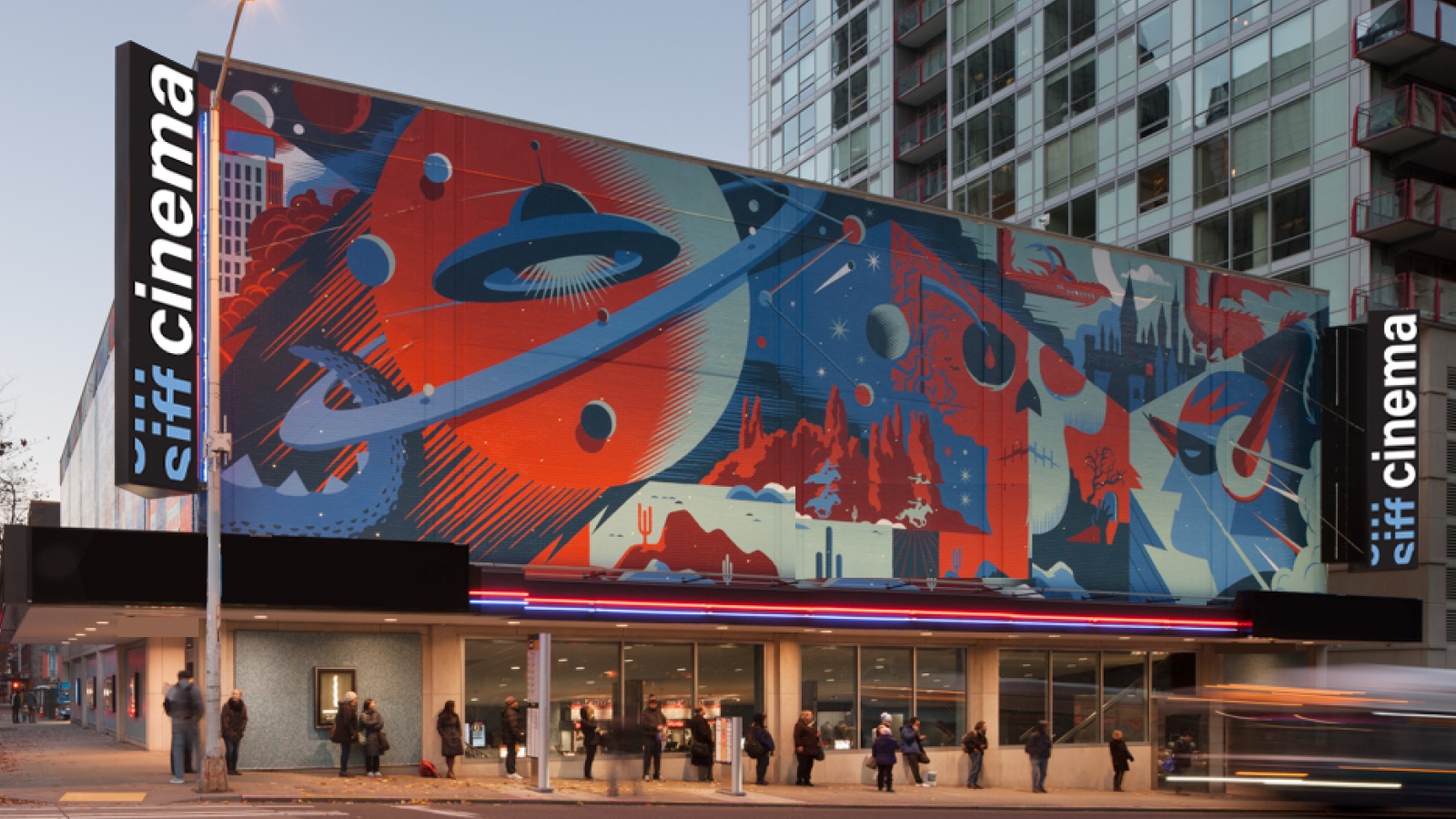
Back in 1976, the year the Kingdome had its grand opening and downtown Seattle’s Freeway Park made its July 4 debut to coincide with the national bicentennial celebration, Seattle became home to another gem: a film festival where local moviegoers, including kids and families, could discover films largely produced outside the major Hollywood studio system.
And over the years, SIFF audiences have been among the first to see movies, from big-budget productions to tiny independent films, that later became family favorites and award-winning classics.

(Courtesty Studio Ghibli)
Disney’s English-language version of Japanese indie filmmaker Hayao Miyazaki’s gentle coming-of-age story Kiki’s Delivery Service premiered at the Seattle International Film Festival in 1998. In 2012, Pixar’s Brave a festival favorite, and the first time the film was shown publicly anywhere in the world. It later won the Academy Award for Best Animated Feature. And The Fault in Our Stars brought plenty of teenagers—and parents—to tears when it screened at SIFF shortly before its 2014 theatrical release.
But SIFF has grown considerably since its first festival opened at Seattle’s Moore-Egyptian Theatre in 1976. Today, families can enjoy independent, international and mainstream films year-round at three SIFF-operated theaters: SIFF Cinema Downtown, formerly Seattle Cinerama in Belltown; SIFF Cinema Uptown in Lower Queen Anne; and the SIFF Film Center at Seattle Center.
That means you don’t have to wait for the annual Seattle International Film Festival in May to introduce your children to films they may not encounter at a multiplex.
Why watch independent and international films with kids?
Sure you can watch Hollywood biggies at SIFF nowadays. But its independent and international offerings should have equal pull on families. That’s because indies often broaden the emotional and creative menu available to young moviegoers, say local filmmakers and reviewers. They introduce children to unfamiliar languages, communities and family traditions—or simply tell familiar stories in ways that look and sound different from a major studio production. SIFF has screened countless films that achieve those goals:
SIFF brought Whale Rider, the slow-moving story of a Māori girl challenging tradition, to Seattle audiences in 2003, where it won the festival’s top award before receiving wider international recognition. Local audiences got an early look at Ernest & Celestine, a warm, watercolor-style film about the friendship between a bear and a mouse which later received an Academy Award nomination for Best Animated Feature. Its sequel, Ernest & Celestine: A Trip to Gibberitia, screened at SIFF in 2023. And the hand-drawn Long Way North, about a Russian girl whose inner strength leads her across the Arctic in search of her missing grandfather, went from audiences here in 2016 to international acclaim.
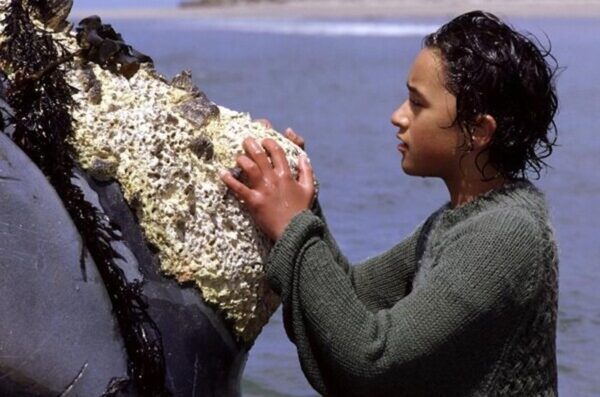
From Whale Rider (Courtesy of South Pacific Pictures / Newmarket Films)
Portals for perspective
“Movies are a portal to learning about the world,” says Candice McMillan, film reviewer for Seattle’s Child, Seattle Refined and other outlets. “Through film, we see other perspectives, hear new voices and feel experiences outside of our immediate purview. Studio movies can offer these things as well, but independent and international filmmaking are more likely to cut through the bureaucracy and financial incentive prioritized by Hollywood.”
Independent and international films also tend to vary more widely in pace, visual style and subject matter. Some leave more room for silence and ambiguity. Others take children seriously as viewers by exploring grief, loneliness, friendship or family conflict without immediately turning those experiences into jokes, villains or action sequences.
Says Joe Shapiro, a Seattle-based indie filmmaker: “International and indie films are able to deeply explore human experiences such as loneliness, grief, friendship, and family conflict without the need to cram them into a superhero, supervillain, or super rich mold as most studio films do.”

From “A Long Way North” (Courtesy
Less of an amusement park ride
“They can take their time and appeal to a narrower audience,” Shapiro points out, “so don’t have to make hundreds of millions of dollars so they can be less of an amusement park ride and more a soulful experience.”
“Independent film also encourages empathy and more complex feelings in children,” McMillan adds. “Its storytelling is often set to a slower pace, focuses on less frenetic images and provides moral nutrition from its unique storytelling, not simply a sugar rush of shiny, loud and sedative.”
“Kids want mindless, talking-animal dribble as much as many adults unwind to reality television, but there is no denying that the more impactful, memorable, life-altering movie-going experiences happen when arthouse cinema is involved,” she adds.
That does not make every independent or international film suitable for children. Parents still need to check ratings, content descriptions and SIFF’s age recommendations. But when a film is a good fit, seeing it together can open a conversation: What surprised you? Which character did you understand? What felt different from your own life?
“Independent cinema offers films that feed the soul, exposing young viewers to other cultures and worldviews,” says McMillan. “It is, I would happily argue, a form of time and space travel, showing us where we have been and where we have yet to go.”
Education consultant Homa Tavangar offers additional suggestions in her guide to watching international films with children.
Find SIFF family-oriented films
During the Seattle International Film Festival in May, parents should watch for films presented in Films4Families category. Films4Families includes features and short-film programs selected for younger viewers.
Community Screenings at SIFF Cinema Downtown are “always family friendly,” according to the organization. This is where you’ll find slower-paced, often older films and classics. Think the plant antics of Little Shop of Horrors, the wet spins in Singin’ in the Rain or the moody plane scene from Casablanca, all of which were recently listed under Community Screenings.
As with any film, parents should still check individual film descriptions and age recommendations because content varies.

(iStock)
Encouragement your filmmaker of the future
Beyond these curated film groups, SIFF has long supported young filmmakers. Check out the National Film Festival for Talented Youth, or NFFTY, in the spring. Founded by three Seattle teenagers in 2007, NFFTY found a permanent home and producing partner in SIFF in 2025. Its programs feature short films by emerging directors age 24 and younger.
NFFTY has accepted work by filmmakers as young as 5, although many participants are teenagers and young adults. Its 20th festival is scheduled for April 1–4, 2027.
Filmmaker Shapiro says encouraging young people to create without the pressure to make money is one of SIFF’s badges of honor:
“Indie films, especially the good ones, are made for love of the craft and storytelling rather than just money,” Shapiro stresses. “Plus they feel much more attainable to make so kids may be inspired to make their own.”
If you’ve got a tween or teen who seems genuinely curious about filmmaking, consider introducing them to the working art by attending SIFF venue screenings of films made during the summertime 48 Hour Film Project Seattle.
In that competition, dozens of local film teams converge on Seattle to write, produce, direct, shoot and edit short films in just 48 hours before screening the results. Some of the shorts may be a little racy, but most are silly, sweet and chill.
Discounted SIFF tickets
SIFF operates year-round and offers several ways for families to save money. Check the SIFF calendar before heading out because schedules and special-ticket rules can change.
- Use your ID: SIFF offers reduced prices for children, students, seniors and TeenTix members at regularly priced screenings.
- At SIFF Cinema Uptown and the SIFF Film Center, children ages 12 and younger save $3, students with valid ID save $1, and adults 65 and older save $2. TeenTix members pay $5.
- At SIFF Cinema Downtown, children ages 12 and younger save $4, students with valid ID save $1, and adults 65 and older save $2. TeenTix members pay $5.
- SIFF likes the number seven: Tickets to qualifying Tuesday screenings are $7 at all three SIFF venues. The deal excludes the Seattle International Film Festival, Noir City, third-party rentals and special engagements and does not apply if a film’s opening date falls on a Tuesday.
- Another plug for Community Screenings: Selected Community Screenings cost $7 for adults and $5 for children at SIFF Cinema Downtown.
Find current prices and restrictions on the SIFF Cinema Box Office page.
Year-round film love
So. If you’ve been waiting for May to pack up the kids and head to see films in SIFF’s Films4Families curation, think broader and year-round. That little gem that launched in 1976 is a diamond now. And more than offering a host of movies you might night get to see on screen, SIFF is a vibrant community grounded in the city’s deeply committed film culture.