Breaking up our usual hot chocolate vs. steamed milk debate at the coffee shop counter, my 11-year-old told me several years ago: “I think I’ll have a mocha today.”
“That’s got espresso in it!” I told him.
No way, right?
But then, why not?
Coffee drinks have caffeine, sure, but so does soda, which we don’t wholly forbid. Even hot chocolate contains a little caffeine.
AAP recommendation
Official recommendations run in line with the old “coffee will stunt your growth” warnings. The American Academy of Pediatrics doesn’t recommend caffeine until children reach their adult height at — or minimally not before about age 12.
“While there isn’t evidence that caffeine intake affects growth directly, some of the side effects of caffeine intake, such as poor sleep, can impact growth and development, and caffeine is addictive,” said Dr. Natalie Muth, a pediatrician and AAP spokeswoman.
Canada guidelines shed some light on daily limits for kids
According to Johns Hopkins Medicine, there are no federal guidelines for caffeine intake for children. The American Academy of Pediatrics discourages caffeine consumption for kids. However, Canada does have some basic guidelines. They recommend the following daily limits on caffeine:
- Ages 4 – 6: 45 mgs (about a half cup of coffee)
- Ages 7 – 9: 62.5 mgs
- Ages 10 – 12: 85 mgs
- Adolescents: 85 – 100 mgs
What does that look like in a real cup?
According to Columbia University and other sources, here’s what an 8-ounce cup of joy brings you:
- Coffee: about 100 mg of caffeine
- Black tea: about 50 mg of caffeine
- Soda: about 25 mg of caffeine
- Energy drinks like Red Bull and Monster: 40 to 250 mg caffeine and high sugar
Short-term and long-term effects
John Hopkins notes that in addition to coffee, “caffeine is present in tea (48 mg per 8 ounces), caffeinated soda (37 mg per 12 ounces), hot chocolate (10 mg per 12 ounces), and chocolate (10-30 mg per 1.5 oz). It’s also added to a variety of sports products and energy drinks.”
What are the possible effects of the consumption of caffeine? They are the same for kids as they are for adults. Short-term side effects may include:
- Anxiety
- Dehydration
- Diarrhea
- Heart palpitations
- High blood pressure
- Increased heart rate
- Insomnia
- Jitters
- Nausea
- Restlessness
In the long term, kids, like adults, can develop a dependence on caffeine and then experience withdrawal symptoms. They are also apt to take in loads of sugar in sweet-bombs like Frappuccinos.
Nuance is key
So, daily double-talls and mainlines of drip coffee are clearly out. As with most parenting issues, though, nuance and personal judgments count for a lot.
A few years ago, I asked Sara Billups what she did with her kids. At the time, Sara was a mom of two, so deeply steeped in the drink. Equally on topic, Sara covered coffee as a Seattle writer. Her husband ran the education program and lab at Atlas, a coffee importer.
“My daughter asks for coffee on the weekends or on holidays, whenever we’re not rushing to school or work … She’s 6, and since she’s still little, we pour about an ounce of coffee into a tall mug of milk, so it’s more flavor than substance,” Billups told me. “We want her to be able to identify the basic taste of coffee and to enjoy the flavor.”
Sips and tastes
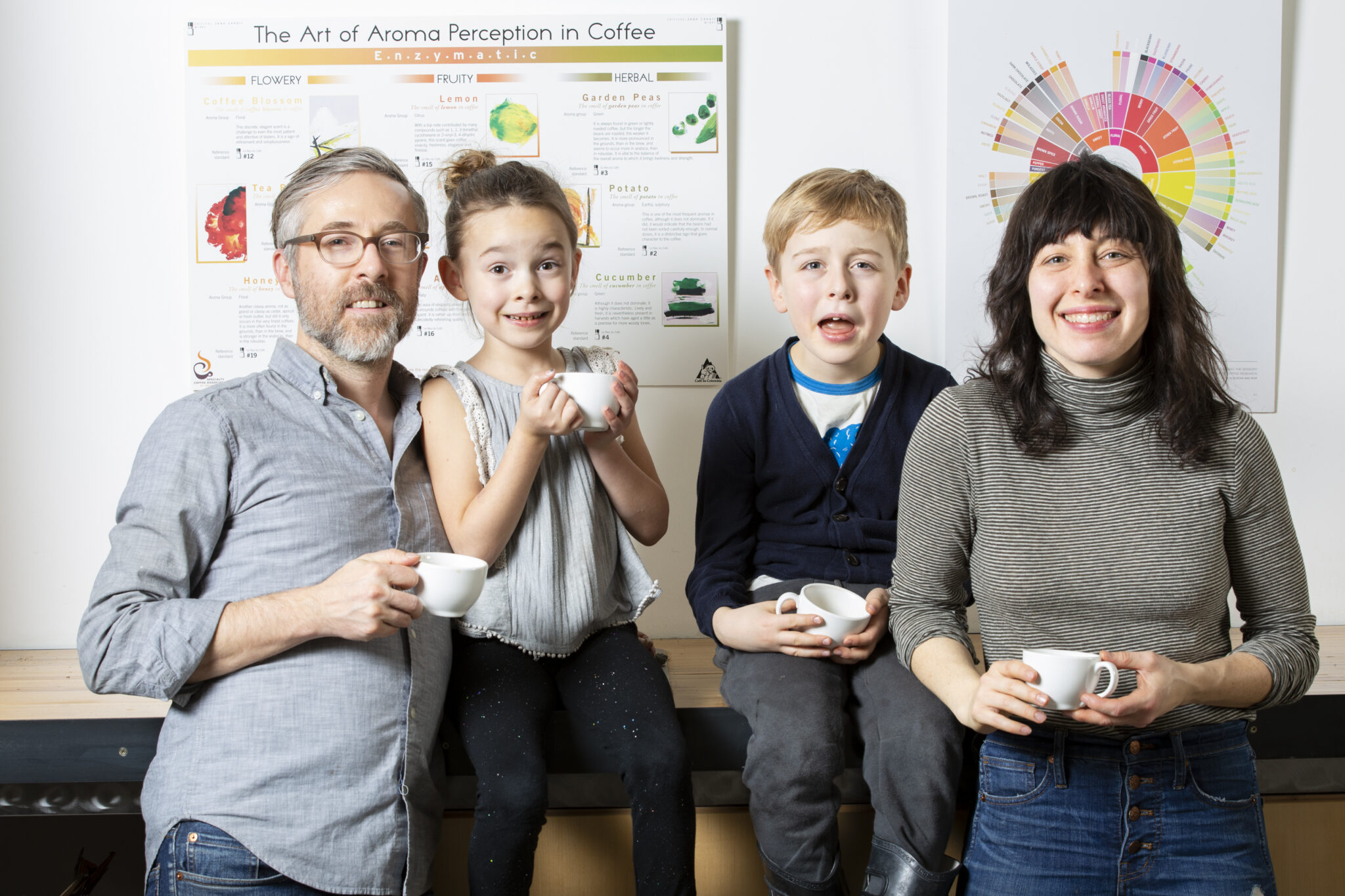
Her son, then 9, rarely asked for coffee. But both kids had done cupping sessions, slurping and spitting coffee samples and learning about farming regions, fair trade, and different parts of the world where coffee is grown.
“We know caffeine is a stimulant and that even a little bit affects kids. We know other things kids consume (cough, sugar) affect them, too. But parents can learn the facts and decide when to let their kids enjoy coffee. Coffee culture is fun, cafés with great design and welcoming staff are fun,” Billups said.
“I’m dreaming here, but beyond hot chocolate, what if cafés offered kid tastings featuring single origins, with, say, a sip of brewed, single-origin Kenya and a sip of Sumatra? The flight could be served with a map that shows where the countries are located and a flavor wheel so kids can identify different tastes. That may not happen anytime soon, but if it does, my family will be first in line!”
I think mine would be right behind her.
*Seattle’s child staff contributed to this article.
More burning questions:
When should kids get cellphones? Ask the Pediatrician
Should you get your kid a DNA test? Things to think about
Should you get a backyard trampoline? Here’s what a doctor says