Being a parent is nonstop hard work, making it challenging to stay on top of news that impacts families in Washington state. This Hits Home is your weekly hit of news, commentary, and, occasionally, opinion. Want to have a say? Look for the “Take action” prompts. Here’s the update for the week of July 6-12.
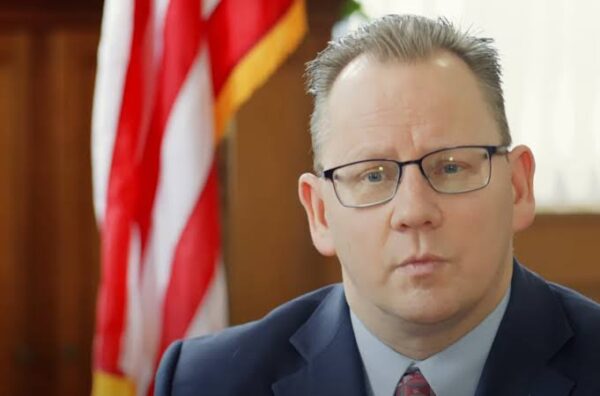
Washington state Superintendent of Public Instruction Chris Reykdal. (Image: OSPI)
WA schools chief wants seniors to graduate with real life skills
Filling out a FAFSA. Building a resume. Registering to vote. Understanding how credit card interest actually works. These are the kinds of tasks that shape a young adult’s first few years out of high school. Yet, in Washington, whether a teen leaves school with the knowledge required to handle them comes down to luck of the draw — which teacher they had, which parent had the time, which elective happened to be available.
State Superintendent Chris Reykdal has a proposal to change all that. This week he proposed a solution: a year-long Senior Year Postsecondary Launch Course to be taken by every graduating senior, timed to match whatever they’re actually facing that semester. Rather than creating an entirely new credit requirement, Reykdal’s plan combines the state’s existing half-credit civics course with a new half-credit in financial literacy and postsecondary readiness — for a total of 1 full credit, taught with an eye toward timing. Financial aid lessons, for instance, would land in the fall, just as seniors looking at college applications and hunting for scholarships. By the end of the course, students would have:
- Completed their High School and Beyond Plan
- Built an actual resume
- Registered or pre-registered to vote
- Submitted at least one application — to a job, a college, or the military
- Applied for financial aid
“Students are graduating from the K–12 system without consistent access to the tools needed to support their independence,” Reykdal said in a written statement on July 7. “Young people are taking on loans and credit card debt without knowledge of the implications. They don’t always know what to add to their resume, or how to register to vote. We can fix that.” Read the full story.
Check out a recent graduate’s perspective: “Why I support mandatory financial literacy courses in schools“
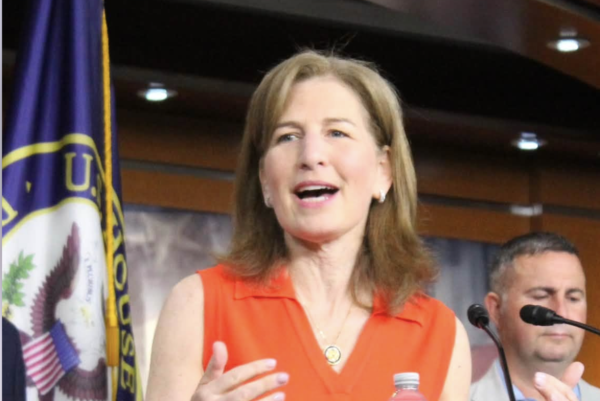
Congressional Rep. Kim Schrier at an event earlier this year (Photo courtesy Rep. Kim Schrier)
U.S. Rep. Schrier pushes CDC to track impacts of newborn vitamin K refusal
U.S. Representative Kim Schrier, a Democrat from Sammamish, is pushing the federal government to start tracking a problem doctors say is quietly getting worse: vitamin K deficiency bleeding (VKDB) among newborns whose parents said no to giving them a vitamin K shot at birth.
On June 29, Schrier and Democratic Sen. Angela Alsobrooks of Maryland sent a letter to CDC leader Dr. Jay Bhattacharya asking the agency to publicly track how often parents decline the shot and how often babies end up with VKDB, including brain bleeding, as a result.
“Vitamin K is an essential nutrient which helps blood clot,” the lawmakers wrote. “Because infants are born with very low levels of vitamin K, they are at high risk for developing dangerous bleeding disorders, including internal bleeding. A single vitamin K shot is a highly effective newborn intervention to help prevent bleeding until babies can absorb sufficient vitamin K.”
In their letter, the lawmakers urged the CDC “to take immediate action to address a growing and preventable public health crisis: the rising rate of vitamin K refusal at birth and resulting vitamin K deficiency bleeding (VKDB) among newborns. Specifically, we call on the CDC to establish ways to monitor and understand the burden of vitamin K refusal rates, VKDB and VKDB-related deaths, and to make that information publicly available.”
Schrier, a pediatrician, said in a release: “The vaccine misinformation and confusion that RFK Jr. [Robert F. Kennedy Jr.] has championed for years and has now created a ‘spillover effect’ that is causing parents to refuse the vitamin K shot and other routine care, putting their babies at risk of life-threatening hemorrhage.
“As a pediatrician and member of Congress, I am focused on doing all I can to hold RFK Jr. accountable for every preventable death and illness of our nation’s children,” she added.
According to the American Academy of Pediatrics, whose president lauded Schrier and Alsobrook:
- Babies are 81 times more likely to develop late VKDB without the vitamin K, and one in every five babies who develop VKDB will die.
- “There are no warning signs in most cases of VKDB: a baby can be bleeding into their intestines or brain before their parents know anything is wrong.”
- Some parents are requesting oral vitamin K instead, which is not recommended by the American Academy of Pediatrics (AAP) or CDC. Babies don’t absorb oral vitamin K consistently, and research shows oral drops are ineffective.
Read the full story. To learn more about the devastating impacts of vitamin K deficiency bleeding, don’t miss “As Parents Reject Vitamin K Shots, Some Babies Develop Devastating Bleeding” from The New York Times.
TAKE ACTION: Do you have an opinion, experience or other input on the request to track vitamin K shot refusal? Contact Rep. Kim Schrier (D-WA) via the Schrier House Portal or by phone at 202-225-7761. To share your opinion with the CDC, call the CDC-INFO help desk at 1-800-CDC-INFO (800-232-4636) or submit a message via the CDC-INFO Web Portal.

(Photo: iStock)
A new study built entirely on samples from Seattle-area moms found hormone-disrupting chemicals in the majority of their breast milk — but researchers are quick to say that’s not a reason to stop breastfeeding.
Investigators from the University of Washington, Seattle Children’s Research Institute, Toxic-Free Future, and Emory University tested milk from 50 Washington women collected back in 2019 and detected BPA (in 74% of samples), its chemical cousin BPS (78%), the antimicrobial triclosan (62%), and melamine at similarly high rates when they tested the breast milk. All four are classified as endocrine disruptors, meaning they can interfere with how the body’s hormones function even in small amounts.
According to the study authors, breastfeeding is a greater source of exposure to BPA, BOS, triclosan, and melamine than other routes, such as skin contact (“generally higher than for other exposure pathways, e.g., dermal uptake, dust ingestion or inhalation,” to be exact).
“These findings show that infants and their mothers are being exposed to hormone-disrupting chemicals used in everyday products, including plastics, during critical stages of development,” said Dr. Ryan Babadi, MPH, science director for Toxic-Free Future, in a release. “These exposures highlight the need for stronger safeguards so families are not put in harm’s way simply by feeding their babies.”
None of that changes the researchers’ bottom line on the importance of breasfeeding: In the same announcement, Dr. Sheela Sathyanarayana, the study’s senior author and a UW pediatrics professor, said the study doesn’t erase the many benefits of breast milk.
“As a pediatrician, I am concerned about the detection of chemicals in breast milk and impacts on infant development,” Sathyanarayana said. “Detection of these contaminants does not take away from the major health benefits of breast milk for infants, including immune factors that help prevent infections.
Instead, Sathyanarayana said, the study is a call to action: “As a society, it’s important to try to work together to eliminate these chemical exposures.”

SNAP card. (Photo courtesy U.S. Department of Agriculture)
WA could face up to $200 million in penalties if it doesn’t reduce SNAP error rates
A new federal law is about to make SNAP mistakes expensive for states — Washington included.
Under the rule, states now have to help cover food stamp benefits themselves once their payment error rate climbs too high, with the bill scaling from 5% to 15% of total benefits depending on how often things go wrong. Washington’s error rate was at 6.98% for the 2025 fiscal year — better than the national average of roughly 10.6%, but still enough to land the state in the penalty zone. That means Washington could owe more than $90 million, and possibly closer to $200 million depending on which fiscal year’s numbers the state chooses to use.
State officials say the errors are largely honest mistakes, not fraud, and they’ve already added quality-control staff to bring the rate down before payments are due starting in October 2027. Advocates worry the bigger hit to families will come from new SNAP work requirements, which they say could knock eligible households off the program through paperwork alone — not because they stopped qualifying. Read the full story from Washington State Standard.
(Graphic: Cascade PBS)
New Healthy Youth Survey data shows how gender and race shape teens’ relationship with food and weight — and other trends
When it comes to data on teen topics like bullying, drinking, or how supported youth feel by the adults in their lives, Washington has a ready source: the Washington Healthy Youth Survey, conducted every other year since 2002. While the recently released 2025 survey shows some positive signs for 10th graders: In 2025, about 7% of them reported drinking alcohol in the past month — much lower than 28% in 2010. Similarly, in 2010, 24% of 10th graders said they were bullied or harassed, compared to just 15% of 10th graders last year.
But challenges remain, according to a report by Cascade PBS including a high rate of feelings of depression and disparities about weight image and control.
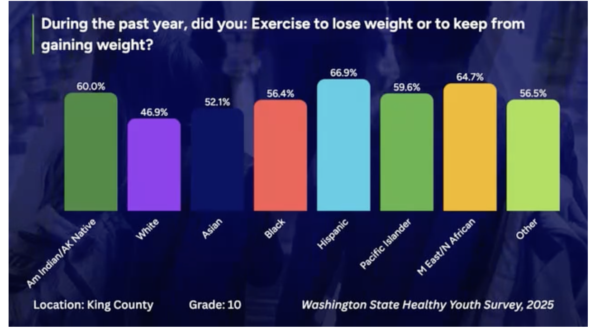
The survey has tracked behaviors such as exercising, fasting, and dieting specifically to control weight since 2023, and the latest numbers show just how differently those experiences are depending on a student’s gender identity and race.
Among King County 10th graders, 58% of girls said they exercised to lose or maintain their weight, compared with 49% of boys. American Indian and Alaska Native 10th graders reported the same habit at nearly 60% — well above the 47% reported by white students. Fasting to control weight was also more common among girls (25%) than boys (17%), and more girls than boys said they dieted specifically to manage their weight.
Students were also asked how often family, friends, or peers said or did things about their body or eating habits that made the students feel bad. Transgender students reported this far more often than their peers: 71% said they’d experienced it, compared with 57% of female students and 38% of male students.
You can dig into these numbers yourself on the Healthy Youth Survey dashboard under “Dangerous Weight Control Behaviors.”
Check out the short video series on different aspects of the report on The Newsfeed at Cascade PBS.

(Photo: iStock)
Is it time for a safety talk in your house?
If I’d read about one accident in the last month, I’d likely keep my fingers quiet. But it feels like there’s been a slew of deadly accidents involving kids this summer and we’re barely into the season. A teenage girl tragically drowned at Lake Sammamish State Park in June, the same month a 17-year-old boy was pulled from Lake Washington near Mount Baker Park, where he remained underwater for 10 minutes after jumping off a dock. And this week a 14-year-old boy died when the electric bike he was riding crashed at the I-5 Colonnade mountain bike park. He was not wearing a motorcycle helmet, the appropriate head protection gear for an e-bike. Learn how his death is sparking questions about e-bike regulations.
In the meantime, summer is the season when accidents and kids go together. Seems like a good time to sit down with kids and refresh their minds on safety rules. These articles may help:
- “E-bike safety tips for kids and adults”
- “Check King County beach water quality before you swim this summer”
- “Summer Weather Watch: Prevent cold water shock”
- “Do you know where the AED is at your child’s camp, sports, or school?”
- “Beat the Heat: How to prevent heat stroke, exhaustion in children”
- “What Parents Need To Know: WA rivers are more dangerous this year”
- “Saving lives through No More Under (Be a ‘water watcher’”)

(Photo: iStock.com)
LISTEN: A bereaved mother’s guide to what you can say and do for her
Susie Shaw (known as Bereavement Mom on Instagram) wants people to ask her about her son, William, who died at age 9. In this moving episode of the Modern Love podcast from The New York Times, it is abundantly clear that a parent’s grief after the loss of a child is so profound as to be nameless. In conversation with host Anna Martin, Shaw encourages people not to shy away from talking to a grieving parent, but to be curious about both the child and the parent’s experience. That is, “to speak about the unspeakable.” In listening, I realized Shaw’s advice applies to all deaths — a parent, a grandparent, a friend. Understanding how to approach the bereaved is a skill we can pass on to our kids. Listen to the podcast episode “Ask Me About My Dead Son.”

(Photo courtesy of the state Department of Children, Youth and Families.)
Curbing foster care saves children’s lives | Op-Ed
In an op-ed posted by Washington State Standard last week, Richard Wexler, executive director of the National Coalition for Child Protection Reform, makes a strong case for something that runs counter to decades of child-welfare conventional wisdom. Pulling fewer kids out of their homes during a parenting crisis doesn’t put more kids in danger, he argues. It saves lives.
Wexler hangs that belief on new research that shows Washington’s pullback from separating kids from their families has prevented an estimated six to 22 child deaths a year. The data show that an additional 10 to 30 lives are saved annually by placing more foster kids with relatives rather than strangers.
Wexler doesn’t argue for zero removals. He is clear: Some kids must be taken from dangerous homes. Instead, he targets the reflexive assumption that taking a child away from his family in a crisis is always the safer choice, even in less extreme cases.
And he proffers a warning: Washington is backsliding. In 2025, the state again started removing more kids from their homes. The number of kids placed into foster care rose again in 2025. The state now removes children at a rate 13% above the national average once poverty is factored in.

When a student’s seat in a classroom is empty because they were deported, their peers feel it. (Photo: iStock)
When a child is deported: Tukwila students celebrate a missing friend
Before the end of the school year, a Tukwila fourth-grade class turned months of rehearsal into a night of song, dance, and digital art at Foster High School. The evening, according to a KUOW report, was built around one question: what does it feel like to come to America?
To answer, about 60 students performed in “Multilingual Musical Migration Stories,” a showcase that blended traditional dance, bilingual songs, and student artwork tied to the kids’ families’ journeys.
Underneath the celebration sat something heavier: a classmate detained alongside her mother during a routine ICE check-in earlier this year and deported to El Salvador. Read or listen to what teacher Michael Grant hoped to achieve in building the show with kids and, out of the mouths of kids, what it feels like when a child suddenly stops coming to class. Read and listen to this heartwarming and heartbreaking story at KUOW.

That’s a lot of duct tape! (Photo courtesy Calina Morgan)
Just for fun: Duct tape IS the answer for everything. Meet a teen who can wear it with pride!
Duct tape. I remember the days of my childhood and youth when my Grandpa Tom discovered something that needed “fix’n” in the house and gleefully reached for the duct tape. That sticky silver solution could be seen all around the house — wrapped around fraying cords, on books, on pleather seat cushions to fix a rip, on window frames to stop a draft …
Grandpa Tom would be as amazed as I to see what Poulsbo teen Calina Morgan did in 87 hours with 29 rolls of duct tape. Morgan has been named a top 10 finalist of the 26th Duck® brand Stuck at Prom® Scholarship Contest—in which teens across the country were challenged to handcraft their dream prom dress or tux using Duck Tape.® The prize? A $10,000 cash college scholarship.
Margan says the competition was a valuable learning experience. “It pushed me to think creatively, solve design problems, and step outside my comfort zone,” Morgan says. She added that she’ll be paying for college herself and that a $10,000 scholarship would put a happy dent in that financial stress. She plans to study sustainable business: “I am interested in finding ways to solve real-world problems and leaving a positive impact,” she says.
The public will decide the Stuck at Prom® winners. Through July 13th, you can cast your vote on the 2026 Stuck at Prom® finalist gallery. Winners—one dress and one tux as well as runners-up and Red, White & Made By You award recipients—will be announced later this month.
How’d the dress do at the prom? It didn’t. “Unfortunately, I finished the dress 3 days after my prom, so it didn’t work out,” Morgan says. Read the full story.