Being a parent is nonstop hard work, making it challenging to stay on top of news that impacts families in Washington state. This Hits Home is your weekly hit of news, commentary, and, occasionally, opinion. Want to have a say? Look for the “Take action” prompts. Here’s the update for the week of July 27-August 2.

(Photo by Olga Yastremska / iStock)
Universal meals Seattle schools in 2026-27 after all
All students in Seattle Public Schools will have access to free breakfasts and lunches at school, possibly as soon as September, following two weeks of back-and-forth negotiations among Seattle City Council members and Seattle Mayor Katie Wilson. At one point, it appeared the program, one of Wilson’s priorities, would not launch until at least the 2027-28 school year.
But last week the council approved the $5 million needed to start the program during the 2026-27 school year. With a 9-0 vote, the council approved funds to provide meals for kids during the school day and to feed low-income students on weekends and during school breaks.
According to a statement from the Mayor’s office, the council vote sealed together Mayor Wilson’s goal of universal school meals and councilmembers’ goal of ensuring “food insecure students” are covered outside of the classroom.
“We are making universal school meals a reality for Seattle this September, and students who most need it will have greater access to food on weekends and school breaks,” said Wilson. “This is a tremendous victory for families across our city that will make Seattle more affordable.”
For the 2026-27 school year, the cost of universal free school meals will be covered by using “one-time” funds. Then, in 2027-2028, Seattle’s Families, Education, Preschool, and Promise (FEPP) Levy will fund that program. The levy will also pay for food for the weekend and school break nutrition for “[food] insecure students outside the classroom.”
“We are united in rejecting the notion that we have to choose between feeding students during school or outside of the classroom,” Councilmember Dan Strauss said in a release. “We can, and we must do both.”
According to Seattle Public Schools policy, families interested in receiving food assistance must complete a meal eligibility application. The collected data is reviewed to determine how much the state and federal governments will reimburse districts for meals and food assistance.
The $5 million in additional funding for universal free school meals will be considered as part of the Midyear Supplemental Budget Legislation, according to the Mayor’s office. A vote on the budget is scheduled for Tuesday, August 4 at 9:30 a.m. Read more on this story in The Seattle Times.
(Photo by Zandi Carlson)
Why do we hear so little about CEO mothers?
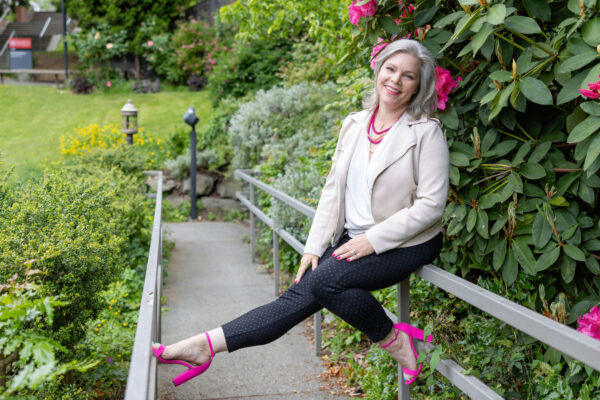
Seattle-based Intuitionship, an advocacy group founded by researcher Dr. Laura Marie Riverak to challenge outdated ideas about mothers and leadership, went looking for a number nobody had bothered to count: how many women running Fortune 500 companies are also raising kids?
Checking public records for the 55 women who led Fortune 500 companies in 2026, Rivera found that 38 of them had their motherhood confirmed somewhere in the public record, one had publicly said she doesn’t have children, and 16 turned up no public information either way. Rivera worked strictly from what was already public, without assuming anything based on a CEO’s surname, marital status, family photos, age or passing mentions of kids, and no individual CEO is named or categorized in the findings.
“This is not necessarily a story about women protecting their privacy,” Rivera said in a release this week. “It is a story about a professional culture that rarely treats Motherhood as relevant to a woman’s leadership story.”
Rivera, a researcher, journalist, podcast host, documentary storyteller, and mother of four, argues motherhood gets tallied plenty when it costs women something — for example, in lost wages or stalled careers. But mother status tends to disappear from the record once women reach the top: “We know how to measure Motherhood when it costs women something,” Rivera said. “We have been far less likely to count it when women succeed.”
The finding connects to Rivera’s own doctoral research at Seattle University, which followed nearly 1,000 mothers and traced how the daily work of caregiving builds skills that employers prize. Among those skills: advocating for others, thinking strategically, managing a crisis, negotiating, keeping complex logistics straight, communicating clearly, staying emotionally steady, seeing how systems fit together, and adapting on the fly.
“If Motherhood remains invisible at the top, then leadership pipelines are being built around an incomplete picture of women’s lives,” Rivera asserts.
Rivera’s brief “The Motherhood Data Gap: Motherhood Among Women Fortune 500 CEOs,” will anchor the Aug. 13 “Lead Like a Mother: Art, Storytelling & Advocacy,” event, a free evening in downtown Seattle from 6:30 to 9 p.m. The event is presented with Moms First, an organization dedicated to transforming workplaces to value motherings. It will include a screening of the documentary “No Country for Mothers” plus a live conversation with mother-leaders.
Register for Lead Like a Mother.
(Photo courtesy Public Health — Seattle & King County)
Second rabid bat found in less than a month
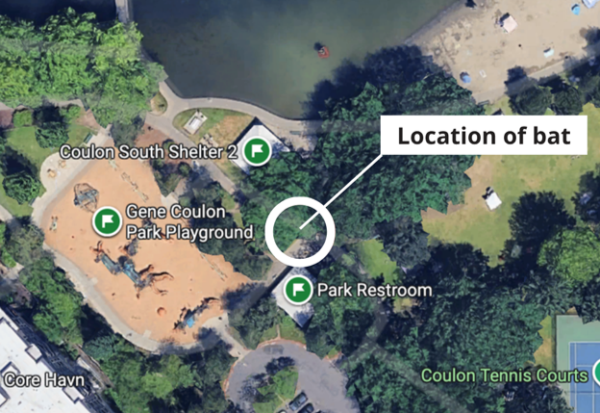
A second rabid bat has surfaced in King County, this time in Renton on July 28, where a bat was found at on a sidewalk at the south end of Gene Coulon Park. It was located near the park playground, south shelter and park restrooms.
The bat was reported to park staff by members of the public who then notified Public Health. It was euthanized by an animal control and Public Health tested the it for rabies and received a positive test on July 29, 2026.To date, no people are known to have had direct contact with this bat.
Another bat was found in earlier this month in Seattle. On July 15, passersby reported it on the sidewalk on University Way Northeast, between NE 41st and NE 42nd street, near Parrington Lawn on the University of Washington campus. The area is busy with many businesses.
Both bats were tested and found to carrie rabies, a disease that is deadly in most cases for humans unless it is caught and treated early. Public Health — Seattle & King County urges anyone who might have come in contact with either bat — even if they were not bitten or touched by a bat — to seek medical evaluation immediately r call Public Health at 206-296-4774 to determine if rabies preventative treatment is necessary.
Rabid bats in the region are not unusual, county health officials report, but they recommend parents and kids bone up on bat safety rules. Get all the information you need to keep your family safe fron The Public Health Insider.
(iStock)
WA’s measles numbers reflect a bigger national surge
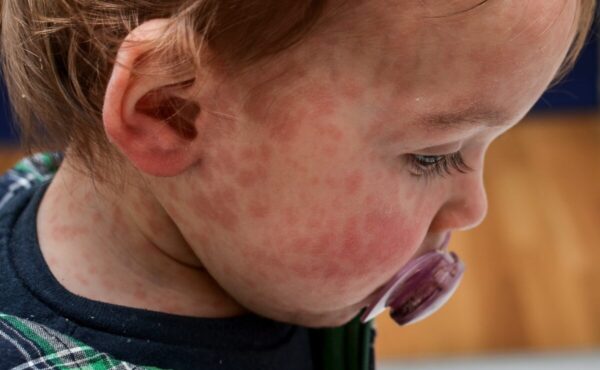
Washington confirmed just 12 measles cases in all of 2025, all of them linked to travel from outside the state. This year is already a different story: the state has logged 45 cases so far, nearly four times last year’s full-year total, with three hospitalizations and cases spread across eight counties: Snohomish, Clark, Kittitas, Walla Walla, King, Stevens, Grant and Spokane.
That local jump mirrors what’s happening across the country. CDC data released last week confirms the worst measles year for the U.S. since the disease was declared eliminated back in 2000. In total, there were 2,318 confirmed measles cases nationally as of July 23, surpassing the 2,289 tallied across all of 2025. Unvaccinated people made up 93% of national cases in both years, most of them younger than 20. Washington has done a little better, with 87% of cases in unvaccinated children and adults. Hospitalizations are actually down nationally, 151 so far versus 243 across 2025, and there have been no deaths in 2026, compared to three in 2025. There have been three measles hospitalizations in Washington so far this year.
Many states now fall short of the 95% childhood vaccination rate researchers say is needed to keep outbreaks from taking hold and Washington is one of them at 91%, according to Johns Hopkins’ state-by-state tracking.
Dr. William Moss, director of the International Vaccine Access Center at Johns Hopkins University, put it this way in a published statement: “High vaccination coverage has protected even the unvaccinated and undervaccinated because of herd protection, keeping measles at bay for the past few decades. But in communities with pockets of susceptible individuals across a broad age range, measles has been able to take hold, infecting those who are susceptible and spreading rapidly.”
We haven’t seen a worse measles year nationally since the 1900s, with nearly 28,000 cases confirmed in 1990 and 9,643 in 1991, before the disease was declared eliminated in the U.S.
The Pan American Health Organization is scheduled to reassess the U.S.’s elimination status in November. The same review process led it to strip Canada of its disease elimination status last year. Read the full story.

(Photo by C. Murfin)
SPS swaps regional directors for ‘executive directors’
Instead of five Seattle Public School regional directors, each covering all grades in their part of the city’s school district, seven new “executive directors” will lead the district’s 106 schools, each within a specific band of grades. According to the school district:
- three executive directors will divide the district’s 63 elementary schools
- one will cover K-8 schools
- one will oversee the middle schools
- one will direct high schools and athletics
- one will lead alternative and nontraditional programs
The shift, announced this week, is the first concrete piece of Superintendent Ben Shuldiner’s broader central-office overhaul. Shuldiner hopes grouping schools by grade level, rather than location, will allow principals to trade ideas more easily:
“There are important synergies that can occur by bringing all the High Schools or K-8s together to share and support best practices,” he wrote in an email to The Seattle Times. “Additionally, these Executive Directors have specific leadership experiences at the level they are supervising. This is very important.”
Most of the new directors were already on staff, one was hired from outside. Shuldiner has said that such restructuring is already saving millions against a district budget deficit currently at $100 million. More restructuring is coming, including new assistant superintendent posts for student and family support and for special populations, both expected to be posted in the next few weeks. Read the full story in The Seattle Times.

(Photo by by Jim Bowen / CC BY 2.0.)
44 WA lawmakers fight for Parent to Parent program
It’s not often lawmakers reach across the aisle to reach a united goal. But last week, 44 Washington state legislators, Republicans and Democrats alike, did just that. They sent a letter to Gov. Bob Ferguson and Department of Social and Health Services Secretary Angela Ramirez, asking the state to keep funding Parent to Parent, a program that pairs families raising kids with autism or other developmental disabilities.
The program’s survival past August is uncertain as DSHS weighs which services to cut amid another rough budget year. The lawmakers didn’t dispute the state’s money troubles, but drew a line here: “However, we believe the Parent to Parent program represents exactly the kind of investment government should protect,” they wrote.
The program works by matching families who’ve already been through the diagnosis-and-referral maze with families just starting out, providing a peer who knows the ropes rather than just a stack of paperwork. Families in every one of Washington’s 39 counties rely on it, generating tens of thousands of requests for help most years, all on a budget of just $900,000 already built into current state spending. Stacy Dym, who runs The Arc of Washington State (the nonprofit that administers Parent to Parent under contract with DSHS), called the lawmakers’ letter proof of how far the program’s reach extends, and said she hopes state leaders will “reconsider how they prioritize limited state funding for our most vulnerable residents.”
DSHS spokesperson Jessica Nelson said last week the agency hasn’t yet decided whether Parent to Parent or other programs will keep their funding, adding that the goal is an approach that “sustainably protects core services and ensures that Washington has a solid financial foundation for the long term.” Ferguson has pushed agencies to hunt for savings as the state braces for a shortfall in the billions, pointing especially at programs launched or expanded since 2019, and Parent to Parent, which predates that window entirely, doesn’t fit the profile he’s targeting. The typical budget calendar has state agencies pitching their funding needs to the governor come September, with his two-year spending blueprint due out in December. Advocates say what bothers them most is that this decision could be made before lawmakers or the public ever have a say. Read the full story.

(Photo by AndLikeThings / CC BY-SA 2.0.)
Well worth the listen (or read): The truth about Roblox
The story in The Atlantic starts this way: “A couple of years ago, Peter Galassi realized that he had a problem: His 9-year-old son was still, somehow, constantly on Roblox, despite the screen-time limits Galassi had set for him. He soon discovered that his son had used his mom’s phone to secretly open multiple accounts on the platform. Why? Because, like a gambler with a fistful of lottery tickets, he wanted to increase his odds in games such as Adopt Me, in which players hatch eggs for a chance to win rare pets …Then came the ‘apoplectic meltdowns,’ three broken tablets, and this devastating refrain: ‘My luck is horrible; my life is horrible.’ It was, Galassi said, like ‘we had a son who was on meth.’”
If you have a Roblox fanatic in your house, make a beeline for writer Connie Chang’s terrific reporting. You could read it, but I suggest you listen, so that you can focus on taking deep breaths to steady your nerves and hear the upshot loudly: Draw a line at games with “gambling-like mechanics.” This one is well worth the listen at The Atlantic.

(Photo courtesy Seattle Center Flickr)
OPINION: Definitely ‘not as sad as another vigil’
Duh.
That is the answer to the question that Danny Westneat, columnist for The Seattle Times, asked with his tongue not quite in his cheek last week: “Should guns be barred from Seattle Center?”
“This would seem like a dumb question, one with an easy answer,” Westneat wrote. “‘Yes!’ There should be zero guns at food truck festivals, hippie sing-a-longs or any of the other chill gatherings at one of Seattle’s town squares. Especially after what just happened.”
Of course, he’s talking about the shooting during the Bite of Seattle food festival at Seattle Center last weekend, which left three dead and several injured. And Seattle Center shootings in 1998, 2006, 2008 and 2012. But what is a progressive Seattle to do? As Westneat aptly points out: “We can’t even make up our minds whether to have security cameras, common as they are in the rest of society.”
There is no foolproof answer, as we know too well, but the politics-savvy columnist pushes Seattle to take a cue from events and facilities where tighter security has largely worked: stadiums, for one, where entrances are limited, and security checks are in place. Seattle Center is different, he acknowledges, in the same breath he suggests it may be time to enact former Mayor Greg Nickels’ ideas for curbing gun violence: flood events with police, restrict entrances, and do wand checks of visitors.
Such tactics would not “address gun violence elsewhere in the city,” Westneat writes. “But how many shootings are there at Seahawks and Mariners games? Zero, as far as I know.”
Danny’s not alone in his sadness that we should have to get scanned to enjoy community: I want to cry when I think of armed police flooding what should be friendly gatherings.
And yet, he’s also spot on. Being wanded and having to stand in a long line to go through fewer entrances will never be “as sad as another vigil.”
It’s an important column that city leaders should read and heed. Read the full column in The Seattle Times.

(Photo from tiktok.com/@official_jimothy)
https://www.instagram.com/reel/DayHOfryG7Z/?utm_source=ig_web_copy_link&igsh=NTc4MTIwNjQ2YQ==
“Hey, Dad, who — and what — is Jimothy?”
If your kids have heard the name Jimothy, and are wondering who he, she or they are, here’s your parent primer: Ballard resident Kiana Hall didn’t know what creature she was looking at when she filmed an animal that looks too short to be a raccoon despite the tell-tale face ducking under a parked car near the Ballard Goodwill in July. She popped her clip on Instagram, and within days, the creature she dubbed “Jimothy” was blowing up across social media.
Turns out the short-necked, round-bodied critter was indeed a raccoon —one with a real medical explanation for his unusual shape, likely a congenital spinal condition, according to local experts.
Since Hall’s first post, Jimothy has racked up millions of views, and his visage has been designed into tattoos, T-shirts, knitted hats, and more. Memes and funny made-up videos of Jimothy are popping up all over the place:
@official_jimothy Jimothy learning new tricks 🥺 #jimothy #raccoon #trending #viral #fyp ♬ Prank Funny Comedy – Ted D’souza & Memes da Alegria & Dani Audiomix
Even the University of Washington has gotten in on the game by handing Jimothy an honorary doctorate on Facebook, Washington State University claimed him as a Coug, Gov. Bob Ferguson named him “Washingtonian of the Day,” and the Seattle City Council made it official on July 26, declaring “Jimothy Summer” at a gathering in Ballard.
Are you and your kids getting into Jimothy Summer? If so, send us your pictures! Email me at [email protected]

(Photo by Vladimir Vladimirov / iStock)
A win for WA student mental health
Washington public schools got a reprieve this week when a U.S. District Court judge issued a temporary restraining order, stopping the U.S. Department of Education from implementing a plan to cancel school-based mental health grants. Without the order, the department was on track to terminate up to nine Washington grants — about $20 million in mental health support for Washington’s K-12 students — by the end of July.
“We have now beaten back multiple attempts by this administration to illegally gut funding for mental health in our schools,” Attorney General Nick Brown said in a release. “This program was a promise to America’s youth that their needs would be supported, and we won’t let the president break it.”
The funding was allocated by Congress in the aftermath of a string of school shootings. With support across party lines, lawmakers committed $1 billion to place 14,000 mental health workers in schools where they were most needed, with a particular focus on rural and low-income districts. One year in, close to 775,000 K-12 students across the country have been able to hire counselors, reducing suicides, school absences, and behavior problems in schools where incidences and risk of those behaviors ran higher.
According to the Office of the Washington State Attorney General, the following schools and educational districts were recipients of mental health support grants from the Department of Education:
- Vancouver School District No. 37
- Educational Service District 105
- Educational Service District 112
- Northwest Educational Service District 189
- UW Seattle (2 grants)
- UW Tacoma
- Seattle University
- Heritage University
In April 2025, the Department of Education moved to cancel the funding, saying it clashed with the Trump administration’s priorities. The department later acknowledged that the real target of the funding cancellation effort was grants’ ties to diversity, equity and inclusion work.
Washington has now won six court rulings in favor of keeping the grant monies flowing. Brown’s office sued the department in July 2025 and, by December, had secured a ruling that deemed the original cancellations unlawful. The court permanently barred the department from canceling the funding “through any means.”
And yet, the department announced it would terminate the same grants anyway, prompting a second lawsuit this July.
Last week’s court restraining order blocks those terminations through August 24, while the court weighs whether to grant longer-term protection by way of a preliminary injunction. Brown is leading the coalition alongside attorneys general from California, Colorado, Connecticut, Delaware, Illinois, Maryland, Massachusetts, Maine, Michigan, New Mexico, New York, Oregon, Rhode Island and Wisconsin. Read the full story.

(Photo by natatravel / iStock)
A question from the isn’t-this-a-waste-of-taxpayer-money? file
A small vial of what might have been testosterone. Apparently, one was displayed at Graham-Kapowsin High School in June as part of a Pride month display. And now the U.S. Department of Education is investigating the incident in Bethel Schools District, located about an hour south of Seattle.
The district says the contents of the vial was not confirmed, but even if it were merely representative of testosterone, it was not authorized by school administrators. When school officials learned how it was being described, they removed it, fired the teacher responsible, and turned the vial over to the Pierce County Sheriff’s Office.
I can see how school officials and parents might consider such a display in poor taste, and perhaps even a fireable offense in this era of hypersensitivity about anything that smells of LQBTQ+ support or information proffering to students. But should it be a fireable offense? And should the federal government use our taxpayer money to investigate one teacher’s major miscalculation? I have my opinion. I am curious about yours. Email me at [email protected] .Read the full story at KUOW.