With the first early-decision college application deadline coming up Nov. 1, Washington families weighing college options have a new ranking to add to the mix.
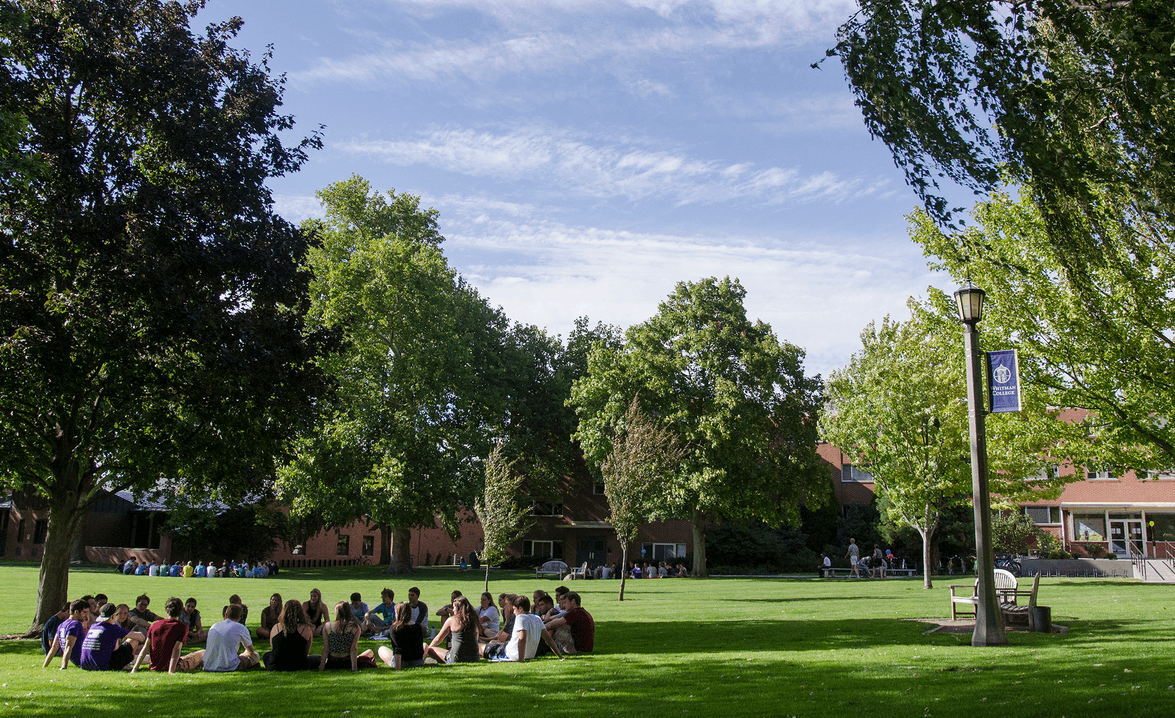
Personal-finance company WalletHub released its 2027 Best Colleges & Universities Rankings, comparing nearly 740 colleges and universities across the country. Whitman College landed at the top of the Washington list, followed by the University of Washington-Seattle and Gonzaga University.
No Washington school made the national top 20. Whitman ranked No. 78 nationally and UW came in at No. 100. Here are the top 10 colleges and universities according to the ranking:
- Whitman College
- University of Washington-Seattle
- Gonzaga University
- Seattle University
- University of Puget Sound
- Western Washington University
- Whitworth University
- Pacific Lutheran University
- Saint Martin’s University
- The Evergreen State College
What went into the rankings?
WalletHub compared 738 public and private nonprofit colleges and universities using 30 measures divided among seven categories, according to its published methodology.
Student selectivity carries the most weight, accounting for 25% of a school’s score. Cost and financing and educational outcomes each account for 20%; career outcomes, 15%; faculty resources, 10%; and campus safety and campus experience, 5% each.
Within those categories, WalletHub looks at such things as admission rates, student-faculty ratios, graduation rates, student debt, net cost, campus crime and earnings after college.
The company used data from the U.S. Department of Education, National Center for Education Statistics, PayScale and other sources.
“In general, universities tend to rank higher than colleges due to their inclusion of graduate-level programs, greater on-campus opportunities and higher earnings for students post-graduation,” WalletHub analyst Chip Lupo said in a release. “In fact, the top 10 places for higher education in the U.S. are all universities. There are still tons of high-ranking colleges, though, which offer their own advantages like smaller class sizes, more personalized learning and often safer campuses.”
How much should families read into the rankings?
How heavily should students and parents weigh rankings? Some, but not too much.
The list gives families a quick way to compare schools using the same set of measures. But the final ranked order was dependent on analysts decisions about what makes a college “best” and how much each factor should count. For example, a quarter of the total score is based on that category, and admission rate alone accounts for 12.5% of the final score. A college gets a sizable rankings boost for being difficult to get into, even though a low acceptance rate doesn’t tell families how well a school will educate a particular student.
Career outcomes account for another 15%. Earnings after college are certainly worth considering, but salaries also depend heavily on what graduates study and the careers they choose. A school sending lots of graduates into engineering or technology may fare differently on that measure than one producing more teachers, artists or social workers.
WalletHub gives cost and financing considerable weight, but its ranking can’t tell you what a particular college will cost your particular family. Financial aid, scholarships and residency can dramatically change the bottom line.
Campus safety figures deserve context, too. WalletHub uses reported crimes and arrests relative to enrollment as part of that score. Families concerned about safety should look at the underlying campus data rather than relying on the ranking alone.
The bottom line
For parents and college-bound teens, the WalletHub list is probably most useful as one more piece of information. Look at the individual measures that matter to your student, compare financial aid offers and use the U.S. Department of Education’s College Scorecard to dig further into costs, graduation rates, debt and earnings.
And perhaps most important, consider what the numbers don’t measure: whether your kid walks onto a campus and can picture spending the next four years there.