“How can you tell a potato has no money?”
Alexius Evans paused and beamed, before delivering the punchline: “It never wants to chip in!”
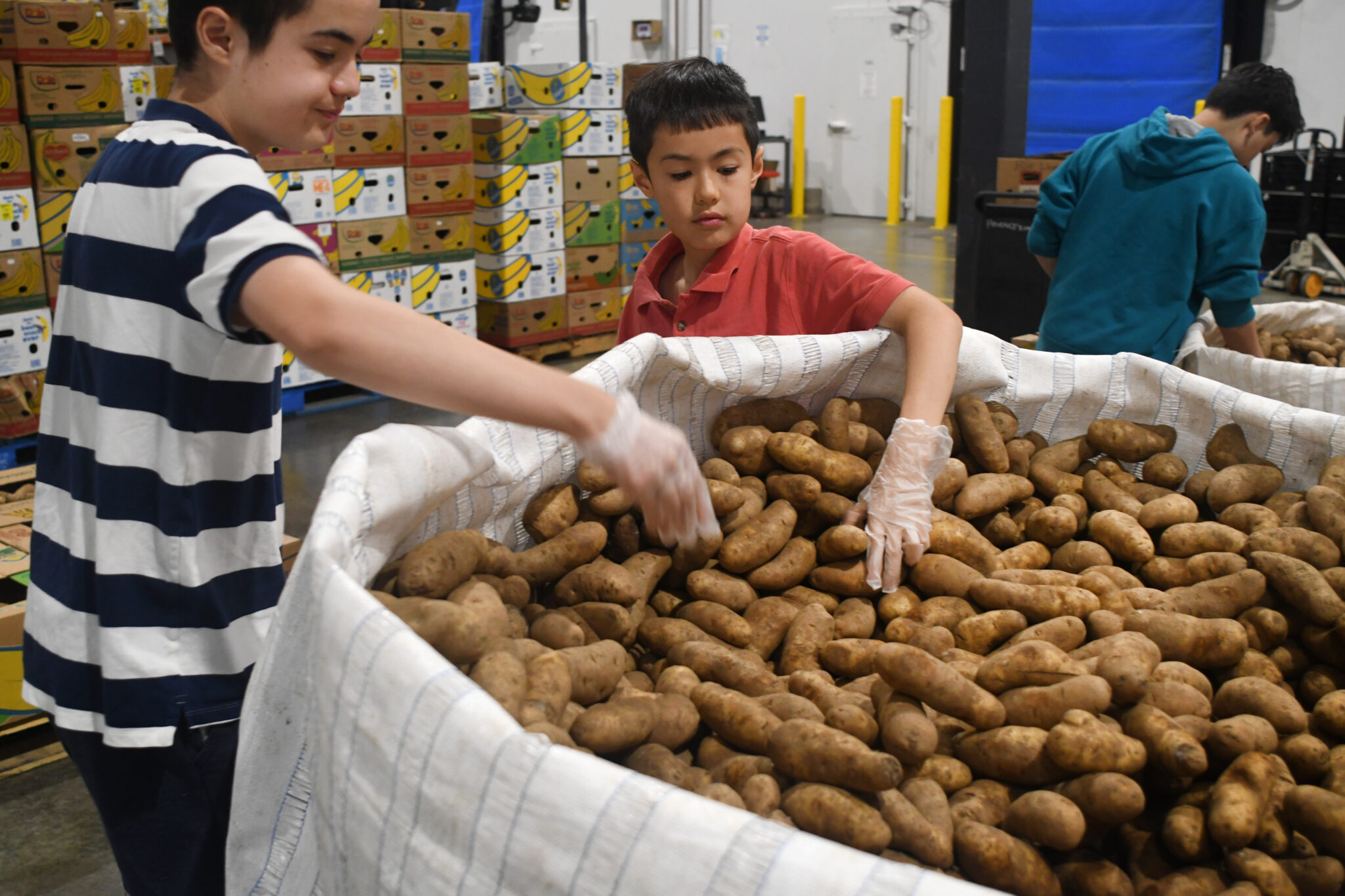
Potatoes were the item of the day during our recent volunteering shift at Food Lifeline in Seattle — 6,160 pounds of potatoes, to be exact, that we sorted and packed into 40-pound boxes.
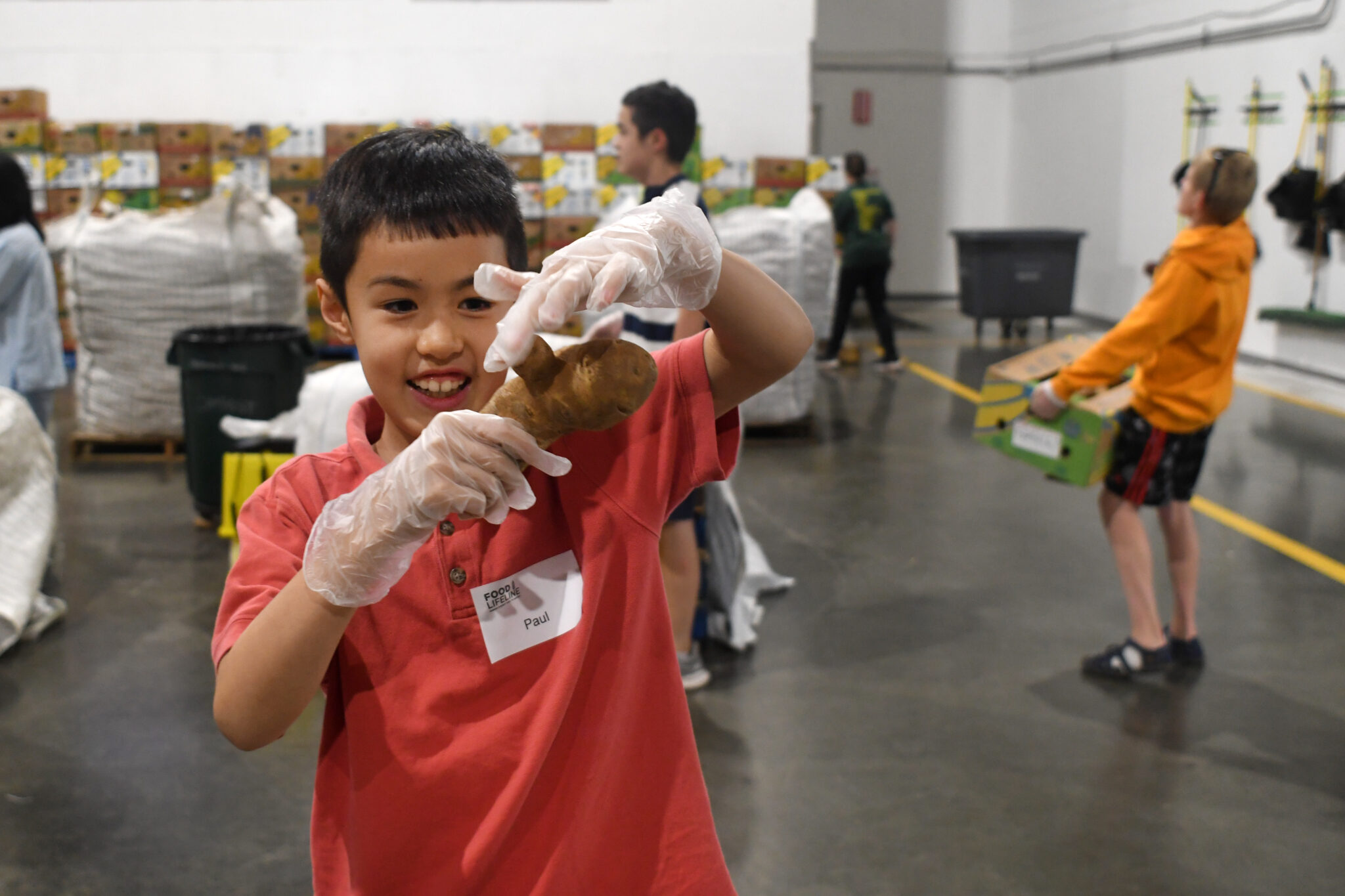
Paul Grygiel, 10, finds an oddly shaped potato. Food that isn’t pretty enough to be sold can be packed at Food Lifeline. (Image: JiaYing Grygiel)
Why Volunteer at Food Lifeline
At 10 and 14, my kids are too old for camp, and too young for summer jobs. Volunteering as a family turned out to be the perfect fit. Each 2-hour shift at Food Lifeline is action-packed. Evans, a volunteer repack coordinator, kept the energy high and the mood light.
“How time flies when you’re having fun,” she said, and she’s not wrong.
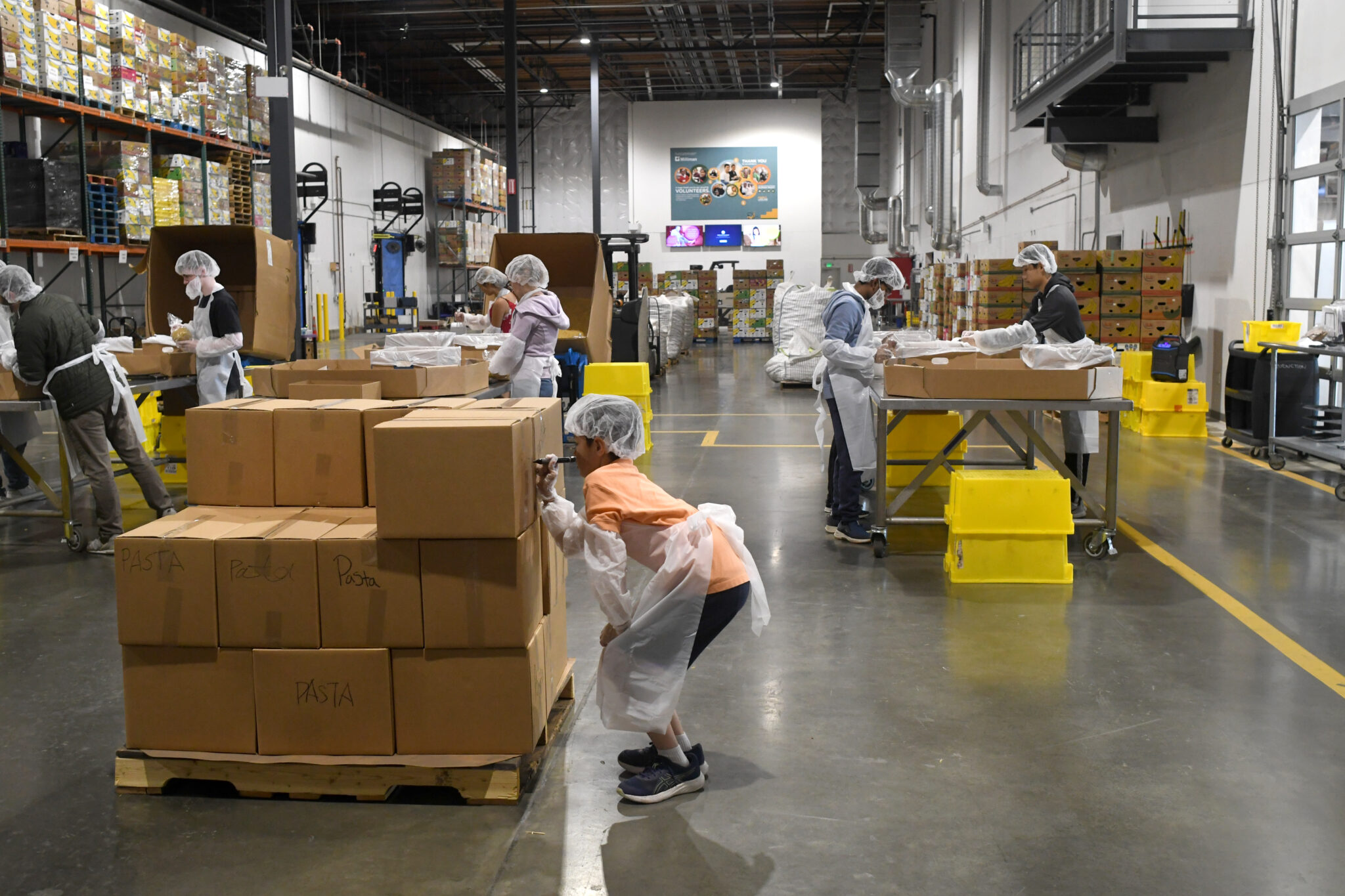
Paul Grygiel, 10, labels a completed box of macaroni. (Image: JiaYing Grygiel)
How the Warehouse Operation Works
This summer, we didn’t traipse through Europe or snorkel in turquoise waters. Instead, we trekked to Boulevard Park, just south of Seattle’s city limits, to a large warehouse stacked high with banana boxes.
“They should call this place ‘Banana Box Storage,’ not ‘Food Lifeline,’” my son said.
Banana boxes are key to the sorting and repacking operation at Food Lifeline inn Seattle. Food, most of it donated, arrives in massive vats. Volunteers sort and repack the food into banana boxes to distribute to 300 food banks across western Washington.
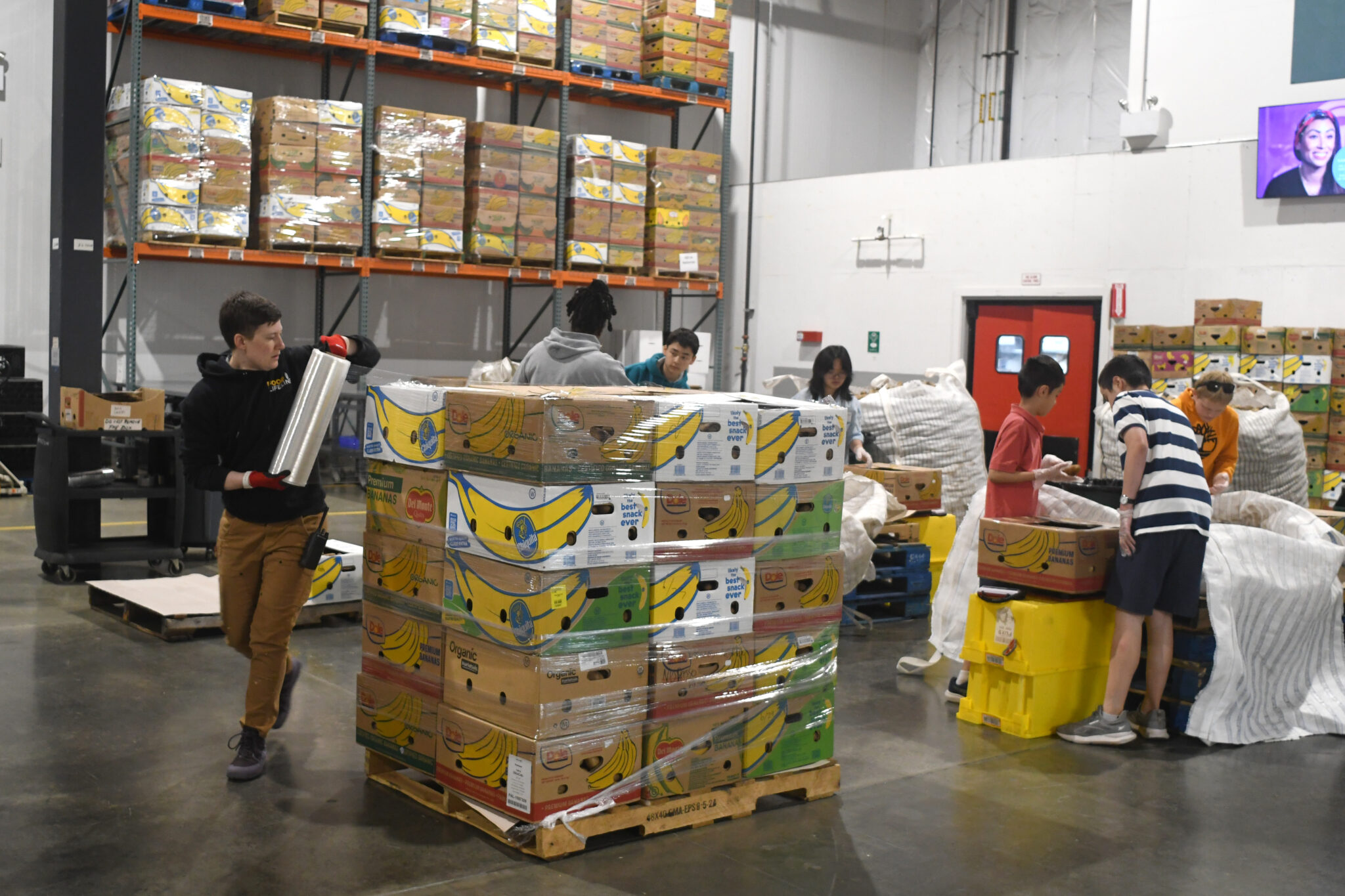
Volunteer repack coordinator Kennedy Stomps wraps a completed pallet of potatoes. (Image: JiaYing Grygiel)
A Family-Friendly Volunteer Experience
To be clear, volunteering at Food Lifeline isn’t just a summer thing, the need is year-round. Some 14,000 people volunteer at Food Lifeline every year, and 3,000 of those are kids. It’s a place where families are welcomed.
“It’s hard to break stuff or make mistakes,” said Kennedy Stomps, another volunteer repack coordinator. “It’s about having fun and just trying your best, really.”
Maybe you’ve had a meh volunteering experience where you show up and they’re not sure what to do with you. This is not the case at Food Lifeline in Seattle.
Check-in at Food Lifeline is super smooth. The warehouse is spotless and exceptionally organized. When you arrive, stations are set up with all the supplies. My kids liked that you’re active the entire time, and the work goes quickly with many hands helping out.
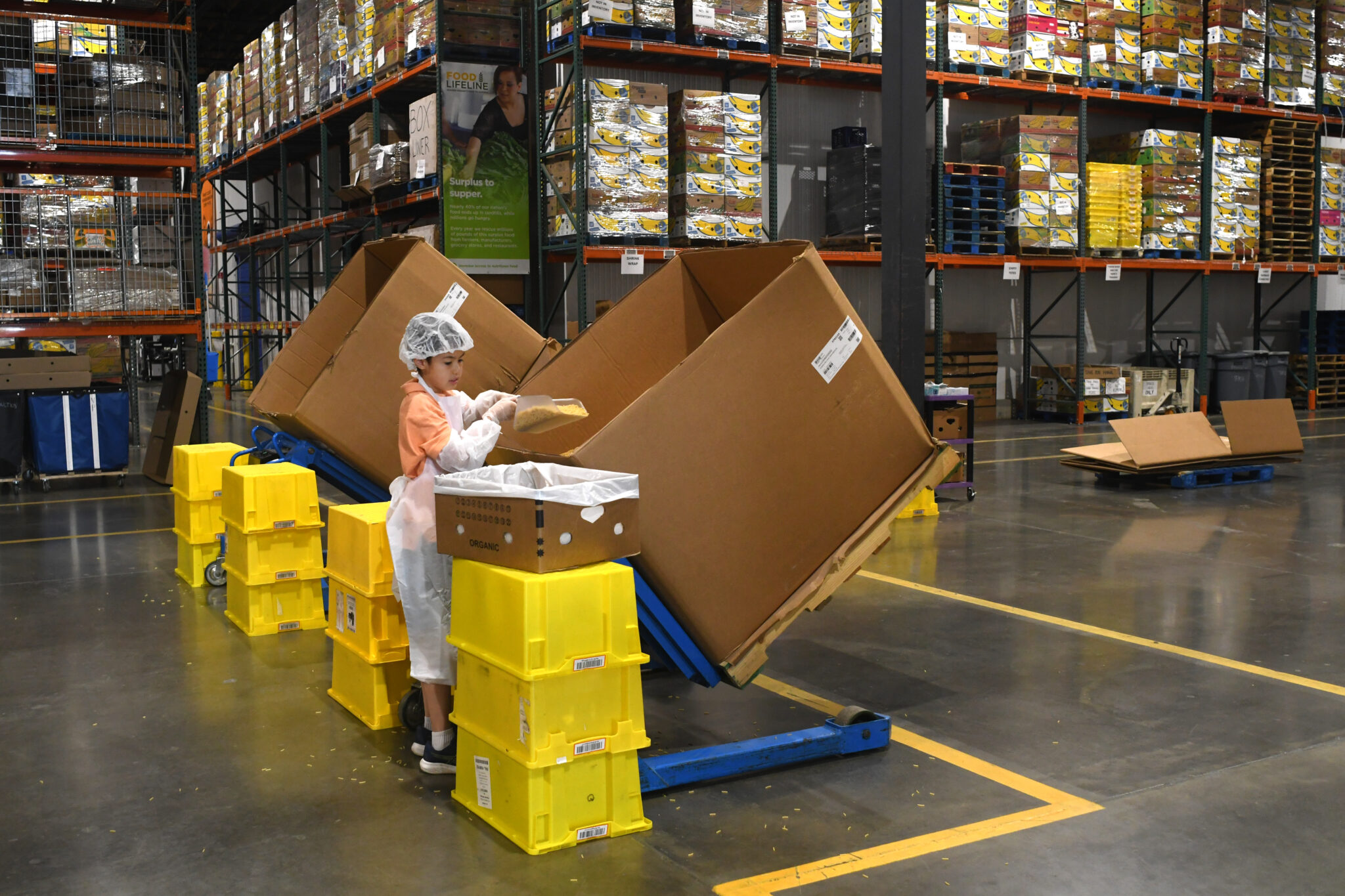
Paul Grygiel, 10, scoops macaroni for packing into 2-pound bags. (Image: JiaYing Grygiel)
“We make sure we don’t waste anyone’s time. You get to complete an important task. It’s just very efficient,” said Food Lifeline spokesman Mark Coleman. “It will fit into your busy schedule, it will be everything that’s advertised.”
We saw families volunteering, students, and corporate groups from Amazon, Boeing and Dell. What you pack changes from shift to shift. My 14-year-old’s favorite project was counting out 100 peach cups per box. My 10-year-old loved pitching cucumbers gone bad into the compost.
What Kids Learn About Helping Others
One day, we got to don outfits — plastic aprons, arm guards, hairnets — to shovel frozen peas into 2-pound bags. Another day, we even got to take out the compost. The compost! The kids were so impressed, you would’ve thought the trailer-sized bin was Disneyland.
At the end of your shift, you get the satisfaction of knowing you really did something, like pack 2,220 pounds of macaroni. The biggest disappointment? When it was time to stop packing and clean up.
If you’ve been to a grocery store lately, you know that prices keep climbing up. Food Lifeline serves 1.8 million people a year in western Washington, double the number served pre-pandemic.
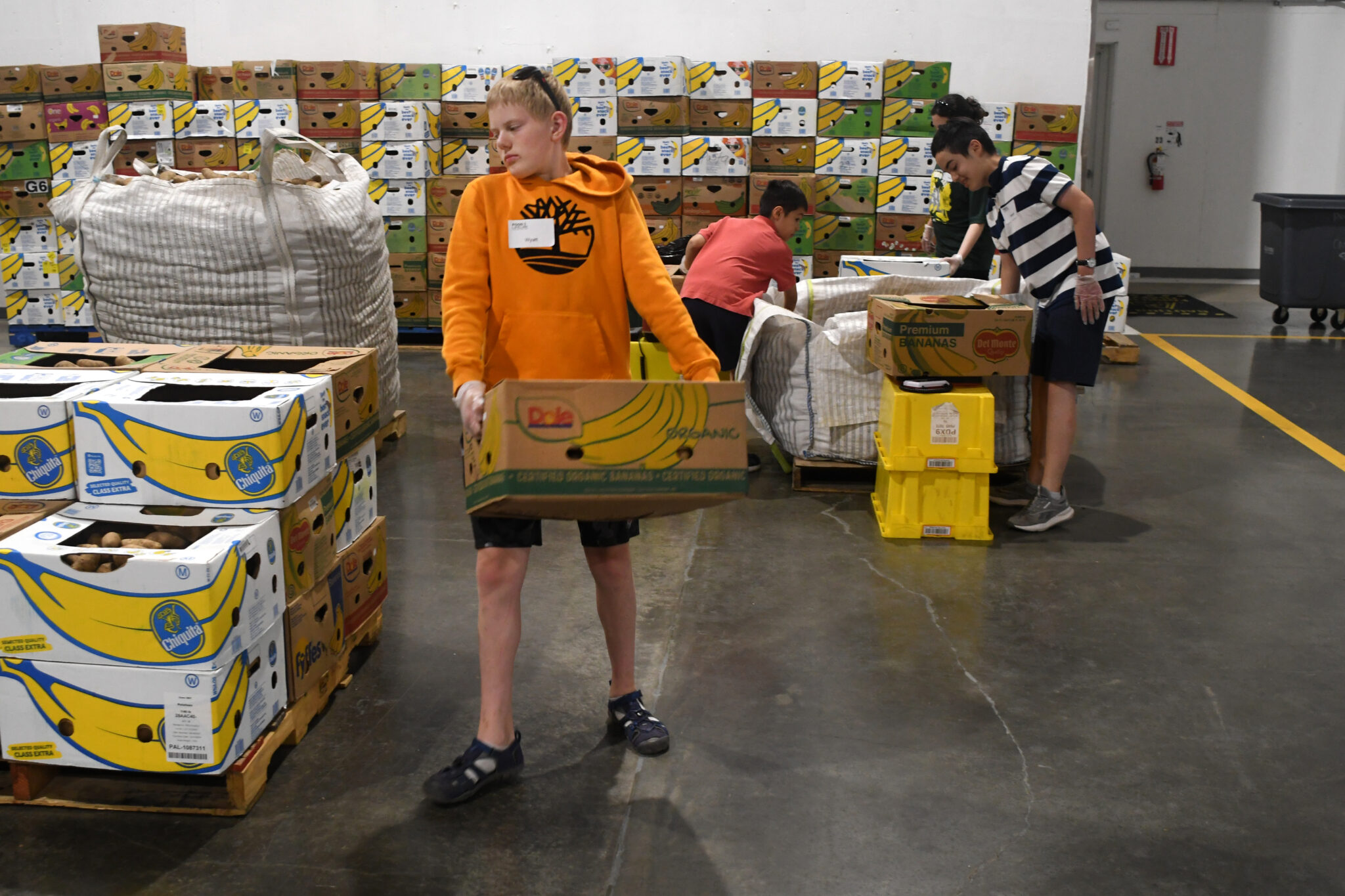
Wyatt Sherwood, 15, carries a completed 40-pound box of potatoes to the pallet. (Image: JiaYing Grygiel)
“We have a growing rate of food insecurity in this country,” Coleman said. ”It really speaks to the fine financial line, for individuals and families, just how close everybody is to the breaking point.”
Taking the kids to volunteer at Food Lifeline is eye-opening. They learn about neighbors who may be hungry — and they get to do something to help.
“It really is a point of activism, even for children,” Coleman said.
3 things to know about volunteering at Food Lifeline
- Sign up for shifts online. There are morning shifts, afternoon shifts, evening shifts, Saturday shifts, lots of options.
- You need an email account for each person.
- The minimum age is 10, and there is no maximum. Some volunteers are in their 90s! Parents need to sign a waiver for kids under 18. Kids can be dropped off solo when they’re 14.
- Wear closed-toed shoes and layers. It can be chilly in the warehouse.
Looking for more ways to give back? Don’t miss our list of family volunteer opportunities all year round.