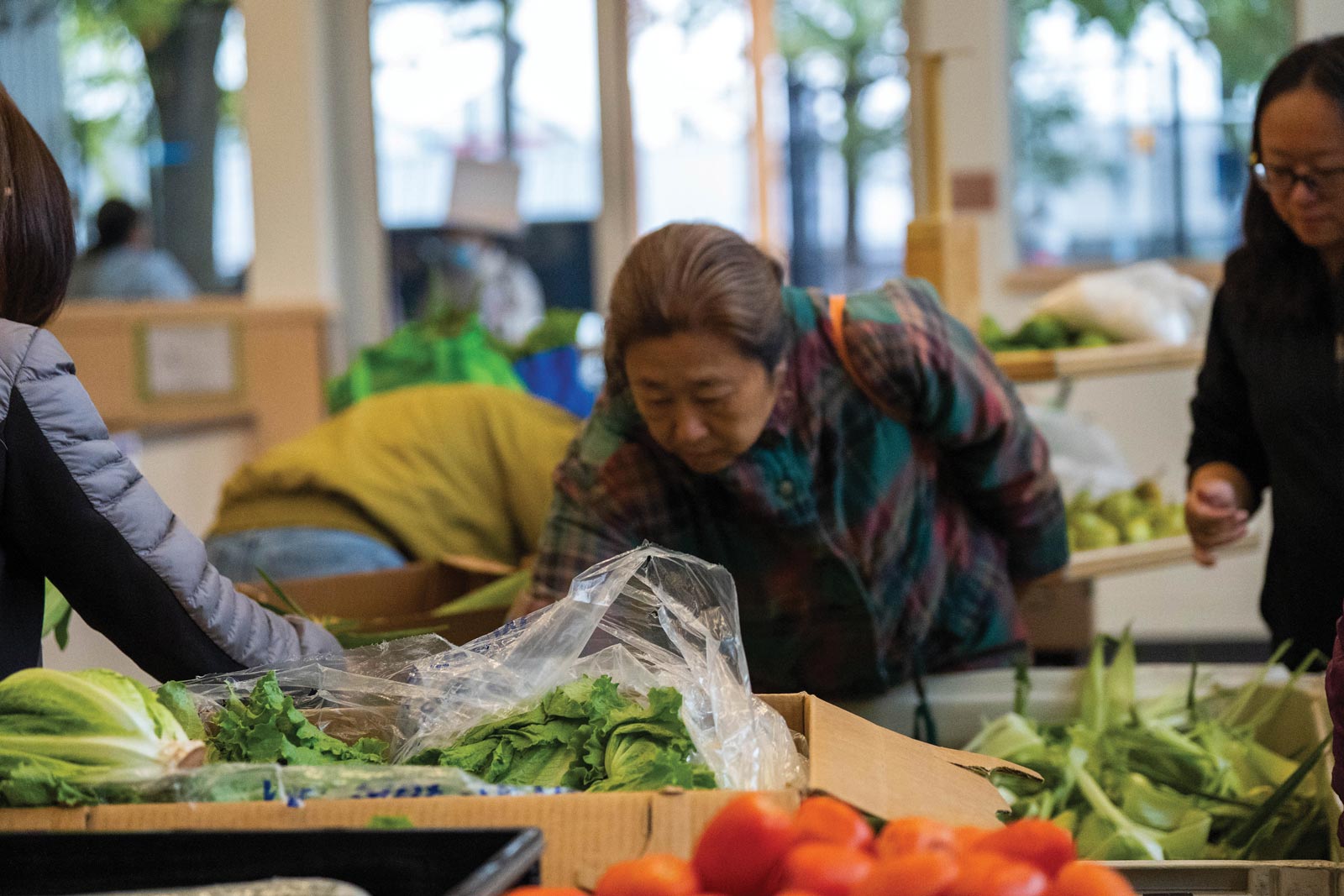
There’s nothing quite like the Rainier Valley Food Bank, where families can discuss recipes as they shop for produce, parents can take home needed baby care products free of charge, and volunteers can become employees on a career path.
After a $17 million renovation completed this fall, the food bank now embodies the full community resource center that it is, according to Executive Director Gloria Hatcher-Mays.
Rainier Valley families and their neighbors can access a community resource library, home delivery for food, and assistance connecting to needed services, be it housing support or employment opportunities.
The food bank provides free weekend meals for kids in South Seattle who might otherwise go without.
Soon, the food bank will allow folks to reserve a shopping time. That means parents don’t have to stand in long lines with kids. Once inside the building, the shopping experience is like that of a real grocery store, rather than the traditional food bank approach where visitors receive bags of food items they didn’t pick.
Hatcher-Mays says families come into Rainier Valley Food Bank with dinner recipes in mind, not just hoping to receive something their kids will eat.
“We have real displays, stand-up coolers, it looks like a Safeway,” said Hatcher-Mays.
She points out that many food bank staff live in the Rainier Valley and started as volunteers.
“We don’t just hire our volunteers, we put them on a career path,” said Hatcher-Mays. Inspired by a UW study that showed human service workers are paid significantly less than other industries, the food bank pays nearly double the city’s minimum wage.
Food Services Manager Otis Pimpleton explained: “We are really focused on having plans for people. If there isn’t a place to move up here, we work to improve their resume.”
Pimpleton started working in the food bank’s warehouse and now heads up a team of four people. Together, they provide more than 800 home deliveries a week and 120 to-go lunches a day, in addition to working with the food bank’s outdoor pop-up in the parking lot of the Paradise Baptist Church and food services in the new building.
“We are close to two schools,” said Pimpleton, “so we’re trying to attract more students for our to-go lunches.”
What sets Rainier Valley apart isn’t their lovely new setting, it’s the way they operate. The food bank works in concert with other food banks — not in competition.
“When we speak in one voice, with connected efforts, it becomes food system support,” said Hatcher-Mays.
Despite massive cuts in federal funding and the dramatic increase in food bank usage across Washington as funding for the Supplemental Nutrition Assistance Program funds are withheld from families, Hatcher-Mays knows there’s enough food to go around — if it can just get where it’s needed.
“We operate from a place of ubiquity,” she said.
Learn how to help: rvfb.org