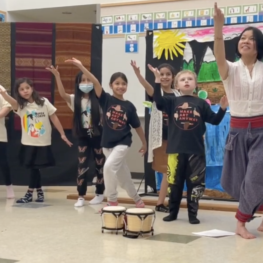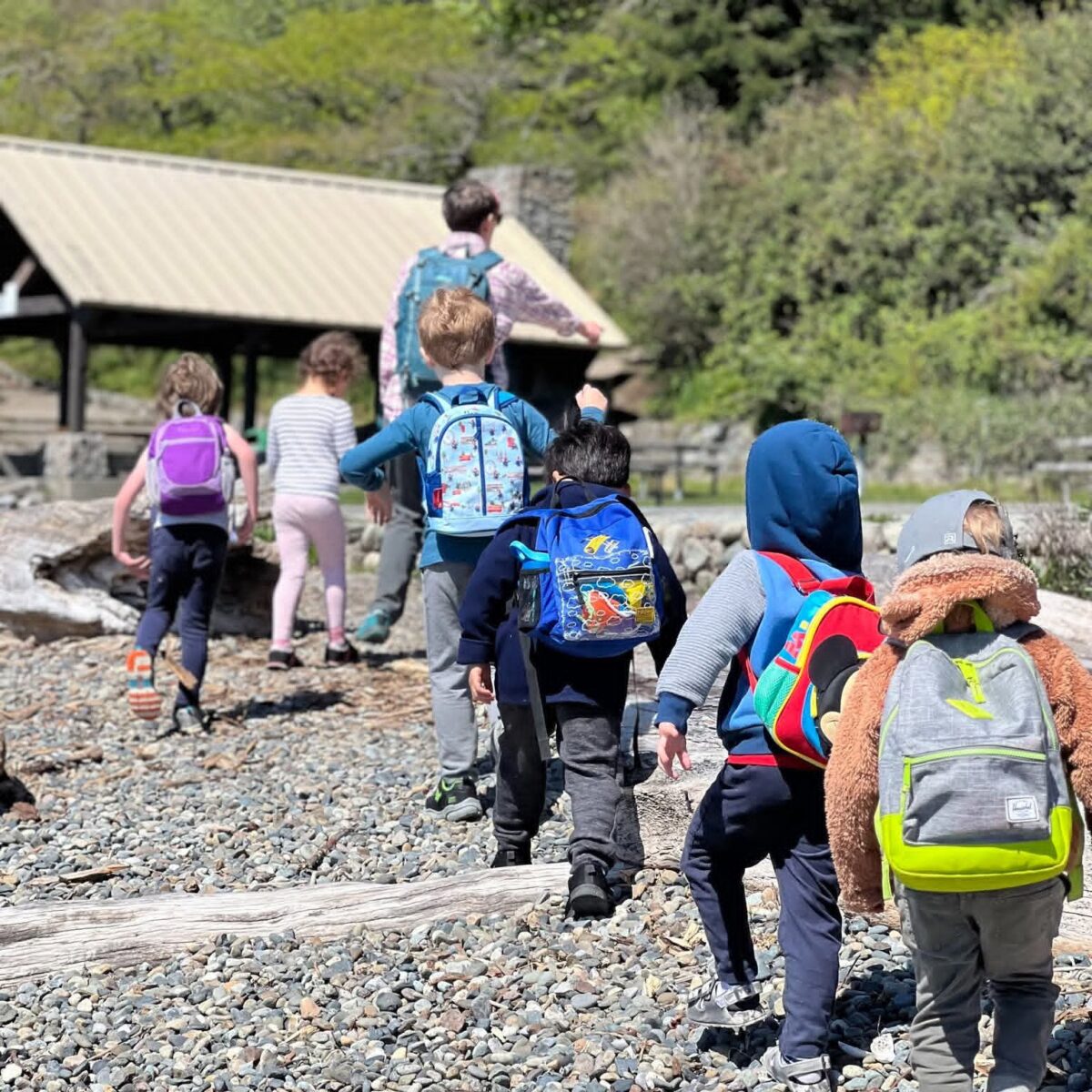
Preschool evokes images of tumbled blocks, runny noses, and mud-splattered rubber boots in the rain. Co-op preschool adds in community parents wiping said noses and helping to build the block towers. Often the entry to both school and socialization for our children, this added parent involvement creates learning benefits that are sometimes overlooked by the larger community.
Co-op preschool helped begin both my journey as a play-based parenting writer and advocate as well as my child’s learning and social education. The co-op community helped me navigate learning and speech delays, and skills as vital as sharing at an early age. Seven years later, we are both thriving with lasting impacts from our experience.
Effective July 2026, this integrated experience may end. Co-op’s funding model, which has endured since 1947 is at risk due to a rule change. But what is a co-op preschool, and why should you care?
(Image: Jen Schill)
What is a co-op preschool?
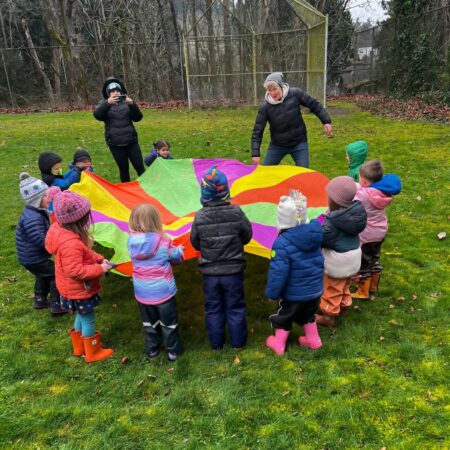
Co-op is short for cooperative. A co-op preschool program combines the cooperative efforts of parents, teachers, and, in Seattle, parent educators) for a holistic learning environment for the whole family. While the teacher and child follow standard preschool roles, parents support the program by providing labor as well. In the case of Seattle co-ops, that includes 1 day a week of on-site classroom support, rotating snack duties, and other roles such as play-dough maker, scheduler, or committee lead.
Unlike some other models, Seattle has a network of co-op preschools that partner with local community colleges on something called parent education. Among other things, this means parents of co-op students must take mandatory parent education classes, held monthly outside of class by parenting educators. Here, parents are given strategies to support both kids and themselves, assist in social-emotional development, and support early learning.
“I think the term ‘Lab Classroom’ says it all,” explains Faculty Coordinator and Parenting Education at South Seattle Co-op, Jennifer Giomi. “A co-op classroom is a place where we can practice our tools for being in relationship with each other: adult to child, child-child, adult-adult, teacher-students, teacher-teacher, board relations, and beyond.”
South Seattle Cooperative Preschool (SCCP) offers programs at 5 locations, primarily near West Seattle. North Seattle Cooperative Preschools (NSCP) offers programs at 10+ locations (not only north Seattle) serving an estimated 4,500 families. The learning model is a play-based curriculum.
By working cooperatively, these preschools operate at significantly lower costs than similar drop-off programs (think hundreds vs. thousands of dollars each month). Both collectives operate as 501(c)(3) nonprofits that connect with the Community and Technical Colleges, with program funding in part allocated due to the college-credit eligible parent education courses. In short, colleges help provide funding, and the parents fill in the gaps.
(Image: Jen Schill)
Why does co-op preschool matter?
A former co-op parent herself, Jennifer Schill describes the classroom as “a magical space.”
“These small humans work on foundational social and emotional skills,” said Schill. “It’s a process that is inherently messy, but it is also a place where we all live 100% in the moment, which is increasingly rare in our hurry-up, attention-scattering world.”
In a world where every part of parenting continues to grow more expensive and isolating, co-ops foster community and affordability. Seattle’s co-op preschool programs are inclusive of all abilities and affordable for most families, thanks in part to the dedicated parent volunteers who support them. Parent education classes support our efforts to raise tiny humans into good human beings as adults. This education can also benefit careers by enhancing specialization for those of us with existing degrees and help begin careers for those without.
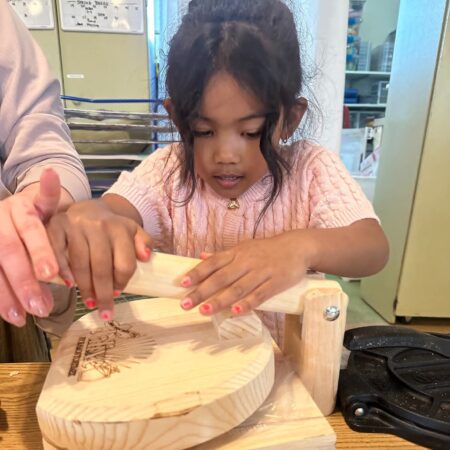
(Image: Jen Schill)
A parent’s perspective
Co-op didn’t care that speech was still an evolving thing for my young kiddo. He’s now a thriving, almost-fifth-grader who talks 100 miles per hour and gets regular character awards at school. I was provided with tools beyond Google to help manage our challenges, and kiddo was provided with friends.
Since co-op, I’m working with STREAM-focused committees to help build a children’s museum in southwest Washington. I sat on the Student-Centered Equity Team at my school, proudly shared insights about Rudine Sims Bishop and those windows, mirrors, and sliding glass doors, and am a regular contributor to multiple parent-focused magazines.
And it all started with South Seattle Co-op and their parenting education.
From a better understanding of developmental stages to simply having enough friends to invite to a birthday party, our experience allowed us to create a community and even help build a career. I may not have used my co-op credits to pursue a degree; instead, I used them to pursue a purpose.
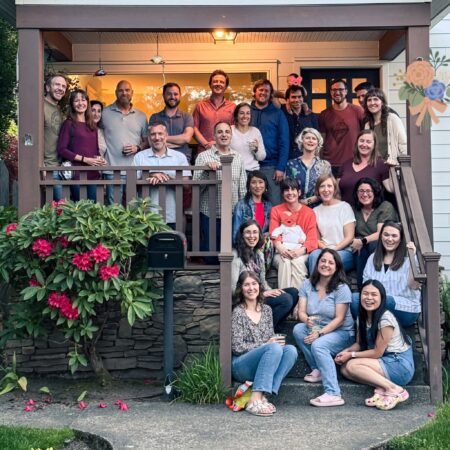
(Image: Jen Schill)
An educator’s perspective
For Schill, co-op is about thriving communities.
“Both partner and parent are jobs that, if done with awareness, a bit of thoughtful intention, helpful tools, and support, can be done much better. Reasonably healthy family relationships that are nurturing and rewarding are the backbone of thriving communities. Co-ops provide high-quality preschool, and perhaps more importantly, they are labs where we practice learning to be adults in a community together. Co-ops are professional development for your parenting (and frequently partner) jobs.”
Why is co-op preschool at risk?
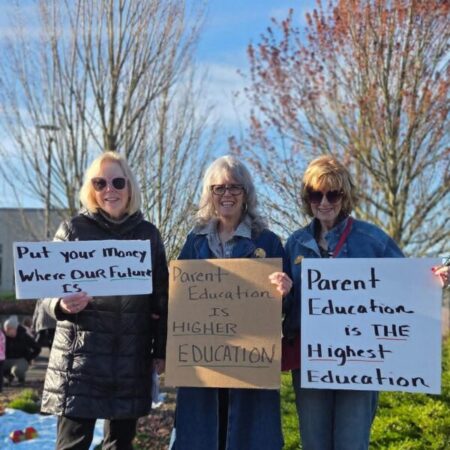
The funding for the parent education component of Seattle’s co-op preschool model was cut on July 1st, 2026.
“Because parent education does not lead to a certificate or degree, it is no longer eligible for state-funded enrollment, creating uncertainty for co-op programs across the state,” shares South Seattle Cooperative Preschool’s official page.
Meaning: the law refers to programs tied to earning a certificate or degree as eligible for funding. Since the parent education component of co-op preschool programs does not, funding is at risk.
To be clear, the funding model changed, but the co-ops didn’t. Parent Education has never been Continuing Education (CE) in this state, and it still isn’t. Nonetheless, the co-op classes are no longer supported in the new allocation model. The change was a reclassification with limited community input, separate from any budget.
“The co-op model is 100% unique,” said Schill. “It feels nuanced and complicated to folks who haven’t experienced it, but once parents become involved, things become clear. I think our world doesn’t have much patience for complexity and nuance these days. I worry that if the funding doesn’t get protected, it will go away forever.”
And unless the State Board of Community and Technical Colleges (SBCTC) agrees that these benefits extend beyond an official certificate, the entire existence of co-ops may come tumbling down like the blocks our kids built during class.
“As of July 1, the SBCTC finalized its plan to exclude parenting from the vocations recognized by the state — despite extensive protest and organizing — and, in doing so, effectively shut these programs down,” said Giomi. “A fortunate few (7 of 13 that began the 2025-26 school year will continue through next year. Two more programs are funded through fall quarter 2026) will continue through next year, buying a little time to find a solution, but the clock is ticking. If they aren’t saved now, they won’t return.”
“These programs are large, long-standing, and deeply woven into community life. I don’t think the State fully understands what our communities will look like without them.”