For most kids, Halloween is a howling good time. All that scare, all that noise, you’re allowed to scream and then there’s the candy. What’s not to love?
A whole lot if you are a child with sensory challenges. For those kids, loud noises can be overwhelming, large crowds unbearable, and flickering animatronics overstimulating and anxiety-inducing. Halloween can trigger several challenges for kids with sensory needs. They include: Discomfort with fabrics (read costumes), sound overload, visual overstimulation, sensitivity to smells and crowds, and disruption of the daily routine. For many kids on the autism spectrum, for example, sticking to a daily routine reduces anxiety. A big, sugar-infused day like Halloween can really disrupt the routine.
What’s a parent to do?
We asked Niki Yarnot, LASW, co-founder of Color Outside Coaching, that question. Yarnot’s practice helps kids (and parents) understand and lean into the unique way neurodivergent brains work to manage obstacles and keep anxiety at bay. Yarnot is also a mom to three boys, including one who is neurodivergent. Below are Yarnot’s ideas for a better Halloween experience.
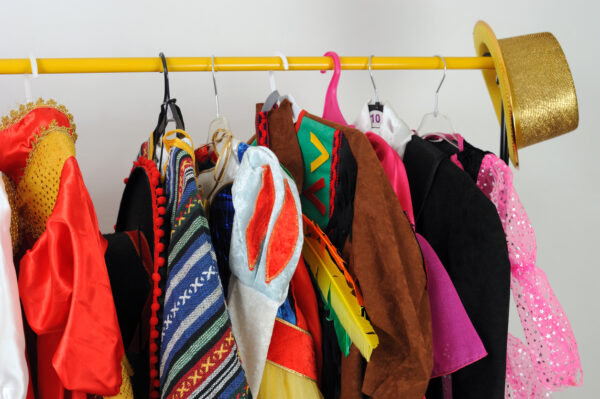
Consider “out of the box” alternatives to the idea of costume (iStock)
How do you help a child with tactile discomfort when standard costumes are often made of scratchy, stiff, or hot fabrics, seams, or restrictive accessories?
Yarnot advises parents to plan ahead: “Don’t wait until the night before Halloween to suddenly realize the fabric is itchy, etc. Do a dry run the week before.”
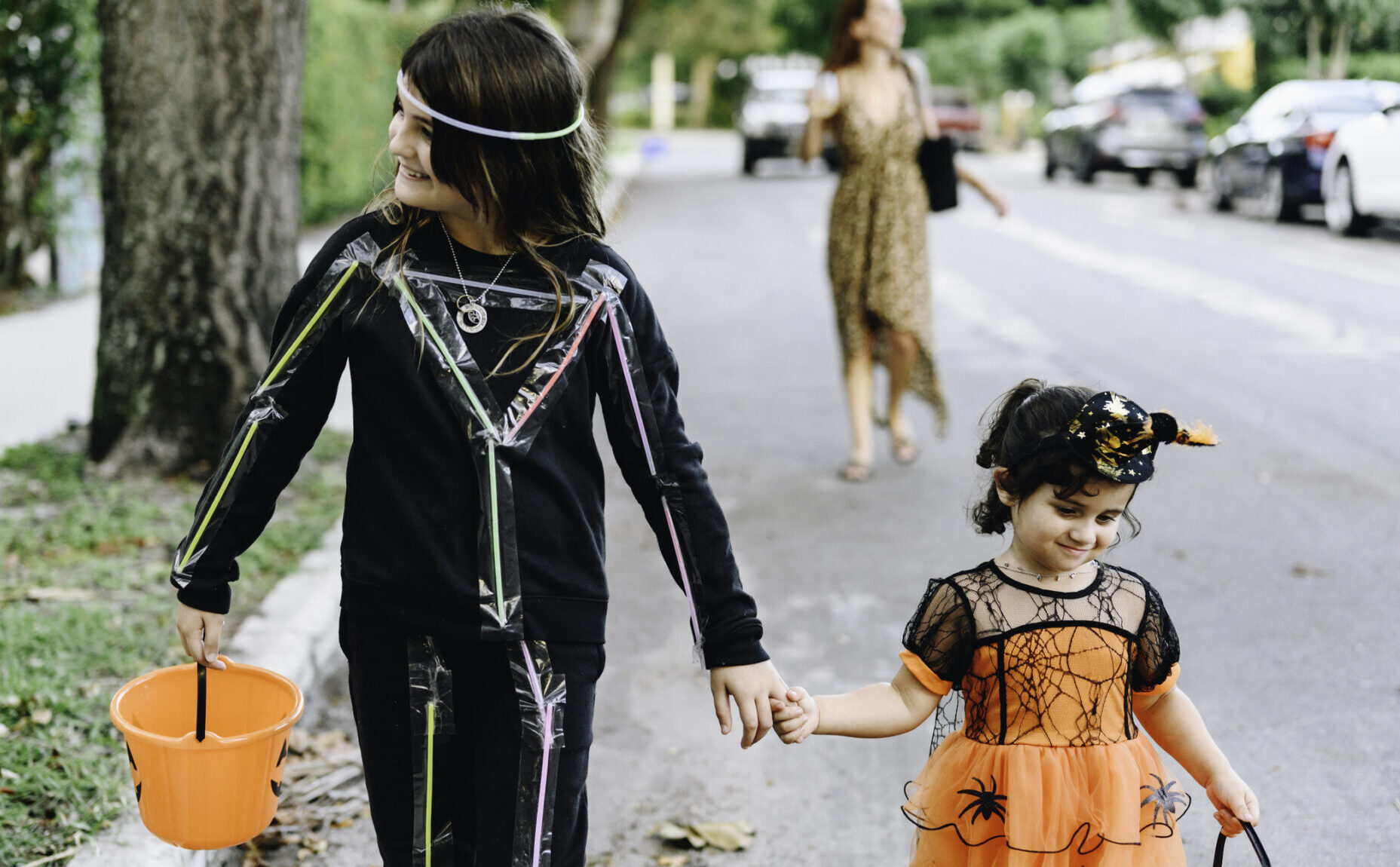
When it comes to costumes, she advises parents to think outside of the box. For example, “What if the costume involves the child in regular dress while their grown-up or pet is dressed up?” Think Dorothy and Toto; Han Solo (white shirt, khaki pants, black vest) and an Ewok or Chewbacca (perhaps put Dad in the furry suit). Another easy idea: Get glow-in-the-dark tape and create a skeleton on pants and a sweatshirt your child already feels comfortable in.
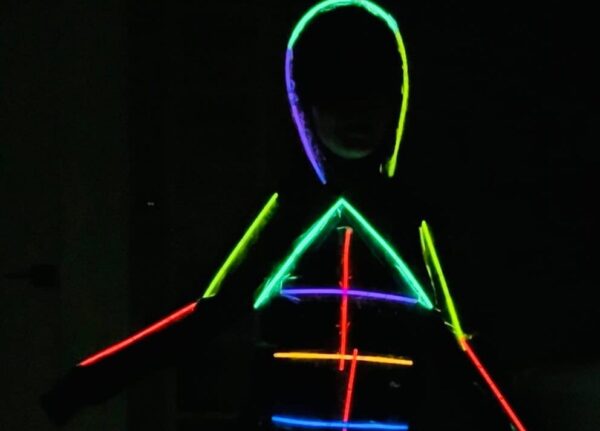
Learn how to DIY a glow-in-the-dark skeleton costume at hellowonderful.co/post/diy-skeleton-costume.
“The more ownership your child has over their costume, the fewer issues you’ll have,” Yarnot stresses. “My own neurodivergent kiddo has never had a single store-bought costume and not because I didn’t want/beg him to allow it. He always wanted to follow his imagination.
One year, Yarnot’s son was Finn Fighterton, “the fighty one,” on Halloween. He dressed all in black except for a silver “helmet” and sword. Another Halloween, he was an “adventure guy.” Again, he wore his own clothes, with a cowboy hat and a map.
“Let their imaginations run wild,” Yarnot says.
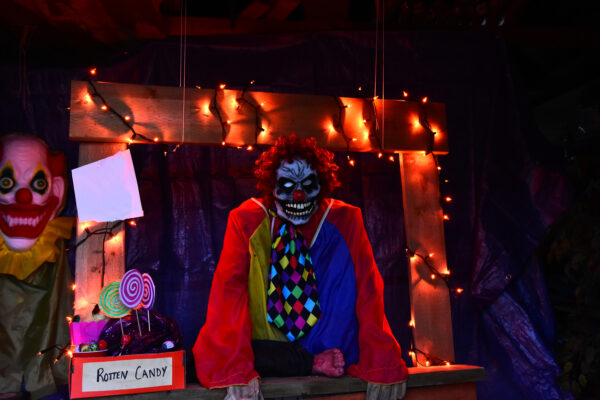
Male a plan for moving displays and loud sounds (Photo by Pam Walker)
Halloween can bring auditory overload. How can parents prepare for or help kids mitigate loud noises, animatronic decorations, fog machines, roaring sound effects, screaming:
Headphones, says Yarnot, are a great way to manage auditory overload—”and they fit in just fine with all sorts of costumes.” If your child doesn’t want to wear them at first, Yarnot suggests bringing them along anyway in case loud noises change their Halloween heart. Other sound mitigation hacks:
- If possible, send one parent ahead on a scouting mission: “Drive the route you plan to walk for trick-or-treating and scout out any houses that seem to have jump-scares or auditory components to their decorations,” Yarnot says. “Once identified, you have two choices: talk to your children about them and see if they are interested in giving it a shot, or if you think it’s just too much, skip it all together.
- If you’re at home and the doorbell ringing over and over is too much, it’s completely reasonable to put up a sign on the door that says “Knock!”
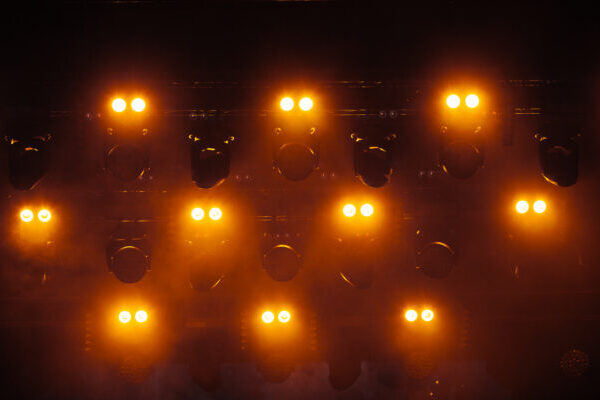
Know if strobes and other lighting might impact your child (Photo by Ruslan Lytvyn)
What about visual overstimulation—things like bright strobe lights, flickering lanterns, moving props, and glowing and flashing?
“This is one of the biggest challenges for a lot of kids,” Yarnot says. “There are a couple of options:
- Head out earlier when it is just heading towards twilight. The lights will be less glaring/less effective when it’s not pitch black outside.
- Talk about what effects might be there,” suggests Yarnot. “Are there specific ones that cause more anxiety than others? Map out a route that skips those houses, or consider heading for a trick-or-treat in town, a store experience or a trunk-or-treat event. These smaller events have less variety, fewer surprises, and offer a calmer experience in general.”
- Consider whether wearing sunglasses might help. Kids can pop them on and off depending on their comfort levels with various types of light.
What about smell triggers, like sulfury fog machines?
“Smells can be tough,” says Yarnot. “The good news is that when you’re outside moving house to house, they tend to dissipate quickly. That said, normalize charting a wide path around houses that have a particularly triggering odor (fog machines are a big one).
Further, Yarnot advises, “If your kiddo likes a certain smell (say, for example, cherry chapstick), put some on them to make that the primary smell. Or consider having them wear a neckerchief/turtleneck that can be pulled up and over the nose when needed.”
Any advice on helping kids navigate a disruption to their daily routine for a fun Halloween night?
“This is where knowing your child and their limits is critical,” says Yarnot. Knowing those, she suggests parents:
- Allow for sensory downtime before heading out.
- Plan breaks in the middle of trick-or-treating, even if just for a few minutes, to take a breath and regroup.
- Plan to finish with enough time left in the evening to do your usual wind-down activities and bedtime routine.
(Courtesy Lemonlimeadventures.com)
What if your kid is uncomfortable with Halloween etiquette?
“Social demands can be hard, so make a plan with your child,” Yarnot advises. Here are some useful ideas:
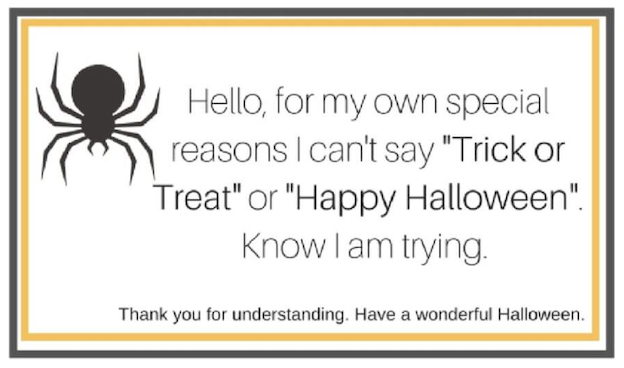
If you know that will be a stressor for them, offer them a card to carry that they can just hold up. It can say trick-or-treat on one side, and thank you on the other.
Take that stress off their plate. You walk up with them and say the words: “As they get comfortable with the routine, you might, before going to another house, ask if they want to say the words with you. Offer options and support, but no pressure. Halloween is supposed to be fun, not a skill test!”
Navigating crowded sidewalks, unfamiliar doorsteps, and loss of personal space can heighten anxiety for a child with sensory concerns. How can parents help kids deal with crowds and spatial stress?
- Start from a place of partnership. Let your kids know they can call a time-out for a break, or end he whole event whenever they are ready.
- Ask what would help them feel more secure. Would it help if you walked to the door with them? Would they like to hold your hand while walking?
- Consider whether costume elements can help provide space: “I saw one kiddo walking around as a beach goer (albeit in warm clothing) with a pool floatie around their middle,” Yarnot recalls.
- As the adult, use your body to help create the space your child needs. Slow your pace to create distance between other walkers, and step next to or in front of your child to give them a bubble of space when needed.
- Give them language to ask for room. “I need space, please” or “Can you please step out of my bubble?”
Remind them (and yourself) what it’s all about
Yarnot urges parents to: “Above all, remember what the goal of Halloween is.
“It’s about fun, community, and silliness for the kids,” she says. “If your child’s best Halloween experience means no costume at all, and just a T-shirt that says “Trouble” or “This is my costume,” then great! If their capacity is only 10 minutes of trick-or-treating, fine! If one year they just want to walk around with you and not even go up to the door, let them.
In other words: “Try to put your own expectations and background aside and follow your child’s lead,” Yarnot says. “At the end of the day, allowing them to experience Halloween in a way that is comfortable to them will lead to the best experiences and memories.”