Being a parent is nonstop hard work, which makes following all the news happening in the city, state, and U.S. decision-making circles challenging. Here are highlights of Washington state political news for families from last week (Aug. 4-10) and a hint at what’s up this week. I hope you will consider taking action – reaching out to those who represent you and your family in Congress and state offices — on the issues that impact families in our state.
Mister Rogers is rolling in his grave
Let’s start with this sad news (not the saddest since President Donald Trump took office, given he is tearing immigrant families apart, trying to make homelessness illegal, and keeping food from children who need it):
The Corporation for Public Broadcasting (CPB) announced last week that it’s done. It will shut its doors by the end of the year.
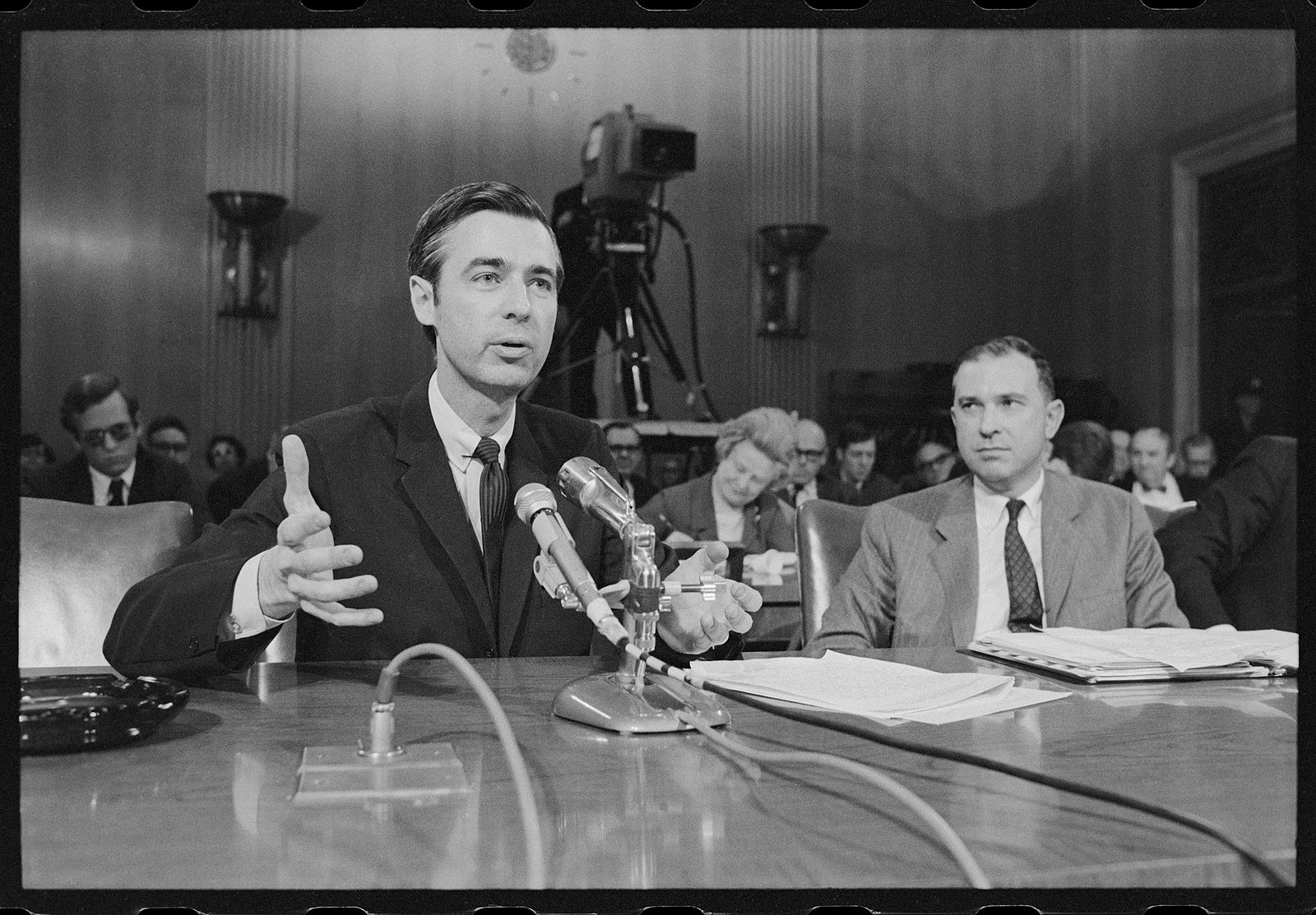
The CPB is the organization that provides grants to Public Broadcasting System (PBS) stations. These stations have brought your kids excellent educational programming and brought you news, documentaries, and good, largely clean entertainment for decades. For free. It also funds National Public Radio stations; its shuttering threatens the closure of stations in many rural areas. While most public televisions and radio stations are supported by private donor members as well, losing CPB is a national travesty. Fred Rogers, the brilliance behind “Mister Rogers’ Neighborhood” and whose testimony before the Senate Subcommittee on Communications in 1969 kept the CPB funded, would be beyond dismayed.
The announcement came after two massive hits. First, Trump pulled back $1.1 billion in funding in a bill passed in July, accusing stations of leaning to the left in their reporting. Then a Senate appropriations bill failed to fund the nonprofit.
“Despite the extraordinary efforts of millions of Americans who called, wrote, and petitioned Congress to preserve federal funding for CPB, we now face the difficult reality of closing our operations,” Patricia Harrison, president and CEO of CPB, said in a statement.
She added that “public media has been one of the most trusted institutions in American life, providing educational opportunity, emergency alerts, civil discourse, and cultural connection to every corner of the country.”
Washington Sen. Patty Murray is on the Senate Appropriations Committee that approved the Labor, Health and Human Services, and Education spending bill for fiscal year 2026, which did not include funding for CPB.
In a report in the Washington State Standard, Murray said of the decision: “It is a shameful reality and now communities across the country will suffer the consequences as over 1,500 stations lose critical funding.”
Take action: With federal funding cuts impacting all public journalism, consider donating to those you regularly watch or listen to. Here are some in our area:
- Cascade PBS: Seattle/King County’s public broadcasting station featuring news, educational programming, and entertainment. Cascade PBS offers a Creative Commons license that allows small news organizations like Seattle’s Child to repost local news important to families.
- KBTC PBS: Tacoma’s public broadcasting station offering news, educational programming, and entertainment
- KUOW (94.9 FM): Seattle’s NPR station and independent, nonprofit news organization producing award-winning journalism and innovative podcasts
- C89.5/KNHC: Music to dance to and educational programming
- KNKX (88.5 FM): Jazz, blues, and NPR news
- KSER (90.7 MHz): Independent media serving north Puget Sound
Funding cut for mRNA (read COVID and bird flu) vaccine development
Keep those N95 masks close at hand. They may become one of your best defenses against nasty, dangerous viruses that have concerned epidemiologists for years.
Why? Because the Department of Health and Human Services announced last week that it is canceling 22 project contracts and pulling $500 million in funding for vaccine development research that uses mRNA technology, chief among them programs developing COVID and bird flu vaccines.
The funding slash is yet another arrow against vaccines from the quiver of longtime vaccine critic Robert F. Kennedy Jr., who has already been cool to COVID vaccination and failed to endorse measles vaccines at a time when cases are rising dramatically. He also fired the panel that makes vaccine recommendations, replacing them with several vaccine naysayers.
Kennedy wants to replace mRNA programs with the “development of safer, broader vaccine strategies, like whole-virus vaccines,” Kennedy said.
According to GAVI (The Vaccine Alliance), whole-virus vaccines can pose several challenges, including potentially causing the disease they are designed to prevent. They may also require careful storage and handling due to temperature sensitivity. Infectious disease experts say the mRNA technology used in vaccines is safe, and warn that without that technology, future pandemics may prove difficult to control.
For more on this story, check out KUOW’s coverage.
A new old test for kids
I remember well hanging from the pull-up bar for five whole minutes, a lifetime in the world of a not-so-athletic youth, but enough to win me the Presidential Fitness Award every year from middle school through high school.
Running and situps were in there too, but it was the pull-up hang (which weirdly only girls had to do when I was young) that I mastered. Each year, I hung that award on my wall and pointed to it any time my mom said I needed more exercise. But secretly, I practiced and looked forward to the test every year.
Schools stopped administering the Presidential Fitness Test, launched in the 1950s, in 2013. But Trump recently signed an executive order to reestablish the test in public schools while committing to revitalizing the “President’s Council on Sports, Fitness, and Nutrition.” According to the White House, the council is charged with developing a new test to “reward excellence in physical education.”
“Rates of obesity, chronic disease, inactivity, and poor nutrition are at crisis levels, particularly among our children,” the executive order notes. “These trends weaken our economy, military readiness, academic performance, and national morale.”
My daughter graduated in 2013, so her cohort was the last to sweat through the test. At the time, she was healthy and active, but P.E. was never her favorite class. Still, she met her tests head-on and proudly brought home her awards. I pinned them to the bulletin board, so she could cross her arms and point to them whenever I suggested she get more exercise. Touche!
Check out “Trump brings back Presidential Fitness Test for schools” for the whole story.
August 1 is now Gold Star Children’s Day in Washington
Here’s a group of heroes that deserves recognition: military children who have lost one or both parents in the line of duty.
Kudos to Gov. Bob Ferguson for officially honoring this group of children for their sacrifice by proclaiming August 1 Gold Star Children’s Day. The proclamation honors the children of military service members who died while serving our nation — recognizing their enduring sacrifice, strength, and resilience.
The national nonprofit organization wear blue: run to remember, headquartered in DuPont, applauded the move.
“Gov. Ferguson’s proclamation affirms the importance of remembering not just the service member, but the entire family who has borne the cost of service,” Lisa Hallett, co-founder and CEO of wear blue, said in a release. “We are honored to stand beside our Gold Star and surviving children, and this day offers a moment to uplift their stories and legacies.”
Take action: wear blue runs the Gold Star Youth Mentorship Program. This national initiative connects children of fallen service members with caring, active duty, or recently separated service members as mentors in their local communities. If you are active duty or recently separated, consider volunteering. If you’re not, donations help keep the program going.
Seattle Shield Initiative aims to “protect critical programs that working families depend on”
Last week, the Seattle City Council unanimously approved placing the Seattle Shield Initiative on the November 2025 ballot for voter consideration. Here’s the Council’s explanation:
“The legislation proposes cuts to Business and Occupation (B&O) taxes on small-and-medium size businesses, while restructuring B&O taxes on the largest businesses with the goal of protecting Seattle’s critical social and human services including food access, gender-based violence programs, and emergency shelter.”
Councilmember Alexis Mercedes Rinck, chair of the Select Committee on Federal Administration and Policy Changes, led the proposal.
“Today the City Council proudly took meaningful action to help protect critical programs that working families and our most vulnerable neighbors depend on, by sending the Seattle Shield Initiative to voters for the November ballot,” said Councilmember Rinck in a release. “Now, voters have the choice to give small businesses relief and help them stay open. These are the coffee shops where they get your oat milk latte just right, the family restaurants where they know you want three stars on your Pad Thai.
“In turn,” Rinck added, “this measure will ensure the largest corporations contribute more to safeguard our city and residents from the cruelty and chaos created by the Trump Administration and Congressional Republicans.”
Key aspects of the Seattle Shield Initiative proposal include:
- 90% of Seattle-based businesses would pay less Business and Occupations (B&O) Tax,
- Federal backfill for programs such as emergency housing vouchers and food assistance,
- A $2 million standard deduction for all businesses when they pay less B&O taxes, and
- Mitigation of the impact of federal funding reductions by ensuring city investments in social and human services.
The initiative now heads to Mayor Bruce Harrell’s desk for review.
In the meantime, learn what area food banks are facing due to federal cuts to the Supplemental Nutrition Assistance Program (SNAP): “Washington food banks are on the brink.”
King County needs advocates for kids in court
This week I read a moving call to action in The Seattle Times written by Tom Trzyna, a professor emeritus of English at Seattle Pacific University and a Court Appointed Special Advocate (CASA).
“This week I sat in Zoom court hearings, listening to many cases that have been postponed for lack of court-appointed special advocates,” Trzyna wrote. “There are hundreds of children in the program each year, and too many do not have a CASA volunteer to visit them or advocate for them. And there is advocacy to be done for children in court.”
Not just in cases of abuse, but in contentious divorce cases. CASA volunteers receive training to interview all parties involved in a case, including kids, to help determine what is in the best interests of a child when parents can’t agree.
Earlier this year, writer (and new CASA volunteer) Ruth Purcell shared with Seattle’s Child readers about her reason for becoming a CASA and explained the program’s purpose. Check out our series on CASAs and Guardian Ad Litems: “Volunteering with CASA: Become a voice for kids: Helping children heal through court advocacy.”
Take action: If you have time on your hands and want to make a significant difference in a child’s life, consider becoming a CASA. Learn more at King County Dependency CASA and Family Law CASA.
News missed in last week’s Roundup: A plan for Denny Blaine Park’s nudity concern
Remember a couple of years ago when the city scrapped plans to build a children’s playground at Denny Blaine Park? I sure do. That was after more than 9,000 residents signed a petition to “Save Denny Blaine,” as the safe haven it has long been for members of the LGBTQIA+ community.
“As queer and trans individuals, we find solace and acceptance at Denny Blaine Park, a nude beach in Seattle. This place allows us to feel confident in our bodies and express our identities freely in a world that often seeks to suppress them,” wrote the authors of the petition.
Alas, sunbathing in your birthday suit at Denny Blaine may soon be a thing of the past..
A King County Superior Court Judge last week ordered the city of Seattle to come up with a plan that would deal with the “nuisance” of nudity and public sex acts at the 2-acre beachside park within two weeks. The case before judges was brought by residents of the area, who argued that the city has documented reports of park users being exposed to drug use, public masturbation, and other public sex acts, and hasn’t protected park users. They wanted the park closed; Instead, the judge gave the City 14 days to devise a plan to address in hopes of appeasing resident plaintiffs and LGBTQ+ park users.
Here’s what the City of Seattle came up with:
- New Signs that clearly let visitors know there is a clothing-optional area, the rules of that area, and laws regarding public conduct and lewd and illegal activities.
- Visual Barriers will be installed to block off clothing-optional areas from other parts of the park.
- More park rangers and law enforcement presence in the park to enforce lewd conduct laws.
The upshot: Looks like Denny Blaine Park will welcome everyone in the near future. But if you don’t want your kids exposed to nudity, steer clear of the barriers. A date has not yet been set for the City to consider the plan. Read the more in The Seattle Times.