Proofed This Hits Home | June 14
Being a parent is nonstop hard work, making it challenging to stay on top of news that impacts families in Washington state. This Hits Home is your weekly hit of news, commentary, and, occasionally, opinion. Want to have a say? Look for the “Take action” prompts. Here’s the update for the week of June 8-14.
2026 KIDS COUNT Report: Share of WA kids with health insurance drops
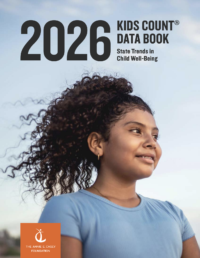 Washington ranks 17th in the nation for overall child well-being in the Annie E. Casey Foundation’s 2026 KIDS COUNT Data Book — better than average, but with a warning sign that shouldn’t be buried: more kids in our state are going without health insurance than at any point in more than a decade.
The share of uninsured children rose from 3% to 4% between 2023 and 2024, a first-in-ten-years reversal that experts tie to the end of pandemic-era coverage protections — and one that is likely to worsen as federal Medicaid cuts take hold. Research is clear that uninsured children are less likely to get the care they need, and more likely to end up in emergency rooms when conditions go untreated.
Washington scored 634th out of 1,000 on the Data Book’s new comprehensive scoring system, well above the national mark of 547. Bright spots include family and community (9th nationally) and health overall. But education is a drag — we ranked 31st, with 57% of 3- and 4-year-olds not enrolled in preschool and 17% of high schoolers not graduating on time. Economic well-being shows strain too: nearly a third of Washington kids live in households spending more than 30% of income on housing. Read the full story and get the report.

(Graphic courtesy Children’s Book Day Festival)
Acts On Stage Theater Announces Children’s Book Day Festival in Seattle
If you have readers or reader wannabes in your family, especially if yours is a BIPOC family, the Children’s Book Day Festival is calling to you — with books, of course, and all sorts of other literary inspiration.
The event, which organizers describe as a “joyful celebration of literacy and imagination,” is designed to encourage families to build reading habits at home and to spotlight BIPOC authors. It’s happening Saturday, June 27, noon – 4 p.m. at the Acts On Stage Theater, 10806 12th Ave. SW, in Seattle. All ages are welcome to the free event.
The festival is the official launch event for Acts On Stage’s new “Literally Ours” program, which aims to “bring the community together through the power of children’s books, storytelling, creativity, and culture.” The festival will feature children’s book authors, family-friendly activities, interactive reading experiences, live children’s book readings, meet-and-greets with local authors and creators, and networking opportunities for writers and educators. Learn more at actsonstage.com.
(Image: Therese Personne /CC BY-SA 4.0.)
New study by local researchers finds teens want better SM conversations, not fewer
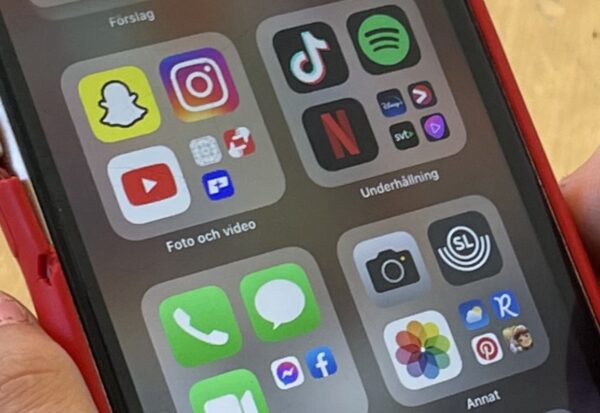
Ask most parents and educators what they’ve told their kids about social media, and it often comes down to three things: be careful with what you post, don’t message with strangers, and don’t give out any private information. That’s all good and important guidance kids need to hear in a world where social media has become a conduit for bullying, body shaming, and, at its worst, sexual abuse. Even so, a new national study released this month by the Seattle-based education research group foundry10 suggests that limiting the conversation to those three rules may fall short, and that teenagers want more.
Seattle-based education research nonprofit foundry10, working with NORC at the University of Chicago, surveyed 1,027 U.S. high schoolers ages 14–18 between June and August 2025 — the first nationally representative study of its kind. The bottom line: most teens aren’t getting meaningful social media education, and the instruction they do receive tends to focus on what can go wrong rather than how to actually navigate the challenges of social media spaces.
According to the study, parents are both the most common and most trusted source of guidance, with 76 percent of teens saying they learned about social media from a parent or caregiver and 69 percent naming parents as the most helpful source. Teachers were the second-most-likely source of education and guidance, at 57 percent. Twenty percent of teens reported learning about social media from their peers.
What any of these sources cover regarding social media education matters. Nearly three-quarters of teens surveyed said they had received instruction on risks — cyberbullying, misinformation, and privacy breaches. However, fewer than six in ten said anyone had talked to them about social media’s genuine uses or benefits.
“One of the most striking findings in this study was that balanced social media education mattered. Teens who learned about both the risks and benefits of social media felt more confident and empowered online than those exposed only to fear-based messaging,” said Jennifer Rubin, in a release. Rubin is the principal investigator of the foundry10 Digital Technologies and Education Lab. Read the full story and find the full foundry10 report.

(Image: C. Murfin)
Could smartphones be the reason behind declining birth rates in the U.S.?
An article this week in The New York Times points to one potential reason behind America’s falling birthrate: smartphones. Sabrina Tavernise’s report highlights two new academic papers — one published by economists at Middlebury College and the other by researchers at the University of Cincinnati — that connect the iPhone’s 2007 launch to the start of the birth rate decline. The article points out, however, that while outside researchers have found the studies interesting, many urged a measured read. There are likely many social influences contributing to the decline. Read the full story in The New York Times.

(Image: iStock)
Speaking of smartphones … will WA finally get a statewide student cellphone ban in 2027?
Washington’s governor and state schools superintendent say they will push for a statewide ban on cellphones during the school day, according to a report in The Seattle Times last week. The proposals are expected to ask state lawmakers to pass restrictions on cell phone use by students from the first bell to the last, including passing periods and lunch. Washington Gov. Bob Ferguson and Schools Superintendent Chris Reykdal told the Times they plan to make “away for the day” legislation a centerpiece of the 2027 session, aiming to have restrictions in classrooms by September 2027. Whether that happens or not is up to members of the state House and Senate. Read the full story in The Seattle Times.
TAKE ACTION: Should Washington have a statewide student cellphone ban policy? Make your voice heard by contacting your state representatives.
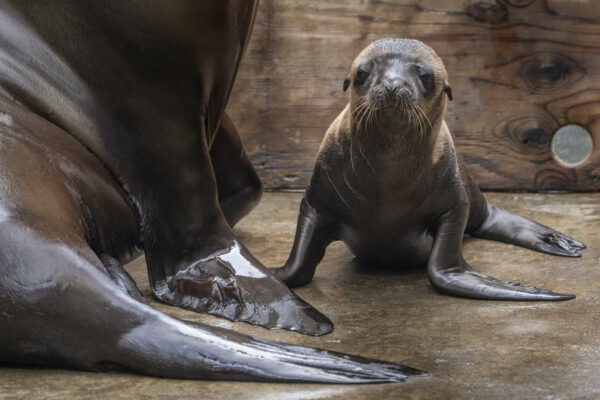
(Image: Katie G. Cotterill/Point Defiance Zoo & Aquarium )
Gorillas aren’t the only babies in local zoos. Check out PDZA’s new pup
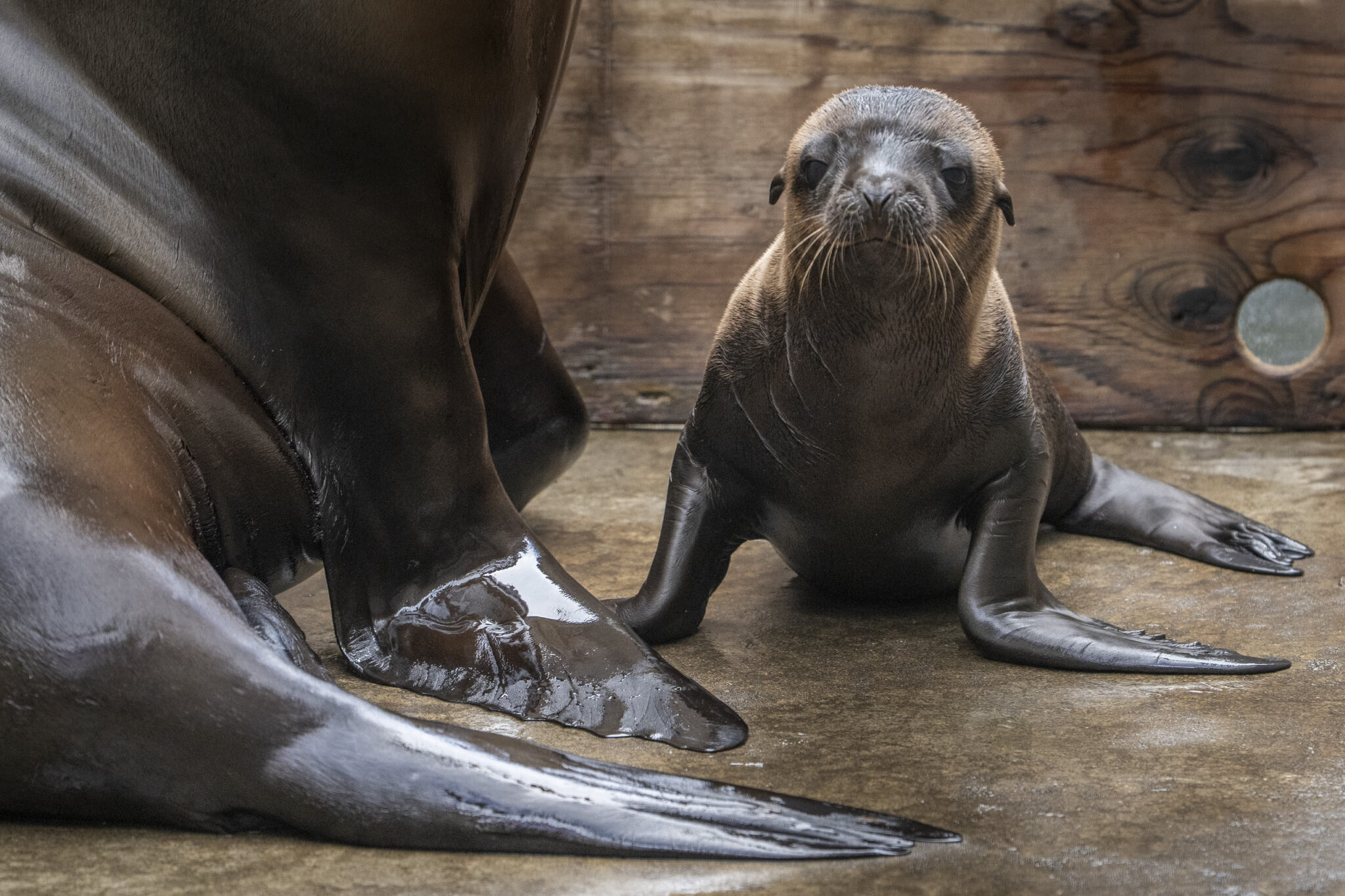
Here at Seattle’s Child, we try to be an equal opportunity cute supporter. Woodland Park Zoo’s sweet baby gorillas (and their mama swap!) isn’t the only zoo news in the region. Check out Point Defiance Zoo & Aquarium’s newest member — the sea lion pup born June 1 to mom Eloise. He’s the second California sea lion pup born in the zoo’s 121-year history.
The pup has spent his first days doing what newborns do: nursing, growing, vocalizing, and bonding with mom. Learn more about this baby, including his name, on the zoo’s website at pdza.org and social media channels.

“Hair Power: The Crown That Grows From Us” (Art by Kameirah Johnson )
UPDATE: Lakeside student wins Google’s 2026 ‘Doodle for Google’ competition
Seattle teen Kameirah Johnson just received major confirmation of her artistic talent: Johnson was named the winner of the 2025-26 “Doodle for Google” competition. Johnson’s artwork, entitled “Hair Power: The Crown That Grows From Us,” rose to the top of tens of thousands of entries with its colorful reframes of personal power through the lens of Black hair. As a finalist, Johnson had already won a $10,000 college scholarship, a Chromebook, and a party for her neighborhood. As the competition’s overall winner, she’s secured a $50,000 technology package for her school, Lakeside, as well as $55,000 in scholarship money.
(Image: iStock)
Washington is a good place for working dads
You’ve likely heard conversations about the lack of support for working moms. But how are dads feeling as they juggle kids and jobs? A new analysis and ranking by the personal finance company WalletHub examined 22 indicators to determine which states are doing best in meeting the needs of working dads. Washington made the top ten.
The analysis used existing data from government sources — including the U.S. Census Bureau, Bureau of Labor Statistics, Centers for Disease Control and Prevention, Child Care Aware of America, and others — to score and rank all 50 states and Washington D.C. Scores were collected for key health indicators, including expectancy, child care costs, unemployment rate for dads with kids under age 18, length of work day, fathers’ physical and financial health.
Washington ranked 10th in the nation overall. Its strongest showing was in employment: the state ranks first in the country for the lowest unemployment rate among fathers with children under 18. When it comes to physical health and the percentage of impoverished kids living in two-parent households, the state also ranked high.
Washington indicator rankings:
- 1st – Unemployment rate for dads with kids under age 18
- 5th – % of physically active men
- 10th — Overall ranking
- 13th – Male life expectancy
- 14th – % of children under age 18 living in poverty with dad present at home
- 16th – Male uninsured rate
- 15th – Average length of work day (in hours) for men
See the report and read the full story.

(Graphic: Ghostbikes.com)
UPDATE: Thurgood Marshall teacher memorialized with a ‘ghost bike’
More than 100 cyclists gathered at the corner of East Yesler Way and 12th Avenue South last weekend to hang flowers on a white “ghost bike” and say goodbye to Christian Salyer, a 30-year-old reading and math support teacher at Thurgood Marshall Elementary School. Salyer was killed June 1 after a Recology waste truck struck him as he rode near the intersection.
Ghost bikes are placed where cyclists have been killed or severely injured, usually by a motor vehicle, to memorialize the rider and raise awareness about traffic dangers. Those at the Salyer’s bike placement said the intersection has been flagged as dangerous for cyclists for years. A protected bike lane promised in Seattle’s 2017 Bicycle Master Plan was scrapped in 2019. Salyer’s death is the second cyclist fatality in Seattle in recent months. Construction on a 12th Avenue bikeway — approved by voters in 2024’s transportation levy — isn’t scheduled to begin until next year. Read the full story in The Seattle Times.
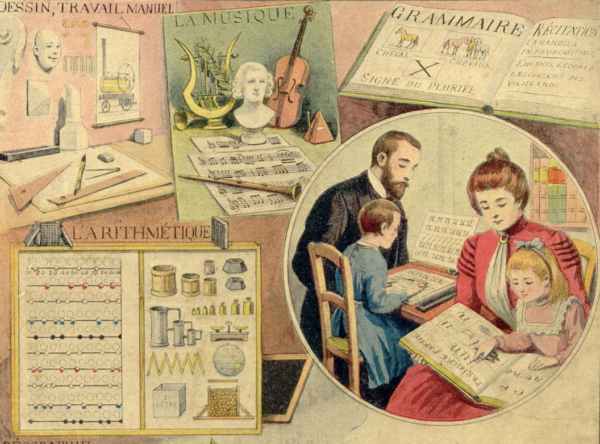
Old parenting primer. Raising kids in isolation isn’t working for today families (Image: Public domain)
GREAT READ: America has seen parenting as a private work. Is that idea finally shifting? | Essay
For decades, the chaos of raising children in America has been treated as a personal problem — your choice, your bill, your problem to solve. So I read with great interest Jia Lynn Yang’s recent New York Times Magazine article tracing how that thinking took root. Yang argues that a perfect storm of free-market ideology, feminist strategy, and corporate culture have worked together to turn parenthood into an endurance sport without support and away from a shared civic responsibility. As Yang points out: “The numbers tell an alarming story.” About 70% of Americans raising kids is implausible.
And, writes Yang, “In one survey, 48 percent of parents said that most days their stress is completely overwhelming, compared with 26 percent of other adults, a gap that has grown over the last decade.”
Something may be shifting, however. States and cities, including are passing universal child care. Yang suggests the shift may come from the social scaffolding that Covid stripped away — schools, day cares, grandparents — which made clear just how much unpaid labor had been quietly keeping everything running.
Yang clearly names the issue. It isn’t just a budget problem. It’s a values problem. The article points to the growing number of voices on both sides of the political aisle pushing the idea that caring for children is crucial to society — and that parents should not have to figure out and manage that work alone. Read the full article in New York Times Magazine.
LISTEN: Is Costco really helping your family food budget?
Food prices are way up since 2021. Pandemic, wars, politics. They’ve all contributed to the problem. But what if one company’s promise that it helps families sace money was true? KUOW ran the numbers on whether a Costco membership actually saves money.
Short answer: It does, at least on staples. The catch is quantity — Costco sells milk in two-gallon lots, so households that can’t keep up will lose those savings to the drain. This 30-minute listen provides hints that have helped at least one mom (of eight kids) get the most and save the most from her Costco runs. Listen to KUOW’s Control F podcast episode “Does Shopping at Costco Actually Save You Money?”

The author received treatment in 2016 (Image: Joe Shapiro)
Proposed OMB rule would stall scientific progress for years. Why parents should care | Op-Ed
Twenty years ago, our family lost an 8-month-old baby to liver disease. Just a month later, newly approved medications and techniques for infant liver transplant saved another infant in the same hospital. Even as we grieved our loss, we cried for joy for that child.
Ten years ago, as the parent of two teens, I was diagnosed with breast cancer. The cancer was removed, and I underwent targeted radiation and oral chemotherapy rather than go through a double mastectomy, which just a few years earlier would have been the treatment, along with a massive dose of chemo. I am cancer-free today.
Today, when moms and dads experience severe postpartum depression, FDA-approved medications can be the difference between thriving in parenthood and just surviving. Today, as more and more mothers are giving birth later in life and meet perimenopause and menopause with teenagers still in the house, there are treatments and medications to help them cope with the myriad symptoms.
These losses and gains were not just a matter of lucky or unlucky timing. All of them trace back to a single starting point: a scientist writing a grant proposal and submitting it to a panel of other scientists who read it, poked holes in it, and decided whether it was worth funding in a peer review system is what kept politics out of the lab.
Medications like tacrolimus used in infant liver transplant, sertraline for severe postpartum depression, and gabapentin for hot flashes were funded because scientists said so, not because a politician liked the sound of them. This system hasn’t been perfect — good research has gone unfunded simply because money was tight. But it has worked well enough to produce most of the medical advances we now take for granted.
A new rule proposed by the Trump administration’s Office of Management and Budget poses the most serious threat to scientific and medical progress we’ve seen in this country. The rule would gut the review and funding system across all federal grant programs — not just science, but housing, education, NASA, defense, all of it.
The public comment period on the proposed rule change is open until July 13. Your voice carries real weight, but only if you reach out to Congress. Why speak out? Because the rule would result in dangerous changes and losses, chief among them being the turn of funding decisions over to political appointees and the pushing of scientists aside.
That means a poorly designed study could get money because it fits the administration’s agenda, while solid, important evidence-based work gets passed over because it doesn’t.
Grants could be canceled mid-project, with no warning and no legal obligation to finish what was started. Picture a study of a new medication that could increase the number of pediatric liver transplant survivors from organ rejection. One that’s been running for three years on a five-year grant. Imagine researchers mid-experiment, graduate students mid-career, patients mid-trial. Under the proposed rule, the government could pull the plug without warning. If that had happened twenty years ago, the little boy who was saved a month after our family’s tragedy would not have celebrated his 24th birthday this year.
All the work already done, all the money already spent, would produce nothing. The team would scatter. The questions would go unanswered.
Under the rule, researchers would need government pre-approval to publish findings, attend conferences, or engage publicly on policy. You can’t put a tighter muzzle on the scientific community. The scientist’s job is to translate lab results into things that actually reach your family doctor, obstetrician, or pediatrician’s office. Science that can’t be shared is science that can’t help anyone.
The damage from this kind of disruption doesn’t just undo itself when the next administration comes in. This decision will have ramifications for years as researchers leave their careers or leave the country. The scientists who would have spent the next decade answering hard questions about Alzheimer’s or childhood cancer, or rare diseases, will make a perfectly rational decision: don’t start anything that depends on stable funding.
The most important science — the kind that takes twenty years to reach a patient — is exactly the science that dies first.
We have until July 13 to tell the government to keep politicians out of research funding decisions.
TAKE ACTION: Go to the official docket for this proposed rule and click on the blue “comment“ at the top left of your screen that says. Click here for suggestions on what to write if you are against this rule. Next, contact your elected members of Congress.