Being a parent is nonstop hard work, which makes following all the news happening in the city, state, and U.S. decision-making circles challenging. Here are highlights of Washington state political news for families from last week (Aug.18-24) and a hint at what’s up this week. I hope you will consider taking action – reaching out to those who represent you and your family in Congress and state offices — on the issues that impact families in our state.
Yes, COVID-19 rates in King County are surging
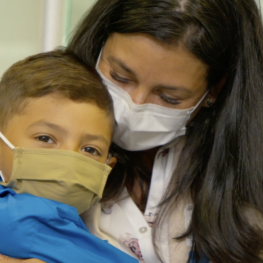
Your neighbor has it. Your child’s best friend is stuck in bed with it. Your coworkers are calling in sick. No, you are not imagining a COVID-19 spike in King County. It’s a fact. This summer the county’s Covid rates have reached the highest point in a year. According to a report by KUOW, the number of local ER visits for complications from COVID and COVID-related symptoms has been doubling weekly.
County health officials say there are two key ways to prevent infection: Wear a mask and get a vaccine or booster if you have not in the last year. New boosters should be available in September or October. Read more at KUOW.
Youth Mental Health Program
The City of Seattle’s mental health program, designed to break down barriers to youth mental health support and help students cope with anxiety and depression—both of which have increased among teens—is gaining popularity.
The teletherapy program, in partnership with the national nonprofit Talkspace, has been running for a mere six months, but already, participation by youth ages 13-24 has dramatically climbed, according to a report in The Seattle Times. Between March and June, the number of kids using the app-based program doubled, reaching 566. The program has increased access to mental health services for students of color.
Students send messages through the Talkspace app anytime, day or night. The goal is to have a therapist make contact within 24 hours. Each user receives one free video therapy session each month.
Data collected by the City through June shows:
- One-third of participants are between the ages of 15 and 17
- 60% of users identify as BIPOC
- White youth are the largest individual group using the program
- 31% of youth users say their main mental health issue is anxiety
- Stress or trauma-related disorders are at issue in 44% of program participants
- 43% of participants were found to have anxiety disorders
- 14% of youth who use the program have depressive disorders, according to the Times report.
Take action: Funding for the Talkspace youth mental health support program is up for renewal as part of a levy measure on the November general election ballot. Make your vote count.
Have a teen in need of support? They can access Talkspace video sessions and text therapy sessions at talkspace.com/seattle, or via the Talkspace app, downloadable from app stores.
New Seattle teachers’ contract includes important safety updates
It definitely still feels like summer, but students will head back to school in less than two weeks. Thankfully, Seattle Public Schools (SPS) teachers, paraprofessionals, and office staff will be headed back with them, following an unusually early conclusion to contract negotiations.
The district and the Seattle Education Association (SEA), representing nearly 6,000 workers, reached a tentative one-year contract agreement in June. The Seattle School Board approved it in late July. The workers’ current contract ends Aug. 31.
According to a report in the Seattle Times last week, safety was a big topic during contract discussions.
New rules were written into the approved 2025-26 contract regarding building safety, classroom disruptions, and student discipline to reflect state law and to align current practices with district policies. For example, since students return to school Sept. 3, SPS principals are now required to provide building handbooks and review their school’s discipline standards, protocols, and policies with building staff in August. They must also ensure that any updates to the handbook, including rapid-response plans, are available by Dec. 15.
The new contract includes a 2.5% pay raise over the next year for staff teachers, paraeducators, and office paraprofessionals. The latter and members of the National Association of Educational Office Professionals unit will get an additional paid day for professional development.
Finally, according to a Seattle Times report, under the new contract, the union is now allowed to file complaints on behalf of teachers and other union member workers.
A letter so worth reading
Last week, Washington Gov. Bob Ferguson went head-to-head with U.S. Attorney General Pam Bondi after Bondi sent him a letter threatening state officials with criminal charges for disallowing Washington law enforcement to aid federal agents in immigration raids. Ferguson’s letter is so strong, so important, so clear that I share it here in full.
Dear Attorney General Bondi:
I am in receipt of your letter dated August 13, 2025, which purports to notify me that Washington State “has been identified” as a “so-called sanctuary jurisdiction”-on grounds that your letter makes no effort whatsoever to explain.
You refer to unidentified “policies and practices” within Washington State that violate federal law—again, without any explanation. You baselessly invoke federal obstruction, conspiracy, and harboring statutes that carry criminal penalties with prison time.
You even threaten that state officials “operating under the color of law, using their official position to obstruct federal immigration enforcement efforts and facilitating or inducing illegal immigration may be subject to criminal charges.”
You are hereby notified that Washington State will not be bullied or intimidated by threats and legally baseless accusations.
In the America that I love and have taught my children to revere, we resolve our differences peacefully through public discourse and, if necessary, through the courts—not by threatening political opponents with imprisonment.
You take a different approach. You threaten me, police officers, state troopers, sheriffs, judges, and other officials with prison time. Why? Because our state legislature passed a bipartisan law that appropriately and lawfully limits the diversion of our state and local resources to federal immigration enforcement.
Your threat to criminally prosecute state officials embarrasses and disgraces the office of the United States Attorney General.
Washington State is proud to be a welcoming community that values immigrants’ and refugees’ contributions to our economy and our cultural fabric. We do so while accounting for and complying with applicable federal law. If you really believe Washington State is in conflict with controlling federal law, you would make some effort to explain that. You did not, because you cannot.
In 2017, I was the first state attorney general to challenge President Trump’s efforts to trample our Constitution in court, and I was the first attorney general to defeat him. I, along with my team at the Washington Attorney General’s Office, went on to defeat the first Trump Administration 55 times. We were unsuccessful in just three cases.
Given that history, I am prepared to defend Washington from any litigation you wish to pursue. If you choose to challenge me and my state, be advised that we will defeat you and seek all appropriate costs and fees.
You seem to believe that cavalierly threatening criminal prosecution will result in me compromising the values of my state.
Never.
You seek to have Washington State bend the knee to a Trump Administration that, day by day, drags us closer to authoritarianism.
Never.
I am not intimidated by you or the President. I will defend our democracy, the rule of law, and the people of my state.
—Gov. Bob Ferguson
Federal judge rules DOE can’t defund schools to stop DEI practices
Maryland U.S. District Judge Stephanie A. Gallagher sent a clear message to President Donald Trump’s administration and the U.S. Department of Education (DOE) last week:
You can’t stop diversity, equity and inclusion practices in schools by yanking federal education funds from states or districts.
The judge ruled that withholding federal money for K-12 public schools, colleges, and universities unless they certify they will comply with the administration’s crackdown on race-conscious (DEI) practices is “unlawful.”
Gallagher called the DOE letter sent to school districts on Aug. 14, threatening to rescind federal funds for schools that use race-conscious practices in programming, admissions, and scholarships, as well as the requirement that schools certify they don’t engage in DEI practices, “unconstitutionally vague.” Read the whole story from the States Newsroom.
We can do better, and so can teens
A short item on the Cascade PBS website caught my eye this week. It caused me great consternation.
Of the nearly $4.4 million registered voters in Washington State, less than 30% sent in their ballots for the Aug. 4 primary election, according to the Washington Secretary of State’s Office. The election was certified last week, on Aug. 20.
You’ll notice that I push hard for voting in every election in this column. That’s because exercising your right to vote is every citizen’s responsibility. And yes, even while I say that, I understand that as a right, we each get to choose whether we exercise it. Still, the fact that so many don’t is disturbing to me and a shame in a democracy. With so much at stake, particularly this year in the face of federal funding threats and a presidency pushing the limits of the Constitution to suppress the rights of kids and families, every vote is crucial.
In the August primary, for the first time, the state tracked statistics for eligible 17-year-old voters separately. According to state law, 17-year-olds who will turn 18 by General Election Day can vote in the primary that comes before it. Only about 17% of those teens cast a ballot. On the positive side, those 17-year-olds did better than voters ages 18 to 34. Only 13.2% of registered voters ages 18-24 and 15.5% of 25- to 34-year-olds submitted their ballots
Take action: Demonstrate democracy to your kids by voting. Talk to teens about voting in every election. Go with them to the mailbox or dropbox. Make it a family value. Ballots for the Nov. 4 General Election should start arriving in mailboxes the week of Oct. 17.
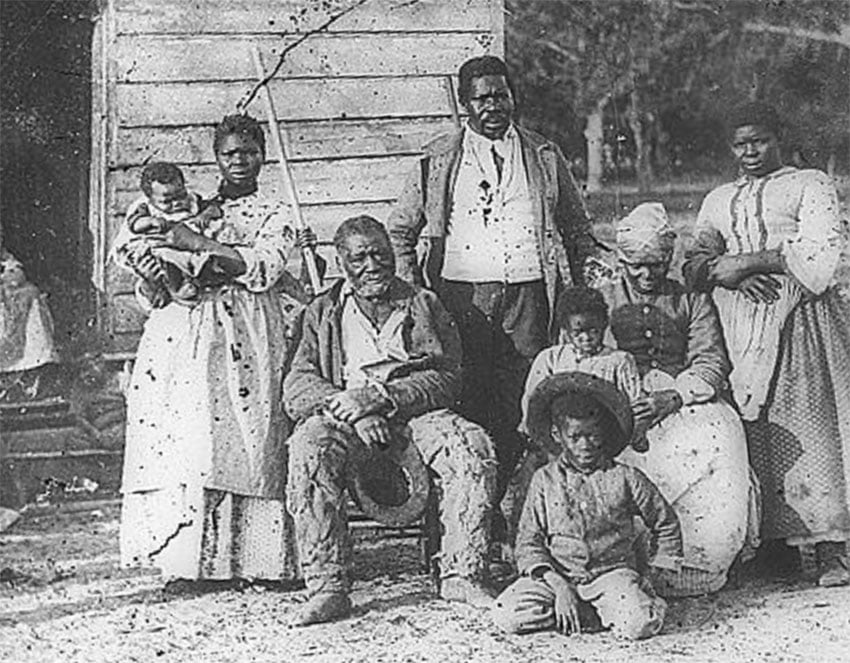
Mr. President, we DO need to show “how bad slavery was”
By now, I am never surprised by the venom, hatred, and idiocy that fly from the mouth of President Donald Trump on an almost daily basis. That doesn’t quell my rage. Which is why I am fuming over Trump’s statement last week that the Smithsonian Institution focuses too much attention on “how bad slavery was.”
What Americans need, he says, is historical niceties. Trump posted this on social media:
“The Smithsonian is OUT OF CONTROL, where everything discussed is how horrible our Country is, how bad Slavery was, and how unaccomplished the downtrodden have been — Nothing about Success, nothing about Brightness, nothing about the Future. This Country cannot be WOKE, because WOKE IS BROKE. We have the ‘HOTTEST’ Country in the World, and we want people to talk about it, including in our Museums.”
First, the grammar and punctuation in this post are egregious; not to mention his juvenile priorities. The ‘hottest country’ sounds like a pitch on an XXX website.
Take action: Send a post directed at Mr. Trump. Here’s the gist: The enslavement of humans in the U.S. was BAD, Mr. Trump. It included hard labor for no pay, torture, rape, killing, and the selling away of children. Your post is an offense to African Americans and U.S. history. It’s an offense to children who need to know that history in order not to repeat it. You, Mr. Trump, cannot hide or rewrite that history.
Listen to the full report on National Public Radio.
The Good Read: Local Programs Help South Seattle Families Breathe Easier
Kids in families who live in Seattle’s South End experience higher rates of asthma than those in other areas of the city. The Duwamish Valley Community Coalition’s clean air program aims to change that. At the same time, the King County Community Health Worker Asthma Program provides asthma kits to kids—rescue inhalers, information, and directions that a kid and those who may be helping him during an asthma attack can easily understand. Families also receive other things to help reduce asthma attacks— for example, hypoallergenic pillows and sheets, vacuums and other cleaning supplies, and air purifiers and filters.
Writer Jadenne Radoc Cabahug’s article “As Air Pollution Rises, Local Programs Help South Seattle Families Breathe Easier,” published in the South Seattle Emerald, examines asthma rates in Beacon Hill and Duwamish Valley and the work being done to address them. It’s a colorful and detailed report, told through the experience of one local child and his family.
Don’t miss this terrific read.