Editor’s Note: Amber Wallin is the executive director of the State Revenue Alliance and former executive director of New Mexico Voices for Children where she was one of the architects of the state’s Universal Child Care system, which launched statewide in November 2025. Wallin was one of the first in New Mexico to propose using state revenue (including oil and gas-derived funds) to build a stable financing stream for universal early childhood care and education. She played a visible role in educating the public, working with policymakers and forming and sustaining a coalition of nonprofits and grassroots groups that helped pass a New Mexico constitutional amendment guaranteeing funding for early childhood services. We asked Wallin what it will take to build and sustain a universally affordable child care system in Seattle.
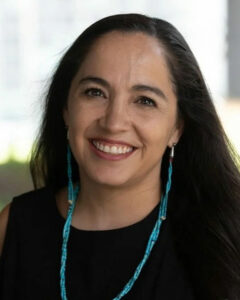
The auhtor, Amber Wallin. (Image: State Revenue Alliance)
Child care has become a defining financial stress for families across Washington and the country. According to recent reporting, the annual cost of child care is more than the student tuition at the University of Washington.
That reality puts many middle-income and working families in a painful bind: choose between paying sky-high daycare rates or giving up work hours (or even careers) to provide care for their children.
But there is hope on the horizon for Seattle’s parents and caregivers. My home state — New Mexico — recently made history by committing to universal, no-cost child care for all families, regardless of income. But New Mexico’s breakthrough isn’t just about child care. It’s about political courage, long-term coalition organizing, comprehensive approaches to improve child well-being, revenue, and the decision to tax the wealthy so every child gets a fair start.
I am proud to be part of a group of parents, policymakers, activists, and other leaders in New Mexico who helped win universal child care for all. And here’s what I would say to families, lawmakers and advocates in Seattle — and to readers of Seattle’s Child — who dream of a day when child care is not a financial burden, but a universal support:
Think long-term

CLICK THE IMAGE To READ OUR FULL COVERAGE of child care access efforts in Seattle in Seattle’s Child Magazine (Image: Joshua Huston
Universal child care didn’t spring up overnight in New Mexico. It was the product of many years of persistent advocacy, thoughtful policymaking, and a willingness to rebuild public finance priorities. Child care advocates must think long-term, statewide, and collaboratively.
Our victory was possible because grassroots advocates, parents, and tribal leaders — people too often ignored in politics — refused to give up. For more than a decade, they knocked on doors, testified in hearings, and fought for a share of the state’s wealth to be used for its youngest citizens. They found a set of new lawmakers who listened and put our communities first.
That kind of buy-in is critical. A universal system will only succeed if it includes the voices not just of parents, but also of child care workers, educators, community organizations, employers who rely on workers with children, and local elected officials.
Without a broad base of support, reforms risk being watered down, ignored, or so underfunded that quality suffers. While big cities like Seattle may be able to enact a program that meets immediate needs, only a well-funded statewide initiative will create lasting change.
The good news is that there are existing coalitions and campaigns focused on delivering on a broad agenda for families, workers, and communities. Join advocacy groups like Child Care Aware of Washington, Child Care for Washington, Children’s Alliance and Child Care Action Council.
Elect leaders who view child care as an economic investment
In 2018, New Mexico voters replaced long-time state legislators with a new set of lawmakers who saw the need to connect affordability issues, including child care, with our state’s economic and fiscal future. The new class of leaders included women of color like Governor Michelle Lujan Grisham and then Congresswoman (and later U.S. Interior Secretary) Deb Haaland, as well as multiple state representatives with deep ties to their communities — immigrants, teachers, and tribal members who understand the struggles families face.
Almost immediately, New Mexico raised revenue by asking the wealthiest people and corporations to pay a bit more. When child care is reliably available and affordable, families can make choices without being constantly squeezed. Parents (often mothers) can stay employed and build careers rather than being forced to scale back or leave the workforce because daycare costs consume their paychecks. Robust, accessible, affordable child care isn’t just good for families; it’s good for the broader economy.
Address workforce challenges
One recurring concern with universal care is staffing: having enough qualified, fairly compensated caregivers and retaining them over time.
Suppose Seattle were to try something akin to New Mexico’s model. In that case, decision makers need to ensure caregivers are paid competitive, living wages — not kept at poverty wages under the guise of “affordable care.” As early-care workers are often women of color, and parents themselves, this also becomes an issue of racial and gender equity and family well-being.
Investing in workforce compensation, training, and respect will not only attract more providers — it will improve care quality and stability, which benefits children and families. (Read about Seattle’s investments in these areas on pg. 24)
Make child care part of a child-first agenda
This child care expansion — and the revenue to support it — went hand-in-hand with a full suite of policies that prioritize children in public policies in a way that has rarely been seen.
Families and communities need more than child care. In New Mexico and Minnesota, advocates included other tax justice policies such as more than doubling the state’s Earned Income Tax Credit and expanding it to immigrant families, and creating and then increasing one of the country’s first state Child Tax Credits (also immigrant inclusive) — all funded by revenue from corporate profits or paid by higher-income households.
This combination of tax changes has led to a fundamental improvement in New Mexico’s tax equity, more than any other state over the last few years.
New Mexico also included other family-support measures to improve economic security for families with kids: minimum wage increase, passage of paid sick leave, major increases in K-12 education funding with a specific focus on Native American children, low-income kids, and immigrant children. And major initiatives to increase funding for college affordability (and expand eligibility for immigrant students).
Start with what already exists
Seattle already has a program aimed at helping many families: Child Care Assistance Program (CCAP), which helps income-eligible families pay for child care, saving many families thousands of dollars per year.
The biggest problem with needs-based programs is that they leave out middle-income families who also need support. Toward that end, when it comes to child care, guaranteeing universal access will reap universal results.
Seattle can build on what it’s started — expanding eligibility, increasing funding, and gradually working toward a truly universal system.
Use your voice
If you are reading this — and know firsthand how expensive and precarious child care can be — I encourage you to take action. Talk to your neighbors. Bring the topic up with your kids’ providers. Engage with local advocacy groups. Share your story. As more voices speak up, pressure will build for systemic change.
Parents and policymakers across the country are starting to imagine living where every child has access to high-quality early care, and no family has to pick between a paycheck and their child’s future.
Universal child care isn’t easy. New Mexico’s story can serve as a guide as Seattle blazes its own path, because if we’re honest with ourselves — as parents, as voters, as communities — it can be the kind of bold investment that defines our future.
Read more from our coverage of what it will take to advance universal child care in Seattle:
Universal Child Care: What can Seattle learn from New Mexico? New Mexico’s new universal, no-fee child care system has insights
The cost of child care: One block, five families, $200,000+ a year Child care for two kids can cost as much as four years of college tuition
Immigrant providers are critical to achieving universal child care Equity in child care access depends on it
What’s the DEEL? Seattle’s work toward universal child care: DEEL Director Dwane Chappelle discusses where we are and what it will take
Child care by the numbers—and where to turn for help: Seattle is a ways away from universal child care, but assistss thousands with care
In Seattle, few employers significantly subsidize child care: Outlier YMCA considers child care ‘not a perk, but a foundation for equity and opportunity
‘We need long-term funding not short-term fixes’: City and state leaders say they’ll keep working to address the state’s child care crisis