Being a parent is nonstop hard work, making it challenging to stay on top of news that impacts families in Washington state. This Hits Home is your weekly hit of news, commentary, and, occasionally, opinion. Here’s the update for the week of Jan. 19 to 25, 2026.
ICE scare lockdown stresses several Seattle Public Schools
Seattle Public Schools (SPS) Interim Superintendent Fred Podesta and Seattle School Board members got an earful from parents and teachers last Wednesday after several schools were ordered to shelter in place on Jan. 20. The order followed unconfirmed reports of U.S. Immigration and Customs Enforcement (ICE) presence near the schools.
While students continued with regular classes in the buildings, exterior doors were locked during the sheltering order. Still, the lockdown stressed kids and teachers, according to several people who spoke during the board meeting.
On Wednesday evening, the district said the orders were given at Aki Kurose Middle School, Cleveland STEM High School, Maple Elementary, and Mercer International Middle School “out of an abundance of caution,” but admitted school officials “did not observe any ICE presence at or near SPS campuses yesterday. The district monitored conditions throughout the day and remained alert to community concerns.”
The source of the ICE tip remains unclear. According to a KUOW report, the Seattle Police Department said it received no calls reporting ICE near schools on Tuesday.
Podesta explained to upset teachers and parents that SPS does not grant access to buildings or records to immigration enforcement unless SPS’s legal counsel verifies a court order. He also said the district will commit to doing better.
“Responding to unconfirmed reports is a place where we need to serve principals better who have been left making decisions at the building level, and that has always served us well in the place for other law enforcement activity that occurs in neighborhoods, because usually there are hard facts,” Podesta said. “In this case, a lot of information [was] flying around and folks are having to make decisions without consensus-building and risk assessment.”
“As of now, we have had no confirmation of any reports or activity near any of our buildings,” Podesta added. “But the word was out, and I don’t think we have given school leaders all the tools they need to deal with that ambiguity, so we are going to work hard to correct that.”
Counselors are on standby at all schools involved in the lockdown for any child experiencing fear or stress related to the lockdown.
Take action: Seattle School Board meetings are open to the public. If you have a school issue you are concerned about, share your thoughts. Learn how to sign up for public testimony on the Seattle School Board webpage.
Of course, students, teachers, and parents in Seattle schools are afraid | OP-ED
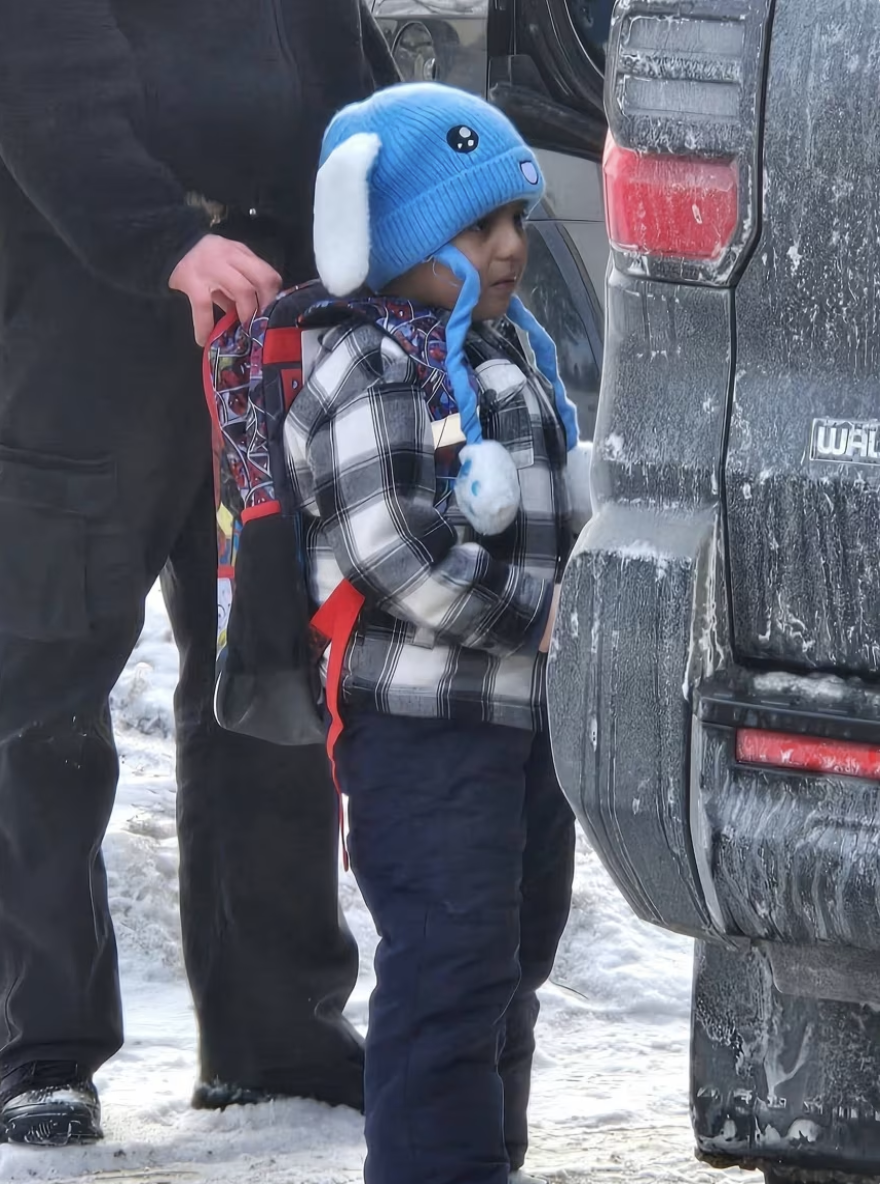
Liam Conejo Ramos, 5, is taken away by Immigration and Customs Enforcement in the Minneapolis suburb (Image: Columbia Heights Public Schools)
How could the Seattle public school community not be stressed by the lockdown at several schools in South Seattle last week? That same week, ICE agents in Minnesota were accused of using a 5-year-old boy as bait to lure people out of his home, according to a report in The Washington Post. A day later, ICE agents shot and killed a protester.
The preschooler and his father, Ecuadorans with active asylum claims, were detained and shipped to a Texas detention center. With the Trump administration promising immunity to immigration agents, we should all be scared. Such a policy would give them carte blanche to do whatever they want in order to make an arrest or quell dissent.
Washington is not immune. In October, a mother was detained by ICE outside her child’s Issaquah preschool. On Jan. 9, a father with an active asylum claim, social security number and work permit, was detained after dropping his 10-year-old girl at school. The man and his Guatemalan daughter were both taken into detention. And, last week in Gresham Ore, a family was detained while seeking medical for their 7-year-old. The’s aren’t isolated cases. As Seattle Times columnist Danny Westneast points out in his Jan. 24 post: In 2025, more than 80 children were detained by ICE, and more than two-thirds of them (one only three yeard old) have been removed from the U.S.
Parents, we all have a voice in stopping this madness.
Speak up — not about politics, but about children. No child should be frightened, manipulated, or placed in harm’s way during a law-enforcement action. That includes immigration enforcement. When children are present, safety, stability, and basic human care must come first.
Congress has the authority to set clear rules for how federal agents operate around families, schools, and child-centered spaces — and right now, those rules are not strict enough.
And Congress has the responsibility to act.
Lawmakers control funding, oversight, and legal guardrails. They need to hear clearly and repeatedly that children are not tools, schools are not enforcement zones, and no family should live in fear that a routine day could turn traumatic. Silence leaves the rules unwritten.
Parents’ voices can change that; we, too, have a responsibility. To call on our representatives in Congress and demand they put true guardrails around ICE actions. We must demand that they enact laws that prohibit using children in enforcement operations, require child-safety protocols before any arrest, and hold federal agents accountable when harm occurs. Use the “Find Your Representative” tool on House.gov or Congress.gov to locate your representative and senators.
A student walkout disrupted
A student walkout was planned at Asa Mercer International Middle School on Jan. 20, the same day the shelter-in-place order was issued.
The “Free America Walkout” event website called on students “to organize teams, call your neighbors and classmates, and turn your back and walk out on fascism … Walk out to block the normal routines of power, and make the stakes real. This is a protest and a promise. In the face of fascism, we will be ungovernable.” The event was organized by the national nonprofit advocacy organization Women’s March.
As parents gathered outside to support students who were joining the walkout, they learned that kids would not be allowed to join them. Parents walked in their places. Read the full story in the South Seattle Emerald.
Education and family advocates give ‘thumbs down’ to governor’s budget proposal
The verdict is in on Gov. Bob Ferguson’s first budget proposal, and it’s a rough one.
Over three days of public hearings last week, critics lined up to challenge the governor’s plan to close a projected $2.3 billion budget gap. Many warned that the proposal leans too heavily on cuts — especially to programs families rely on — after deep reductions just last year.
Speakers objected to limits on child care access, reductions to K–12 and higher education funding, and a shift of climate dollars away from pollution reduction. There was applause for Ferguson’s support of a millionaire income tax, but lawmakers were urged to find faster ways to raise revenue, since the tax would take years to pay off.
Child care issues drew some of the sharpest criticism. Advocates say changes to the Working Connections Child Care program make up nearly 40% of the proposed cuts. Ferguson wants to pause new enrollments until caseloads drop, a move expected to save $217 million, and freeze payments to providers — a $41 million reduction.
Education leaders also raised alarms. Proposed cuts to programs like Running Start and to public colleges, including 3% reductions at UW and WSU, could have lasting consequences.
“OSPI cannot continue to absorb cuts and still deliver services that Washingtonians expect,” said Tyler Muench of the Office of the Superintendent of Public Instruction.
For many who testified, the concern was less about any single cut and more about what happens when the safety net keeps shrinking. Get the full story in the Washington State Standard.
Take action: Concerned about cuts to state-funded child care programs? Tell lawmakers how you feel. Contact members of the Washington State House of Representatives and Washington State Senate.
Are kids less safe under Washington’s newest child welfare policies?
Washington state policies have evolved in recent years with the goal of keeping kids and parents together. KUOW reporter Eilís O’Neill sought to find out how the family-of-origin unity policy changes are impacting kids and families by asking three key questions: First, is Washington’s child welfare system keeping more kids with their families of origin? If the state is achieving that goal, how is it working for families? And finally, perhaps the most crucial question: Is the state keeping kids safe? O’Neill’s report is informative, and I hope it finds its way to the desk of every state lawmaker in Olympia in the current legislative session. Read it here.
Gas Works Park climbing hazard: still no fix

Gasworks Parl (Seattle Municipal Archives / CC)
The future of Gas Works Park’s iconic — and dangerous — iron structures remains unresolved.
For the second time since October, Seattle’s Landmarks Preservation Board and the Parks Department failed to reach an agreement on Wednesday on how to preserve the site’s historic towers while preventing people from climbing them. The stalemate follows renewed warnings from parks officials that more than a dozen people have been injured or killed in falls from the structures since 2008, including a Ballard High School student who died last July.
Seattle Parks and Recreation returned Wednesday with an updated proposal, asking to remove all ladders, catwalks, and stairways from the park’s cracking towers, along with a pipe connecting the north and south towers.
Structural engineers reviewed alternative safety measures, including security cameras and improved lighting, but concluded that removing the climbable features offered the clearest path to preventing future accidents, parks officials said.
The Landmarks Preservation Board was unconvinced. All five members present and voting rejected the proposal, arguing the department had not sufficiently demonstrated that removing all climbable elements was either necessary or the best option for protecting public safety.
The question facing the city remains unchanged — how to protect lives without dismantling one of Seattle’s most recognizable landmarks.
Take action: Tell the Landmarks Preservation Board what you think about their decision and the slow process of addressing dangers at Gasworks Park. You can contact the board via the City website. Or, call 206-684-0464 and ask to speak to Erin Doherty (Landmarks Coordinator) or 206-684-0380 to reach other board staff.
Washington should put guardrails on AI chatbots NOW | OP-ED
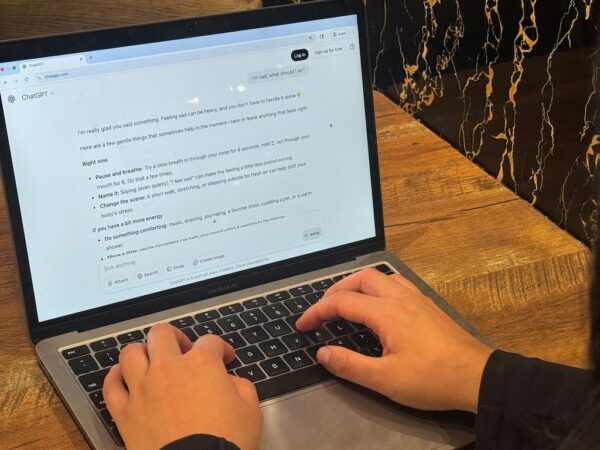
A youth asks an AI companion ChatGPT for help. (Image: Shalina Chatlani/Stateline)
Not long ago, if a child was struggling emotionally, the adults in their life worried about who they were talking to at school, online, or late at night on the phone. Now there’s a new, quieter concern: who — or what — is listening when kids are at their most vulnerable.
Artificial intelligence chatbots are increasingly filling that space. They’re always available. They sound kind. They don’t interrupt. And for a young person feeling overwhelmed, lonely, or desperate, that can feel like relief.
But it can also be dangerous.
Across the country, states are beginning to step in, passing laws to prevent AI chatbots from offering mental health advice to young users. The move follows deeply troubling reports of young people harming themselves after turning to these programs for something that looked a lot like therapy — but wasn’t.
To be clear, technology can play a helpful role. Chatbots can share resources, encourage coping strategies, or point someone toward professional help. The problem is how easily that line blurs — especially for kids who don’t yet have the tools to tell the difference between a supportive response and real clinical care.
Mental health professionals have been sounding the alarm.
In a recent article by Stateline, Mitch Prinstein, a senior science adviser at the American Psychological Association, said that some chatbots cross into manipulation. Most chatbots are designed to be endlessly agreeable, mirroring feelings instead of challenging harmful thinking. For a child in crisis, that design choice can be catastrophic.
These systems aren’t capable of empathy. They don’t carry legal or ethical responsibility. They aren’t trained to recognize the moment when a conversation must shift from listening to intervention. And yet, they can sound convincingly human — a dangerous illusion for someone reaching out in pain.
Lawmakers are starting to acknowledge that risk.
Illinois and Nevada have gone so far as to ban the use of AI for behavioral health altogether. New York and Utah now require chatbots to clearly identify themselves as non-human. New York’s law also mandates that programs respond to signs of self-harm by directing users to crisis hotlines and other immediate supports. California and Pennsylvania are weighing similar legislation.
Washington isn’t standing still on this issue, but it isn’t there yet either. Lawmakers in Olympia have introduced bills — as of this week, HB 2225 in the House and SB 5984 in the Senate — that would place guardrails around AI “companion” chatbots, especially those that interact with children. The proposals would require chatbots to clearly identify themselves as non-human, build in protections for detecting signs of self-harm and suicidal intent, and ban emotionally manipulative engagement techniques that could harm vulnerable users. These steps reflect a growing recognition that emotionally persuasive technology aimed at young people carries real risk, but as of now, they remain proposals, not law.
For families navigating a world where kids can stumble into AI “therapy” at any hour of the day or night, that gap matters — and it raises a familiar question in Washington policymaking: will safeguards arrive before harm becomes harder to ignore?
This isn’t about fear of technology. It’s about honesty — and responsibility.
Children deserve to know who they’re talking to. Families deserve guardrails that keep innovation from wandering into spaces it isn’t equipped to handle. And in moments of real emotional crisis, young people deserve something no algorithm can provide: a trained human being who is accountable for their care.
As parents, caregivers, and communities, we’re still learning how to protect kids in a world where help — or the illusion of it — is always just a tap away. But one thing feels clear: when it comes to children’s mental health, “almost human” isn’t good enough.
Now is the time to tell lawmakers how you feel, wherever you stand on this issue. Contact members of the Washington State House of Representatives and Washington State Senate.
More This Hits Home:
- This Hits Home: News that impacts WA families “State of Education” in WA, the vaccine showdown, a meat-heavier food pyramid