Being a parent is nonstop hard work, making it challenging to stay on top of news that impacts families in Washington. Below are highlights and commentary on key policy updates and headlines from the week of Nov. 9-16. The opinions shared here are those of the author and do not represent Seattle’s Child.
Now THAT is a gift
Last week, former Microsoft leader Steve Ballmer’s philanthropic arm, The Ballmer Group, made a surprising investment in Washington Kids. The group committed $170 million per year for the next decade to fund 10,000 additional slots in the state’s Early Childhood Education and Assistance Program, or ECEAP, for low-income families. The program has faced significant challenges due to state budget cuts and federal rollbacks.
During a press conference announcing the gift, Washington Gov. Bob Ferguson called the pledge “truly transformative,” adding: “It’d be hard to quantify how significant that investment will be for our state.”
The money, however, comes with a string: the program only receives funding if there are no further budget cuts to the ECEAP program over the next 10 years. Let’s hope state lawmakers, who head back to Olympia on Jan. 12 for the start of the 2026 legislative session and biannual budget wrangling, keep that condition in mind. Read the full story from our colleague at Washington State Standard.
Seattle will have a new mayor, but let’s thank the one leaving
In part, Mayor-elect Katie Wilson won her seat on a platform that included making Seattle a “city for working families.” Toward that end, Wilson says she’ll focus on making housing more affordable so high rents and mortgages no longer push families out of the city. She also promises to work with the labor movement at the state level to achieve universally affordable childcare while ensuring that childcare workers receive a living wage. Both, if achieved, would be great for families.
In the meantime, as Mayor Bruce Harrell prepares to leave office, I’d like to offer him my gratitude for his efforts to improve the lives of Seattle kids, teens, and families. In his four-year term, Harrell racked up a list of achievements:
- This year, with the voters’ passage of the Families, Education, Preschool, and Promise (FEPP) levy renewal on Nov. 4, Every Child Ready stands ready to meet its goals.
- Mental health and youth safety: Harrell has made a sizable investment in youth mental health services in Seattle. In 2024, he announced a $14.55 million package, in collaboration with Seattle Public Schools, to expand mental health support, strengthen school security, and boost violence prevention. He also issued an executive order that year, dedicating $2 million to youth violence prevention and telehealth mental health access, and has pushed public awareness of youth mental health needs.
- Preschool Expansion: Beyond expanding access to the Seattle Preschool Program by making it free to most families, Harrell sought to make the program more inclusive by adding dual-language classrooms and “SPP Plus” classrooms for kids with special education plans and those without.
- Affordable benefits for families: Harrell upgraded CiviForm, a one-stop online portal that simplifies access to city benefit programs. Through CiviForm, families can apply for discounts and support, including reduced-cost child care and preschool, recreation program scholarship, and more.
- Community investments: Harrell directed $13.5 million (via the Equitable Development Initiative) to community organizations, many of which run youth-oriented programming, cultural organizations, and affordable child care and early learning services.
I do not doubt that Mayor-elect Wilson, the parent of a young child, will work hard to make campaign platform hopes a reality, and I look forward to writing about any gains for kids and families. Still, let’s pause to recognize the gains made under Mayor Harrell.
I hope he will look back with pride when it comes to kids and families and say to himself, “It was a job well done.”
MyHeart infant formula recalled
The New York-based infant formula manufacturer ByHeart has recalled all its formula products following an outbreak of infant botulism, with one case in Washington possibly linked. Parents and caregivers should immediately refrain from feeding any ByHeart products to infants or children.
As of today, health investigators from the U.S. Food and Drug Administration (FDA) and the Centers for Disease Control and Prevention (CDC) are investigating 15 cases of the disease, including one in Washington state, that may be linked to the company’s product. The voluntary recall includes all ByHeart cans or single-serve Anywhere Pack™ sticks.
“We are so sorry for the immense anxiety and fear that we have been causing you these past few days. As parents and as founders, that is the absolute last thing we would ever want to do,” wrote Mia Funt and Ron Belldegrun, co-founders of ByHeart. The company initially recalled two lots of formula on Nov. 8 in response to concerns from the FDA and CDC. The full product recall went out on Nov. 11.
Take action: Click here to learn what to do if you have MyHeart formula products at home or have used any recently with a baby.
Perks Pass: Get out and visit Seattle
I tend to shy away from marketing campaigns. However, I’m all about discounts in this very expensive city, especially if you’re exploring it with kids. So no, I have not been paid to make the following suggestion.
Check out Visit Seattle’s free Perks Pass. I actually signed up for this campaign.
The new mobile pass gives families access to discounts at 40 Seattle attractions, hotels, and restaurants—things like $10 off admission to the Museum of History & Industry, 20% off a cruise through the Ballard Locks, hours of unlimited video game play at GameWorks Seattle, and 10% off Seattle’s Underground Donut Tour. I’m not sure about you, but they had me at donuts and underground. And a discount on family fun. Not to mention, when local families get out and rediscover their city, it boosts the Seattle economy during the off-season for tourism.
3 Seattle parks will stay closed through December
Move over, Denny-Blaine Park controversy, you’re not the only what-is-happening-in-this-park game in town. Last week, the City of Seattle announced that three parks or park areas will remain closed at least until Dec. 27 due to reports of park activities deemed “incompatible with their intended use.” The Dr. Blanche Lavizzo Park’s shelter area, Lake City Mini Park, and Seven Hills Park have been closed since late August.
What’s the incompatibility problem? Homeless encampments for one, plus a shooting near one park that ended with two men dead. The city will hold three community meetings this month about the parks, according to a notice on the department’s website: “The community is invited to participate in conversations to collaborate on how our shared green spaces can evolve to better serve everyone.”
Take action: Let city parks officials know what you think about the future of the three closed parks. Join the community meetings listed below or complete an online survey.
- Nov. 18 meeting about Lake City Mini Park: 7 p.m. at Akin Building, 12360 Lake City Way N.E., or engage in an online survey.
- Nov. 19 meeting about South Capitol Hill parks: 5:30 to 7 p.m. at Garfield Community Center, 2323 E. Cherry St.
- Nov. 20 meeting about Dr. Blanche Lavizzo Park pavilion: 6 to 7:45 p.m. at Garfield Community Center.
For more information, contact Daud Ali at [email protected]. Read the full story on KUOW.org.
Deaths, injuries in child welfare system slowing, but still a near record high
According to a recent report in the Washington State Standard, there were 15 deaths and 30 near-deaths among children in the Washington child welfare system in the first nine months of 2025. State data, released earlier this month, shows many of those who died or were hurt were infants and toddlers.
In 2024, there were 49 such incidents, and in 2023, 51. Although the number of bad outcomes in 2025 is slowing down, state officials expect this year’s number to be as high or higher..
“Although the numbers have moderated, thankfully, quite a bit since quarter one of 2025, we do anticipate that 2025 will be a record year,” Vickie Ybarra, an assistant secretary at the agency, said. “We do not expect it to be double or triple, which was a concern in the first quarter.”
More than half of this year’s deaths and injuries have been linked to opioids, which is why child welfare agencies have been holding sessions with staff to help identify roadblocks to their working with families with substance use issues.
In the meantime, the deaths and injuries are already leading to calls for changes to a state’s Keeping Families Together Act, which raised the standard for separating children from their parents. Still, some child welfare officials believe that it is also contributing to the high numbers of child losses or injuries. Read the full story from the Washington State Standard.
Take action: Do you have an experience or perspective you think lawmakers grappling with issues of safety within the state child welfare system might need to hear? Contact your lawmaker about any bill and ask how you can make your voice heard. Contact members of the Washington State House of Representatives. Contact members of the Washington State Senate.
Why are Native children being arrested at higher rates?
What’s up with this? According to a report last week on KUOW, Native American kids have been far more likely than white children to be arrested in Washington state — and tossed in jail — for the previous three decades.
Despite acknowledging the problem and working to address racial inequities in the juvenile justice system, the gaps haven’t shrunk. In fact, they’ve gotten worse.
According to the KUOW report, the most recent juvenile incarceration data shows that Washington’s indigenous kids are more than 4.5 times more likely to end up in jail than white youth. What’s the cause of the disparity, and what are the solutions? For one, the state needs to ensure that Native American youth in Washington do not go through the justice system alone. Don’t miss this important report by KUOW.
Keeping families housed after federal grant restrictions
According to the Seattle City Council blog, nearly 4,500 households in Seattle and King County, including those of families with children, could lose their housing and essential services due to changes to the U.S. Department of Housing and Urban Development’s Continuum of Care program.
In response, councilmember Alexis Mercedes Rinck brought an amendment to the council last week that would set aside $11.8 million in the city’s human services department budget to support programs funded by Continuum of Care and prevent people from losing their housing.
Federal HUD Continuum of Care program funds are used by cities and other jurisdictions to provide homes for people who might otherwise be homeless. Currently, Seattle and King County receive $65 million to house and offer support services to nearly 4,500 residents who were or are currently experiencing homelessness. With HUD’s changes, only 30% of those funds can be used to keep families and individuals in permanent housing. Currently, Seattle and King County use 80% of the grant to fund permanent housing.
City, county, and state leaders, along with advocates, vow to fight the changes.
“As the chair of the select committee on Federal Administration and Policy Changes, we have been following this issue closely. This is another cruel policy choice intentionally designed by the Trump regime to harm our most vulnerable community members, and once again local governments are being asked to step up to meet the moment,” said Rinck in a release following the HUD grant change announcement.
“The potential loss of these federal funds will cut off thousands more of our residents from the lifesaving shelter and housing they rely on. State, regional, and local leaders must work together to uphold our values and protect this essential care to the greatest extent possible,” added King County CouncilmemberJorge Barón.
On Tuesday, Nov. 18, the King County Council will consider a proposal by Councilmember Teresa Mosqueda that would make King County’s intent to partner with the City of Seattle and the King County Regional Homelessness Authority (KCRHA) to develop a regional Continuum of Care plan official.
And that, my friends, is how jurisdictions in service to kids and families should work: Together.
How a smart seal saves itself
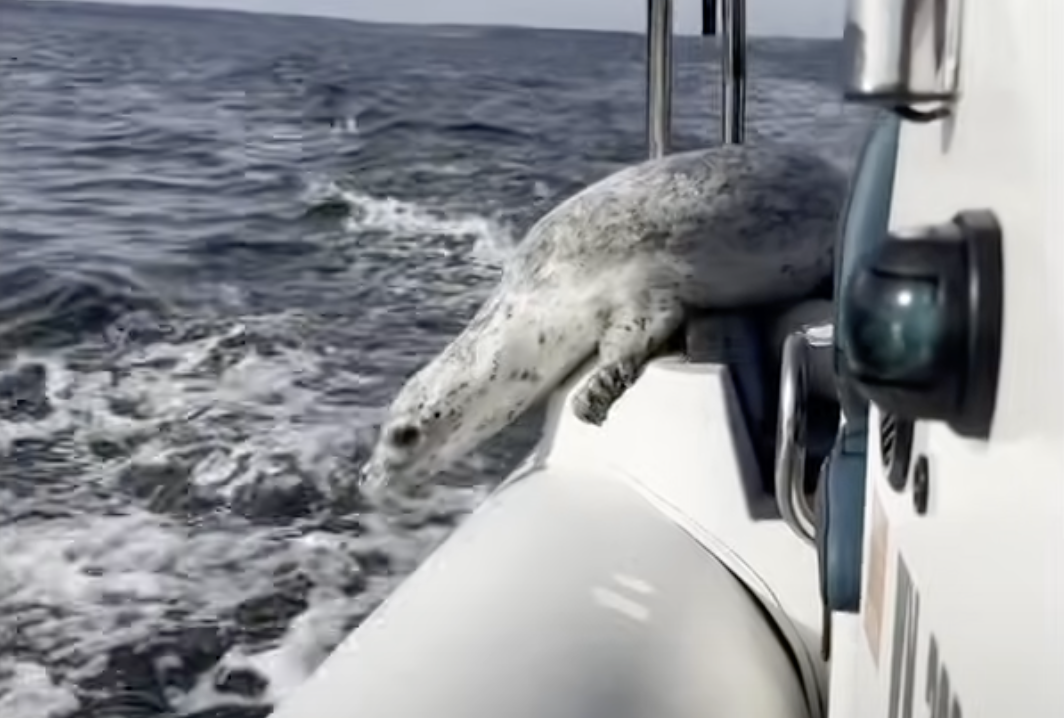
Last week, a harbor seal escaped being hunted by orcas near Camano Island by jumping into a boat used by Salish Sea wildlife photographer Charvet Drucker and her friends. The boaters were photographing the whales when they noticed them enter hunting mode, chasing the seal. The smart seal knew a getaway vehicle when it saw one and flopped itself aboard. The seal returned to the water after the whales took their leave. Why is this news important to families? It’s not. It’s just sweet. And in these times of bad news overload, we need something sweet. Show your kids.