Being a parent is nonstop hard work, making it challenging to stay on top of news that impacts families in Washington. Below are highlights and commentary on key policy updates and headlines from the week of Nov. 17-23. The opinions shared here are those of the author and do not represent Seattle’s Child.
New SPS superintendent starts February
The contract has been agreed upon, and it’s official: Seattle Public Schools (SPS) has a new superintendent. Incoming Superintendent Ben Shuldiner will assume the role on Feb. 1.
This week, the Seattle School Board met and unanimously approved an employment agreement with Shuldiner, including a salary and benefits package of $425,000. The new superintendent’s contract runs through 2028.
So far, Shuldiner’s move from the 10,000-student Lansing School District, where he is currently serving as superintendent, to the 50,000-student SPS is meeting with wide but cautious approval from student advocacy and parenting groups. Shuldiner told the Seattle School Board that it is something he takes seriously.
At the school board meeting, Shuldiner thanked the board and the school community for “entrusting me with this great responsibility.”
“Together we will make Seattle Public Schools the best urban school district in the country,” he added. “I am ready to do the hard work and am committed to making the most of the opportunities ahead.” To get the whole story, check out KUOW’s coverage.
City Council passes “safety & affordability” budget
The Seattle City Council’s budget committee unanimously passed the 2026 budget, making record investments to improve safety and affordability for working families.
“From the start, I have said this budget needs to be about making Seattle safer and more affordable for working families,” said Councilmember Dan Strauss, chair of the Select Budget Committee, in a release following the Council’s vote.
“We are making record-high investments in housing. We are doubling the size of our crisis response teams. And, while the federal government steps back from its most basic responsibilities, we’re stepping up to safeguard Seattleites by making stronger investments in food programs, immigration defense, and shelter. We are living in uncertain times, and this budget creates a roadmap to meet this moment,” Strauss added.
The budget includes new, voter-approved progressive revenue that will help build more housing, protect city programs working families depend on, and backfill federal cuts to food programs, immigrant rights, emergency shelter, and more. Highlights include:
- A record-high $349.5 million in affordable housing investments.
- Keeping people housed: The budget includes $10 million for rental assistance and $2.5 million for tenant assistance organizations.
- $11.8 million for new shelter and emergency housing, $1.4 million for programs supporting runaway and homeless youth that have had federal funding cuts, and $9 million to offset potential federal and other funding cuts to homeless shelters.
- Doubling the city’s investment in Fresh Bucks (a program that helps Seattle families afford fresh fruits and veggies) and increasing funding to food banks and meal programs while also addressing the “food emergency caused by the federal government allowing SNAP benefits to lapse.”
The final budget was unanimously approved in a special meeting of the Seattle City Council on Nov. 21. It now heads to Mayor Harrell for his signature. Learn what the full budget includes on the Council’s webpage.
Secondhand Sunday
If gift-giving is part of your November, December, or January celebrations and you have kids, the costs can add up. Why not join the growing reuse and regift movement and do your holiday shopping on Secondhand Sunday, this year held on Nov. 30?
That’s the Sunday following Black Friday (November 28 this year), which is the Friday after Thanksgiving (November 27). The big online buying sale day, Cyber Monday, is the Monday after Thanksgiving, December 1 this year.
Secondhand Sunday is a campaign launched by Evergreen Goodwill in 2022 in response to the Black Friday/Cyber Monday retail frenzy — and as a way of “offering a more mindful and value-based alternative to the over-consumption.”
The invitation is to gather your gently used gifts at the many secondhand, consignment, or charity shops in Seattle and the surrounding King County area. Doing so not only supports small businesses but also benefits the environment, helps raise the necessary funds for the charities served by the shops, and, in Goodwill’s case, aids people in the community in building career skills, confidence, and self-sufficiency.
“Secondhand Sunday is about stepping away from fast-paced consumption and choosing creativity, community, and purpose,” said Evergreen Goodwill’s Derieontay Sparks. Invite your kids to hunt for your gifts in the same places — it’s an excellent opportunity to teach them about reuse, reducing waste, and the truth that a thing does not need to be brand-new to be appreciated and enjoyed.
NO LINK between vaccines and autism
This week, the U.S. Centers for Disease Control and Prevention (CDC) updated its webpage dedicated to autism and vaccines to heavily disclaim its long-held stance: “Vaccines do not cause autism.”
Now the page states: “This webpage has been updated because the statement ‘Vaccines do not cause autism’ is not an evidence-based claim.”
A whole lot of science and the American Medical Association (AMA) beg to differ.
“Despite recent changes to the CDC website, an abundance of evidence from decades of scientific studies shows no link between vaccines and autism,” said AMA Trustee Sandra Adamson Fryhofer, MD. Extensive and rigorous studies consistently show that vaccines are safe and effective at protecting against serious illness.
“Vaccination is essential to protect individuals and communities from preventable diseases, making it a fundamental element of public health,” Fyhofer’s statement added. “The AMA is deeply concerned that perpetuating misleading claims on vaccines will lead to further confusion, distrust, and ultimately, dangerous consequences for individuals and public health.”
As a parent of a person with autism, I am appalled by this CDC decision, which will cause confusion and help further misinformation about the safety of vaccines and the possible causes of autism.
OP-ED: Give new parents cash payments
You may have heard the term “universal income,” which refers to the idea of giving individuals and parents a monthly cash payment to cover their basic needs and those of their families. The evidence is growing that this approach works, helping children and parents thrive.
According to Dona Ponepinto, president and CEO of United Way of Pierce County, and Camie Goldhammer, founding executive director of Hummingbird Indigenous Family Services, “a statewide direct cash-transfer pilot for pregnant people and new parents will help ensure that those who do choose to grow their families can do so with stability, dignity, and support.”
Ponepinto and Goldhammer’s recent opinion piece for the Washington State Standard outlines what Michigan has learned: cash for moms and babies improves health, reduces hospitalizations, improves mental health, stabilizes families, and saves millions in down-the-road crisis care dollars.
The idea has been tested locally as well. The Growing Resilience in Tacoma (GRIT) pilot provided 110 single parents in Tacoma’s highest-need ZIP code areas with $500 per month for 13 months. The pilot, write Ponepinto and Goldhammer, found that families became more financially resilient and improved their employment opportunities.
Don’t miss this important Op-Ed about a long-overdue idea.
Sen. Murray’s fight for affordable health care
Wondering why Washington Democrat Sen. Patty Murray did not join eight other democrats, including one from Washington, in voting to end the shutdown? KUOW’s recent interview with the senator on just that topic is illuminating.
Key among the reasons, as she has pushed for months, is this: Murray’s grave concern about the impact on families of expiring Affordable Care Act (ACA) health insurance subsidies. Federal health care subsidies expire at the turn of the year.
“People who are on the ACA and get tax credits were going to see their bills for health insurance, starting in January, double, triple, and even in some cases quadruple,” Murray told KUOW’s Kim Malcolm this week. “This is a dire situation for millions of Americans.”
Check out the full KUOW interview to learn more about Murray’s position, the approved legislation that reopened the government but expires in January, and what’s ahead in the fight for affordable healthcare.
Potential SPS ‘no cell phone’ rule
At last week’s Seattle School Board meeting, Seattle Public Schools officials reported that they are considering a new districtwide policy to limit student cellphone use as part of an effort to curb classroom disruptions and improve student learning.
Although there is no formal proposal on the table, district officials are aiming to have a new policy in place by the start of the 2026-27 school year. Thus far, the discussion is around three grade-dependent approaches:
- High schoolers would need to have their phones away during classes.
- Middle schoolers would need to keep their phones “away for the day,” meaning they would have to power off and store their devices out of sight for the entire school day, from arrival to dismissal.
- Phones would be prohibited in elementary schools.
It’s far from a done deal, and district policymakers say they will gather community input. Read the full story at The Seattle Times.
As if withholding SNAP benefits wasn’t enough
I was disheartened to read a piece from State’s Newsroom about the possibility that U.S. Agriculture Secretary Brooke Rollins may call for 42 million Americans, including nearly a million in Washington state, to be booted off SNAP rolls and then asked to reapply as a means of reducing waste and fraud in the program.
“Secretary Rollins wants to ensure the fraud, waste, and incessant abuse of SNAP ends,” a USDA spokesperson wrote Wednesday. “Rates of fraud were only previously assumed, and President Trump is doing something about it. Using standard recertification processes for households is a part of that work. As well as ongoing analysis of state data, further regulatory work, and improved collaboration with states.”
Analysts say such a move would mean that families would lose funds they need for groceries during the process—40% of those enrolled in SNAP are children.
Haven’t we had enough of accusing low-income families of fraud? Haven’t we had enough of balancing President Trump’s agenda on the backs of the poor?
Leave SNAP alone. It feeds kids. It helps keep families afloat. It works.
The Good Read: Good-bye, Mr. Lincoln
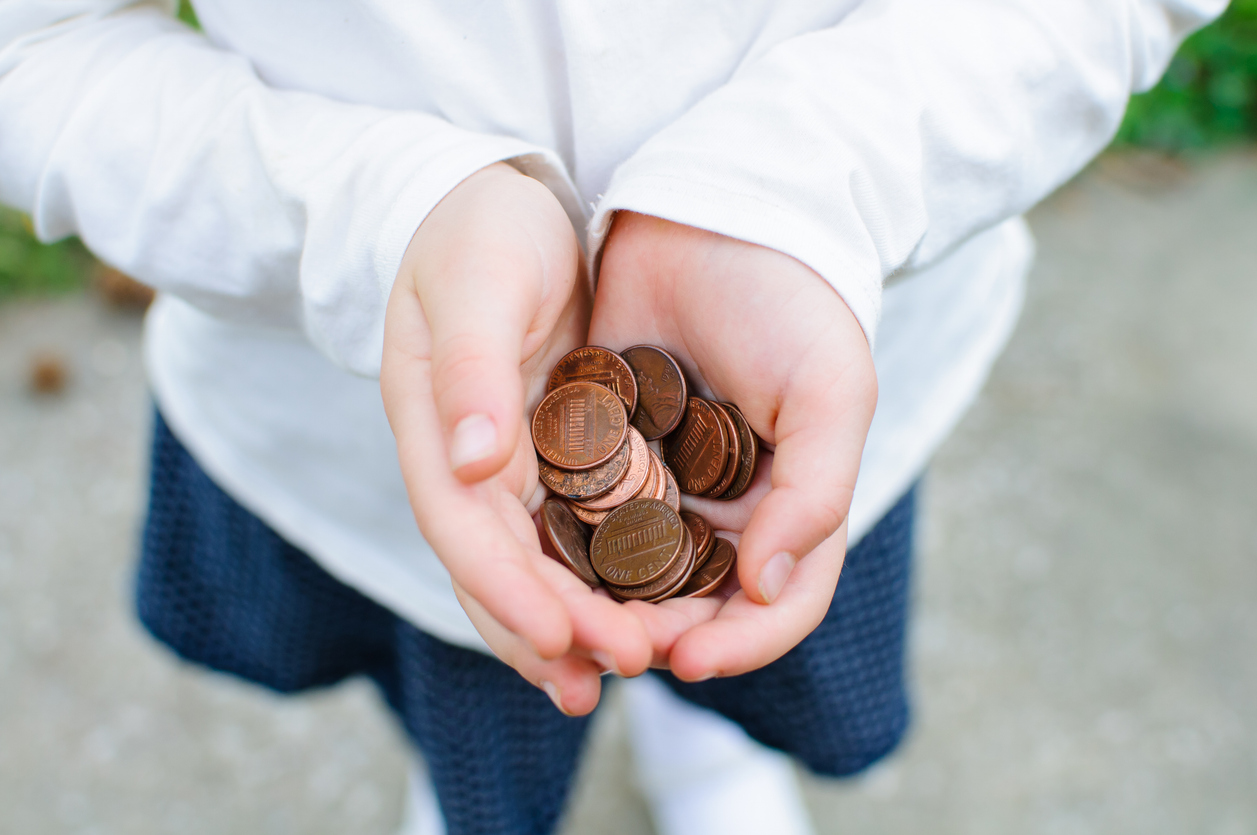
I have to admit, I feel sad for the children of the far future, who will never hold a penny’s worth of power in their hands.
I refer to the pennies that, as small children, my friends and I collected in jars and spilled on the corner store counter to buy candy, proud of our patience and the reward. The penny, that Lincoln-faced coin my dad and I enjoyed collecting—finding that missing year, slipping it into the circular spot in the blue penny collection folders, feeling like we held American history in our hands. The jar of pennies we saved up to get our parents inexpensive presents that seemed like luxuries to us.—Old Spice aftershave for dad, the Ronco Smokeless Ashtray for mom.
Not that kids can’t still collect pennies over the next few years, but eventually, following the discontinuation of the U.S. penny mint, jars of pennies will run low and empty, and the penny loafers of the future will find other coins slipped into their uppers.
All that is to say, check out L. Carol Ritchie/KUOW’s article “Farewell, fair penny. You are finished, but never forgotten.” It’s a perfect history lesson for kids and homage to the copper-plated coin millions of children have placed their dreams on since 1793.